



Water Damage Restoration in Paradise Valley, AZ

24/7 emergency water response and luxury-finish rebuild across Paradise Valley — IICRC-aligned.

Serving Paradise Valley & nearby Maricopa County

Get Your Free Water Damage Restoration Estimate

Step 1 of 5Project

What kind of project?

Pick the option that fits best — you can add details next.

Quick Answer

ProWorx Restoration provides 24/7 water damage restoration throughout Paradise Valley, AZ. PV losses most often come from second-story primary-bath failures in estate homes, pool/spa line bursts, and water-feature/fountain leaks; typical projects run $10,000–$150,000+ and 2 weeks to 16 weeks.

1,200+

Projects Completed

15+

Years Experience

ROC #349454

Licensed & Insured

100%

Satisfaction Guaranteed

Water Damage Restoration Built for Paradise Valley Homes
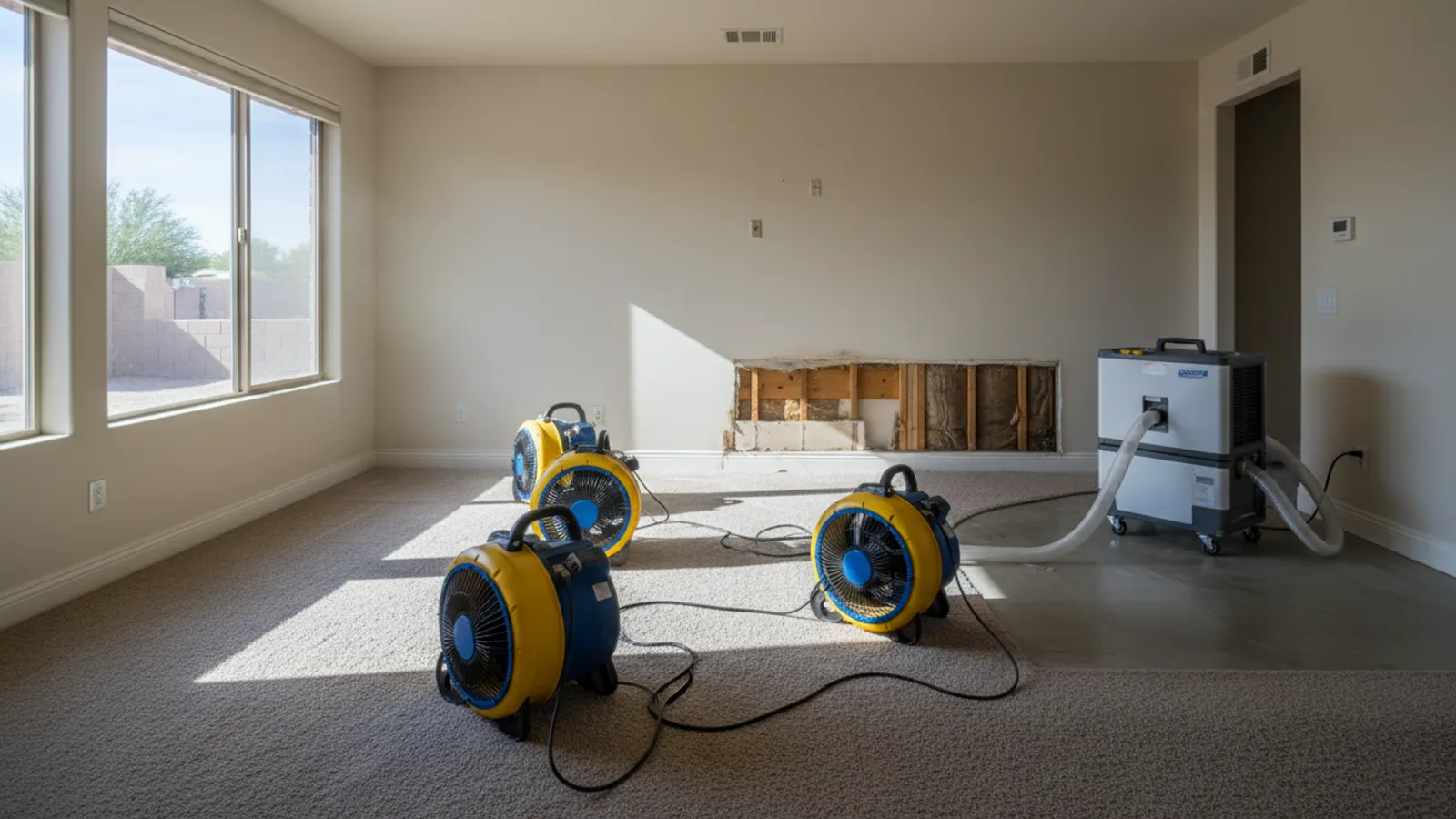
Water damage drying setup with air movers and a dehumidifier, baseboards removed in a Paradise Valley, Arizona home
Paradise Valley losses are the highest-value rebuilds in the Valley. Camelback Country Club, Mummy Mountain, Clearwater Hills, and Camelback Foothills estate homes have wide-plank European oak, slab stone walls and floors, hand-glazed Moroccan tile, custom plaster, custom millwork, and designer fixtures from European suites.
Loss types skew toward second-story primary-bath supply failures (often above great rooms with vaulted ceilings and view glass), pool and spa equipment line bursts, and water-feature/fountain failures.
We respond 24/7, document meticulously for the carrier, coordinate Town of Paradise Valley design review on visible exterior repairs, and rebuild to original finish level — not to insurance substitutes.

Why Paradise Valley Water Damage Restoration Is Different

Material lead times are the binding constraint. Wide-plank European oak (12–16 weeks), slab stone (8–14 weeks), hand-glazed tile (10–16 weeks), custom millwork (12–18 weeks), and designer fixture replacements (8–14 weeks) all need to be sourced in parallel during mitigation.
Town of Paradise Valley enforces strict hillside, scenic-corridor, and lot-coverage rules. Design review applies on any exterior-affecting rebuild. We file submittals during mitigation so rebuild can start as soon as materials land.

Recent Water Damage Restoration Projects in Paradise Valley

Camelback Country Club

Primary bath burst above great room: 2-story ceiling demo, plaster, European oak floor replacement, slab stone, custom millwork

$112K14 weeks

Mummy Mountain

Pool equipment line burst: exterior + interior demo, slab stone walls, full rebuild with designer fixture replacement

$78K10 weeks

Clearwater Hills

Water-feature line failure: structural drying, slab stone replacement, plaster + custom paint, mechanical rework

$48K9 weeks

Water Damage Restoration in Paradise Valley: Fast Facts

Average PV residential water loss: $30,000–$120,000+.

Most common loss source: second-story primary-bath supply, pool/spa equipment, or water-feature failure.

Wide-plank European oak lead time: 12–16 weeks.

Town design review for visible exterior rebuild: 4–8 weeks.

Mold colonization window: 48–72 hours.

Typical Cost

$1,500 – $40,000+

Typical Timeline

3 days – 6 weeks

Permit Lead Time

2–4 weeks

How We Approach Water Damage Restoration

Water damage can strike at any time — from burst pipes and appliance leaks to monsoon flooding. ProWorx Restoration provides 24/7 emergency water damage restoration throughout the area.
Our certified technicians use advanced water extraction, dehumidification, and drying equipment to stop damage in its tracks. We then repair and restore your property to its pre-loss condition, handling everything from drywall repair to complete reconstruction.

24/7 emergency water extraction

Advanced drying and dehumidification

Mold prevention and remediation

Structural drying and monitoring

Complete repair and reconstruction

Direct insurance billing

What Paradise Valley Homeowners Should Know About Water Damage Restoration

Drying Hardwood in Place

In many cases, hardwood floors can be dried in place rather than torn out, especially if mitigation begins quickly and the water was clean. Specialised drying systems draw moisture out through the floor surface while dehumidifiers remove it from the air, and the subfloor beneath may also need targeted drying. The process takes longer than drying carpet or tile and requires careful monitoring. Drying in place can save a significant amount of money compared with replacing the floor, but it is only appropriate when the boards are not severely damaged and the water was not heavily contaminated.

Why You Should Not Sand Too Soon

A common and costly mistake is sanding a cupped floor flat before the wood has returned to its normal moisture content. Once the boards finish drying, the edges that were sanded down shrink further than the centres, leaving the floor crowned and permanently uneven. Proper restoration means drying the floor and subfloor first, monitoring moisture readings until they stabilise at normal levels, and waiting to see how much the boards flatten on their own. Only then should any sanding and refinishing be considered.

When Hardwood Can Be Saved vs Replaced

Light cupping (edges slightly higher than centers) almost always sands out. Moderate cupping with no buckling and no subfloor damage usually refinishes successfully. Severe buckling, crowning, or boards lifted off the subfloor typically require board replacement or a full re-lay. Engineered hardwood with delaminated veneer has to be replaced — it can't be sanded. We give you an honest assessment after moisture testing.

Living in Your Home During Restoration

Many families can remain at home while water damage is being dried, but it depends on what was affected and how. Drying equipment runs continuously and is noisy, it raises the temperature in affected rooms, and those areas may be sealed off. If a kitchen or the only bathroom is out of service, or if Category 3 water or extensive mould is involved, temporarily staying elsewhere is usually more practical and safer. Many homeowner policies include coverage for additional living expenses when a home is uninhabitable, so check your policy or ask your adjuster. We will tell you honestly whether the home is reasonable to live in during each phase of the work.

Reducing Future Flood Risk

Once a home has flooded, it is sensible to look at why water reached the structure and what can be changed. Regrading soil so it slopes away from the foundation, extending downspouts, installing drainage channels, sealing gaps around doors and garage openings, and raising thresholds can all help. In some cases, landscape changes or berms can redirect runoff. We can recommend practical improvements as part of the restoration so the home is better protected during future monsoon seasons.

Where Residential Water Damage Usually Comes From

In Arizona homes, most water damage originates inside the house rather than from weather. Braided supply lines under sinks and toilets fail at their fittings, water heaters in garages and closets rupture as they age, refrigerator ice-maker lines leak slowly behind the appliance, washing machine hoses split, and air-conditioning condensate lines clog and overflow. Many of these failures are preventable with occasional inspection: replacing rubber washing machine hoses with braided ones, checking supply lines for corrosion or bulging, flushing water heaters and replacing them before they fail, and keeping condensate lines clear. A few minutes of checking each year can prevent a very expensive repair.

The Wax Ring and the Slow Leak Beneath the Toilet

One of the most common sources of hidden bathroom damage is the wax ring that seals the toilet to the drain flange. When the seal fails, or when the toilet rocks because the flange is loose or broken, small amounts of water can escape every time the toilet is flushed. Because the leak is beneath the toilet, it can continue for months, soaking the subfloor and eventually causing rot, loose flooring or stains on the ceiling below. Signs include a toilet that moves when pressed, discoloured or soft flooring around the base, and a persistent odour. Replacing the seal is simple; repairing the subfloor after a long leak is not.

Our Proven Process

01

Free Consultation

We visit your property, discuss your goals, and provide a detailed, no-obligation estimate.

02

Custom Plan

Our team creates a tailored project plan with timeline, materials, and transparent pricing.

03

Expert Execution

Licensed craftsmen complete your project with quality materials and meticulous attention to detail.

04

Final Walkthrough

We inspect every detail with you and ensure complete satisfaction before the job is done.

"They handled a six-figure rebuild like a true general contractor. Every finish was sourced to original, design review went smoothly, and the carrier paid the claim without a fight."

ProWorx Client · Paradise Valley

Neighborhoods We Serve in Paradise Valley

Camelback Country Club · Tatum Canyon · Clearwater Hills · Camelback Foothills · Mummy Mountain

Water Damage Restoration FAQs for Paradise Valley Homeowners

Ready to Start Your Paradise Valley Water Damage Restoration Project?

Get a free, no-obligation estimate from a licensed Arizona contractor — ROC #349454.