



Flood Restoration in Paradise Valley, AZ

24/7 estate-home flood response across Paradise Valley — discreet, finish-grade extraction, drying, and rebuild.

Serving Paradise Valley & nearby Maricopa County

Get Your Free Flood Restoration Estimate

Step 1 of 5Project

What kind of project?

Pick the option that fits best — you can add details next.

Quick Answer

ProWorx Restoration delivers 24/7 flood restoration throughout Paradise Valley, AZ. Paradise Valley flood losses are almost exclusively estate-home claims: supply-line failures on premium finishes, hillside monsoon runoff off Camelback and Mummy Mountain, and pool/water-feature equipment failures flooding adjacent luxury interiors. Typical projects run $10,000–$200,000+ and 2–14 weeks.

1,200+

Projects Completed

15+

Years Experience

ROC #349454

Licensed & Insured

100%

Satisfaction Guaranteed

Flood Restoration Built for Paradise Valley Homes
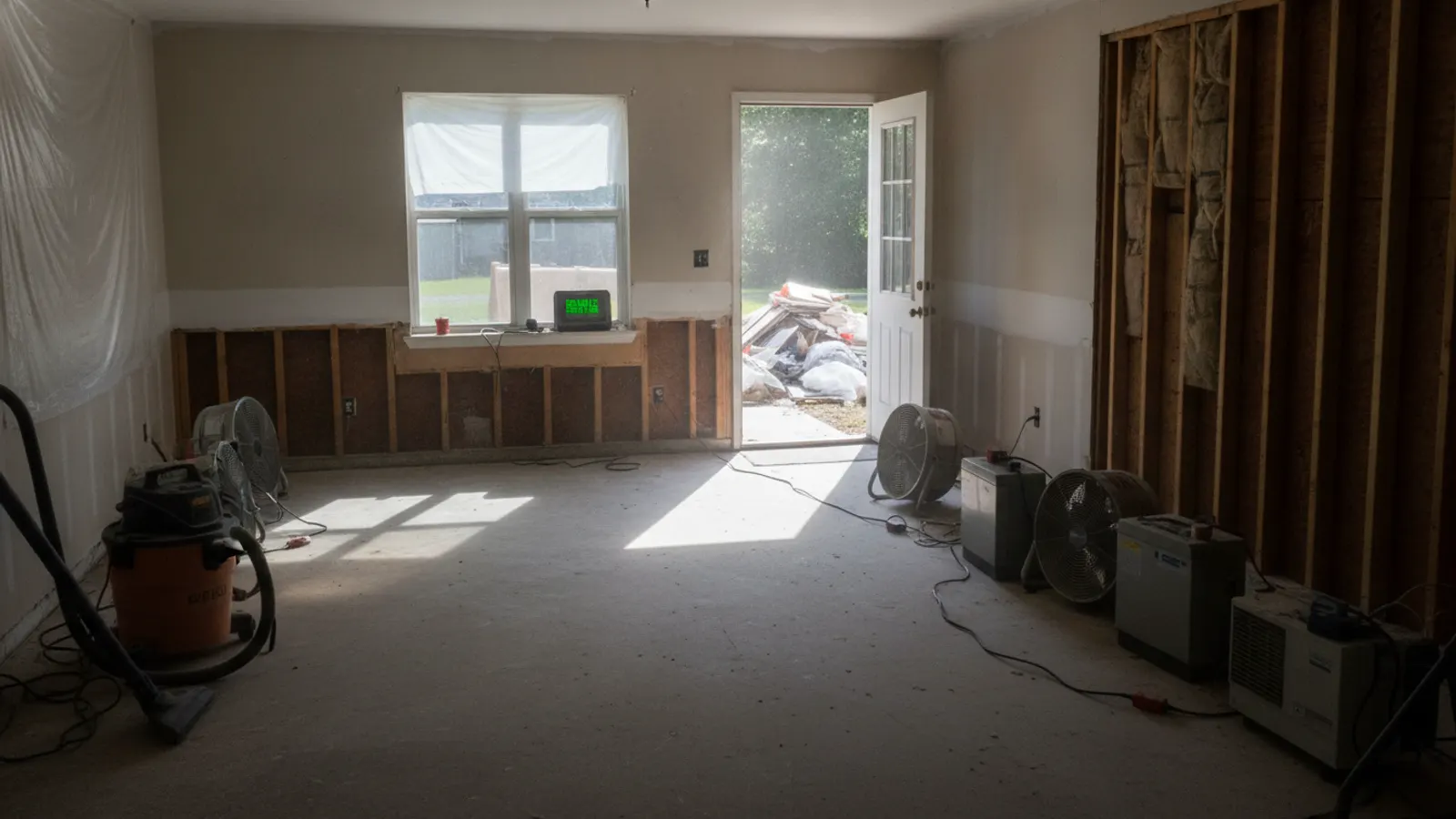
Flood-damaged flooring removed to the slab with drying equipment running in a Paradise Valley, Arizona home
Paradise Valley's housing stock is overwhelmingly estate-grade — 5,000–15,000+ sf custom homes with hand-finished plaster, wide-plank rift-and-quartered oak, book-matched marble slabs, and integrated smart-home systems. Water losses in Paradise Valley are rarely small. A 30-minute ice-maker line failure on a kitchen with $80,000 of cabinetry and $40,000 of stone is a six-figure rebuild — even when the water volume is modest.
Hillside estates on Camelback Mountain, Mummy Mountain, and in Clearwater Hills see significant monsoon sheet flow. Pool, spa, and water-feature equipment is also a recurring flood source — failed pump seals or burst supply lines in equipment rooms regularly migrate into adjacent finished space.
We respond 24/7 across the Town of Paradise Valley with discreet, low-noise extraction and drying suitable for occupied estates, full insurance coordination with PURE, Chubb, AIG, and the carriers common to Paradise Valley homes, and finish-grade reconstruction.

Why Paradise Valley Flood Restoration Is Different

Paradise Valley's hillside, scenic-corridor, and lot-coverage rules apply to visible exterior rebuild scope after a loss. We file the Design Review and engineering package in parallel with mitigation so the rebuild stays on schedule.
Town of Paradise Valley emergency repair permits typically issue in 48–72 hours; structural rebuilds with design review can take 4–8 weeks of permitting.

Recent Flood Restoration Projects in Paradise Valley

Camelback Country Club

Refrigerator supply-line failure on wide-plank rift oak: 900 sf in-place drying + selective refinish, custom inset-cabinet kick rebuild

$68K10 weeks

Clearwater Hills

Hillside monsoon sheet flow + entry flashing failure on estate: 1,400 sf extraction, drywall, Venetian-plaster repair, custom millwork, finish-grade repaint

$125K13 weeks

Mummy Mountain

Equipment-room water-feature line burst into adjacent gallery: 1,800 sf extraction, drywall, hardwood refinish, custom art-wall rebuild

$95K12 weeks

Flood Restoration in Paradise Valley: Fast Facts

Average Paradise Valley flood/water claim: $30,000–$120,000 (driven by finish grade, not water volume).

Hillside sheet-flow claims: roughly 25% of monsoon-season Paradise Valley residential losses.

Wide-plank rift/quartered wood floor save rate with in-place drying <24 hours: ~65%.

Town of Paradise Valley emergency repair permits: typically 48–72 hours.

Design Review + hillside engineering: add 4–8 weeks for visible exterior structural scope.

Typical Cost

$3,000 – $75,000+

Typical Timeline

1 – 8 weeks

Permit Lead Time

2–4 weeks

How We Approach Flood Restoration

Arizona's monsoon season — typically mid-June through September — can dump 1–3 inches of rain in under an hour on hard-packed desert soil that can't absorb it. The result: flash flooding, washes overrunning streets, roof leaks under wind-driven rain, and ground-water intrusion into garages, casitas, and lower-level living spaces. ProWorx Restoration is a licensed Arizona general contractor (ROC #349454) responding 24/7 to flood emergencies across the Valley.
We arrive with truck-mounted water extractors, submersible pumps, commercial dehumidifiers, and air movers. Water is removed immediately, structural drying begins within hours, and antimicrobial treatment is applied before mold can take hold (typically within 24–48 hours of saturation). For total losses we also handle drywall, flooring, insulation, and finish reconstruction under the same contract.

24/7 emergency response across the Phoenix metro

Licensed Arizona general contractor (ROC #349454)

Truck-mounted water extraction and submersible pumping

Industrial dehumidification and high-velocity air movers

Antimicrobial treatment to prevent mold growth

Thermal imaging to detect hidden moisture

What Paradise Valley Homeowners Should Know About Flood Restoration

Your Homeowner Policy and the Claim

Most homeowner policies cover sudden and accidental water damage, such as a burst pipe or a failed water heater, but often exclude damage resulting from long-term leaks, neglect or gradual deterioration, and flood water entering from outside usually requires separate flood coverage. Read the water damage section of your policy, report the loss promptly, document everything, and keep receipts for any emergency expenses. You have the right to choose your own restoration contractor. We provide the detailed documentation adjusters need, including moisture readings, photographs and itemised scope, which helps the claim move forward without unnecessary delay.

How Structural Drying Actually Works

Drying a building is not simply a matter of pointing fans at wet surfaces. Effective drying balances three things: removing liquid water by extraction, moving air across wet surfaces so moisture evaporates, and removing that moisture from the air with dehumidifiers so it does not simply condense somewhere else. Too much air movement without enough dehumidification raises humidity throughout the house and can spread damage to dry areas. Temperature matters as well, since warmer air holds more moisture and drying progresses faster within the right range. Professional drying is planned around the volume of the space, the materials involved and how much water they absorbed, which is why two seemingly similar leaks can require very different equipment setups and drying times.

Mould: When It Becomes a Concern

Mould spores are present almost everywhere, but they need moisture to grow, and wet building materials can begin supporting growth surprisingly quickly in warm conditions. The aim of rapid drying is to bring materials back to normal moisture levels before growth gets established. If mould is already present, it should be handled under containment, so disturbing it does not spread spores to other parts of the home, and affected porous materials are generally removed rather than cleaned. Covering visible mould with paint does not solve the problem, because the moisture source and the growth behind the surface remain. Addressing the cause of the moisture is always part of the fix.

Rebuilding After the Drying Is Done

Once the structure is dry, the home has to be put back together, and this is where a single contractor handling both mitigation and reconstruction saves time and confusion. Removed drywall is replaced and finished to match surrounding walls, baseboards and trim are reinstalled, flooring is repaired or replaced, cabinets are reset or rebuilt, and painting blends new work into existing finishes. Matching flooring and texture so repairs are not obvious takes care. We manage the full rebuild after drying, coordinating every trade so your home is returned to the condition it was in before the loss.

Our Flood Restoration Process

Every flood response follows IICRC S500 standards: (1) emergency water extraction with pumps and truck-mount equipment; (2) damage assessment and moisture mapping with thermal cameras; (3) removal of unsalvageable materials — saturated carpet, padding, baseboards; (4) structural drying with commercial dehumidifiers and air movers for 3–5 days; (5) antimicrobial application and daily moisture monitoring; (6) reconstruction of drywall, flooring, and finishes. You get a single project manager from extraction through final paint.

Where Residential Water Damage Usually Comes From

In Arizona homes, most water damage originates inside the house rather than from weather. Braided supply lines under sinks and toilets fail at their fittings, water heaters in garages and closets rupture as they age, refrigerator ice-maker lines leak slowly behind the appliance, washing machine hoses split, and air-conditioning condensate lines clog and overflow. Many of these failures are preventable with occasional inspection: replacing rubber washing machine hoses with braided ones, checking supply lines for corrosion or bulging, flushing water heaters and replacing them before they fail, and keeping condensate lines clear. A few minutes of checking each year can prevent a very expensive repair.

Our Proven Process

01

Free Consultation

We visit your property, discuss your goals, and provide a detailed, no-obligation estimate.

02

Custom Plan

Our team creates a tailored project plan with timeline, materials, and transparent pricing.

03

Expert Execution

Licensed craftsmen complete your project with quality materials and meticulous attention to detail.

04

Final Walkthrough

We inspect every detail with you and ensure complete satisfaction before the job is done.

"Equipment-room water feature failed and flooded the gallery. ProWorx matched the Venetian plaster, the custom millwork, and the hand-finished oak — I cannot find the repair."

ProWorx Client · Paradise Valley

Neighborhoods We Serve in Paradise Valley

Camelback Country Club · Tatum Canyon · Clearwater Hills · Camelback Foothills · Mummy Mountain

Flood Restoration FAQs for Paradise Valley Homeowners

Ready to Start Your Paradise Valley Flood Restoration Project?

Get a free, no-obligation estimate from a licensed Arizona contractor — ROC #349454.