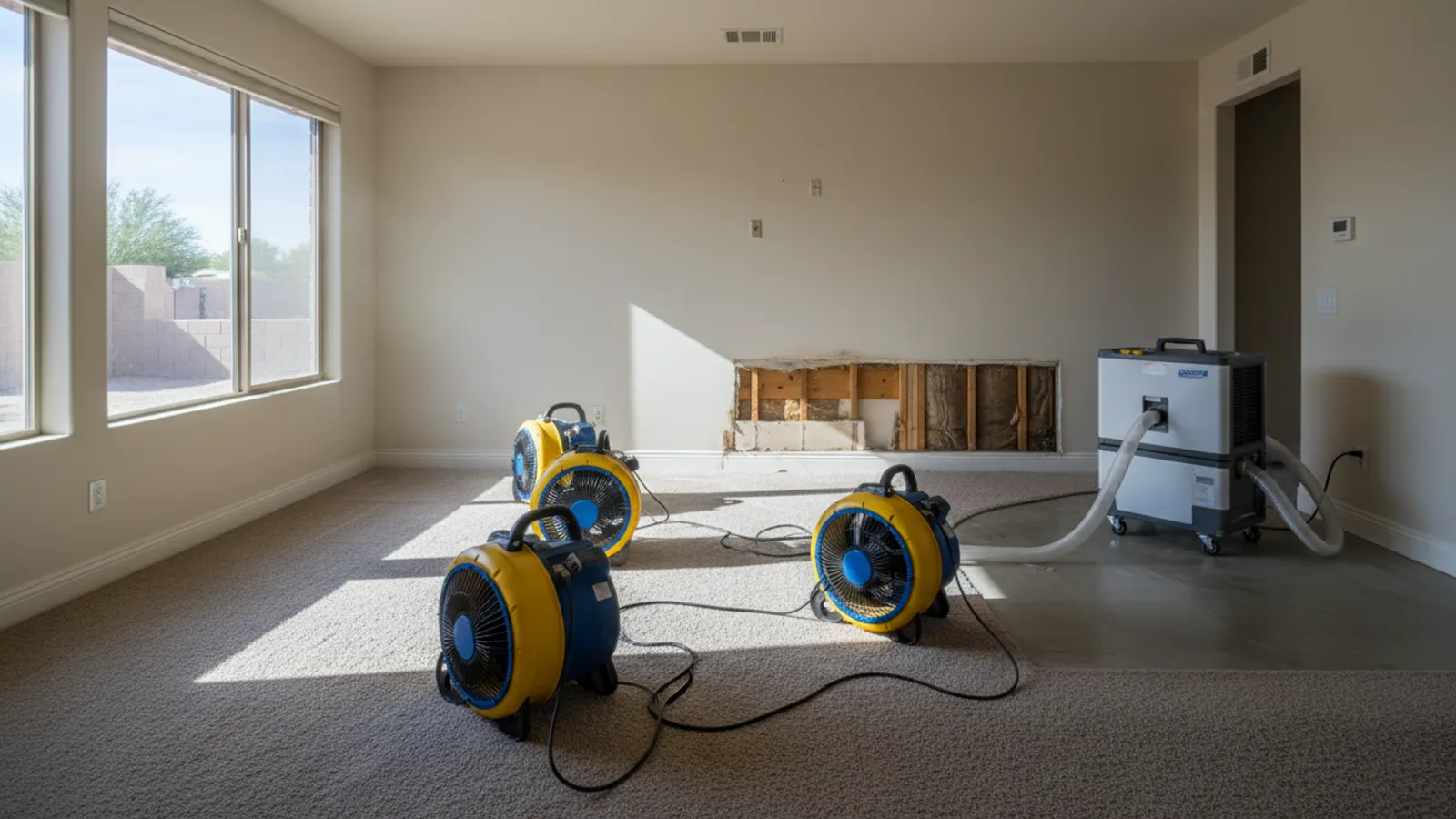
Our Ceiling Water Damage Repair Process
We start by finding the source — roof leak, plumbing, HVAC condensate, or appliance overflow upstairs. After the source is fixed (by us or a licensed plumber/roofer we coordinate), we open the ceiling, dry the cavity with air movers, inspect for mold, replace damaged drywall, blend the texture, prime with a stain-blocker like Kilz or Zinsser, and paint to match the rest of the room. The repair is invisible.
Common Ceiling Leak Sources in Arizona Homes
Most calls trace back to: monsoon roof leaks (especially flat roofs and parapet walls in central Phoenix), attic air handler condensate pan overflows during summer, second-story bathroom plumbing leaks (toilet flanges, supply lines, shower pans), upstairs washing-machine supply hose failures, and ice-maker line leaks above kitchens. Each requires a different repair sequence.
Texture Matching & Asbestos Awareness
We match popcorn, knockdown, orange peel, and smooth textures by hand. Note: homes built before 1980 may have asbestos-containing popcorn ceilings; we test before scraping and coordinate licensed abatement when required by Maricopa County and ADEQ rules.
Finding the Real Source First
A stain on a ceiling shows where water ended up, not necessarily where it began. Water travels along rafters, joists, ductwork and the top of drywall before dripping through, so the source can be several feet away from the visible damage. In Arizona homes, the most common sources are roof leaks during monsoon storms, plumbing lines in the attic or upstairs bathrooms, and air-conditioning condensate overflows. Repairing the ceiling without identifying and fixing the source simply means repairing it again later. We trace the water path, often using moisture meters and thermal imaging, before any ceiling repair begins.
The Arizona Culprit: Air-Conditioning Condensate
Many Arizona homes have air-handling units in the attic, and those units produce a large amount of condensation during the cooling season. That water is supposed to drain away through a condensate line, with a secondary pan beneath the unit as backup. When the primary line clogs with algae or debris, or the secondary pan rusts through or its drain is blocked, water overflows directly onto the ceiling below. Because air-conditioning runs for months on end here, this is one of the most frequent causes of ceiling damage we see. Having condensate lines flushed and pans inspected as part of routine HVAC service, and fitting a float switch that shuts down the system if water rises in the pan, prevents most of these losses.
When a Ceiling Is Sagging
A sagging or bulging ceiling is a warning sign, not just a cosmetic problem. It usually means water has collected above the drywall, which becomes heavy and loses strength as it absorbs moisture. A saturated ceiling can collapse suddenly, bringing down water, insulation and debris. Keep people and pets out of the room, move furniture and valuables away if it is safe to do so, and do not stand directly beneath the bulge. A professional can safely release the water and remove the damaged section in a controlled way. Do not attempt to push the ceiling back up.
Wet Attic Insulation
When water passes through an attic, it soaks the insulation lying on top of the ceiling. Wet insulation loses much of its insulating value, adds weight to the ceiling, holds moisture against the drywall and framing, and can support mould growth. Depending on the type of insulation and how wet it became, it may be dried or need to be removed and replaced. Restoring insulation to the proper depth after repairs is important in Arizona, where attic insulation significantly affects summer cooling costs. We include insulation assessment and replacement as part of ceiling repairs.
Textured and Popcorn Ceilings
Many Arizona homes have textured ceilings, and older ones may have acoustic popcorn texture. Matching the existing texture so a repair blends in requires skill, since texture patterns vary widely and an obvious patch can be more noticeable than the original stain. In homes built before the 1980s, popcorn texture may contain asbestos, which should be tested before it is disturbed. If asbestos is present, it must be handled by qualified professionals following proper procedures. We test where necessary and match textures carefully so repairs disappear into the surrounding ceiling.
Drying Before Closing
Once the source has been fixed and damaged drywall removed, the ceiling cavity, framing and remaining materials must be dried thoroughly before new drywall goes up. Closing a damp cavity traps moisture inside, which can lead to mould, odours and repeat staining. We verify that framing and surrounding materials have returned to normal moisture levels before reinstalling drywall, then finish, texture and paint the repair to match the rest of the ceiling.
Upstairs Bathrooms and Laundry Rooms
In two-storey homes, ceilings beneath upstairs bathrooms and laundry rooms are especially vulnerable. Shower pans, toilet seals, supply lines and washing machine hoses directly above a ceiling can all leak downward, sometimes slowly over long periods. Stains that reappear after being painted over are a clear sign of an ongoing leak above. Regularly checking caulk and grout upstairs, replacing aging hoses and supply lines, and installing a drain pan beneath an upstairs washing machine all reduce the risk to the rooms below.
Roof Leaks During Monsoon Season
Monsoon storms bring wind-driven rain that can force water past roofing materials that shed ordinary rain without trouble. Lifted shingles, cracked tiles, failed underlayment, deteriorated flashing around vents and chimneys, and clogged valleys are common entry points. Because the leak may only appear during heavy storms, it can be difficult to trace afterwards. If a ceiling stain appears after a monsoon storm, have the roof inspected before repairing the ceiling, so the source is fixed first.