



Insurance Restoration in Arizona

We work directly with your insurance company to restore your property after fire, water, smoke, mold, or storm damage.

Get Your Free Estimate

Step 1 of 5Project

What kind of project?

Pick the option that fits best — you can add details next.

1,200+

Projects Completed

15+

Years Experience

ROC #349454

Licensed & Insured

100%

Satisfaction Guaranteed

Insurance Restoration Services
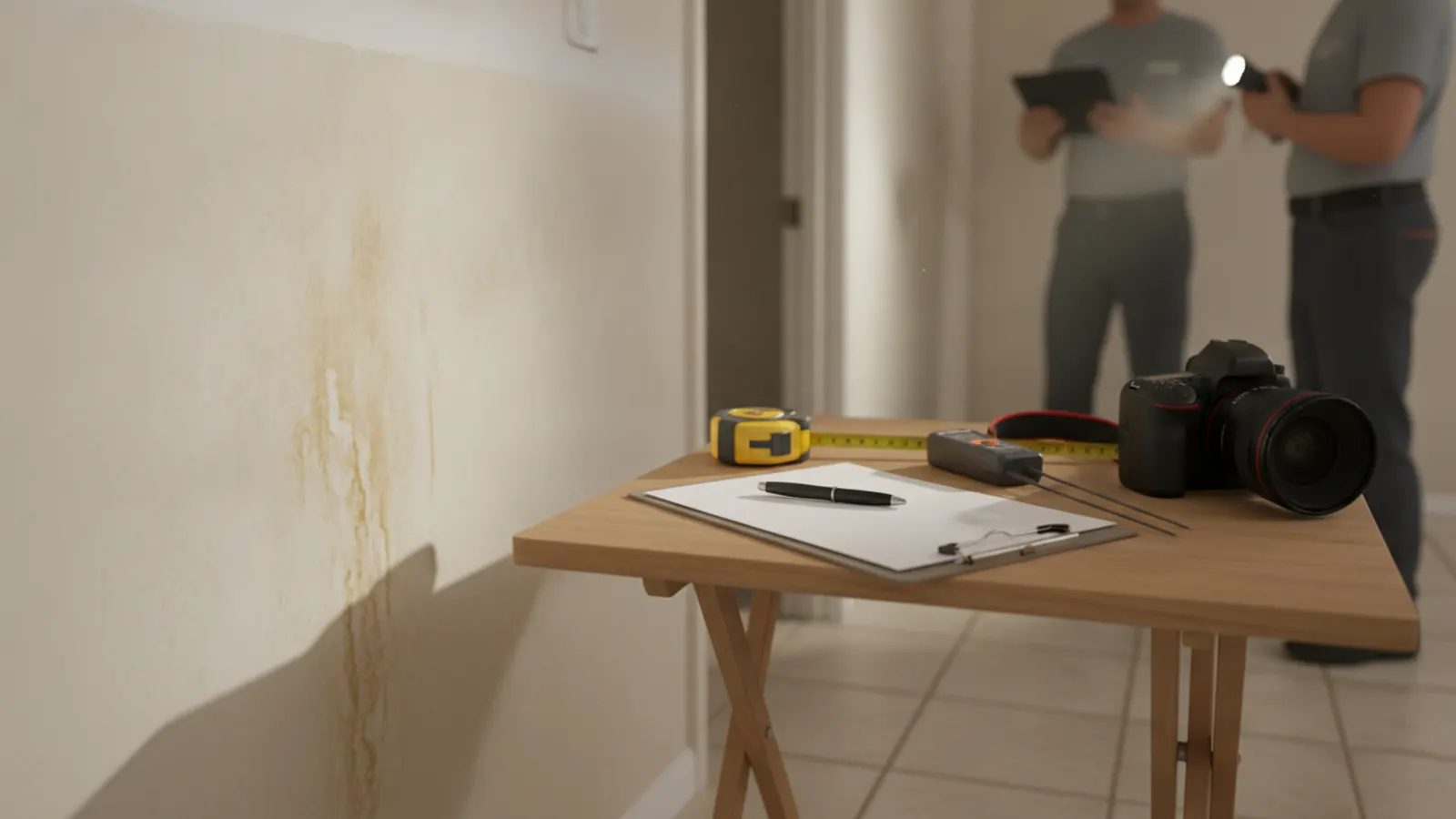
Property damage being documented with a moisture meter, tape measure and camera in an Arizona home
ProWorx Restoration is a full-service insurance restoration contractor serving the entire Phoenix metro. We act as your single point of accountability from the first emergency call through final reconstruction — performing mitigation, documenting damage to carrier standards, writing the scope in Xactimate, negotiating supplements with your adjuster, and rebuilding to pre-loss condition under one contract. That eliminates the common homeowner trap of hiring one company to dry the structure, a second to clean contents, and a third to rebuild — with no one owning the claim or the timeline.
Arizona claims have their own profile. Monsoon micro-bursts (June–September) drive a spike in roof-leak, wind, and flash-flood losses; aging polybutylene and CPVC supply lines fail under the Valley's high water-pressure zones; pre-1995 stucco-clad homes in Sun City, Mesa, and west Phoenix often have hidden moisture intrusion behind one-coat assemblies; and HVAC condensate overflows are a year-round source of ceiling and drywall damage in attic-mounted air handlers. We document each of these correctly so the loss is paid as the structural and code-upgrade event it actually is — not a cosmetic repair.
We coordinate with every major carrier — State Farm, Allstate, Farmers, USAA, Liberty Mutual, American Family, Travelers, Nationwide, Progressive, Country Financial, Erie, and Auto-Owners — and with most TPA networks. For the underlying restoration trades, see fire damage restoration, water damage restoration, mold restoration, smoke restoration, and property reconstruction after fire. All work is performed under Arizona ROC #349454, bonded and insured.

Our Insurance Restoration Process in Arizona

Step 1 — Emergency response and mitigation within 1–2 hours: we extract water, board up openings, tarp roofs, and stabilize the structure to prevent secondary damage (a carrier requirement under most policies' duty-to-mitigate clause). Step 2 — Documentation: room-by-room photos, video walkthroughs, moisture readings logged to a floor plan, and a contents inventory if needed. Step 3 — Xactimate scope written to the line item, including demolition, drying, antimicrobial, code upgrades, and reconstruction. Step 4 — Adjuster meeting on site to walk the scope and resolve differences before work begins. Step 5 — Supplements as concealed damage is discovered during demo. Step 6 — Reconstruction to pre-loss condition with finish matching, permitting, and inspections. Step 7 — Final walkthrough, certificate of completion, and warranty handoff. Most homeowner claims close in 30–90 days depending on scope; large losses (full kitchen, multi-room fire) run 4–8 months. For the underlying trade work see water damage restoration and fire damage restoration.

Common Arizona Claim Scenarios We Handle

Monsoon roof leaks — wind-driven rain through tile roofs, parapet wall failures on flat-roof commercial, and skylight gasket failures. Supply-line failures — burst polybutylene, CPVC, and PEX manifolds, plus failed washing-machine hoses and ice-maker lines (the #1 homeowner water claim in Maricopa County). HVAC condensate overflows — attic air handlers in two-story Phoenix and Chandler homes that flood ceilings below. Kitchen fires — grease fires, microwave fires, and self-cleaning oven thermal events with heavy smoke deposition. Mold claims — usually a covered water event followed by delayed discovery, requiring IICRC S520 remediation. Vehicle-into-structure — common at strip-mall storefronts. Vandalism, theft, and break-ins — board-up, glass replacement, and finish repair. For each, we document cause of loss, scope of damage, and code-upgrade triggers so nothing gets denied for missing detail. See mold restoration and smoke restoration.

Standards, Documentation, and Carrier Requirements

We follow IICRC S500 for water damage, S520 for mold remediation, S540 for trauma and biohazard, and S700 for smoke and fire restoration — the same standards your adjuster's preferred-vendor network is held to. All estimates are written in Xactimate using current Maricopa County price lists, with line-item detail down to baseboard linear footage, drywall texture type, and antimicrobial application. Photo documentation is geo-tagged and timestamped. Moisture readings are logged daily during the drying phase and submitted as a dry-out log at completion. For code-upgrade items (knob-and-tube re-wire, hard-wired smoke detectors, low-flow fixtures, R-38 attic insulation, anti-scald valves) we pursue Ordinance & Law coverage when present on the policy. All work is permitted, inspected, and warrantied under ROC #349454. For ground-up rebuilds following total loss see property reconstruction after fire.

Reading Your Policy Before You Need It

The time to understand your homeowner's policy is before a loss happens. Knowing your deductible, your coverage limits, whether your policy pays replacement cost or actual cash value, and what exclusions apply allows you to respond confidently after damage occurs. Policies differ significantly, so reviewing your own coverage is more useful than relying on general assumptions.

Your Duty to Prevent Further Damage

Most property policies require homeowners to take reasonable steps to protect their property from further damage after a loss, such as stopping a leak, tarping a damaged roof or starting water mitigation. Delaying these steps can allow damage to grow and may affect coverage. Keeping receipts for emergency measures ensures those costs can be submitted with the claim.

Checks Made Out to Your Mortgage Company

If your home has a mortgage, insurance payments for structural damage are often issued jointly to you and your lender. Lenders typically have procedures for releasing funds as repairs progress, which may involve inspections or paperwork. Contacting your lender early about its claim process helps prevent delays in paying for repairs.

When You Disagree With the Estimate

Disagreements over the scope or cost of repairs are common. Providing detailed documentation, photographs and contractor estimates can support your position. Many policies include an appraisal clause that offers a process for resolving disputes over the amount of a loss. Understanding these options helps homeowners pursue a fair settlement.

Public Adjusters

Public adjusters are licensed professionals who represent policyholders, rather than insurers, in preparing and negotiating claims, typically in exchange for a percentage of the settlement. Some homeowners with complex or large claims choose to hire one. Before signing an agreement, understand the fee, the scope of services and whether the adjuster is properly licensed.

How Long Claims Take

Simple claims may be resolved quickly, while complex losses involving structural damage, contents and additional living expenses can take months. Prompt reporting, thorough documentation and responsive communication with the adjuster help keep claims moving. Repairs can often begin on undisputed portions of the claim while other details are resolved.

Keeping Good Records

Maintaining an organised record of the claim, including correspondence, estimates, photographs, receipts and notes from conversations, makes it easier to track progress and resolve questions. Good records protect homeowners if disputes arise and simplify the final settlement.

Why We Work Directly With Adjusters

Because we document damage thoroughly and price repairs in the same line-item format insurers use, working directly with your adjuster reduces misunderstandings and keeps the claim moving. You remain in control of your claim and your choice of contractor throughout the entire process, from the first inspection to the final walkthrough.

Why Choose ProWorx?

Direct adjuster coordination — phone, email, on-site meetings

Xactimate estimating and supplements to ACV/RCV line-item detail

Emergency mitigation within 1–2 hours, 24/7/365

Moisture mapping, thermal imaging, and contents inventory documentation

Code-upgrade coverage pursued under Ordinance & Law (Coverage D)

Mortgage company draw coordination for losses over $10,000

IICRC S500 (water), S520 (mold), S540 (trauma), and S700 (smoke) certified

Licensed Arizona general contractor, ROC #349454, bonded and insured

Our Proven Process

01

Free Consultation

We visit your property, discuss your goals, and provide a detailed, no-obligation estimate.

02

Custom Plan

Our team creates a tailored project plan with timeline, materials, and transparent pricing.

03

Expert Execution

Licensed craftsmen complete your project with quality materials and meticulous attention to detail.

04

Final Walkthrough

We inspect every detail with you and ensure complete satisfaction before the job is done.

Ready for Your Free Estimate?

Licensed contractor ROC #349454 · Serving Mesa & the Phoenix Metro area

Frequently Asked Questions

Ready to Get Started?

Contact ProWorx Restoration today for a free consultation and estimate.