

Mold Restoration in Paradise Valley, AZ

IICRC-aligned mold remediation and estate-grade rebuild across Paradise Valley.

Serving Paradise Valley & nearby Maricopa County

Get Your Free Mold Restoration Estimate

Step 1 of 5Project

What kind of project?

Pick the option that fits best — you can add details next.

Quick Answer

ProWorx Restoration performs IICRC-aligned mold remediation throughout Paradise Valley, AZ — discreet estate-home work with finish-grade rebuild. Most cases trace to slow supply-line leaks on premium finishes, equipment-room weeping, and hillside intrusion. Typical projects run $5,000–$75,000+ and 1–10 weeks.

1,200+

Projects Completed

15+

Years Experience

ROC #349454

Licensed & Insured

100%

Satisfaction Guaranteed

Mold Restoration Built for Paradise Valley Homes
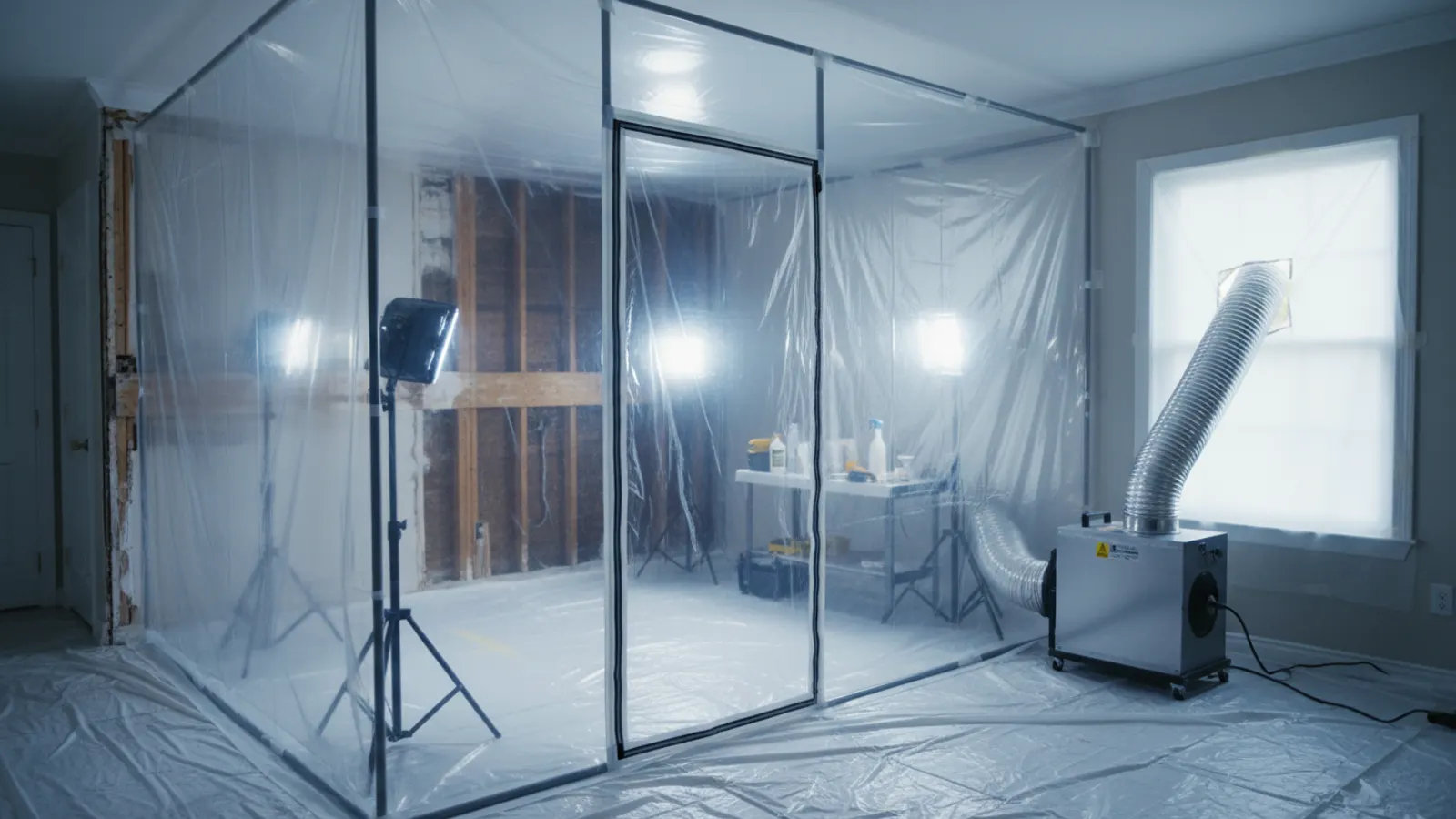
Mold remediation containment with a negative air machine and wall opened to expose framing in a Paradise Valley, Arizona home
Paradise Valley mold work is estate-grade. Slow drips on $100K+ kitchens and $40K+ stone baths produce hidden mold that, once exposed, demands like-kind-and-quality rebuild — custom millwork, Venetian plaster, book-matched stone, hand-finished oak. Water volume is rarely the issue; finish detail is.
Pool, spa, and water-feature equipment rooms produce slow-weeping cases that migrate into adjacent galleries, wine rooms, and media spaces. Hillside intrusion at Camelback and Mummy Mountain properties is the third major source.
We work with PURE, Chubb, AIG, and Cincinnati Signature alongside State Farm and USAA. Discreet uniformed crews, low-noise containment suitable for occupied estates, secure access protocols, single PM, full documentation, and third-party clearance available.

Why Paradise Valley Mold Restoration Is Different

HNW carriers fund like-kind-and-quality reinstatement when documented. We photograph and source-document existing finishes from the first walk-through so scope is properly funded.
Paradise Valley hillside, scenic-corridor, and lot-coverage rules apply to visible exterior rebuild. Design Review + engineering can add 4–8 weeks. We file in parallel with remediation.

Recent Mold Restoration Projects in Paradise Valley

Camelback Country Club

Slow ice-maker leak under wide-plank rift oak with subfloor mold: containment, in-place drying + selective refinish, custom inset-cabinet kick rebuild

$45K8 weeks

Clearwater Hills

Hillside intrusion + entry wall with cavity mold: containment, drywall remediation, Venetian plaster, custom millwork, finish-grade repaint

$72K10 weeks

Mummy Mountain

Equipment-room water-feature slow weep into adjacent gallery with cavity mold: containment, drywall remediation, hardwood restoration, custom art-wall rebuild

$58K9 weeks

Mold Restoration in Paradise Valley: Fast Facts

Average Paradise Valley mold remediation + rebuild claim: $20,000–$60,000.

Wide-plank rift/quartered wood floor save rate with early intervention: ~65%.

Design Review + hillside engineering: add 4–8 weeks for visible exterior scope.

Microbial growth window: 48–72 hours.

Third-party clearance verification: next-day after final HEPA pass.

Typical Cost

$1,500 – $30,000+

Typical Timeline

3 days – 4 weeks

Permit Lead Time

2–4 weeks

What Paradise Valley Homeowners Should Know About Mold Restoration

Mould in the HVAC System

Ductwork, air handlers and condensate drain pans can harbour mould, particularly where condensation collects. Mould in the HVAC system can distribute spores and odour throughout the house every time it runs. Cleaning or replacing affected components, clearing condensate lines and correcting the conditions that allow moisture to accumulate are all part of a thorough remediation when the system is involved.

Remove or Clean

Porous materials such as drywall, insulation, carpet and ceiling tiles that have grown mould generally cannot be reliably cleaned and should be removed and bagged inside containment. Semi-porous and non-porous materials, including structural wood, metal and glass, can often be cleaned. Structural framing is not removed simply because it has surface mould; it is cleaned, treated and dried. Deciding what to remove and what to clean is the core judgement in any mould job.

Choosing a Water Damage Company

In the stressful hours after a leak, it is easy to hire the first company that answers. A few questions help separate qualified firms from the rest. Ask whether their technicians are trained to recognised industry standards, whether they measure and document moisture daily, and whether they will explain what needs removing and why. Check that they are licensed and insured in Arizona, particularly if they will also carry out reconstruction. Be wary of anyone pressing you to sign broad authorisations on the spot or promising a result before they have inspected the damage. A reputable company will be clear about what they are doing and why, and will work directly with your insurer.

What Drives the Cost of Water Damage Repair

The cost of a water damage job depends mainly on how far the water spread, how contaminated it was, how long it sat before mitigation began and what materials it reached. A clean-water leak caught within hours in a single room may require only extraction and a few days of drying. The same leak discovered after a week can involve removing flooring, cutting out lower drywall, replacing cabinets and treating mould. Category 3 water increases cost because more material must be removed and handled safely. This is why speed matters so much: the single biggest factor within your control is how quickly someone begins removing water and drying the structure.

How Structural Drying Actually Works

Drying a building is not simply a matter of pointing fans at wet surfaces. Effective drying balances three things: removing liquid water by extraction, moving air across wet surfaces so moisture evaporates, and removing that moisture from the air with dehumidifiers so it does not simply condense somewhere else. Too much air movement without enough dehumidification raises humidity throughout the house and can spread damage to dry areas. Temperature matters as well, since warmer air holds more moisture and drying progresses faster within the right range. Professional drying is planned around the volume of the space, the materials involved and how much water they absorbed, which is why two seemingly similar leaks can require very different equipment setups and drying times.

What to Do in the First Hour

If you discover water damage, safety comes first. If water is near electrical outlets, appliances or the breaker panel, or if ceilings are sagging, stay out of the area and turn off power at the panel only if you can reach it safely without standing in water. Next, stop the source by closing the fixture valve or the main water shut-off, which is usually near the street or where the line enters the house. Move valuables and electronics out of harm's way, photograph everything before cleaning up, and call your insurer and a restoration company. Avoid using a household vacuum on water, and do not turn on ceiling fans or lights in a ceiling that has visible water damage.

Containment During Remediation

Disturbing mould releases spores into the air, and without containment they spread to clean parts of the home. Professional remediation isolates the work area with plastic sheeting and sealed doorways, and uses negative air pressure so air flows into the contained area rather than out of it. HVAC returns in the work zone are sealed so the system does not distribute spores through the house. Containment is what separates genuine remediation from simply moving the problem.

Why Bleach Is Not the Answer

Household bleach is commonly used on mould, but it is a poor choice for building materials. It can lighten the visible stain while doing little to growth that has penetrated porous surfaces, and the water it contains can feed regrowth. Bleach also produces harmful fumes and should never be mixed with other cleaners. Professional remediation relies on physical removal, appropriate cleaning agents and drying, rather than on masking stains.

Signs of Water Damage in Your Home

Water damage isn't always obvious. Look for water stains on ceilings or walls, musty odors, peeling or bubbling paint, warped flooring, soft or spongy drywall, and unexplained increases in your water bill. In Arizona's warm climate, hidden moisture can lead to mold growth within 24-48 hours. If you notice any of these signs, call ProWorx Restoration immediately for a professional moisture assessment using thermal imaging and industrial moisture meters.

Our Proven Process

01

Free Consultation

We visit your property, discuss your goals, and provide a detailed, no-obligation estimate.

02

Custom Plan

Our team creates a tailored project plan with timeline, materials, and transparent pricing.

03

Expert Execution

Licensed craftsmen complete your project with quality materials and meticulous attention to detail.

04

Final Walkthrough

We inspect every detail with you and ensure complete satisfaction before the job is done.

"Hidden mold from a slow leak in our gallery wall. ProWorx contained, remediated, and rebuilt — Venetian plaster, custom millwork, hand-finished oak all match perfectly."

ProWorx Client · Paradise Valley

Neighborhoods We Serve in Paradise Valley

Camelback Country Club · Tatum Canyon · Clearwater Hills · Camelback Foothills · Mummy Mountain

Mold Restoration FAQs for Paradise Valley Homeowners

Ready to Start Your Paradise Valley Mold Restoration Project?

Get a free, no-obligation estimate from a licensed Arizona contractor — ROC #349454.