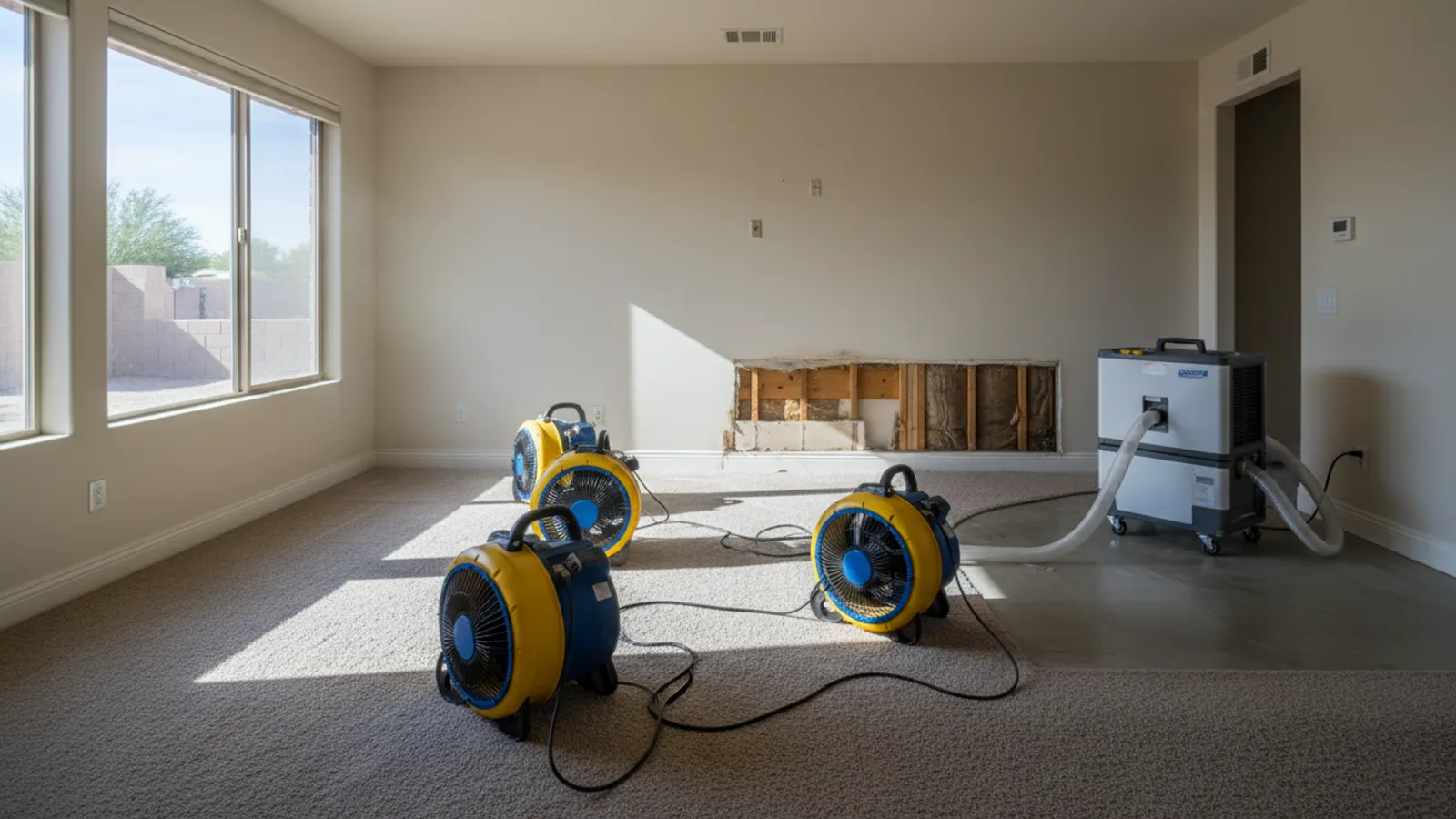
Our Bathroom Water Damage Repair Process
Every job starts with leak detection — thermal imaging, moisture meters, and selective drywall removal to find the source. Once confirmed, we shut off water, remove damaged drywall and substrate, dry the cavity, inspect for mold, repair the underlying plumbing or waterproofing, then rebuild with code-compliant materials. A small leak repair may take 3–5 days; a full waterproofing and tile rebuild 2–4 weeks.
Common Bathroom Water Damage Sources in Arizona
Failed shower pans (especially 1980s–90s mortar pans), cracked grout and caulking around tubs and showers, leaking toilet wax rings, supply-line failures under vanities, p-trap leaks, and hard-water corrosion of brass fixtures are our most common calls. Phoenix's hard water (10–18 grains/gallon) shortens fixture life and accelerates pinhole leaks in copper supply lines.
Modern Waterproofing & Materials We Use
When we rebuild showers and wet areas we use modern systems: Schluter Kerdi membrane, RedGard liquid waterproofing, sloped pre-formed pans, and silicone (not latex) caulking at all changes-of-plane. These systems carry manufacturer warranties and dramatically outlast traditional mortar-pan-and-felt construction.
The Wax Ring and the Slow Leak Beneath the Toilet
One of the most common sources of hidden bathroom damage is the wax ring that seals the toilet to the drain flange. When the seal fails, or when the toilet rocks because the flange is loose or broken, small amounts of water can escape every time the toilet is flushed. Because the leak is beneath the toilet, it can continue for months, soaking the subfloor and eventually causing rot, loose flooring or stains on the ceiling below. Signs include a toilet that moves when pressed, discoloured or soft flooring around the base, and a persistent odour. Replacing the seal is simple; repairing the subfloor after a long leak is not.
When the Shower Pan Fails
A tiled shower depends on a waterproof layer beneath the tile and mortar bed, usually a shower pan liner or a waterproofing membrane. Tile and grout are not waterproof on their own, so when that hidden layer fails, is installed incorrectly or is damaged, water seeps into the surrounding framing and subfloor every time the shower is used. Warning signs include loose tiles, cracked or darkened grout, peeling paint or swollen drywall on adjacent walls, and water appearing in rooms below. Fixing a failed shower pan almost always means removing the tile so the waterproofing can be replaced properly, since surface patching cannot address the underlying failure.
Grout, Caulk and Why Small Gaps Matter
Many bathroom water problems start with small gaps that seem harmless. Cracked grout, failed caulk around a tub or shower, and gaps where the tub meets the wall allow water to reach the wall cavity behind the finish. Over time, repeated wetting can damage drywall, swell wood framing and support mould growth inside the wall. Inspecting caulk and grout every year or two, and resealing them before they fail, is one of the most cost-effective bathroom maintenance tasks. Joints where two different materials meet, such as tile and tub, should be sealed with flexible caulk rather than rigid grout, because grout cracks as materials expand and contract.
Subfloor Damage and Structural Rot
When water has been reaching a bathroom floor over a long period, the damage often extends beyond the visible flooring into the subfloor and sometimes the floor framing. Plywood or particleboard subfloors can delaminate, soften and rot, making the floor feel spongy or uneven. Repairing this properly means removing the affected flooring and cutting out the damaged subfloor, inspecting the framing beneath and reinforcing or replacing it where needed, then installing new subfloor before reinstalling the finish flooring. Simply laying new tile over a compromised subfloor leads to cracked tile and recurring problems.
Leaks Behind the Wall
Some bathroom leaks come from supply or drain lines inside the wall, rather than from fixtures or seals, and these can be difficult to detect until damage becomes visible. Signs include stains or bubbling paint on the wall behind fixtures, an unexplained rise in the water bill, the sound of running water when nothing is in use, and musty odours. Locating the source accurately before opening the wall limits the amount of finish that needs to be removed. Once the leak is repaired, the wall cavity must be dried thoroughly before it is closed up again.
Rebuilding the Bathroom Properly
Once damaged materials have been removed and the structure is dry, the bathroom should be rebuilt in a way that prevents the problem returning. In wet areas, that means cement board or other moisture-resistant backer board rather than standard drywall, a properly installed waterproofing membrane, correct slope toward drains and flexible sealant at changes of plane. Many homeowners use the repair as an opportunity to update the bathroom at the same time, since the walls and floor are already open.
Ventilation and Everyday Moisture
Not all bathroom moisture problems come from leaks. Bathrooms without adequate exhaust ventilation trap humidity from showers and baths, which condenses on cooler surfaces and can lead to peeling paint, damaged drywall and mould growth on ceilings and in corners. An exhaust fan should be sized properly for the room, vented to the outside rather than into the attic, and run during and for a period after bathing. If your bathroom fan is weak, noisy or vents into the attic, replacing it is an inexpensive way to protect the room.
Signs It Is Time to Call Someone
Call a professional if you notice a toilet that rocks, tiles that sound hollow when tapped, grout that keeps cracking, a ceiling stain beneath a bathroom, a persistent musty smell, or flooring that feels soft. Each of these points to water reaching places it should not. Catching the problem early usually means a modest repair rather than a full tear-out.