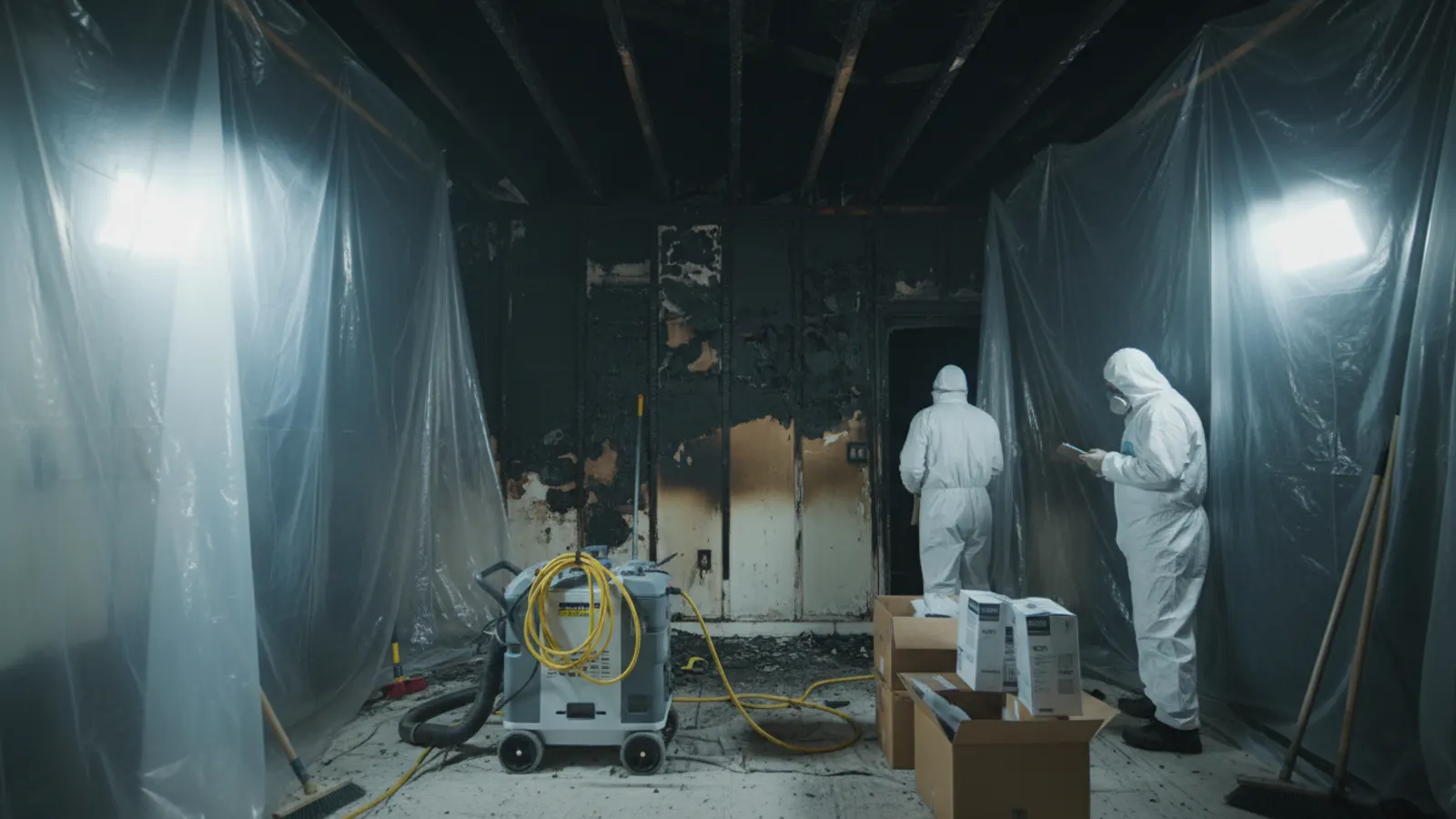
What to Do Immediately After a Fire
After a fire, your safety comes first — do not re-enter the property until the fire department gives clearance. Once cleared, contact your
insurance company and a professional fire restoration team like ProWorx Restoration. Document all visible damage with photos and video for your claim. Do not attempt to clean soot or smoke damage yourself, as improper cleaning can cause permanent staining and further damage. Our 24/7 emergency team responds quickly to secure your property, begin
board-up services, and start the restoration process.
The Fire Damage Restoration Process Explained
Professional fire restoration involves multiple phases: emergency board-up and securing,
water removal from firefighting efforts, smoke and soot removal from all surfaces, structural assessment and demolition of irreparable materials, deodorization and air quality restoration, and finally
complete reconstruction. ProWorx Restoration manages the entire process from emergency response to the final coat of paint, working directly with your insurance adjuster to ensure maximum claim coverage and minimize your out-of-pocket costs.
Not All Smoke Leaves the Same Residue
What burned, and how hot it burned, determines the kind of residue a fire leaves behind, and that in turn determines how it must be cleaned. A fast, high-temperature fire involving paper and wood tends to leave a dry, powdery soot that is comparatively easy to remove. A slow, smouldering fire involving plastics, rubber and synthetic materials leaves a wet, sticky, smeary residue that clings to surfaces and has a strong odour. A kitchen fire involving food can leave a protein residue that is almost invisible but discolours paint and carries a pervasive smell. A furnace puff-back leaves a fine, oily fuel soot. Identifying the residue type is the first step, because cleaning methods that work on one can smear or set another.
Why Smoke Damage Spreads So Far
Fire damage is rarely confined to the room where the fire started. Hot smoke rises and spreads through the house, carried by air currents, and travels into rooms that were never near the flames. It moves along ceilings, into closets and cabinets, through gaps around outlets and into wall cavities, and is drawn into the heating and air-conditioning system, which then distributes it throughout the home. Smoke particles are extremely small and penetrate porous materials easily. That is why a fire in one room often requires cleaning throughout the entire home and why the HVAC system almost always needs attention.
Soot Is Acidic, and It Keeps Working
Soot does not simply sit on surfaces. Many residues are acidic and continue to cause damage after the fire is out. Within days, they can discolour plastics, etch glass, tarnish metal fixtures and yellow grout and finishes. Left longer, staining can become permanent and items that could have been cleaned may need replacing. This is one of the main reasons restoration should start as soon as possible after a fire. Prompt cleaning of affected surfaces limits how much ends up being replaced rather than restored.
The Water Damage That Comes With Fire
Putting out a house fire often uses a large volume of water, and that water causes damage of its own. It soaks into flooring, drywall, insulation and structural framing, and if it is not removed and dried promptly it can lead to mould and further deterioration. Fire restoration therefore usually involves water mitigation alongside smoke and soot cleanup. Drying must be completed before reconstruction, and the moisture levels of framing and subfloors should be verified rather than assumed.
Getting Rid of the Smell Permanently
Smoke odour is one of the most persistent effects of a fire, because odour molecules penetrate porous materials such as drywall, wood, insulation and fabrics. Masking the smell with fragrances only hides it temporarily. Effective deodorisation removes the source by cleaning residue from surfaces, removing materials that cannot be cleaned, cleaning the HVAC system, and then treating remaining odour with methods such as thermal fogging or hydroxyl generators. Where odour remains in structural surfaces, a specialised sealing primer can lock it in before repainting. Using several of these approaches together is usually necessary for lasting results.
How Long Fire Restoration Takes
The timeline depends on the extent of the damage. A small kitchen fire with limited smoke spread might be cleaned and repaired in a few weeks. A fire that damaged structural elements and affected the whole house through smoke can take several months, especially when engineering assessment, permits and significant reconstruction are involved. Insurance approvals, material lead times and the need for code upgrades all affect the schedule. We give a realistic timeline after assessing the damage and update it as the work progresses.
Choosing a Fire Restoration Contractor
After a fire, it is worth choosing a contractor carefully rather than hiring the first one available. Look for experience with both smoke and soot cleaning and structural reconstruction, an active Arizona contractor licence, appropriate insurance and a willingness to work directly with your insurer. A good contractor will explain the scope clearly, document the damage thoroughly and give you realistic expectations. Handling cleanup and reconstruction through one company avoids gaps between phases and simplifies communication.
Electrical Safety After a Fire
Heat can damage wiring, outlets, switches and the electrical panel in ways that are not visible from the outside, and insulation on wires inside walls can melt or become brittle well away from where the flames actually reached. Water from firefighting adds a further hazard, since wet electrical components can short or shock. Until a qualified electrician has inspected the system, do not assume it is safe to restore power to affected areas, even if the lights appear to work normally. We arrange electrical evaluation as part of the restoration and repair or replace damaged wiring before walls are closed up again, so hidden heat damage is not sealed inside the finished structure where it could cause a problem years later.
Your Insurance Claim After a Fire
Fire claims tend to be more complex than most property claims because they combine structural damage, smoke and soot cleaning, water damage from firefighting, contents losses and often temporary living costs. Report the loss promptly, keep receipts for every emergency expense, and avoid discarding damaged belongings until they have been photographed and listed. Request a copy of your full policy so you understand your coverage limits, any additional living expense provisions and how contents are valued. You are entitled to choose your own restoration contractor. We provide adjusters with detailed, itemised scopes and documentation, which helps keep the claim moving and reduces disputes over what was damaged and what it will cost to restore.