Signs of Water Damage in Your Home
Water damage isn't always obvious. Look for water stains on ceilings or walls, musty odors, peeling or bubbling paint, warped flooring, soft or spongy drywall, and unexplained increases in your water bill. In Arizona's warm climate, hidden moisture can lead to mold growth within 24-48 hours. If you notice any of these signs, call ProWorx Restoration immediately for a professional moisture assessment using thermal imaging and industrial moisture meters.
Arizona's Monsoon Season and Water Damage Prevention
Arizona's monsoon season (June through September) brings intense rainfall that can overwhelm drainage systems and cause flash flooding. homeowners can reduce risk by maintaining gutters and downspouts, grading soil away from foundations, sealing basement walls, and installing sump pumps in low-lying areas. Despite prevention efforts, monsoon damage happens — and when it does, ProWorx Restoration provides 24/7 emergency water extraction, structural drying, and complete property restoration.
Not All Water Is the Same: The Three Categories
The industry standard for water damage restoration, IICRC S500, sorts water into three categories by how contaminated it is, and the category determines what can be saved. Category 1 is clean water from a sanitary source, such as a burst supply line or an overflowing sink with no contaminants. Category 2, often called grey water, carries significant contamination: washing machine or dishwasher discharge, or a toilet overflow containing urine but no faeces. Category 3, black water, is grossly contaminated and includes sewage, rising flood water from outside and any water that has been left standing long enough to support significant microbial growth. Water also degrades over time and with contact, so a clean-water leak left for several days can become Category 2 or 3. Porous materials such as carpet pad and drywall that have absorbed Category 3 water generally cannot be cleaned and must be removed.
How Structural Drying Actually Works
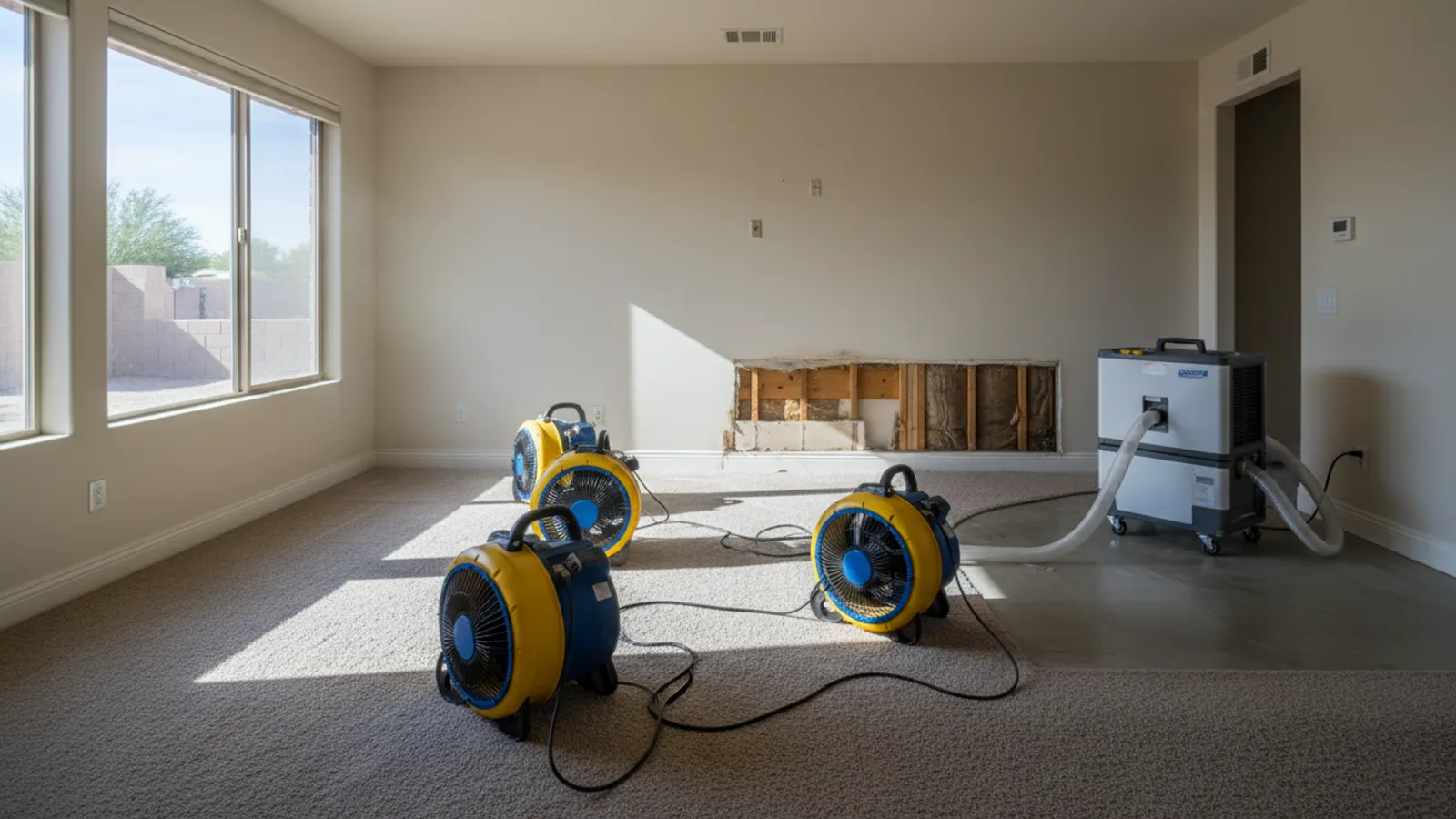
Drying a building is not simply a matter of pointing fans at wet surfaces. Effective drying balances three things: removing liquid water by extraction, moving air across wet surfaces so moisture evaporates, and removing that moisture from the air with dehumidifiers so it does not simply condense somewhere else. Too much air movement without enough dehumidification raises humidity throughout the house and can spread damage to dry areas. Temperature matters as well, since warmer air holds more moisture and drying progresses faster within the right range. Professional drying is planned around the volume of the space, the materials involved and how much water they absorbed, which is why two seemingly similar leaks can require very different equipment setups and drying times.
Measuring Dry Rather Than Guessing
Surfaces often feel dry long before the materials beneath them are. Drywall can be dry to the touch while the bottom plate of the wall behind it is still saturated, and flooring can look fine while the subfloor holds enough moisture to cause mould or warping later. We use moisture meters and thermal imaging to locate water that cannot be seen, establish dry standards by measuring unaffected materials of the same type in the same building, and record readings every day. Drying is complete when the affected materials reach those standards, not when a set number of days has passed. That documentation also supports the insurance claim, because it shows exactly what was wet, how it was dried and when it reached an acceptable level.
What Drives the Cost of Water Damage Repair
The cost of a water damage job depends mainly on how far the water spread, how contaminated it was, how long it sat before mitigation began and what materials it reached. A clean-water leak caught within hours in a single room may require only extraction and a few days of drying. The same leak discovered after a week can involve removing flooring, cutting out lower drywall, replacing cabinets and treating mould. Category 3 water increases cost because more material must be removed and handled safely. This is why speed matters so much: the single biggest factor within your control is how quickly someone begins removing water and drying the structure.
Mould: When It Becomes a Concern
Mould spores are present almost everywhere, but they need moisture to grow, and wet building materials can begin supporting growth surprisingly quickly in warm conditions. The aim of rapid drying is to bring materials back to normal moisture levels before growth gets established. If mould is already present, it should be handled under containment, so disturbing it does not spread spores to other parts of the home, and affected porous materials are generally removed rather than cleaned. Covering visible mould with paint does not solve the problem, because the moisture source and the growth behind the surface remain. Addressing the cause of the moisture is always part of the fix.
Choosing a Water Damage Company
In the stressful hours after a leak, it is easy to hire the first company that answers. A few questions help separate qualified firms from the rest. Ask whether their technicians are trained to recognised industry standards, whether they measure and document moisture daily, and whether they will explain what needs removing and why. Check that they are licensed and insured in Arizona, particularly if they will also carry out reconstruction. Be wary of anyone pressing you to sign broad authorisations on the spot or promising a result before they have inspected the damage. A reputable company will be clear about what they are doing and why, and will work directly with your insurer.
What to Do in the First Hour
If you discover water damage, safety comes first. If water is near electrical outlets, appliances or the breaker panel, or if ceilings are sagging, stay out of the area and turn off power at the panel only if you can reach it safely without standing in water. Next, stop the source by closing the fixture valve or the main water shut-off, which is usually near the street or where the line enters the house. Move valuables and electronics out of harm's way, photograph everything before cleaning up, and call your insurer and a restoration company. Avoid using a household vacuum on water, and do not turn on ceiling fans or lights in a ceiling that has visible water damage.