



Commercial Construction in Paradise Valley, AZ

Resort and hospitality TI, plus PV-zoned medical and office construction.

Serving Paradise Valley & nearby Maricopa County

Get Your Free Commercial Construction Estimate

Step 1 of 5Project

What kind of project?

Pick the option that fits best — you can add details next.

Quick Answer: Commercial Construction in Paradise Valley

ProWorx Restoration delivers commercial construction across Paradise Valley, AZ — primarily resort and hospitality TIs (Camelback Inn, Sanctuary, El Chorro area), limited medical and office along Tatum and Lincoln. PV's strict residential zoning means commercial work is narrow and design-review intensive. Typical TIs $150K–$1M+; 14–32 weeks.

1,200+

Projects Completed

15+

Years Experience

ROC #349454

Licensed & Insured

100%

Satisfaction Guaranteed

Commercial Construction Built for Paradise Valley Homes
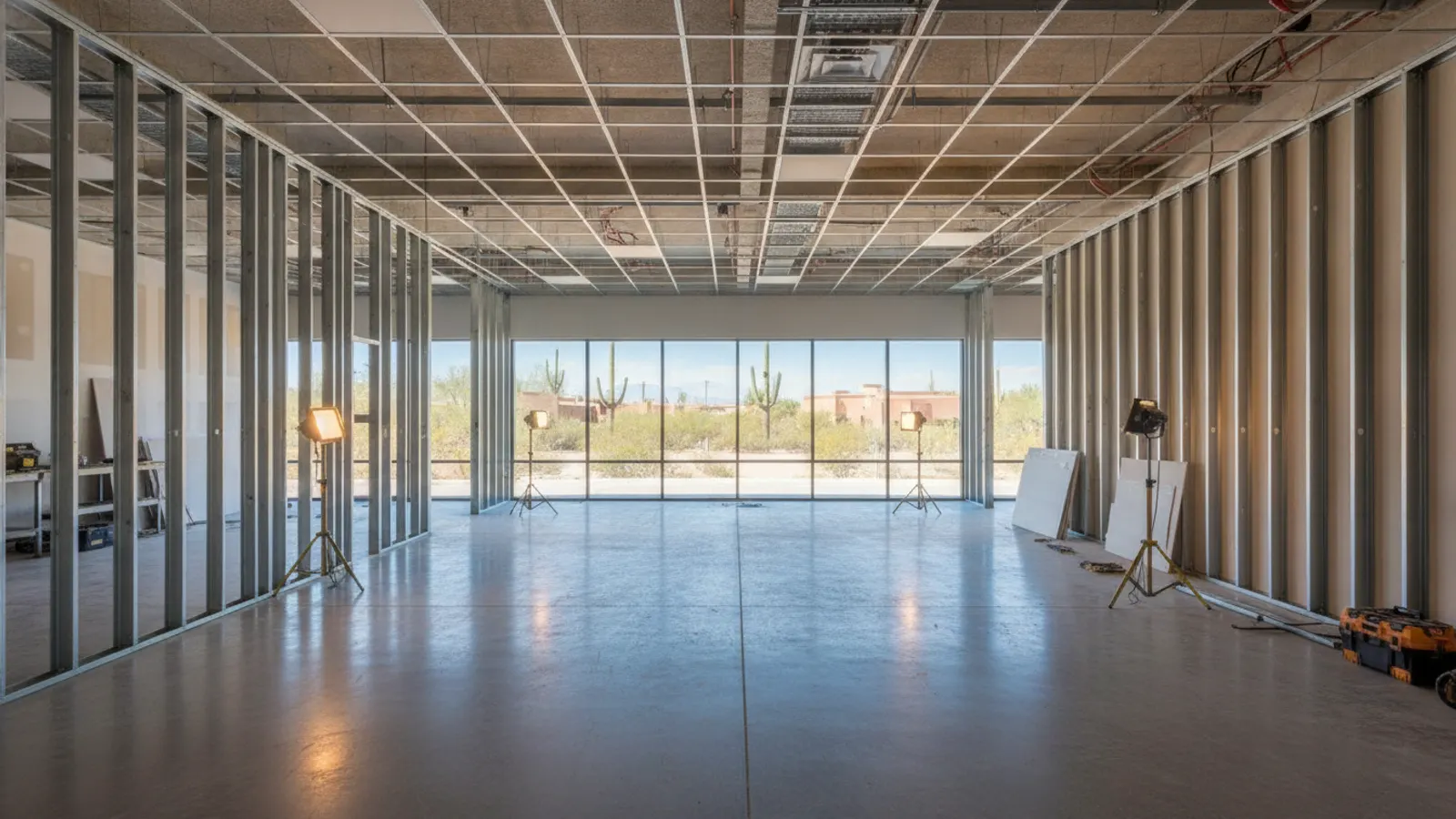
Commercial tenant improvement build-out with metal stud framing and a suspended ceiling grid in a Paradise Valley, Arizona home
Paradise Valley is overwhelmingly residential and the Town's zoning restricts commercial development to a small number of resort, hospitality, and limited office/medical sites. Commercial work here is concentrated at the resorts (Camelback Inn, Sanctuary on Camelback, Mountain Shadows, Hermosa Inn, El Chorro) and along a small number of arterials.
Hospitality TIs run high-end and operate around live guest counts — phased scopes, room-by-room turn, and event-week coordination are routine.
Town of Paradise Valley Building Safety manages plan review along with strict design-review submittal on visible exteriors.

Why Paradise Valley Commercial Construction Is Different

Strict commercial zoning: limited sites, design-review intensive.
Resort hospitality: phased operations, guest-impact mitigation, event-week coordination.
Mountain Shadows / Mummy / Camelback hillside views: design-review oversight on any visible exterior.
Town of Paradise Valley commercial plan review: 5–7 weeks first cycle + design review.

Recent Commercial Construction Projects in Paradise Valley

Camelback Inn area

Resort restaurant TI 5,200 sf, custom millwork, exhibition kitchen, phased around guest operations

$920K24 weeks

Sanctuary on Camelback

Spa addition + treatment-room TI 3,800 sf, quiet-construction protocols, guest-side mitigation

$680K20 weeks

Tatum / Lincoln

Medical office TI 4,200 sf, accessible exam rooms, ADHS coordination, PV design review

$420K18 weeks

Commercial Construction in Paradise Valley: Fast Facts

Average PV commercial TI: $250K–$700K.

Resort hospitality: phased operations standard.

PV design review: 4–6 weeks on visible exteriors.

PV plan review: 5–7 weeks first cycle.

Hospitality TI quiet-construction premium: 10–15%.

Typical Cost

$25,000 – $1,500,000+

Typical Timeline

1 – 12 months

Permit Lead Time

2–4 weeks

How We Approach Commercial Construction

ProWorx Restoration delivers commercial construction and tenant-improvement work across the Phoenix metro — office buildouts, retail spaces, restaurant TIs, medical and dental offices, and multi-tenant shell modifications. We hold Arizona ROC #349454 and act as the general contractor of record from design coordination through certificate of occupancy.
Commercial work in the Valley carries specific compliance pressure: 2018 IBC with Arizona amendments, 2018 IFC for fire-rated assemblies and sprinklers, Maricopa County Health Department requirements for any food-service buildout, and ADA accessibility standards across every entry, restroom, and circulation path. We pre-coordinate with the landlord's CAM contact, the city plans examiner, and where applicable the fire marshal so submittal comments don't blow up the schedule.

Tenant improvements (TI) for office, retail, medical, dental

Restaurant buildouts including grease, ansul, hood, and Health Dept coordination

Office buildouts with low-voltage, HVAC modifications, and acoustic ceilings

ADA compliance: accessible restrooms, doorways, ramps, parking, signage

Fire-rated demising walls and sprinkler modification coordination

Off-hours and night-shift scheduling to keep tenants operating

What Paradise Valley Homeowners Should Know About Commercial Construction

Flat Roofs on Commercial Buildings

Many Arizona commercial buildings have flat or low-slope roofs, which rely on proper drainage to prevent water from ponding. Over time, membranes and coatings deteriorate, drains clog and flashing around rooftop equipment fails. Restoration options range from recoating sound roofs to complete replacement. Regular inspection and maintenance extend roof life and prevent interior damage.

Restoring the Building Envelope

The building envelope, made up of the roof, exterior walls, windows and doors, separates the interior from the weather. Restoring it may involve replacing roofing, repairing or replacing stucco and masonry, resealing joints and replacing failed windows. In Arizona, the envelope also plays a major role in controlling heat gain, so restoration often improves energy performance as well as weather protection.

Working Through Property Managers

Many commercial restoration projects are coordinated through property managers, who balance owner budgets, tenant needs and building operations. Clear scopes, reliable schedules and regular communication help managers keep owners and tenants informed. Documentation of completed work also supports budgeting, insurance and future planning.

Restoring Roofs on Older Buildings

Roofs on older buildings frequently need more than surface repairs. Deteriorated decking, failed flashing at parapets and penetrations, clogged drains and multiple layers of old roofing may all need attention. Flat roofs, common on Arizona commercial buildings, depend on careful drainage design to prevent ponding water. Addressing the roof comprehensively prevents recurring leaks.

Working With Engineers and Architects

Significant restoration projects often involve structural engineers, architects and, for historic buildings, preservation specialists. Coordinating their recommendations with practical construction methods ensures repairs are technically sound, compliant with codes and achievable within the budget. Early collaboration between designers and the contractor helps identify the most effective restoration approach.

Rooftop Mechanical Equipment

Commercial buildings frequently house HVAC units on the roof, and the penetrations and curbs supporting them are common leak points. Replacing equipment may require structural evaluation, new curbs and careful flashing. Coordinating roofing and mechanical work avoids damage to new roofing when equipment is replaced.

Preventive Maintenance Programmes

Routine inspection of roofs, drainage, sealants, exterior finishes and building systems identifies problems while they are small and inexpensive to repair. A preventive maintenance programme extends the life of building components and protects the owner's investment.

Obtaining a Certificate of Occupancy

Before a commercial space can open, it typically must pass final inspections and receive approval for occupancy. Building, fire and other inspections confirm that the work complies with applicable codes. Planning for these final steps helps avoid delays at the end of the project.

Restoration as Capital Planning

For commercial property owners, restoration is best treated as part of long-term capital planning rather than a series of emergency repairs. Understanding the remaining life of roofs, building envelopes, parking surfaces and mechanical systems allows owners to schedule work, budget reserves and avoid unexpected failures that disrupt tenants. A planned approach usually costs less than reacting to breakdowns.

Ground-Up Construction Versus Build-Outs

Ground-up commercial construction creates a new building from an empty site, involving site work, foundations, structure and every building system. Build-outs work within an existing shell. Each requires different planning, permitting and scheduling, and understanding which applies helps set expectations for cost and timeline.

Accessibility Upgrades

Commercial and public buildings undergoing restoration may need accessibility improvements, such as accessible entrances, restrooms and routes through the building. Planning these upgrades as part of the restoration allows them to be integrated thoughtfully into the building's design.

Documenting the Restoration

Detailed documentation, including photographs, drawings and records of materials used, provides a valuable reference for future maintenance and repairs. For historic buildings, it also creates a permanent record of the building's condition and the work performed.

Matching Historic Materials

Restoring older buildings often requires matching materials that are no longer standard. Historic masonry may need mortar that is softer and more compatible with the original bricks than modern mortar, since harder mortar can damage historic masonry. Older stucco, plaster, wood profiles and windows may need custom work to match. Using compatible materials preserves both the building's appearance and its long-term durability.

Restoring Building Exteriors

The exterior of a commercial building shapes how customers and tenants perceive it, and deteriorated stucco, faded paint, damaged signage and worn finishes can make an otherwise sound property look neglected. Restoring facades, repairing and repainting exterior finishes, replacing damaged trim and updating lighting can significantly improve curb appeal. Beyond appearance, exterior restoration also protects the building envelope from water intrusion and sun damage, which reduces the likelihood of more serious and expensive interior problems developing later.

How Our Commercial Construction Process Works in Paradise Valley

01

Free On-Site Consultation

We visit your property, discuss your goals, and provide a detailed, no-obligation estimate.

02

Custom Project Plan

Our team creates a tailored project plan with timeline, materials, and transparent pricing.

03

Licensed Crews On Site

Licensed craftsmen complete your project with quality materials and meticulous attention to detail.

04

Final Walkthrough & Sign-Off

We inspect every detail with you and ensure complete satisfaction before the job is done.

"ProWorx ran our resort spa expansion without a single guest complaint — quiet, clean, and on schedule."

ProWorx Client · Paradise Valley

Neighborhoods We Serve in Paradise Valley

Camelback Inn area · Sanctuary on Camelback · Mountain Shadows · Hermosa Inn area · El Chorro area · Tatum corridor · Lincoln corridor · Mummy Mountain border · Camelback Mountain border · Tatum Foothills

Commercial Construction FAQs for Paradise Valley Homeowners

Commercial Construction Guides for Paradise Valley Homeowners

Practical reading from our team before you commit to a project.

Ready to Start Your Paradise Valley Commercial Construction Project?

Get a free, no-obligation estimate from a licensed Arizona contractor — ROC #349454.