Our Flood Restoration Process
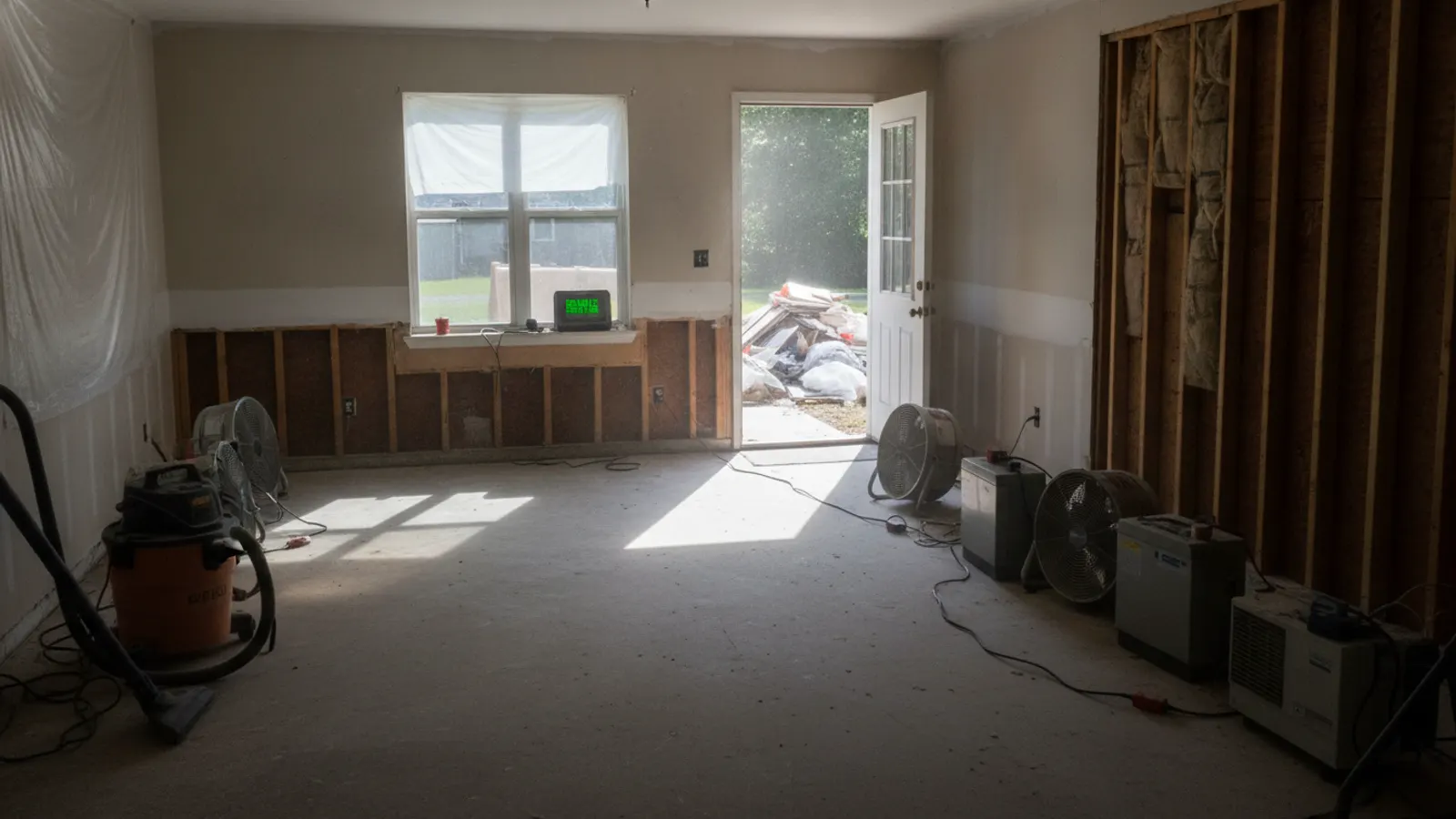
Every flood response follows IICRC S500 standards: (1) emergency water extraction with pumps and truck-mount equipment; (2) damage assessment and moisture mapping with thermal cameras; (3) removal of unsalvageable materials — saturated carpet, padding, baseboards; (4) structural drying with commercial dehumidifiers and air movers for 3–5 days; (5) antimicrobial application and daily moisture monitoring; (6) reconstruction of drywall, flooring, and finishes. You get a single project manager from extraction through final paint.
Common Flood Sources in Arizona
Most Valley flood calls fall into a few patterns: monsoon roof leaks (especially on flat-roof homes in central Phoenix), washes overrunning into garages and casitas, slab leaks from corroded copper supply lines, water heater bursts, and washing-machine supply hose failures. Each requires different extraction and drying strategies, which we adapt on-site.
Mold Prevention & Air Quality
In Arizona's dry climate, water-damaged materials look dry on the surface within a day even when wall cavities and subfloors stay saturated for weeks — the perfect mold environment. We monitor moisture content daily with pin and pinless meters, apply EPA-registered antimicrobials, and only close walls back up when readings meet IICRC-approved dryness standards.
Why Flood Water Is Treated as Contaminated
Water that enters a home from outside, whether through monsoon flash flooding, overland runoff or a backed-up sewer line, is classified as Category 3, the most contaminated class under the IICRC standard. It may carry sewage, chemicals, fertilisers, animal waste and soil bacteria. That classification changes how the restoration must be handled. Porous materials such as carpet, padding, drywall, insulation and upholstered furniture that have absorbed flood water generally cannot be safely cleaned and must be removed and discarded. Hard, non-porous surfaces are cleaned and disinfected before drying continues.
Protecting Yourself Around Flood Water
Flood water poses health risks beyond the damage it causes to the house. Avoid direct contact where possible, wear waterproof boots and gloves if you must enter affected areas, and keep children and pets away. Never enter a flooded area if electrical systems may be energised. After the water recedes, mud and sediment left behind may also be contaminated. Wash hands thoroughly after any contact, and discard food, medicines and cosmetics that came into contact with flood water. Restoration crews use appropriate protective equipment for precisely these reasons.
Monsoon Flash Flooding in Arizona
Arizona's monsoon storms can drop large amounts of rain in a very short time, and the hard desert soil absorbs little of it. Water runs quickly across properties, overwhelms drainage, and can enter homes through doors, garages and low points. Properties near washes or at the bottom of slopes are particularly vulnerable. Flooding can occur within minutes, even when the storm seems brief. Proper lot grading, clear drainage paths, raised thresholds and sealed openings help reduce the risk of water entering the house.
Sewer Backups
A sewer backup sends contaminated water up through floor drains, toilets and tubs into the home. It can be caused by blockages in the main line, tree roots, aging pipes or a municipal system overwhelmed during heavy rain. Because the water is Category 3, cleanup requires removing affected porous materials and thoroughly cleaning and disinfecting everything else. Installing a backwater valve can help prevent future backups in some properties. Standard homeowner policies may require a specific endorsement for sewer backup coverage, so it is worth checking.
Flood Insurance Is Usually Separate
Most standard homeowner insurance policies do not cover flood damage from water entering the home from outside, such as overland flooding or rising water. Flood coverage typically requires a separate policy. Damage from sudden internal sources, such as a burst pipe, is generally treated differently. Understanding which coverage applies to your loss is important before work begins. We document the source and extent of damage carefully, which helps clarify coverage and supports whichever claim applies.
Removing Sediment and Restoring the Structure
After floodwater has been removed, mud, silt and debris are often left behind on floors, in wall cavities and around foundations. That material must be cleaned out thoroughly before drying and disinfection can be effective. Wall cavities are opened to remove wet insulation and allow drying, and framing is cleaned, treated and dried to safe moisture levels before reconstruction begins. Rebuilding then restores drywall, flooring, cabinetry and finishes so the home is safe and comfortable again.
Reducing Future Flood Risk
Once a home has flooded, it is sensible to look at why water reached the structure and what can be changed. Regrading soil so it slopes away from the foundation, extending downspouts, installing drainage channels, sealing gaps around doors and garage openings, and raising thresholds can all help. In some cases, landscape changes or berms can redirect runoff. We can recommend practical improvements as part of the restoration so the home is better protected during future monsoon seasons.
Garages, Casitas and Detached Structures
Flood water often enters garages, casitas and other detached structures first because they sit lower or have wider openings than the main house. Stored belongings, appliances, water heaters and vehicles may all be affected. Detached structures can also have different construction, such as uninsulated walls or concrete floors, which affects how they are cleaned and dried. We assess every affected building on the property, not just the main residence, so nothing is missed in the restoration or the insurance claim.
Working With Your Adjuster After a Flood
Flood claims often involve detailed questions about where the water came from and how high it rose. Photographs showing water lines on walls, the condition of flooring and the items affected are valuable evidence. Keep samples of damaged materials if your adjuster asks for them, and do not discard large items until they have been documented. We record the depth of water, the materials removed and the drying process, giving your adjuster a clear picture of the loss.