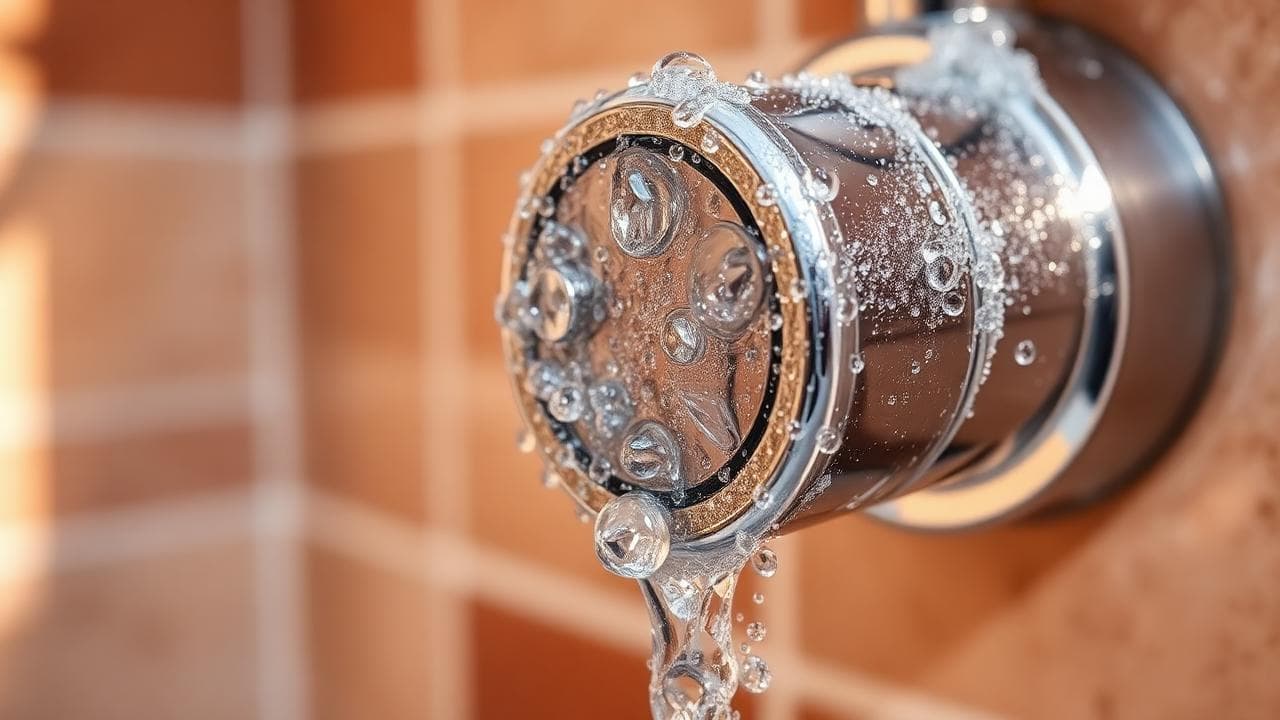
If you live in the Phoenix metro, you already know the white crust on your faucets isn't just cosmetic. Arizona's municipal water routinely tests between 12 and 20 grains per gallon — well into the "very hard" range. Over years, those dissolved minerals scale up pipes, destroy fixtures, and can quietly set the stage for a slab leak. Here's what's actually happening inside your home and what it costs to stay ahead of it.
Why Arizona Water Is So Hard
Most of the Valley's water comes from the Colorado River and Salt River systems, both of which pick up heavy loads of calcium and magnesium as they move through desert geology. Groundwater wells in the East Valley and West Valley are often harder still. Softening is not universal at the treatment plant, so what reaches your meter is the raw mineral content.
What Hard Water Actually Damages
- Copper and galvanized supply lines: Scale narrows internal diameter, chokes flow, and accelerates pinhole leaks — especially in slab-embedded lines.
- Water heaters: Sediment layers on the tank bottom cut efficiency and can shorten a heater's life from 12 years to 6.
- Fixtures and valves: Cartridges seize, aerators clog, and chrome pits from mineral etching.
- Tile, glass, and grout: Permanent etching on shower glass, chalky film on tile, and grout deterioration.
- Appliances: Dishwashers, ice makers, and washing machines fail 30–50% faster than in soft-water regions.
The Slab Leak Connection
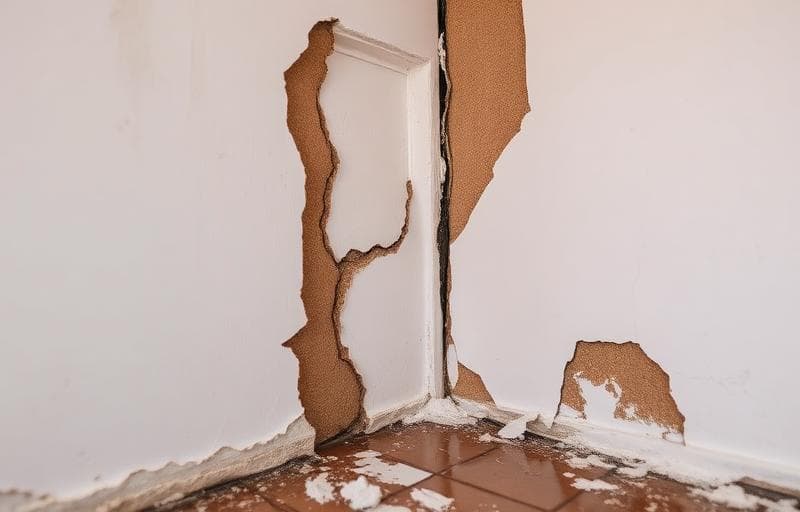
The most expensive failure is a pinhole leak in a copper line buried in your concrete slab. Once scale-driven corrosion breaches the pipe, water travels sideways through the slab and eventually shows up as warm floor spots, unexplained water bills, or mildew smells. By the time it's visible, the pad and baseboards are usually already saturated. If you suspect this, get water damage restoration onsite within 24 hours — drying that starts on day one costs a fraction of what mold remediation costs on day five.
Signs You Have a Hard Water Problem
- White crust on faucets, shower heads, and around drains
- Soap that won't lather; a film on skin after showering
- Spots on glassware after the dishwasher runs
- Water heater popping or rumbling
- Reduced pressure at a single fixture (localized scaling in the supply line)
2026 Prevention Costs
- Whole-home water softener (installed): $2,200 – $4,800
- Reverse-osmosis under-sink system: $450 – $1,200
- Annual water heater flush: $150 – $250 (adds 3–5 years of life)
- Fixture descaling service: $200 – $400 per visit
2026 Repair Costs When You Wait Too Long
- Slab leak detection + spot repair: $1,800 – $4,500
- Whole-home repipe (PEX): $6,500 – $14,000
- Water heater replacement: $1,900 – $3,400
- Slab leak water damage restoration (drying + demo + rebuild): $8,000 – $28,000
- Bathroom tear-out and rebuild after hidden leak: $18,000 – $45,000 — often paired with a bathroom remodel since demo is already done
What to Do If You Already See Damage
If you have warm spots on tile floors, mildew smells around baseboards, or a water bill that spiked with no explanation, don't wait. Shut the main off and call a licensed restoration contractor. ProWorx handles the full path — water damage restoration, flood restoration, and full rebuild — so you're not juggling three vendors while your subfloor rots. Book a free inspection and we'll come out within 24 hours across the Phoenix metro.
What Hard Water Actually Is
Hard water simply means water carrying a high concentration of dissolved minerals, principally calcium and magnesium, picked up as it moves through rock and soil. Arizona's groundwater and surface water are both notably hard by national standards, which is why the effects are so visible in Valley homes.
The minerals are not a health concern. They are a maintenance and equipment concern, because when hard water evaporates or is heated, those dissolved minerals come out of solution and deposit as scale on whatever surface they were sitting on.
Where You See It First
Glass shower doors are usually the first casualty, developing a cloudy film that ordinary cleaning stops removing. Faucets, showerheads and fixtures accumulate white crust around outlets and bases. Sinks, tubs and tile develop rings and spotting that reappear within days of cleaning.
Beyond appearance, scale narrows showerhead openings and aerators, reducing flow and distorting spray patterns. Soap and detergent lather poorly in hard water, so people use more of both, which in turn leaves more residue on skin, hair, dishes and laundry.
The Expensive Damage Is Out of Sight
The visible spotting is cosmetic. The costly effects happen inside appliances and pipework. Scale builds on water heater elements and tank walls, insulating the heating surface so the unit works harder, uses more energy and fails sooner. Dishwashers and washing machines accumulate deposits in valves, hoses and spray arms. Over many years, scale narrows supply lines themselves.
Replacing a water heater years earlier than necessary, repeatedly, is where hard water quietly takes real money from Arizona homeowners.
Etching Is Permanent
There is an important distinction between deposits sitting on a surface and damage to the surface itself. Fresh mineral deposits can usually be cleaned off. Left long enough, particularly on glass, minerals begin to etch into the material, creating a permanently cloudy appearance that no cleaning product will restore.
This is why shower glass should be squeegeed after use and cleaned regularly rather than occasionally. Once glass is etched, the practical options are polishing by a specialist or replacement.
Softeners, Conditioners and Filters
A traditional ion-exchange water softener removes calcium and magnesium by exchanging them for sodium, and it is the most effective option for protecting plumbing and appliances. It requires salt, periodic regeneration and a drain connection.
Salt-free conditioners do not remove minerals; they alter their form so they are less inclined to adhere as scale. They require less maintenance and add no sodium, but they do not deliver the classic soft-water feel. Whole-house filters address sediment, chlorine and taste but do not address hardness at all. Matching the equipment to what you actually want to solve prevents disappointment.
Choosing Fixtures and Finishes That Cope
If you are remodelling, finish selection makes daily life easier. Brushed and matte finishes disguise spotting far better than polished chrome, which shows every mark. Factory-applied protective coatings on shower glass help water bead and run off rather than sit and evaporate.
Showerheads and faucets with rubber or silicone nozzles allow deposits to be wiped off by hand instead of requiring disassembly and soaking. These are small decisions at the specification stage that pay back every week.
Cleaning Scale Without Damaging Surfaces
Mild acids dissolve mineral deposits, which is why vinegar-based approaches work on glass, chrome and tile. Natural stone is the exception: acidic cleaners etch marble, travertine and some granites, so stone needs products formulated for it.
Abrasive pads will remove deposits and also scratch the finish underneath, which then holds future deposits more readily. Soaking is almost always better than scrubbing. Aerators and showerheads can usually be unscrewed and soaked rather than attacked in place.
Protecting the Water Heater
The water heater takes more hard-water punishment than any other appliance, because heating the water is exactly what drives minerals out of solution. Sediment accumulates in the bottom of the tank, insulating the burner or element from the water it is meant to heat. The unit runs longer, uses more energy, becomes noisier as sediment boils, and fails earlier.
Flushing the tank periodically removes that sediment and is one of the highest-value maintenance tasks in an Arizona home. Tankless units are not exempt; they require descaling on a schedule, and skipping it is a common reason they underperform or fail prematurely in hard-water areas.
Is a Softener Worth It?
The honest answer depends on what you are trying to achieve. If the goal is protecting the water heater, dishwasher, washing machine and plumbing from scale over decades, a softener usually pays for itself. If the goal is only to stop shower glass spotting, better cleaning habits and a glass coating may be sufficient at a fraction of the cost.
Running costs, salt handling, the drain connection and the space required all factor in, and some households dislike the feel of softened water. It is worth being clear about the objective before buying equipment.