



Water Damage Restoration in Cave Creek, AZ

24/7 emergency water response and custom-finish rebuild across Cave Creek — IICRC-aligned.

Serving Cave Creek & nearby Maricopa County

Get Your Free Water Damage Restoration Estimate

Step 1 of 5Project

What kind of project?

Pick the option that fits best — you can add details next.

Quick Answer

ProWorx Restoration provides 24/7 water damage restoration throughout Cave Creek, AZ. Cave Creek losses most often come from monsoon roof and parapet leaks on custom homes, slab leaks, and second-story primary-bath failures; typical projects run $5,000–$80,000+ and 1 week to 10 weeks.

1,200+

Projects Completed

15+

Years Experience

ROC #349454

Licensed & Insured

100%

Satisfaction Guaranteed

Water Damage Restoration Built for Cave Creek Homes
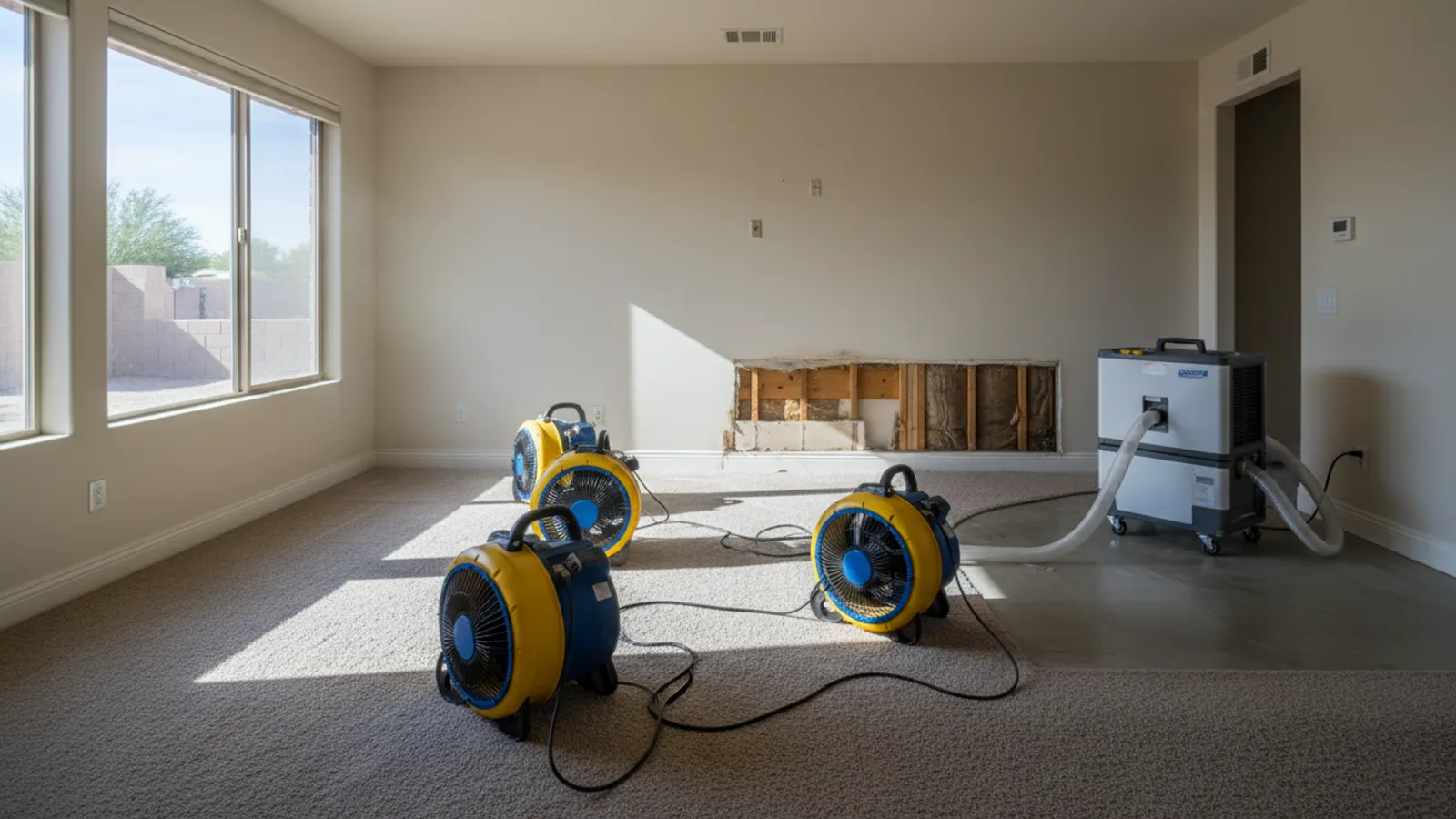
Water damage drying setup with air movers and a dehumidifier, baseboards removed in a Cave Creek, Arizona home
Cave Creek water losses skew custom and high-value. Tatum Ranch, Carefree Foothills, Black Mountain, and Dove Valley estate homes have wide-plank hardwoods, slab stone, custom millwork, plaster walls, and designer fixtures. Mitigation is straightforward; rebuild is where the time and budget go.
Loss types skew toward monsoon roof and parapet flashing failures on flat-roof contemporary homes, slab leaks under aging copper, and second-story primary-bath supply ruptures.
We respond 24/7, document for the carrier, coordinate engineering on any structural-related losses, and rebuild to original finish level.

Why Cave Creek Water Damage Restoration Is Different

Hillside Cave Creek homes have non-standard geometry — vaulted ceilings, exposed structure, custom window placements. Water losses in these homes need careful demo planning to preserve original details. We document and protect during mitigation.
Custom-finish lead times drive the rebuild timeline. Slab stone, hand-glazed tile, custom millwork, and plaster runs 8–16 weeks. We sequence accordingly.

Recent Water Damage Restoration Projects in Cave Creek

Tatum Ranch

Upstairs primary bath burst: 2-story ceiling demo, plaster repair, hardwood drying, slab stone replacement, custom millwork rebuild

$58K10 weeks

Carefree Foothills

Monsoon parapet leak: ceiling cavity drying, plaster + custom paint match, designer fixture replacement

$22K5 weeks

Black Mountain

Slab leak under hardwood: leak detection, slab opening, wide-plank hardwood replacement

$32K7 weeks

Water Damage Restoration in Cave Creek: Fast Facts

Average Cave Creek residential water loss: $15,000–$60,000+.

Most common loss source: monsoon roof/parapet failure or second-story primary-bath supply.

Wide-plank hardwood / slab stone lead time: 6–14 weeks.

Custom millwork rebuild lead time: 10–14 weeks.

Mold colonization window: 48–72 hours.

Typical Cost

$1,500 – $40,000+

Typical Timeline

3 days – 6 weeks

Permit Lead Time

2–4 weeks

How We Approach Water Damage Restoration

Water damage can strike at any time — from burst pipes and appliance leaks to monsoon flooding. ProWorx Restoration provides 24/7 emergency water damage restoration throughout the area.
Our certified technicians use advanced water extraction, dehumidification, and drying equipment to stop damage in its tracks. We then repair and restore your property to its pre-loss condition, handling everything from drywall repair to complete reconstruction.

24/7 emergency water extraction

Advanced drying and dehumidification

Mold prevention and remediation

Structural drying and monitoring

Complete repair and reconstruction

Direct insurance billing

What Cave Creek Homeowners Should Know About Water Damage Restoration

Roof Leaks During Monsoon Season

Monsoon storms bring wind-driven rain that can force water past roofing materials that shed ordinary rain without trouble. Lifted shingles, cracked tiles, failed underlayment, deteriorated flashing around vents and chimneys, and clogged valleys are common entry points. Because the leak may only appear during heavy storms, it can be difficult to trace afterwards. If a ceiling stain appears after a monsoon storm, have the roof inspected before repairing the ceiling, so the source is fixed first.

Protecting Yourself Around Flood Water

Flood water poses health risks beyond the damage it causes to the house. Avoid direct contact where possible, wear waterproof boots and gloves if you must enter affected areas, and keep children and pets away. Never enter a flooded area if electrical systems may be energised. After the water recedes, mud and sediment left behind may also be contaminated. Wash hands thoroughly after any contact, and discard food, medicines and cosmetics that came into contact with flood water. Restoration crews use appropriate protective equipment for precisely these reasons.

Finding the Real Source First

A stain on a ceiling shows where water ended up, not necessarily where it began. Water travels along rafters, joists, ductwork and the top of drywall before dripping through, so the source can be several feet away from the visible damage. In Arizona homes, the most common sources are roof leaks during monsoon storms, plumbing lines in the attic or upstairs bathrooms, and air-conditioning condensate overflows. Repairing the ceiling without identifying and fixing the source simply means repairing it again later. We trace the water path, often using moisture meters and thermal imaging, before any ceiling repair begins.

Common Residential Water Sources in Arizona

The most frequent calls we get: slab leaks from aging copper supply lines (common in 1970s–80s homes), water-heater bursts in garages, washing-machine supply hose failures, dishwasher and ice-maker line leaks, toilet supply line failures, roof leaks during monsoon, and AC condensate pan overflows in attic-mounted air handlers (a major Phoenix summer issue).

Arizona's Monsoon Season and Water Damage Prevention

Arizona's monsoon season (June through September) brings intense rainfall that can overwhelm drainage systems and cause flash flooding. homeowners can reduce risk by maintaining gutters and downspouts, grading soil away from foundations, sealing basement walls, and installing sump pumps in low-lying areas. Despite prevention efforts, monsoon damage happens — and when it does, ProWorx Restoration provides 24/7 emergency water extraction, structural drying, and complete property restoration.

Your Homeowner Policy and the Claim

Most homeowner policies cover sudden and accidental water damage, such as a burst pipe or a failed water heater, but often exclude damage resulting from long-term leaks, neglect or gradual deterioration, and flood water entering from outside usually requires separate flood coverage. Read the water damage section of your policy, report the loss promptly, document everything, and keep receipts for any emergency expenses. You have the right to choose your own restoration contractor. We provide the detailed documentation adjusters need, including moisture readings, photographs and itemised scope, which helps the claim move forward without unnecessary delay.

The Arizona Culprit: Air-Conditioning Condensate

Many Arizona homes have air-handling units in the attic, and those units produce a large amount of condensation during the cooling season. That water is supposed to drain away through a condensate line, with a secondary pan beneath the unit as backup. When the primary line clogs with algae or debris, or the secondary pan rusts through or its drain is blocked, water overflows directly onto the ceiling below. Because air-conditioning runs for months on end here, this is one of the most frequent causes of ceiling damage we see. Having condensate lines flushed and pans inspected as part of routine HVAC service, and fitting a float switch that shuts down the system if water rises in the pan, prevents most of these losses.

Common Bathroom Water Damage Sources in Arizona

Failed shower pans (especially 1980s–90s mortar pans), cracked grout and caulking around tubs and showers, leaking toilet wax rings, supply-line failures under vanities, p-trap leaks, and hard-water corrosion of brass fixtures are our most common calls. Phoenix's hard water (10–18 grains/gallon) shortens fixture life and accelerates pinhole leaks in copper supply lines.

Drying Hardwood in Place

In many cases, hardwood floors can be dried in place rather than torn out, especially if mitigation begins quickly and the water was clean. Specialised drying systems draw moisture out through the floor surface while dehumidifiers remove it from the air, and the subfloor beneath may also need targeted drying. The process takes longer than drying carpet or tile and requires careful monitoring. Drying in place can save a significant amount of money compared with replacing the floor, but it is only appropriate when the boards are not severely damaged and the water was not heavily contaminated.

Our Proven Process

01

Free Consultation

We visit your property, discuss your goals, and provide a detailed, no-obligation estimate.

02

Custom Plan

Our team creates a tailored project plan with timeline, materials, and transparent pricing.

03

Expert Execution

Licensed craftsmen complete your project with quality materials and meticulous attention to detail.

04

Final Walkthrough

We inspect every detail with you and ensure complete satisfaction before the job is done.

"Sourced the exact plaster finish and hand-glazed tile we had originally. Took longer, but you'd never know anything happened."

ProWorx Client · Cave Creek

Neighborhoods We Serve in Cave Creek

Tatum Ranch · Carefree Foothills · Black Mountain · Dove Valley · Desert Hills

Water Damage Restoration FAQs for Cave Creek Homeowners

Ready to Start Your Cave Creek Water Damage Restoration Project?

Get a free, no-obligation estimate from a licensed Arizona contractor — ROC #349454.