


From late June through September, the Arizona monsoon delivers half the state's annual rainfall in a few violent bursts. A roof that survived last summer can suddenly leak during a single haboob-driven downpour — and by the time you see a ceiling stain, water has already traveled through the attic. This guide walks Phoenix homeowners through the first 24 hours of a monsoon roof leak, the most common failure points, and what a proper repair should cost in 2026.
Why Monsoon Leaks Are Different
Monsoon rain isn't a slow soak — it's wind-driven, horizontal, and concentrated. Water that would normally sheet off a roof gets forced under flashing, up under tile overlaps, and into vents that were never designed to face 60 mph gusts. A roof that's "fine" in normal rain can fail spectacularly in a monsoon cell. The other factor: thermal shock. A 115°F afternoon followed by a 75°F downpour cracks older underlayment and brittle pipe boot collars.
First 24 Hours: What to Do
- Contain the water. Move furniture, place buckets, and lay towels along the water path. Document everything with photos for insurance.
- Find the entry point if safe. In the attic, look for wet insulation, darkened rafters, or active drips. Mark the spot with tape.
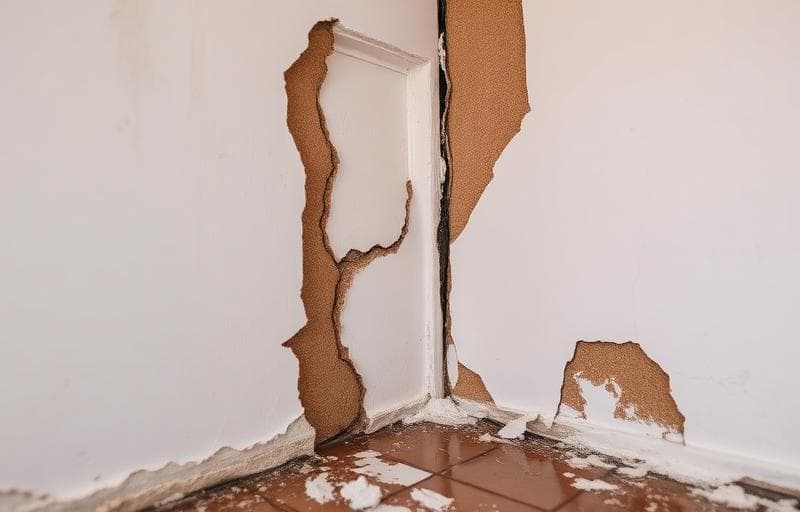
- Stop the spread. If water has reached drywall, fan the area and pull wet insulation — trapped moisture turns a roof leak into a mold and water damage problem within 48–72 hours.
- Call a licensed contractor. A tarps-and-temporary-flashing bandage is fine for the storm, but the underlying failure needs a proper repair before the next cell hits.
The 5 Most Common Monsoon Leak Points
- Valley flashing. Where two roof planes meet, debris builds up and water backs up under the tiles. This is the #1 monsoon leak in Phoenix.
- Pipe boot collars. The rubber gasket around plumbing vents cracks after 7–10 years of UV exposure and lets water run straight down the pipe.
- Chimney and skylight flashing. Step flashing lifts in wind-driven rain; the fix is re-flashing, not caulk.
- Tile underlayment failure. Concrete tile lasts 50+ years, but the felt beneath it lasts 15–20. A monsoon exposes failed underlayment fast.
- Attic vent penetrations. Wind drives rain up through ridge vents and turbine vents that lack proper baffle protection.
What a Proper Repair Costs (2026 Phoenix Pricing)
- Pipe boot replacement (per vent): $350 – $650
- Valley flashing re-seal / replace: $900 – $2,400
- Chimney re-flashing: $1,200 – $3,000
- Tile underlayment replacement (per square): $450 – $850, often 8–15 squares per roof
- Interior drywall + paint repair (small stain): $600 – $1,800
- Full attic insulation replacement (wet removal): $2,500 – $5,500
Be wary of any quote that's 40% below these ranges — it usually means caulk instead of re-flashing, which will fail by the next monsoon.
Does Homeowners Insurance Cover Monsoon Roof Leaks?
Yes, with caveats. Sudden leaks from a storm event are covered, but damage from gradual wear (old underlayment, cracked boots you ignored) is not. The key is documenting the storm timeline and getting a contractor's assessment that ties the damage to a specific weather event. ProWorx works directly with adjusters on insurance restoration claims and can help scope the repair to what the policy actually covers.
Preventing the Next Leak
- Get a pre-monsoon roof inspection every May — we catch 90% of failures before they leak
- Replace pipe boots proactively at 10 years
- Ask about upgrading to peel-and-stick underlayment in valleys; it adds $800–$1,500 but seals around wind-driven water
- Clear debris from valleys and gutters before June
- If your roof is 18+ years old, budget for underlayment replacement even if the tiles look fine
Don't Wait for the Next Cell
A monsoon roof leak never gets cheaper to fix — it gets worse with every storm. If you saw water this season, ProWorx offers free roof and attic assessments across the Phoenix metro. We'll identify the entry point, photograph the damage for your insurance, and give you a scoped repair estimate. Book a roof inspection here, or call us directly if you have an active leak.
Why Monsoon Rain Finds Leaks Ordinary Rain Does Not
A roof that sheds gentle winter rain without trouble can leak badly in a monsoon storm, and the reason is wind. Monsoon cells arrive with strong, gusting wind that drives rain horizontally and even upward under tiles, shingles and flashing. Water is pushed into laps and seams that rely on gravity to stay dry.
Volume compounds it. An inch of rain falling over an hour drains away comfortably. The same inch falling in fifteen minutes overwhelms valleys, scuppers and drains, and water backs up until it finds the weakest point in the assembly.
Where Phoenix Roofs Actually Leak
On tile roofs, the tile is a rain shield rather than the waterproof layer. The underlayment beneath it does the real work, and underlayment degrades under decades of heat long before the tile shows any sign of age. Cracked and slipped tiles let more water reach that aging layer, but the underlayment is usually the real culprit.
On flat and low-slope roofs, the common failure points are seams, parapet flashing, and the penetrations around rooftop air-conditioning units, vents and drains. Ponding water that sits for days after a storm accelerates every one of those failures. Across both roof types, flashing at walls, chimneys and skylights is a recurring source.
A Ceiling Stain Is Not Where the Leak Is
Water entering a roof rarely drips straight down. It runs along the top of trusses, across ductwork and along the upper face of ceiling drywall until it finds a seam or a fixture to escape through. The stain on your ceiling can be several feet from the actual entry point, and sometimes in a different room altogether.
That is why repairing the ceiling without tracing the source leads to the stain reappearing after the next storm. Finding the entry point usually means inspecting the attic during or shortly after rain, looking for wet framing and insulation, and following the trail uphill to the roof.
What to Do While It Is Still Raining
During an active leak, the priority is limiting damage. Move furniture and belongings out of the path, put containers under drips and lay towels to stop water spreading across flooring. If a ceiling is sagging or bulging, keep people and pets out of the room entirely, because saturated drywall can come down suddenly and heavily.
Do not climb onto a wet roof during a storm. Tile is slippery, wind is unpredictable and lightning is a genuine risk in monsoon conditions. Temporary protection can be installed safely once the storm passes.
Emergency Tarping and Why It Must Be Secured
A properly installed tarp buys time until permanent repair is possible, but it has to be secured against monsoon wind rather than simply laid over the damage. A tarp that lifts in the next storm is worse than none, because it can take tiles and flashing with it and expose a larger area.
Tarping should extend well past the damaged area, run up and over the ridge where possible so water cannot drive underneath, and be fastened in a way that does not create new penetrations below the water line. In Arizona, tarps also degrade quickly under UV, so they should be checked between storms.
Repair or Replace
A small, isolated failure on an otherwise sound roof is worth repairing. Where underlayment has reached the end of its life across the whole roof, repeated repairs become a way of spending replacement money slowly without ever solving the problem. Age, the number of previous repairs, the condition of the underlayment where it can be inspected, and whether leaks are appearing in multiple unrelated locations all inform that decision.
Roof age is also worth knowing before a loss. Many policies treat an aged roof differently from a new one when settling storm damage claims, so understanding where yours stands helps set expectations.
Documenting Storm Damage for a Claim
If a storm damaged the roof, photograph everything before any cleanup or temporary repair: displaced tiles, debris, interior staining, wet insulation and damaged belongings. Note the date and time of the storm. Report the claim promptly and keep receipts for emergency measures such as tarping, since most policies expect you to take reasonable steps to prevent further damage and will usually consider those costs part of the claim.
Before the Next Monsoon Season
The most effective roof maintenance in Phoenix happens in spring, before the storms arrive. Clearing debris from valleys, scuppers and drains, resealing exposed fasteners and flashing, replacing cracked or slipped tiles and trimming branches that overhang the roof all reduce the chance of a leak. An attic inspection after the first significant storm of the season catches small problems while they are still small.
What the Leak Did Above the Ceiling
A roof leak damages more than the ceiling it finally shows up on. Water passing through an attic soaks the insulation lying on the ceiling drywall, and wet insulation loses most of its R-value, adds weight, and holds moisture against the framing. It frequently has to be removed and replaced rather than left to dry in place, which matters in Arizona where attic insulation carries so much of the cooling load.
Framing and sheathing also need checking. Repeated wetting over several seasons can rot roof decking and truss members, and a leak that has been quietly running for a year or two may have caused structural damage well before the first stain appeared downstairs. That is why finding and fixing the entry point promptly is worth far more than repainting the ceiling.
Choosing Someone to Do the Work
Verify the contractor's Arizona ROC licence is active and covers roofing, and ask for proof of liability and workers' compensation insurance before anyone goes on the roof. Be wary of crews that appear door to door immediately after a storm.