



Mold Restoration in Scottsdale, AZ

IICRC-aligned mold containment, remediation, and finish-grade rebuild across Scottsdale.

Serving Scottsdale & nearby Maricopa County

Get Your Free Mold Restoration Estimate

Step 1 of 5Project

What kind of project?

Pick the option that fits best — you can add details next.

Quick Answer

ProWorx Restoration delivers IICRC-aligned mold remediation throughout Scottsdale, AZ. Most Scottsdale mold cases trace to slow supply-line leaks on hardwood and natural stone, parapet/scupper failures on flat-roof modern homes in DC Ranch and Silverleaf, and HVAC closet condensate issues. Typical projects run $3,000–$45,000 and 5 days to 6 weeks.

1,200+

Projects Completed

15+

Years Experience

ROC #349454

Licensed & Insured

100%

Satisfaction Guaranteed

Mold Restoration Built for Scottsdale Homes
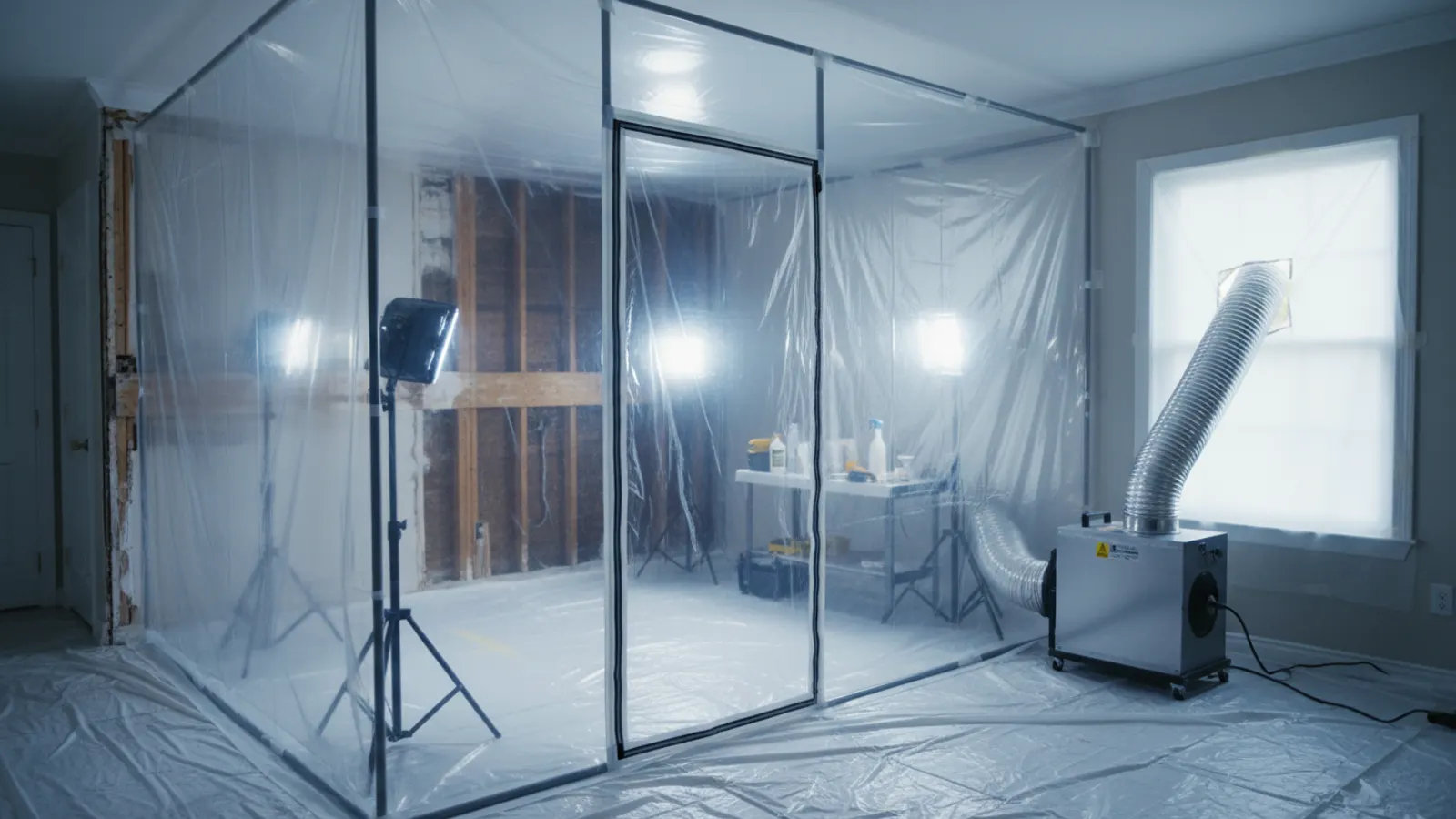
Mold remediation containment with a negative air machine and wall opened to expose framing in a Scottsdale, Arizona home
Scottsdale mold cases skew toward high-finish content — slow ice-maker and refrigerator drips that migrate under wide-plank wood floors, slow shower-pan failures behind travertine and marble, and parapet/flat-roof leaks on modern North Scottsdale homes that wet sheathing and OSB-sheathed parapet walls.
Older McCormick Ranch, Old Town, and Gainey Ranch homes (1970s–80s) also see pinhole copper failures behind walls that go undetected for weeks. By the time the homeowner sees staining, the mold colony is well past visible scope.
We containment, HEPA-filter, remediate, and rebuild with finish-grade detail — same crew throughout, full documentation, and third-party clearance available for insurance and resale.

Why Scottsdale Mold Restoration Is Different

Engineered wide-plank wood floors and natural stone in Scottsdale homes are highly water-absorbent at the substrate. We moisture-map subfloor and substrate before deciding scope — sometimes targeted in-place drying and antimicrobial treatment prevents the need for full floor replacement.
North Scottsdale HOAs (DC Ranch, Silverleaf, Grayhawk, Troon) require Design Review Board approval for visible exterior repair. We file in parallel with remediation so the rebuild doesn't stall.

Recent Mold Restoration Projects in Scottsdale

DC Ranch

Slow ice-maker leak under wide-plank oak: subfloor mold remediation, in-place wood-floor drying + selective refinish, custom cabinet-kick rebuild

$28K5 weeks

Silverleaf

Parapet flashing failure with attic mold: containment, sheathing antimicrobial, blown-insulation replacement, Venetian-plaster ceiling repair

$42K7 weeks

McCormick Ranch

Pinhole copper leak behind primary bath: drywall remediation, mold on baseplate and adjacent cabinet, full primary-bath partial rebuild

$24K5 weeks

Mold Restoration in Scottsdale: Fast Facts

Average Scottsdale mold remediation + rebuild claim: $9,000–$28,000.

Engineered wood floor save rate with early intervention: ~70% when remediation starts <72 hours.

1970s–80s McCormick Ranch / Old Town pinhole copper cases: roughly 25% of our Scottsdale remediation volume.

Design Review Board cycle for visible exterior repair: 2–4 weeks in most North Scottsdale HOAs.

Third-party clearance verification: typically next-day after final HEPA pass.

Typical Cost

$1,500 – $30,000+

Typical Timeline

3 days – 4 weeks

Permit Lead Time

2–4 weeks

What Scottsdale Homeowners Should Know About Mold Restoration

Insurance and Mould Claims

Many homeowner policies limit or exclude mould coverage, but mould resulting from a covered sudden water loss may be treated differently from mould caused by long-term leaks or neglect. Reporting water damage promptly and starting drying quickly helps both to prevent mould and to support a claim. Documentation showing when the water event occurred and how quickly mitigation began is valuable if coverage is questioned.

Remove or Clean

Porous materials such as drywall, insulation, carpet and ceiling tiles that have grown mould generally cannot be reliably cleaned and should be removed and bagged inside containment. Semi-porous and non-porous materials, including structural wood, metal and glass, can often be cleaned. Structural framing is not removed simply because it has surface mould; it is cleaned, treated and dried. Deciding what to remove and what to clean is the core judgement in any mould job.

Measuring Dry Rather Than Guessing

Surfaces often feel dry long before the materials beneath them are. Drywall can be dry to the touch while the bottom plate of the wall behind it is still saturated, and flooring can look fine while the subfloor holds enough moisture to cause mould or warping later. We use moisture meters and thermal imaging to locate water that cannot be seen, establish dry standards by measuring unaffected materials of the same type in the same building, and record readings every day. Drying is complete when the affected materials reach those standards, not when a set number of days has passed. That documentation also supports the insurance claim, because it shows exactly what was wet, how it was dried and when it reached an acceptable level.

Mould: When It Becomes a Concern

Mould spores are present almost everywhere, but they need moisture to grow, and wet building materials can begin supporting growth surprisingly quickly in warm conditions. The aim of rapid drying is to bring materials back to normal moisture levels before growth gets established. If mould is already present, it should be handled under containment, so disturbing it does not spread spores to other parts of the home, and affected porous materials are generally removed rather than cleaned. Covering visible mould with paint does not solve the problem, because the moisture source and the growth behind the surface remain. Addressing the cause of the moisture is always part of the fix.

Why Mould Follows Water

Mould spores are present in almost every indoor and outdoor environment, and they stay dormant until they find moisture and something organic to feed on. Wet drywall paper, wood framing, carpet backing and ceiling tiles all qualify. That is why mould is almost always a consequence of a water problem rather than a problem on its own. Removing mould without correcting the moisture that allowed it to grow simply means it returns, usually in the same place, often within weeks.

What to Do in the First Hour

If you discover water damage, safety comes first. If water is near electrical outlets, appliances or the breaker panel, or if ceilings are sagging, stay out of the area and turn off power at the panel only if you can reach it safely without standing in water. Next, stop the source by closing the fixture valve or the main water shut-off, which is usually near the street or where the line enters the house. Move valuables and electronics out of harm's way, photograph everything before cleaning up, and call your insurer and a restoration company. Avoid using a household vacuum on water, and do not turn on ceiling fans or lights in a ceiling that has visible water damage.

Choosing a Water Damage Company

In the stressful hours after a leak, it is easy to hire the first company that answers. A few questions help separate qualified firms from the rest. Ask whether their technicians are trained to recognised industry standards, whether they measure and document moisture daily, and whether they will explain what needs removing and why. Check that they are licensed and insured in Arizona, particularly if they will also carry out reconstruction. Be wary of anyone pressing you to sign broad authorisations on the spot or promising a result before they have inspected the damage. A reputable company will be clear about what they are doing and why, and will work directly with your insurer.

Mould in a Desert Climate

Arizona's dry air leads many homeowners to assume mould is not a concern, but indoor moisture problems create their own microclimates. Leaking supply lines, failed shower pans, overflowing air-conditioning condensate, roof leaks during monsoon storms and evaporative coolers all supply the moisture mould needs. Because the outdoor air is dry, a musty smell indoors is often a clearer warning sign here than it would be in a humid region.

Our Proven Process

01

Free Consultation

We visit your property, discuss your goals, and provide a detailed, no-obligation estimate.

02

Custom Plan

Our team creates a tailored project plan with timeline, materials, and transparent pricing.

03

Expert Execution

Licensed craftsmen complete your project with quality materials and meticulous attention to detail.

04

Final Walkthrough

We inspect every detail with you and ensure complete satisfaction before the job is done.

"Discovered mold behind a slow leak in our Silverleaf primary bath. ProWorx contained it, matched the Venetian plaster on rebuild, and PURE paid the entire claim."

ProWorx Client · Scottsdale

Neighborhoods We Serve in Scottsdale

Old Town · DC Ranch · Silverleaf · Troon · Grayhawk · McCormick Ranch · Gainey Ranch · North Scottsdale

Mold Restoration FAQs for Scottsdale Homeowners

Ready to Start Your Scottsdale Mold Restoration Project?

Get a free, no-obligation estimate from a licensed Arizona contractor — ROC #349454.