


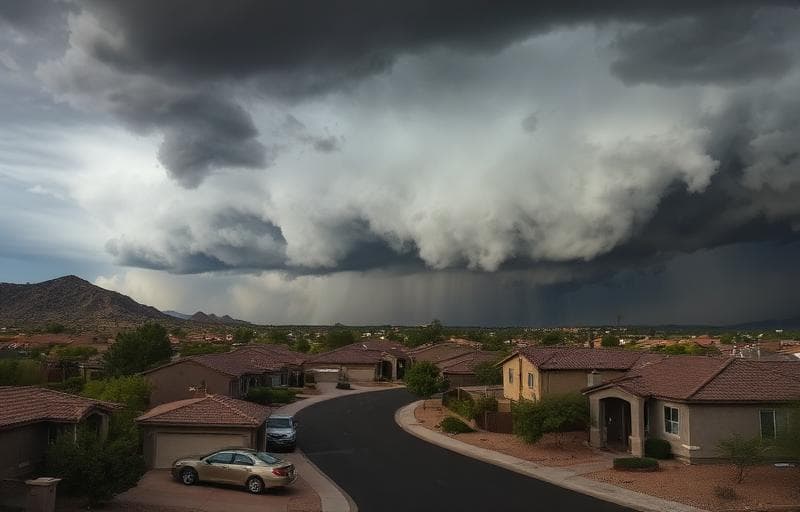
Every year from June through September, Arizona's monsoon season brings intense thunderstorms, microbursts, dust storms, and flash flooding to the Phoenix Metro area. Mesa homeowners know the drill — but many aren't fully prepared for the damage these storms can cause.
As a fire and water damage restoration contractor, ProWorx Restoration sees firsthand the destruction monsoons leave behind. Here's how to protect your home and recover quickly when damage occurs.
Common Monsoon Damage to Mesa Homes
- Roof damage: High winds rip off shingles, tiles, and flashing — creating entry points for water
- Water intrusion: Driving rain finds every gap in windows, doors, and roof penetrations
- Flooding: Flash floods can overwhelm drainage systems and enter homes through garage doors and low-lying windows
- Wind damage: Microbursts generate winds exceeding 70 mph — enough to topple trees onto structures
- Dust damage: Haboobs carry fine particulates that infiltrate HVAC systems and damage finishes
Monsoon Preparation Checklist
Complete these tasks before monsoon season starts:
- Inspect your roof: Look for loose tiles, damaged flashing, and deteriorated sealant around vents and pipes
- Clean gutters and downspouts: Blocked drainage causes water to pool against your foundation
- Seal windows and doors: Check weatherstripping and caulk around all exterior openings
- Grade landscaping away from foundation: Water should flow away from your home, not toward it
- Trim trees near structures: Remove dead branches and limbs overhanging your roof
- Secure outdoor items: Patio furniture, grills, and decorations become projectiles in high winds
- Check HVAC intake filters: Install high-quality filters before dust storm season
For a complete seasonal checklist, see our Arizona home maintenance guide.
What to Do Immediately After Monsoon Damage
Time is critical — especially with water damage. Follow these steps:
- Document everything: Take photos and videos before moving or cleaning anything
- Contact your insurance company: Report the claim as soon as possible
- Stop active water intrusion: Place tarps over roof damage, use towels and buckets for leaks
- Call a professional: Water damage restoration should begin within 24–48 hours to prevent mold growth
- Don't enter flood-damaged areas: Standing water may be contaminated or electrically charged
Monsoon Damage Repair Services
ProWorx Restoration handles all aspects of storm damage repair:
- Water extraction and drying: Industrial equipment removes moisture from walls, floors, and structures
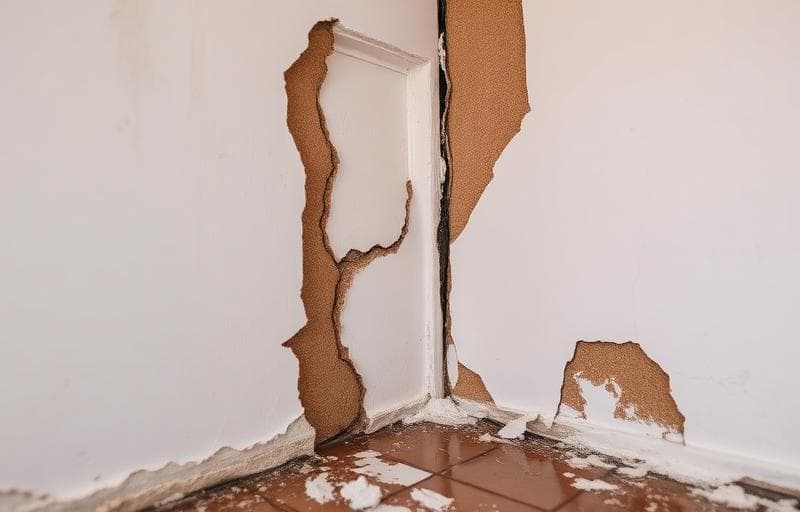
- Drywall repair: Water-damaged drywall is removed and replaced
- Mold remediation: Professional treatment prevents health hazards from hidden mold growth
- Roof repair: Emergency tarping followed by permanent repairs
- Structural repair: Foundation, framing, and structural elements compromised by water or wind
- Painting and finishing: Interior and exterior painting to restore appearance
Insurance Tips for Monsoon Claims
- Standard homeowners insurance typically covers wind and rain damage
- Flood damage requires separate flood insurance — most Mesa homeowners don't have it
- Document pre-storm condition of your home annually (photo inventory)
- Keep contractor estimates organized for your adjuster
Don't Wait for the Next Storm
Prevention is always cheaper than repair. If your home has existing vulnerabilities — signs that need attention — address them before monsoon season arrives.
Schedule a free inspection with ProWorx Restoration and we'll identify potential issues before they become expensive problems.
What a Mesa Monsoon Actually Does
Monsoon storms combine three damaging elements that rarely arrive together elsewhere: sustained high wind, intense rainfall over a short period, and airborne dust. Each attacks a house differently, and the combination is what causes most of the damage we repair.
Wind lifts roofing and drives rain horizontally into assemblies designed to shed vertical rain. Rainfall volume overwhelms drainage that copes easily with ordinary rain. Dust blocks vents, fouls HVAC systems and works into every gap it can find.
Roof Damage and Why It Hides
Wind lifts and cracks tile, displaces flashing and forces water under roofing that sheds normal rain without difficulty. On tile roofs the underlayment beneath is the real waterproof layer, and it degrades under Arizona heat long before the tile shows any sign of age.
Roof damage frequently does not announce itself. Water entering during a storm can run along framing and ductwork and appear as a ceiling stain some distance away, sometimes weeks later. That is why a post-storm attic inspection with a torch is worth more than a glance at the ceiling.
Water at Ground Level
More Mesa homes are damaged by water entering at ground level than through the roof. Desert soil absorbs very little, so runoff moves fast and collects at low points. Properties near washes, at the bottom of slopes, or with grading that has shifted over the years are most exposed.
Garages usually flood first, because the slab sits low and the door opening is wide. Water reaching the slab edge of the house can then migrate under flooring, where it spreads laterally and may not be noticed until baseboards swell.
Dust Damage Nobody Budgets For
Haboobs push fine dust into attics through vents, into wall cavities, and into HVAC systems where it coats coils and chokes filters, reducing efficiency precisely when cooling demand is highest. Window and door tracks fill, and seals degrade faster.
After a significant dust event, replacing HVAC filters early, checking attic vent screens and cleaning window tracks prevents problems that otherwise surface as reduced cooling performance and higher bills later in the season.
Trees, Walls and Flying Objects
Many desert trees are shallow-rooted and become top-heavy after a wet spring, which is why monsoon winds bring down so many. Falling limbs damage roofs, walls, vehicles and block drainage with debris.
Block walls take wind load too, and walls with inadequate footings or saturated soil at the base can lean or fail. Loose yard items become projectiles: umbrellas, shade sails, lightweight furniture, trampolines and bins all need securing or a plan to bring them in.
What to Do the Moment a Storm Passes
Speed matters more than thoroughness in the first hour. Walk the exterior and look for displaced roofing, debris impacts and pooled water. Check every ceiling for new staining. Take a torch into the attic and look for wet framing, wet insulation or daylight where there should not be any.
Photograph everything before clearing debris or starting cleanup. If water has entered, begin extraction and drying immediately rather than waiting for an adjuster; most policies require you to take reasonable steps to limit further damage.
Temporary Protection Done Properly
A tarp buys time, but only if it is secured against the next storm. A tarp that lifts can take tiles and flashing with it and expose a larger area than the original damage.
Proper tarping extends well past the damaged area, runs up and over the ridge where possible so wind cannot drive underneath, and is fastened without creating new penetrations below the water line. Arizona UV degrades tarps quickly, so temporary protection should be checked between storms, not fitted and forgotten.
Preparing Before the Season
Nearly everything that limits monsoon damage is done in spring. Clear roof valleys, scuppers and drains. Repair cracked or slipped tiles and failed flashing. Reseal around windows and doors. Confirm soil slopes away from the foundation and that landscaping has not buried the weep screed at the base of stucco walls. Trim trees and remove dead limbs. Secure or plan for loose yard items.
Photographing the house in good condition before the season gives you a baseline that makes any later storm claim considerably easier to support.
Insurance and Monsoon Claims
Wind and rain damage from a storm is generally covered under standard homeowner policies, but water that enters as overland flooding usually is not and requires separate flood coverage. That distinction decides a great deal, so documenting where the water came from matters as much as documenting what it damaged.
Roof age also matters. Many policies treat an older roof differently when settling storm claims, sometimes paying actual cash value rather than replacement cost. Knowing which applies to your policy before a storm, rather than discovering it during a claim, prevents a significant unpleasant surprise.