

Water Damage Restoration in Glendale, AZ

24/7 emergency water response and full repair rebuild across Glendale — IICRC-aligned.

Serving Glendale & nearby Maricopa County

Get Your Free Water Damage Restoration Estimate

Step 1 of 5Project

What kind of project?

Pick the option that fits best — you can add details next.

Quick Answer: Water Damage Restoration in Glendale

ProWorx Restoration provides 24/7 water damage restoration throughout Glendale, AZ. Glendale losses split between aging-plumbing failures in 1960s–80s central builds and second-floor bath supply ruptures in Arrowhead Ranch; typical projects run $2,000–$22,000+ and 5 days to 4 weeks.

1,200+

Projects Completed

15+

Years Experience

ROC #349454

Licensed & Insured

100%

Satisfaction Guaranteed

Water Damage Restoration Built for Glendale Homes
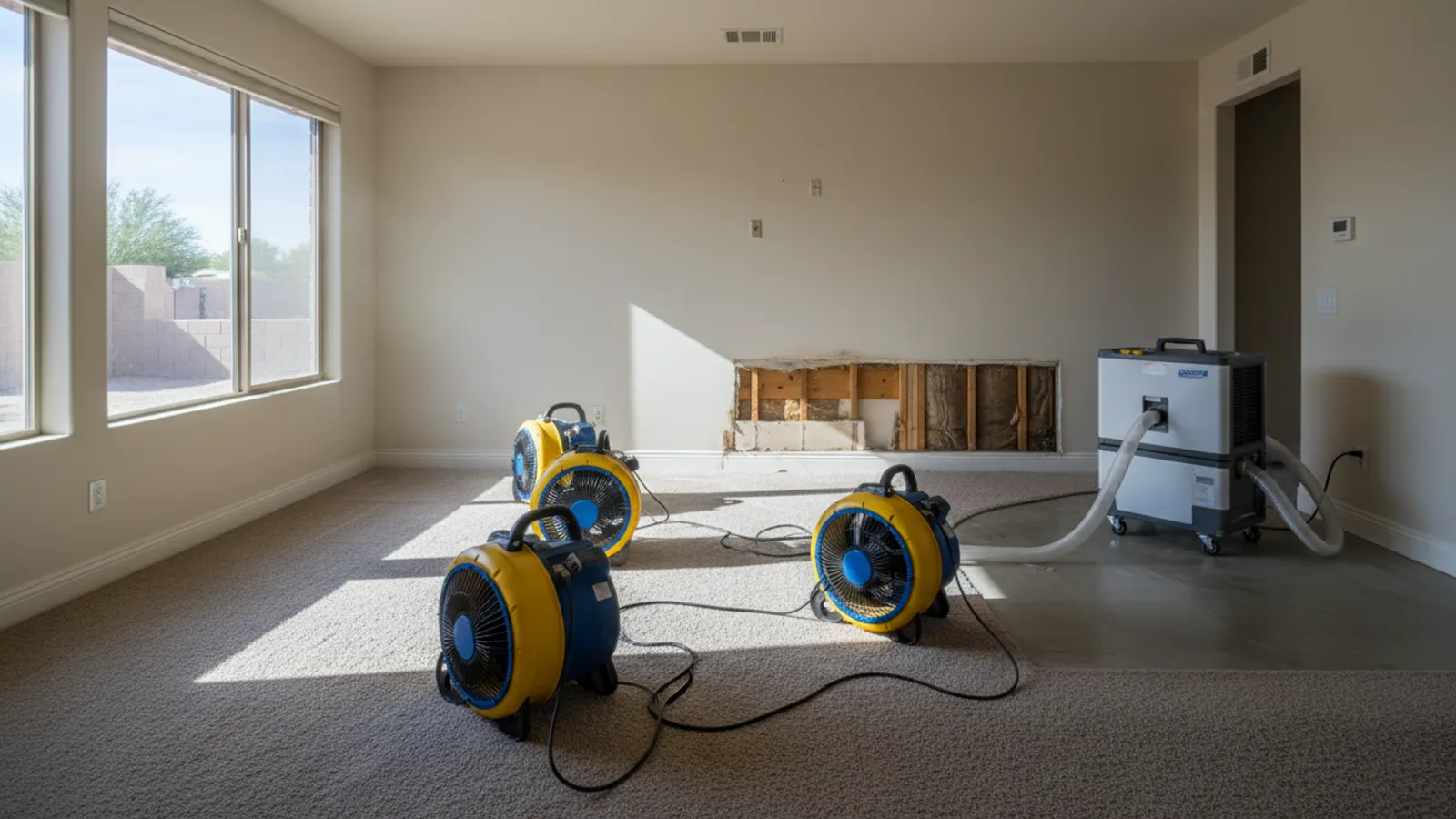
Water damage drying setup with air movers and a dehumidifier, baseboards removed in a Glendale, Arizona home
Glendale's split housing stock drives a split water-loss profile. North of Bell Rd — Arrowhead Ranch, Westgate, Stetson Hills — losses look like the rest of the new-build Valley: upstairs bath supply failures, ice-maker line ruptures, water-heater bursts in interior closets. Central and south Glendale — Cholla, Sahuaro, Yucca, Barrel — losses look more like Tempe: cast-iron drain failures, slab leaks under decades-old copper, and aging galvanized supply lines.
Monsoon roof leaks affect both halves of the city, especially on flat-roof and parapet contemporary homes.
We respond 24/7, document for the carrier, and handle rebuild end-to-end.

Why Glendale Water Damage Restoration Is Different

Older Glendale losses often expose a deteriorating system — not a one-time event. We scope drains and supply during mitigation and flag root causes to the carrier transparently.
Arrowhead Ranch HOA design review applies on exterior-affecting visible repairs. We file in parallel with mitigation.

Recent Water Damage Restoration Projects in Glendale

Arrowhead Ranch

Upstairs bath supply burst: 2-story ceiling demo, drying, drywall + texture, paint

$12K3 weeks

Cholla

Slab leak under hallway: leak detection, slab opening, line repair, hardwood + tile rebuild

$14K4 weeks

Westgate

Ice-maker line failure: hardwood drying, cabinet pull/reset, baseboard, paint

$6K10 days

Water Damage Restoration in Glendale: Fast Facts

Average Glendale residential water loss: $4,000–$14,000.

Pre-1985 central Glendale: high incidence of slab leaks and drain stack issues.

Glendale permit timeline for build-back: 2–3 weeks (if structural).

HOA design review for visible exterior repairs: 2–3 weeks.

Mold colonization window: 48–72 hours.

Typical Cost

$1,500 – $40,000+

Typical Timeline

3 days – 6 weeks

Permit Lead Time

2–4 weeks

How We Approach Water Damage Restoration

Water damage can strike at any time — from burst pipes and appliance leaks to monsoon flooding. ProWorx Restoration provides 24/7 emergency water damage restoration throughout the area.
Our certified technicians use advanced water extraction, dehumidification, and drying equipment to stop damage in its tracks. We then repair and restore your property to its pre-loss condition, handling everything from drywall repair to complete reconstruction.

24/7 emergency water extraction

Advanced drying and dehumidification

Mold prevention and remediation

Structural drying and monitoring

Complete repair and reconstruction

Direct insurance billing

What Glendale Homeowners Should Know About Water Damage Restoration

Why Flood Water Is Treated as Contaminated

Water that enters a home from outside, whether through monsoon flash flooding, overland runoff or a backed-up sewer line, is classified as Category 3, the most contaminated class under the IICRC standard. It may carry sewage, chemicals, fertilisers, animal waste and soil bacteria. That classification changes how the restoration must be handled. Porous materials such as carpet, padding, drywall, insulation and upholstered furniture that have absorbed flood water generally cannot be safely cleaned and must be removed and discarded. Hard, non-porous surfaces are cleaned and disinfected before drying continues.

Roof Leaks During Monsoon Season

Monsoon storms bring wind-driven rain that can force water past roofing materials that shed ordinary rain without trouble. Lifted shingles, cracked tiles, failed underlayment, deteriorated flashing around vents and chimneys, and clogged valleys are common entry points. Because the leak may only appear during heavy storms, it can be difficult to trace afterwards. If a ceiling stain appears after a monsoon storm, have the roof inspected before repairing the ceiling, so the source is fixed first.

Matching Replacement Boards & Refinishing

We source matching species (oak, hickory, maple, walnut), board width, and grade from regional flooring suppliers. After installation we sand the entire room or area to a single plane, apply matching stain, and blend the refinish edge into adjacent flooring so the repair is invisible. Refinishing typically takes 3–5 days of cure time before furniture returns.

Arizona's Monsoon Season and Water Damage Prevention

Arizona's monsoon season (June through September) brings intense rainfall that can overwhelm drainage systems and cause flash flooding. homeowners can reduce risk by maintaining gutters and downspouts, grading soil away from foundations, sealing basement walls, and installing sump pumps in low-lying areas. Despite prevention efforts, monsoon damage happens — and when it does, ProWorx Restoration provides 24/7 emergency water extraction, structural drying, and complete property restoration.

The Arizona Culprit: Air-Conditioning Condensate

Many Arizona homes have air-handling units in the attic, and those units produce a large amount of condensation during the cooling season. That water is supposed to drain away through a condensate line, with a secondary pan beneath the unit as backup. When the primary line clogs with algae or debris, or the secondary pan rusts through or its drain is blocked, water overflows directly onto the ceiling below. Because air-conditioning runs for months on end here, this is one of the most frequent causes of ceiling damage we see. Having condensate lines flushed and pans inspected as part of routine HVAC service, and fitting a float switch that shuts down the system if water rises in the pan, prevents most of these losses.

Common Sources of Hardwood Water Damage

Hardwood floors are most often damaged by dishwasher and refrigerator leaks in kitchens, overflowing sinks and toilets, failed water heaters, pet accidents near doors, and slab leaks beneath the floor. Water may travel under the boards some distance from the source before damage becomes visible. Placing protective mats near sinks and entry doors, wiping up spills promptly and investigating any unusual cupping or discolouration early helps catch problems before they spread.

Living in Your Home During Restoration

Many families can remain at home while water damage is being dried, but it depends on what was affected and how. Drying equipment runs continuously and is noisy, it raises the temperature in affected rooms, and those areas may be sealed off. If a kitchen or the only bathroom is out of service, or if Category 3 water or extensive mould is involved, temporarily staying elsewhere is usually more practical and safer. Many homeowner policies include coverage for additional living expenses when a home is uninhabitable, so check your policy or ask your adjuster. We will tell you honestly whether the home is reasonable to live in during each phase of the work.

Our Hardwood Floor Water Damage Process

Every job starts with extraction within hours — the faster water is removed, the more floor we can save. We then deploy specialized hardwood drying mats (Injectidry or similar) and dehumidifiers, monitoring moisture content daily. Once the floor is dry to spec, we sand out cupping and stains, replace any boards beyond repair, then refinish with your choice of stain and topcoat — water-based polyurethane for fast cure or oil-based for the traditional warm tone.

The Wax Ring and the Slow Leak Beneath the Toilet

One of the most common sources of hidden bathroom damage is the wax ring that seals the toilet to the drain flange. When the seal fails, or when the toilet rocks because the flange is loose or broken, small amounts of water can escape every time the toilet is flushed. Because the leak is beneath the toilet, it can continue for months, soaking the subfloor and eventually causing rot, loose flooring or stains on the ceiling below. Signs include a toilet that moves when pressed, discoloured or soft flooring around the base, and a persistent odour. Replacing the seal is simple; repairing the subfloor after a long leak is not.

How Our Water Damage Restoration Process Works in Glendale

01

Free On-Site Consultation

We visit your property, discuss your goals, and provide a detailed, no-obligation estimate.

02

Custom Project Plan

Our team creates a tailored project plan with timeline, materials, and transparent pricing.

03

Licensed Crews On Site

Licensed craftsmen complete your project with quality materials and meticulous attention to detail.

04

Final Walkthrough & Sign-Off

We inspect every detail with you and ensure complete satisfaction before the job is done.

"Caught the slab leak in two hours, ran the entire claim, and we never had to deal with the insurance company directly."

ProWorx Client · Glendale

Neighborhoods We Serve in Glendale

Arrowhead Ranch · Westgate · Downtown Glendale · Cholla · Sahuaro · Yucca · Barrel

Water Damage Restoration FAQs for Glendale Homeowners

Ready to Start Your Glendale Water Damage Restoration Project?

Get a free, no-obligation estimate from a licensed Arizona contractor — ROC #349454.