



Smoke Restoration in Glendale, AZ

Soot, residue, and HVAC smoke cleanup across Glendale — IICRC S700 protocol, insurance-direct.

Serving Glendale & nearby Maricopa County

Get Your Free Smoke Restoration Estimate

Step 1 of 5Project

What kind of project?

Pick the option that fits best — you can add details next.

Quick Answer: Smoke Restoration in Glendale

ProWorx Restoration provides smoke damage restoration across Glendale, AZ — covering 1960s–80s homes in central Glendale, newer builds in Arrowhead Ranch, and short-term rentals around Westgate. Typical projects run $3,000–$22,000 and 5–18 days under IICRC S700.

1,200+

Projects Completed

15+

Years Experience

ROC #349454

Licensed & Insured

100%

Satisfaction Guaranteed

Smoke Restoration Built for Glendale Homes
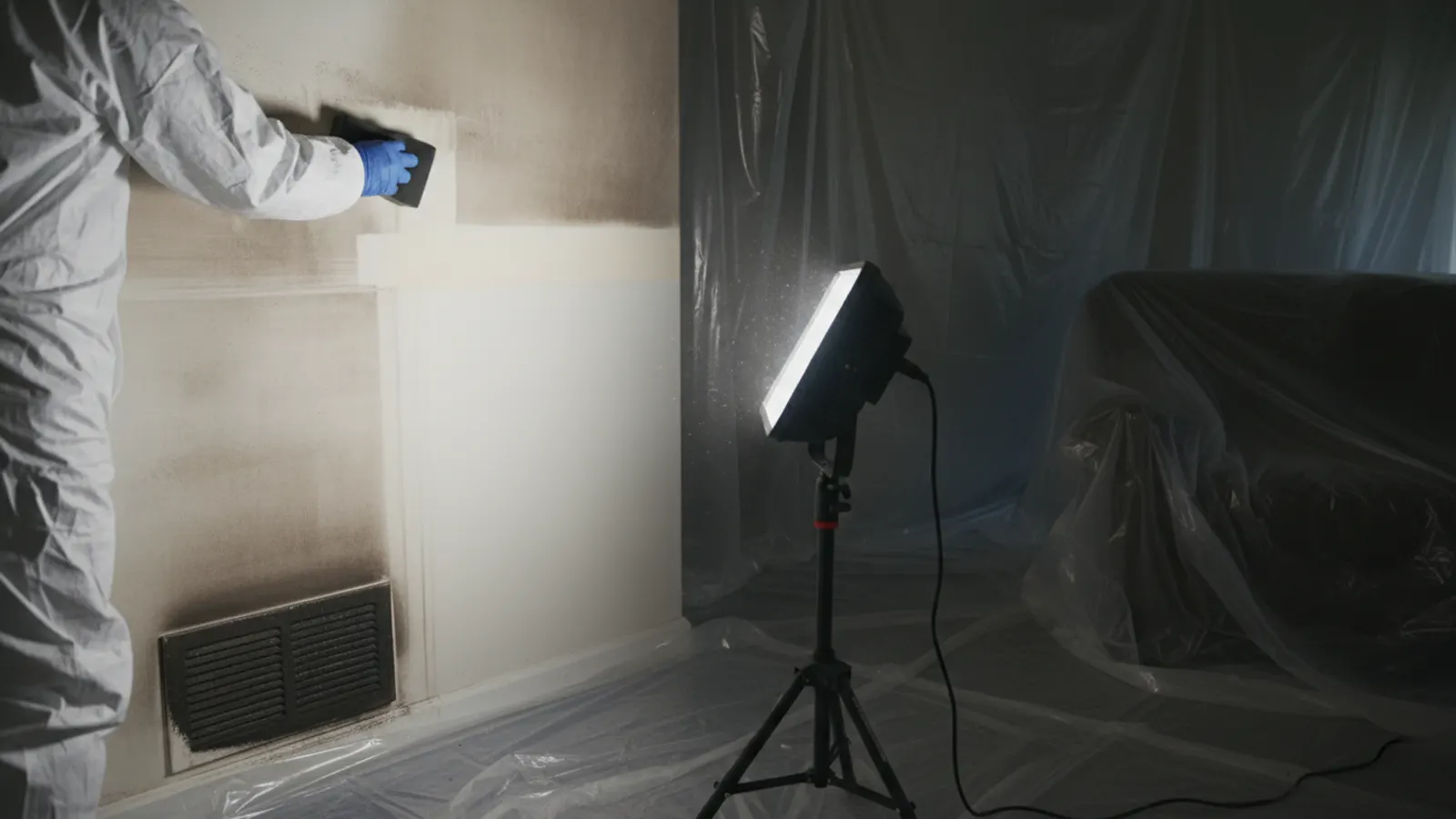
Soot being cleaned from a wall, showing the contrast between treated and untreated sections in a Glendale, Arizona home
Glendale's housing mix spans 1960s slump-block ranches in central Glendale through 2000s+ tract homes in Arrowhead Ranch. Older slump-block homes often have plaster walls that respond differently to wet cleaning — we adapt the cleaning chemistry and dwell time to the substrate.
Westgate-area short-term rentals see frequent smoke calls tied to unattended cooking and unauthorized indoor smoking. We turn these properties around fast — 5–8 day mitigation-to-relist with full HVAC decon and odor neutralization.
All jobs scoped to IICRC S700, documented in Xactimate, and billed directly to the carrier or owner.

Why Glendale Smoke Restoration Is Different

Glendale Development Services issues emergency board-up same-day; standard reconstruction permits typically within 2–3 weeks.
Westgate-area STR owners need fast turnaround between bookings — our rental-turnover crews staff for 5–8 day mitigation-to-relist on standard smoke jobs.

Recent Smoke Restoration Projects in Glendale

Arrowhead Ranch

Stovetop kitchen fire, whole-home migration: containment, HEPA + dry sponge, HVAC decon, contents wipe-down, repaint with odor primer

$18K13 days

Westgate

STR indoor smoking residue: full wall wash, HVAC line + coil cleaning, ozone cycle, repaint, 6-day turn

$8K6 days

Downtown Glendale

Electrical fire in 1965 slump-block home: containment, plaster-safe dry clean + mild alkaline wash, HVAC decon, thermal fog

$15K12 days

Smoke Restoration in Glendale: Fast Facts

Westgate STR smoke turnovers: roughly 20% of Glendale volume.

Average kitchen-fire smoke job in Glendale: $7,000–$18,000.

Slump-block / plaster wall jobs require modified cleaning chemistry.

HVAC decon included on every job.

Same-day emergency response across all Glendale ZIPs.

Typical Cost

$2,500 – $60,000+

Typical Timeline

3 days – 6 weeks

Permit Lead Time

2–4 weeks

What Glendale Homeowners Should Know About Smoke Restoration

Verifying the Result

Cleanup is complete when surfaces are clean and odour is gone, not simply when the crew has finished working. We inspect cleaned areas carefully, check for remaining residue and odour, and address anything that falls short before repairs and repainting begin, so problems are not sealed in.

Your Insurance Claim After a Fire

Fire claims tend to be more complex than most property claims because they combine structural damage, smoke and soot cleaning, water damage from firefighting, contents losses and often temporary living costs. Report the loss promptly, keep receipts for every emergency expense, and avoid discarding damaged belongings until they have been photographed and listed. Request a copy of your full policy so you understand your coverage limits, any additional living expense provisions and how contents are valued. You are entitled to choose your own restoration contractor. We provide adjusters with detailed, itemised scopes and documentation, which helps keep the claim moving and reduces disputes over what was damaged and what it will cost to restore.

Soot Is Acidic, and It Keeps Working

Soot does not simply sit on surfaces. Many residues are acidic and continue to cause damage after the fire is out. Within days, they can discolour plastics, etch glass, tarnish metal fixtures and yellow grout and finishes. Left longer, staining can become permanent and items that could have been cleaned may need replacing. This is one of the main reasons restoration should start as soon as possible after a fire. Prompt cleaning of affected surfaces limits how much ends up being replaced rather than restored.

Why Smoke Damage Spreads So Far

Fire damage is rarely confined to the room where the fire started. Hot smoke rises and spreads through the house, carried by air currents, and travels into rooms that were never near the flames. It moves along ceilings, into closets and cabinets, through gaps around outlets and into wall cavities, and is drawn into the heating and air-conditioning system, which then distributes it throughout the home. Smoke particles are extremely small and penetrate porous materials easily. That is why a fire in one room often requires cleaning throughout the entire home and why the HVAC system almost always needs attention.

Assessing the Extent of Smoke Damage

Smoke travels in ways that are not always obvious, following air currents and heat, and collecting in cooler areas and enclosed spaces. A careful assessment checks every room, closet, cabinet interior, attic space and the HVAC system, since residue may be present in places that look unaffected. Understanding the full extent of damage prevents missed areas that would otherwise continue to release odour.

Sealing Before Repainting

Even after thorough cleaning, some smoke odour and staining can remain locked inside porous materials. Painting directly over them with ordinary paint often allows stains to bleed through and odour to return. A specialised odour-sealing primer, typically shellac-based, creates a barrier that locks in residual odour and prevents stains from reappearing. Applying the correct primer before repainting is an important step toward a lasting result.

Our Fire Cleanup & Repair Process

Every job follows a proven sequence: (1) emergency board-up and water extraction from firefighting efforts; (2) damage assessment with photos for your insurance claim; (3) debris removal and demolition of unsalvageable materials; (4) soot and residue cleaning using the right method for each surface; (5) deodorization with thermal fog or ozone; (6) structural repair, drywall, paint, and finish work. You get one project manager from start to finish.

Why You Should Never Wipe Soot

One of the most common mistakes after a fire is trying to wipe soot away with a wet cloth or household cleaner. Many types of soot smear when wet, pushing the residue deeper into porous surfaces such as painted drywall, ceiling texture and unfinished wood, which can make staining permanent. Effective soot removal usually begins with dry methods, such as specialised dry-cleaning sponges and vacuuming with HEPA-filtered equipment, before any wet cleaning is attempted. If you are unsure, leave the surface alone until it can be assessed properly.

What to Remove Instead of Clean

Some materials cannot be restored effectively and must be removed. Insulation exposed to smoke, heavily charred wood, drywall that is burned or saturated with water, carpeting and padding that have absorbed significant smoke or water, and items that have deformed or melted generally need replacement. Removing them, rather than attempting to clean them, prevents lingering odour and ensures repairs are sound. We explain what needs to be removed and why before the work begins.

How Long Fire Restoration Takes

The timeline depends on the extent of the damage. A small kitchen fire with limited smoke spread might be cleaned and repaired in a few weeks. A fire that damaged structural elements and affected the whole house through smoke can take several months, especially when engineering assessment, permits and significant reconstruction are involved. Insurance approvals, material lead times and the need for code upgrades all affect the schedule. We give a realistic timeline after assessing the damage and update it as the work progresses.

How Our Smoke Restoration Process Works in Glendale

01

Free On-Site Consultation

We visit your property, discuss your goals, and provide a detailed, no-obligation estimate.

02

Custom Project Plan

Our team creates a tailored project plan with timeline, materials, and transparent pricing.

03

Licensed Crews On Site

Licensed craftsmen complete your project with quality materials and meticulous attention to detail.

04

Final Walkthrough & Sign-Off

We inspect every detail with you and ensure complete satisfaction before the job is done.

"Smoke incident at our Westgate Airbnb. ProWorx had it spotless and rental-ready in six days — we barely missed a booking weekend."

ProWorx Client · Glendale

Neighborhoods We Serve in Glendale

Arrowhead Ranch · Westgate · Downtown Glendale · Cholla · Sahuaro · Yucca · Barrel

Smoke Restoration FAQs for Glendale Homeowners

Ready to Start Your Glendale Smoke Restoration Project?

Get a free, no-obligation estimate from a licensed Arizona contractor — ROC #349454.