



Stucco Repair in Glendale, AZ

Crack repair, color-coat, and full resurfacing across Glendale.

Serving Glendale & nearby Maricopa County

Get Your Free Stucco Repair Estimate

Step 1 of 5Project

What kind of project?

Pick the option that fits best — you can add details next.

Quick Answer

ProWorx Restoration provides stucco repair across Glendale, AZ — Arrowhead Ranch re-coats, historic downtown three-coat patching, Westgate-adjacent STR turn work, and foundation crack chase in Arrowhead, Catlin Court, and Marbella Vineyards. Typical projects run $500 – $10,000.

1,200+

Projects Completed

15+

Years Experience

ROC #349454

Licensed & Insured

100%

Satisfaction Guaranteed

Stucco Repair Built for Glendale Homes
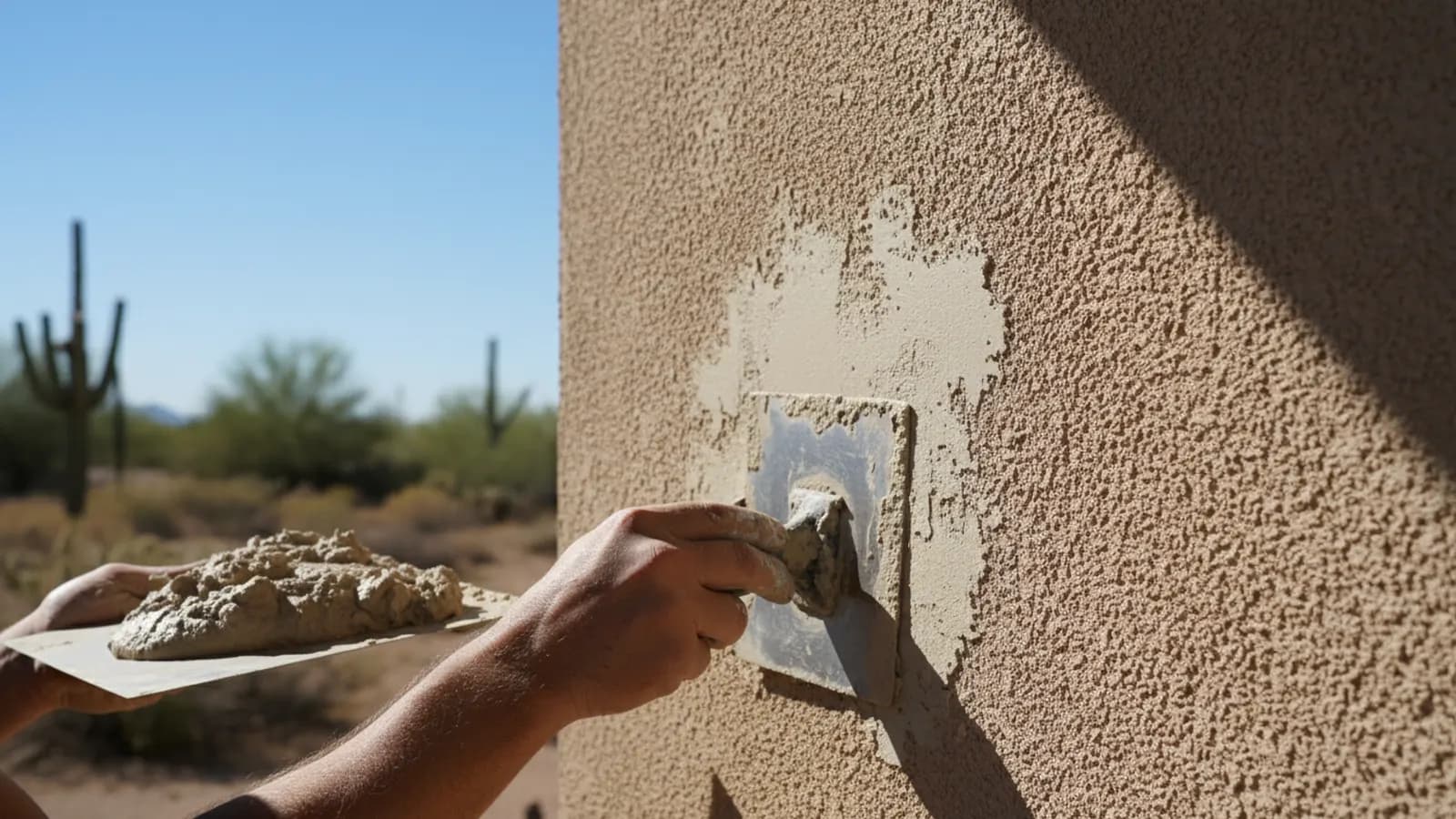
Stucco patch being floated over a repaired wall section and the texture matched in a Glendale, Arizona home
Glendale splits between three repair markets: Arrowhead Ranch / Arrowhead Lakes (15–25 year tract re-coats with HOA submittal), historic downtown / Catlin Court (pre-1950 hard-coat with historic-review constraints), and Westgate-adjacent STR turn work (fast cosmetic re-coat between guest cycles).
Sprinkler over-spray and lake-adjacent weep damage in Arrowhead Lakes are constant drivers.
Historic district requires color and finish review before any visible work.

Why Glendale Stucco Repair Is Different

Arrowhead HOA color re-coat submittal.
Catlin Court historic review on visible work.
Westgate STR fast-turn cosmetic re-coats.

Recent Stucco Repair Projects in Glendale

Arrowhead Ranch

Full color re-coat 1,800 sf, integral color, HOA-approved

$8.5K7 days

Catlin Court

1925 bungalow three-coat patch + period color match, historic review

$6K6 days

Marbella Vineyards

Westgate STR fast-turn re-coat 1,200 sf between bookings

$5.5K4 days

Stucco Repair in Glendale: Fast Facts

Arrowhead tract re-coats: ~35%.

Historic downtown patching: ~20%.

Westgate STR turn: ~15%.

Average Glendale stucco repair: $2,000–$9,000.

Historic district color review: required in Catlin Court.

Typical Cost

$500 – $15,000+

Typical Timeline

2 days – 2 weeks

Permit Lead Time

2–4 weeks

How We Approach Stucco Repair

Arizona's extreme heat, monsoon-driven wind-driven rain, and 40°F+ daily thermal swings put stucco under constant stress. ProWorx Restoration repairs hairline and structural cracks, patches damaged areas, performs full re-stucco on aged exteriors, and matches color and texture across Phoenix-metro homes and commercial properties. Arizona ROC #349454.
Stucco failure modes in the Valley fall into predictable patterns. Hairline pattern cracking on south and west elevations from UV and thermal cycling. Diagonal cracks at window and door corners from minor structural movement. Bulging or hollow-sounding patches where moisture penetrated past failed sealant joints. EIFS (synthetic stucco) delamination on 1990s–2000s tract homes where weep details were undersized. We identify the failure mode before patching so the repair lasts.

Hairline and structural crack repair with elastomeric or cementitious patch

Full-wall and whole-house re-stucco (traditional three-coat)

Color matching from samples; integral and elastomeric topcoats

Texture matching: smooth, sand, dash, lace, Santa Barbara, Spanish

Window and door sealant replacement at stucco interfaces

EIFS repair and weep-detail correction

What Glendale Homeowners Should Know About Stucco Repair

Code Requirements During Restoration

Restoration work may trigger requirements to bring parts of the building up to current codes, particularly when the building's use changes or major alterations are made. Accessibility, fire and life safety, electrical and energy requirements can all apply. Understanding these requirements early prevents surprises during permitting.

Reading Stucco Cracks

Not all stucco cracks mean the same thing. Fine, hairline cracks in a random pattern are usually shrinkage cracks from the curing process and are mostly cosmetic. Cracks radiating from the corners of windows and doors often reflect normal movement concentrated at those weak points. Wider cracks, cracks that keep growing, or cracks with one side higher than the other may indicate structural movement and warrant closer inspection. Understanding the type of crack guides the right repair.

Common Stucco Issues in Phoenix-Metro Homes

Four issues drive most calls. First, south and west elevation pattern cracking from UV and 40°F daily thermal cycling. Second, diagonal corner cracks at windows and doors from minor frame movement and missing diagonal lath reinforcement. Third, monsoon-driven moisture intrusion at failed sealant joints around windows, hose bibs, and electrical penetrations — water gets behind stucco and rots sheathing. Fourth, on 1990s–2000s tract homes, undersized or missing weep screeds at the foundation that trap moisture. We address the root cause, not just the visible crack.

Planning Maintenance After Restoration

Restoration is not a one-time fix. Regular maintenance, such as inspecting roofs, resealing joints, cleaning drainage systems and repairing minor damage promptly, protects the investment and prevents deterioration from recurring. A maintenance plan established at the end of restoration helps keep the building in good condition.

Cleaning Masonry Safely

Masonry can be stained by dirt, efflorescence, rust, algae or paint. Cleaning methods must be appropriate for the material, since aggressive pressure washing or harsh acids can damage brick, block and mortar. Gentle methods tested in an inconspicuous area first protect the masonry while removing stains.

Matching Historic Materials

Restoring older buildings often requires matching materials that are no longer standard. Historic masonry may need mortar that is softer and more compatible with the original bricks than modern mortar, since harder mortar can damage historic masonry. Older stucco, plaster, wood profiles and windows may need custom work to match. Using compatible materials preserves both the building's appearance and its long-term durability.

Matching Texture and Colour

The biggest challenge in stucco repair is making patches blend in. Stucco textures vary widely, from smooth to sand finishes and heavier textures, and colour fades with sun exposure. Skilled repair matches the existing texture carefully, and recoating or painting the whole wall section often produces the most uniform appearance.

Restoring the Building Envelope

The building envelope, made up of the roof, exterior walls, windows and doors, separates the interior from the weather. Restoring it may involve replacing roofing, repairing or replacing stucco and masonry, resealing joints and replacing failed windows. In Arizona, the envelope also plays a major role in controlling heat gain, so restoration often improves energy performance as well as weather protection.

Stone Veneer Repairs

Natural and manufactured stone veneer is popular on Arizona homes for accent walls, columns and fireplaces. Veneer can loosen, crack or allow water behind it if it was installed without proper drainage and flashing. Repairs may involve resetting loose stones, replacing damaged pieces and correcting installation details to prevent water intrusion.

Why Block Walls Lean

A leaning or tilting block wall usually signals a problem below ground. Inadequate footings, soil erosion, expansive soils, tree roots or water collecting at the base can all cause movement, as can soil or landscaping piled against one side. A leaning wall can become dangerous, particularly if it continues to move. Evaluating the cause determines whether the wall can be stabilised or needs to be rebuilt.

Accessibility Upgrades

Commercial and public buildings undergoing restoration may need accessibility improvements, such as accessible entrances, restrooms and routes through the building. Planning these upgrades as part of the restoration allows them to be integrated thoughtfully into the building's design.

Commercial vs. Residential Building Restoration

Commercial restoration projects require careful coordination to minimize business disruption, meet ADA and fire safety codes, and often involve larger-scale structural work. Residential restoration focuses on preserving your home's character and value while addressing damage from age, weather, or accidents. ProWorx Restoration has dedicated teams for both, ensuring specialized expertise and compliance with all applicable building codes throughout the area.

Elastomeric Coatings

Elastomeric coatings are thick, flexible finishes that can bridge fine cracks and help shed water. They are often applied over repaired stucco to improve weather resistance and provide a uniform colour. Because they are less breathable than some other finishes, they should be applied only over sound, dry stucco.

Restoring Interiors

Building restoration often extends inside, repairing damaged plaster and drywall, restoring flooring and woodwork, updating lighting and building systems, and repairing water or smoke damage. In historic interiors, preserving original features such as trim, doors and decorative plaster maintains the building's character.

Our Proven Process

01

Free Consultation

We visit your property, discuss your goals, and provide a detailed, no-obligation estimate.

02

Custom Plan

Our team creates a tailored project plan with timeline, materials, and transparent pricing.

03

Expert Execution

Licensed craftsmen complete your project with quality materials and meticulous attention to detail.

04

Final Walkthrough

We inspect every detail with you and ensure complete satisfaction before the job is done.

"ProWorx handled both our 1925 Catlin Court historic review and a Marbella STR cosmetic re-coat in the same month — different approach for each, both flawless."

ProWorx Client · Glendale

Neighborhoods We Serve in Glendale

Arrowhead Ranch · Arrowhead Lakes · Catlin Court · Marbella Vineyards · Sierra Verde · Stonehaven · Westgate · Historic Downtown

Stucco Repair FAQs for Glendale Homeowners

Ready to Start Your Glendale Stucco Repair Project?

Get a free, no-obligation estimate from a licensed Arizona contractor — ROC #349454.