



Water Damage Restoration in Peoria, AZ

24/7 emergency water response and full repair rebuild across Peoria — IICRC-aligned.

Serving Peoria & nearby Maricopa County

Get Your Free Water Damage Restoration Estimate

Step 1 of 5Project

What kind of project?

Pick the option that fits best — you can add details next.

Quick Answer: Water Damage Restoration in Peoria

ProWorx Restoration provides 24/7 water damage restoration throughout Peoria, AZ. Peoria losses most often come from water-heater failures, supply-line ruptures, and monsoon roof leaks; typical projects run $2,000–$22,000+ and 5 days to 4 weeks.

1,200+

Projects Completed

15+

Years Experience

ROC #349454

Licensed & Insured

100%

Satisfaction Guaranteed

Water Damage Restoration Built for Peoria Homes
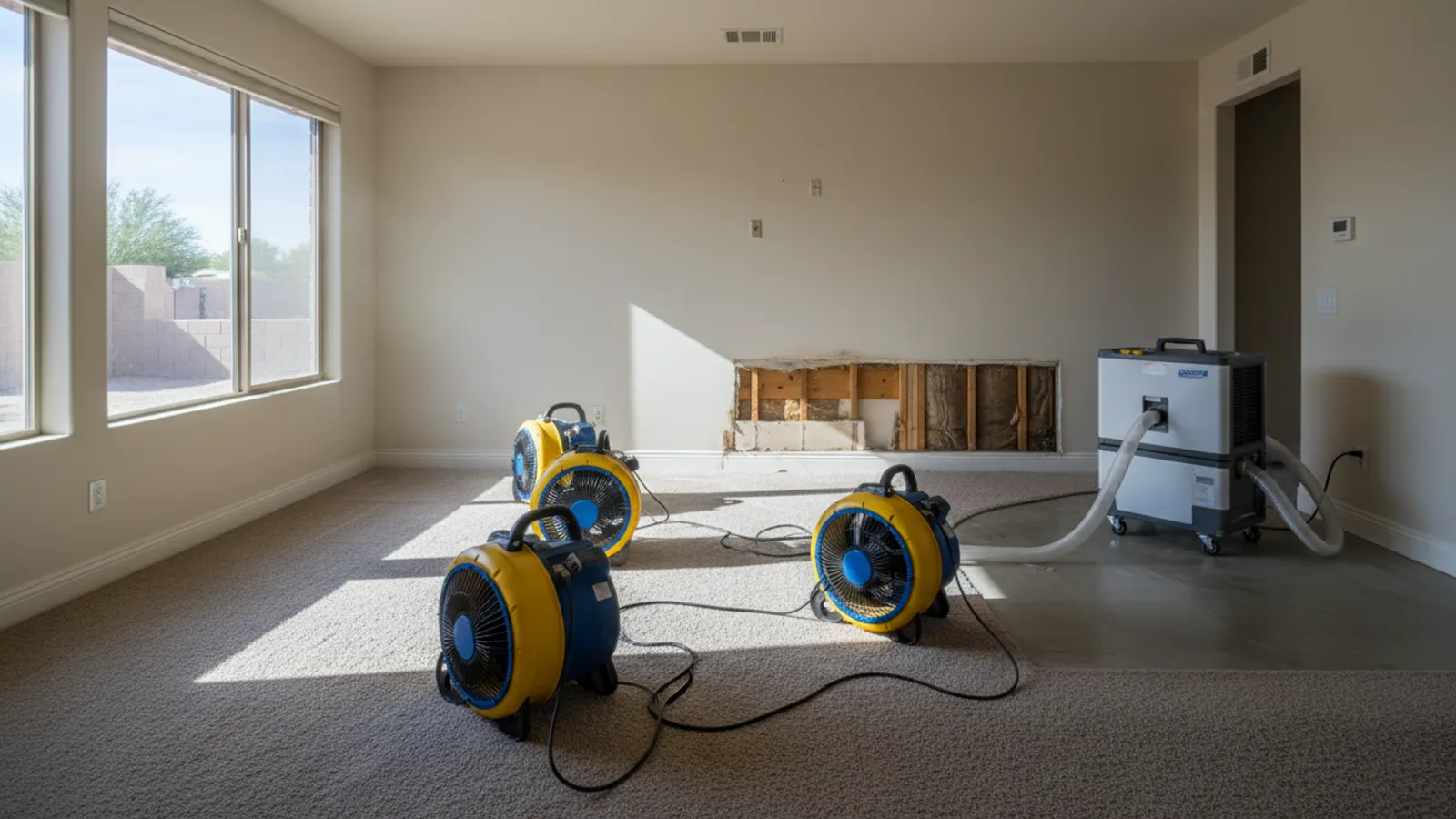
Water damage drying setup with air movers and a dehumidifier, baseboards removed in a Peoria, Arizona home
Peoria's far-north neighborhoods — Vistancia, Trilogy, Westwing Mountain — are dominated by post-2000 master-planned builds. Sun City and Sun City West add a deep base of single-story active-adult homes from the 1970s onward. The water-loss profile reflects both: newer Peoria sees second-floor bath supply failures and ice-maker line ruptures; Sun City sees water-heater bursts in utility rooms and slab leaks under aging copper.
Monsoon roof losses are common across both — far-north Peoria sees brutal monsoon storms and frequent roof penetration leaks on tile and foam roofs.
We respond 24/7, document for the carrier, and rebuild end-to-end.

Why Peoria Water Damage Restoration Is Different

Sun City losses skew toward older systems and accessibility considerations. We coordinate accessibility-friendly rebuild details (curbless thresholds, lever handles, grab-bar blocking) where appropriate during build-back.
Vistancia and Trilogy HOA architectural review applies on exterior-affecting visible repairs. We file in parallel with mitigation.

Recent Water Damage Restoration Projects in Peoria

Vistancia

Upstairs bath supply burst: 2-story ceiling demo, hardwood drying, drywall + texture, paint

$13K3 weeks

Sun City

Water heater failure in utility closet: drying, new tankless, drywall + tile rebuild

$9K2 weeks

Trilogy

Monsoon tile roof leak: ceiling cavity drying, insulation, drywall, roof tie-in coordination

$7K2 weeks

Water Damage Restoration in Peoria: Fast Facts

Average Peoria residential water loss: $4,000–$13,000.

Sun City: high incidence of aging water-heater and supply-line failures.

Peoria permit timeline for build-back: 2–3 weeks.

HOA design review for visible exterior repairs: 2–3 weeks.

Mold colonization window: 48–72 hours.

Typical Cost

$1,500 – $40,000+

Typical Timeline

3 days – 6 weeks

Permit Lead Time

2–4 weeks

How We Approach Water Damage Restoration

Water damage can strike at any time — from burst pipes and appliance leaks to monsoon flooding. ProWorx Restoration provides 24/7 emergency water damage restoration throughout the area.
Our certified technicians use advanced water extraction, dehumidification, and drying equipment to stop damage in its tracks. We then repair and restore your property to its pre-loss condition, handling everything from drywall repair to complete reconstruction.

24/7 emergency water extraction

Advanced drying and dehumidification

Mold prevention and remediation

Structural drying and monitoring

Complete repair and reconstruction

Direct insurance billing

What Peoria Homeowners Should Know About Water Damage Restoration

Arizona's Dry Climate After the Flood

Arizona's naturally low humidity can help hardwood dry, but it also creates its own challenges. Wood that dries too quickly or unevenly can crack, check or develop gaps between boards. Once restoration is complete, normal indoor humidity in Arizona homes is often much lower than in other regions, and floors installed or repaired without allowing for that can shrink and open up over time. Controlled drying and allowing replacement boards to acclimatise to the home before installation help prevent these issues.

Modern Waterproofing & Materials We Use

When we rebuild showers and wet areas we use modern systems: Schluter Kerdi membrane, RedGard liquid waterproofing, sloped pre-formed pans, and silicone (not latex) caulking at all changes-of-plane. These systems carry manufacturer warranties and dramatically outlast traditional mortar-pan-and-felt construction.

Signs of Water Damage in Your Home

Water damage isn't always obvious. Look for water stains on ceilings or walls, musty odors, peeling or bubbling paint, warped flooring, soft or spongy drywall, and unexplained increases in your water bill. In Arizona's warm climate, hidden moisture can lead to mold growth within 24-48 hours. If you notice any of these signs, call ProWorx Restoration immediately for a professional moisture assessment using thermal imaging and industrial moisture meters.

Our Bathroom Water Damage Repair Process

Every job starts with leak detection — thermal imaging, moisture meters, and selective drywall removal to find the source. Once confirmed, we shut off water, remove damaged drywall and substrate, dry the cavity, inspect for mold, repair the underlying plumbing or waterproofing, then rebuild with code-compliant materials. A small leak repair may take 3–5 days; a full waterproofing and tile rebuild 2–4 weeks.

Roof Leaks During Monsoon Season

Monsoon storms bring wind-driven rain that can force water past roofing materials that shed ordinary rain without trouble. Lifted shingles, cracked tiles, failed underlayment, deteriorated flashing around vents and chimneys, and clogged valleys are common entry points. Because the leak may only appear during heavy storms, it can be difficult to trace afterwards. If a ceiling stain appears after a monsoon storm, have the roof inspected before repairing the ceiling, so the source is fixed first.

Common Residential Water Sources in Arizona

The most frequent calls we get: slab leaks from aging copper supply lines (common in 1970s–80s homes), water-heater bursts in garages, washing-machine supply hose failures, dishwasher and ice-maker line leaks, toilet supply line failures, roof leaks during monsoon, and AC condensate pan overflows in attic-mounted air handlers (a major Phoenix summer issue).

Drying Hardwood in Place

In many cases, hardwood floors can be dried in place rather than torn out, especially if mitigation begins quickly and the water was clean. Specialised drying systems draw moisture out through the floor surface while dehumidifiers remove it from the air, and the subfloor beneath may also need targeted drying. The process takes longer than drying carpet or tile and requires careful monitoring. Drying in place can save a significant amount of money compared with replacing the floor, but it is only appropriate when the boards are not severely damaged and the water was not heavily contaminated.

Mold Prevention & Air Quality

In Arizona's dry climate, water-damaged materials look dry on the surface within a day even when wall cavities and subfloors stay saturated for weeks — the perfect mold environment. We monitor moisture content daily with pin and pinless meters, apply EPA-registered antimicrobials, and only close walls back up when readings meet IICRC-approved dryness standards.

How Structural Drying Actually Works

Drying a building is not simply a matter of pointing fans at wet surfaces. Effective drying balances three things: removing liquid water by extraction, moving air across wet surfaces so moisture evaporates, and removing that moisture from the air with dehumidifiers so it does not simply condense somewhere else. Too much air movement without enough dehumidification raises humidity throughout the house and can spread damage to dry areas. Temperature matters as well, since warmer air holds more moisture and drying progresses faster within the right range. Professional drying is planned around the volume of the space, the materials involved and how much water they absorbed, which is why two seemingly similar leaks can require very different equipment setups and drying times.

Why You Should Not Sand Too Soon

A common and costly mistake is sanding a cupped floor flat before the wood has returned to its normal moisture content. Once the boards finish drying, the edges that were sanded down shrink further than the centres, leaving the floor crowned and permanently uneven. Proper restoration means drying the floor and subfloor first, monitoring moisture readings until they stabilise at normal levels, and waiting to see how much the boards flatten on their own. Only then should any sanding and refinishing be considered.

How Our Water Damage Restoration Process Works in Peoria

01

Free On-Site Consultation

We visit your property, discuss your goals, and provide a detailed, no-obligation estimate.

02

Custom Project Plan

Our team creates a tailored project plan with timeline, materials, and transparent pricing.

03

Licensed Crews On Site

Licensed craftsmen complete your project with quality materials and meticulous attention to detail.

04

Final Walkthrough & Sign-Off

We inspect every detail with you and ensure complete satisfaction before the job is done.

"Made it easy after a stressful night — they took over, talked to State Farm, and we just signed off when it was done."

ProWorx Client · Peoria

Neighborhoods We Serve in Peoria

Vistancia · Trilogy · Sun City · Westwing Mountain · Fletcher Heights · Old Town Peoria

Water Damage Restoration FAQs for Peoria Homeowners

Ready to Start Your Peoria Water Damage Restoration Project?

Get a free, no-obligation estimate from a licensed Arizona contractor — ROC #349454.