



Flooring Installation in Glendale, AZ

Tile, LVP, and engineered wood across Glendale — Arrowhead to Historic Downtown.

Serving Glendale & nearby Maricopa County

Get Your Free Flooring Installation Estimate

Step 1 of 5Project

What kind of project?

Pick the option that fits best — you can add details next.

Quick Answer

ProWorx Restoration provides flooring installation across Glendale, AZ — large-format porcelain, LVP, engineered wood, STR-grade durable flooring near Westgate, and slab prep in Arrowhead Ranch, Stonehaven, and Historic Downtown. Typical projects run $4 – $13/sf installed.

1,200+

Projects Completed

15+

Years Experience

ROC #349454

Licensed & Insured

100%

Satisfaction Guaranteed

Flooring Installation Built for Glendale Homes
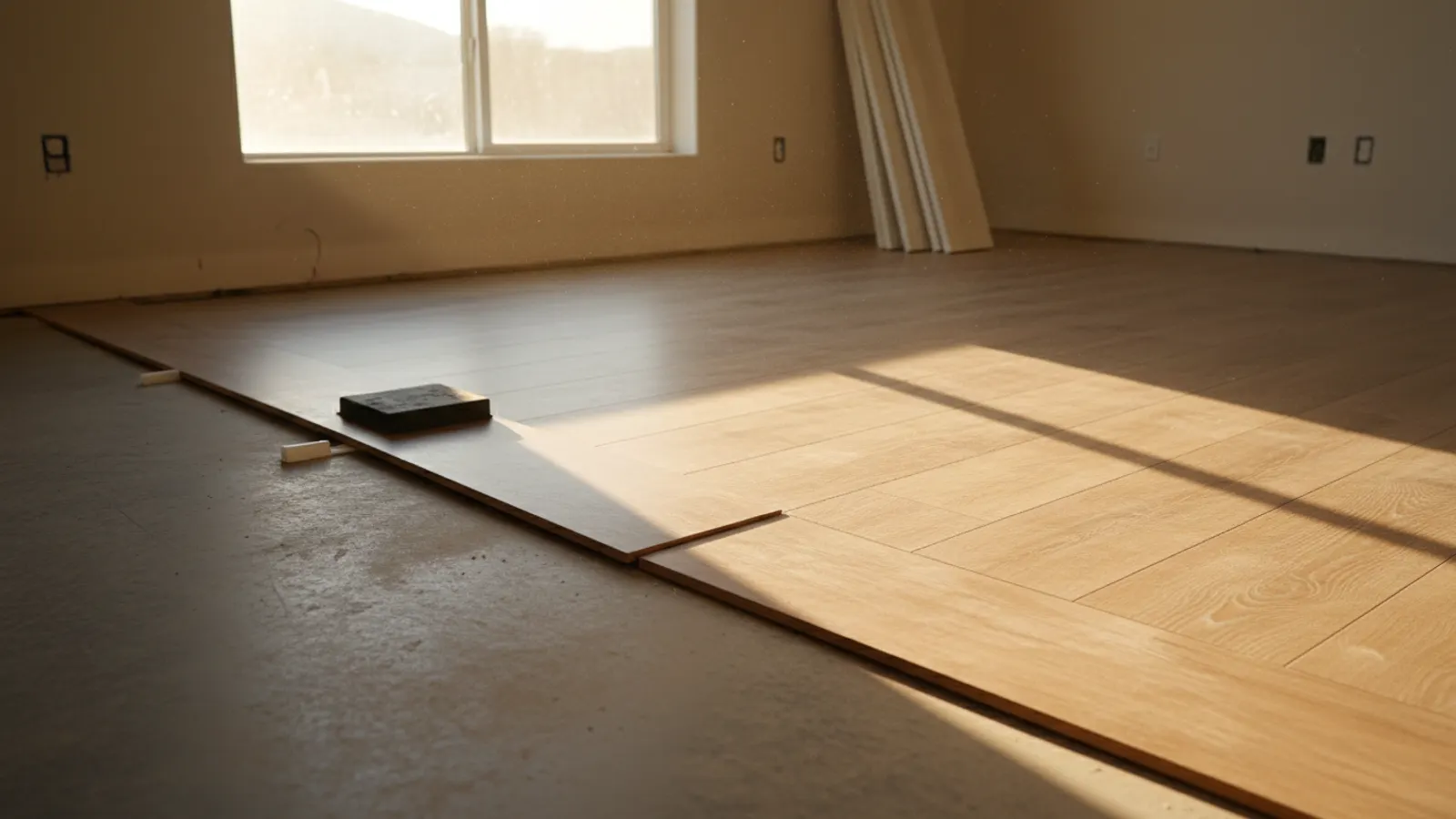
Luxury vinyl plank flooring being locked together across a prepared subfloor in a Glendale, Arizona home
Glendale's housing stock splits between 1990s–2010s Arrowhead and Stonehaven tract (carpet-to-LVP or tile conversions) and 1960s–80s central / Historic Downtown stock (often original tile or worn carpet over slab).
Westgate-adjacent short-term rentals drive durable-spec flooring scope — 28-mil+ wear-layer LVP rated for high-traffic commercial use.
Insurance flooring scopes (slab leak, monsoon roof leak) are scoped in Xactimate with direct carrier billing.

Why Glendale Flooring Installation Is Different

Westgate STRs: 28-mil+ wear-layer LVP rated commercial-grade is the right spec for game-day traffic.
Historic Downtown pre-1980 homes: asbestos pre-test on any vinyl-asbestos tile removal.
City of Glendale doesn't permit like-for-like flooring.

Recent Flooring Installation Projects in Glendale

Arrowhead Ranch

Whole-home carpet-to-LVP over slab, baseboards, 2,800 sf

$20K6 days

Westgate-area STR

Commercial-grade 28-mil LVP whole-home, durable spec, 1,900 sf

$15K5 days

Historic Downtown

1970s VAT removal (asbestos-tested), self-level slab, 24×24 porcelain, 1,400 sf

$16K9 days

Flooring Installation in Glendale: Fast Facts

Carpet-to-LVP conversions: ~45% of Glendale volume.

Westgate STR commercial-grade installs: ~15% and rising.

Pre-1980 VAT removal: asbestos pre-test required.

Average Glendale flooring project: $12,000–$28,000.

Self-leveling on most central Glendale slabs.

Typical Cost

$2,000 – $30,000+

Typical Timeline

3 days – 3 weeks

Permit Lead Time

2–4 weeks

How We Approach Flooring Installation

ProWorx Restoration installs porcelain tile, luxury vinyl plank (LVP), engineered hardwood, laminate, and carpet across the Phoenix metro. We handle subfloor prep, slab moisture testing, crack-isolation membranes, and demolition of existing flooring. Arizona ROC #349454.
Phoenix-metro flooring choices are shaped by slab-on-grade construction and the climate. Solid hardwood is generally inappropriate over slab — moisture vapor transmission from concrete causes cupping and crowning even years after the slab cures. Engineered hardwood, porcelain tile, and LVP dominate for good reason. Slab moisture testing (calcium chloride or RH probe per ASTM F1869/F2170) is essential before any glue-down installation. Crack-isolation membranes (Schluter Ditra, NobleSeal CIS) under tile prevent slab cracks from telegraphing into the tile assembly.

Porcelain and ceramic tile with Schluter Ditra crack-isolation

Luxury vinyl plank (LVP) — waterproof, click-lock, and glue-down systems

Engineered hardwood over slab with proper moisture mitigation

Laminate and carpet installation

Slab moisture testing (ASTM F1869 calcium chloride, F2170 RH probe)

Subfloor leveling and patching to install-spec flatness

What Glendale Homeowners Should Know About Flooring Installation

Letting Flooring Acclimate

Some flooring materials, particularly wood and certain vinyl and laminate products, need time to adjust to the temperature and humidity of the home before installation. Installing flooring that has not acclimated can lead to gaps, buckling or other problems once it adjusts to its environment. Following manufacturer guidance on acclimation helps ensure a stable installation.

Materials & Standards We Use

Tile installation per ANSI A108 with TCNA-compliant thinset (modified for porcelain). Crack-isolation membranes: Schluter Ditra (ANSI A118.12) for tile over slab. LVP per manufacturer spec — Coretec, Shaw, Mohawk waterproof systems. Engineered hardwood from major manufacturers (Mirage, Mohawk, Shaw) with vapor mitigation when moisture exceeds 3 lbs. Grout: polymer-modified or epoxy as wet-area scope requires. All work warrantied under ROC #349454 plus manufacturer warranty pass-through.

Hardwood Throughout the Home

Hardwood floors add warmth and value, and they can be refinished several times over their lifetime. In Arizona's dry climate, wood flooring needs attention to acclimation and expansion gaps to prevent gaps and movement. Engineered hardwood offers improved dimensional stability compared with solid wood, making it a popular choice over concrete slabs.

Choosing Flooring for Arizona Homes

Tile and luxury vinyl are especially popular in Arizona because they stay cool, resist dust and hold up well in active households. Light colours can help rooms feel brighter and cooler, while darker floors show dust more readily. Considering climate, lifestyle and maintenance helps homeowners choose flooring that will perform well for years to come.

Matching Replacement Boards & Refinishing

We source matching species (oak, hickory, maple, walnut), board width, and grade from regional flooring suppliers. After installation we sand the entire room or area to a single plane, apply matching stain, and blend the refinish edge into adjacent flooring so the repair is invisible. Refinishing typically takes 3–5 days of cure time before furniture returns.

Laminate Versus Luxury Vinyl

Laminate and luxury vinyl both offer wood-look appearances at moderate cost, but they differ in construction. Many luxury vinyl products have waterproof cores, while laminate typically has a wood-based core that can swell if it gets wet. Laminate can offer good scratch resistance, while vinyl tends to be softer and quieter underfoot.

How Long a Kitchen Floor Replacement Takes

Most kitchen floor replacements take a few days, depending on the size of the room, the material and how much slab preparation is required. Tile needs additional time for mortar and grout to cure before heavy use.

When Hardwood Can Be Saved vs Replaced

Light cupping (edges slightly higher than centers) almost always sands out. Moderate cupping with no buckling and no subfloor damage usually refinishes successfully. Severe buckling, crowning, or boards lifted off the subfloor typically require board replacement or a full re-lay. Engineered hardwood with delaminated veneer has to be replaced — it can't be sanded. We give you an honest assessment after moisture testing.

Testing for Moisture

Concrete slabs can transmit moisture from the ground, which can damage moisture-sensitive flooring and adhesives. Testing slab moisture before installation helps determine whether a moisture barrier or a different flooring choice is needed. Skipping this step can lead to warping, mould or adhesive failure.

Common Sources of Hardwood Water Damage

Hardwood floors are most often damaged by dishwasher and refrigerator leaks in kitchens, overflowing sinks and toilets, failed water heaters, pet accidents near doors, and slab leaks beneath the floor. Water may travel under the boards some distance from the source before damage becomes visible. Placing protective mats near sinks and entry doors, wiping up spills promptly and investigating any unusual cupping or discolouration early helps catch problems before they spread.

Cupping, Crowning and Buckling Explained

Hardwood reacts to moisture in predictable ways, and the shape of the damage tells you a lot. Cupping occurs when the edges of boards rise higher than the centres, usually because moisture is coming from below and the bottom of each board has absorbed more water than the top. Crowning is the opposite, with the centres higher than the edges, and often appears when cupped floors are sanded flat before they have properly dried. Buckling, where boards lift away from the subfloor entirely, indicates severe moisture exposure. Understanding which of these is happening helps determine whether the floor can be saved and how it should be dried.

Comfort When Standing

Cooks spend long periods standing on kitchen floors, and hard surfaces such as tile can be tiring. Softer materials such as cork or vinyl with cushioned underlayment reduce fatigue, and anti-fatigue mats placed at the sink and stove offer an inexpensive improvement. Considering comfort alongside durability helps create a kitchen that is pleasant to use.

Preparing the Slab

Most Arizona homes have concrete slab floors, and the condition of the slab determines how well new flooring performs. The slab must be clean, flat and free of excessive moisture. High spots may need grinding and low spots filling, while cracks may need repair. Proper preparation prevents uneven floors, cracked tile and premature failure.

Our Proven Process

01

Free Consultation

We visit your property, discuss your goals, and provide a detailed, no-obligation estimate.

02

Custom Plan

Our team creates a tailored project plan with timeline, materials, and transparent pricing.

03

Expert Execution

Licensed craftsmen complete your project with quality materials and meticulous attention to detail.

04

Final Walkthrough

We inspect every detail with you and ensure complete satisfaction before the job is done.

"Two Westgate STRs, both running commercial LVP from ProWorx — three game-day weekends in, still looks brand new. Worth the spec upgrade."

ProWorx Client · Glendale

Neighborhoods We Serve in Glendale

Arrowhead Ranch · Stonehaven · Historic Downtown · Westgate · Sahuaro Ranch · Marbella Vineyards · Rovey Farm Estates

Flooring Installation FAQs for Glendale Homeowners

Ready to Start Your Glendale Flooring Installation Project?

Get a free, no-obligation estimate from a licensed Arizona contractor — ROC #349454.