



Concrete Pouring in Glendale, AZ

Slabs, driveways, RV pads, and decorative concrete across Glendale.

Serving Glendale & nearby Maricopa County

Get Your Free Concrete Pouring Estimate

Step 1 of 5Project

What kind of project?

Pick the option that fits best — you can add details next.

Quick Answer

ProWorx Restoration provides concrete pouring across Glendale, AZ — driveway replacements, patio extensions, RV pads, addition footings, and stamped / broom finishes in Arrowhead Ranch, Stonehaven, and Historic Downtown. Typical projects run $7 – $16/sf.

1,200+

Projects Completed

15+

Years Experience

ROC #349454

Licensed & Insured

100%

Satisfaction Guaranteed

Concrete Pouring Built for Glendale Homes
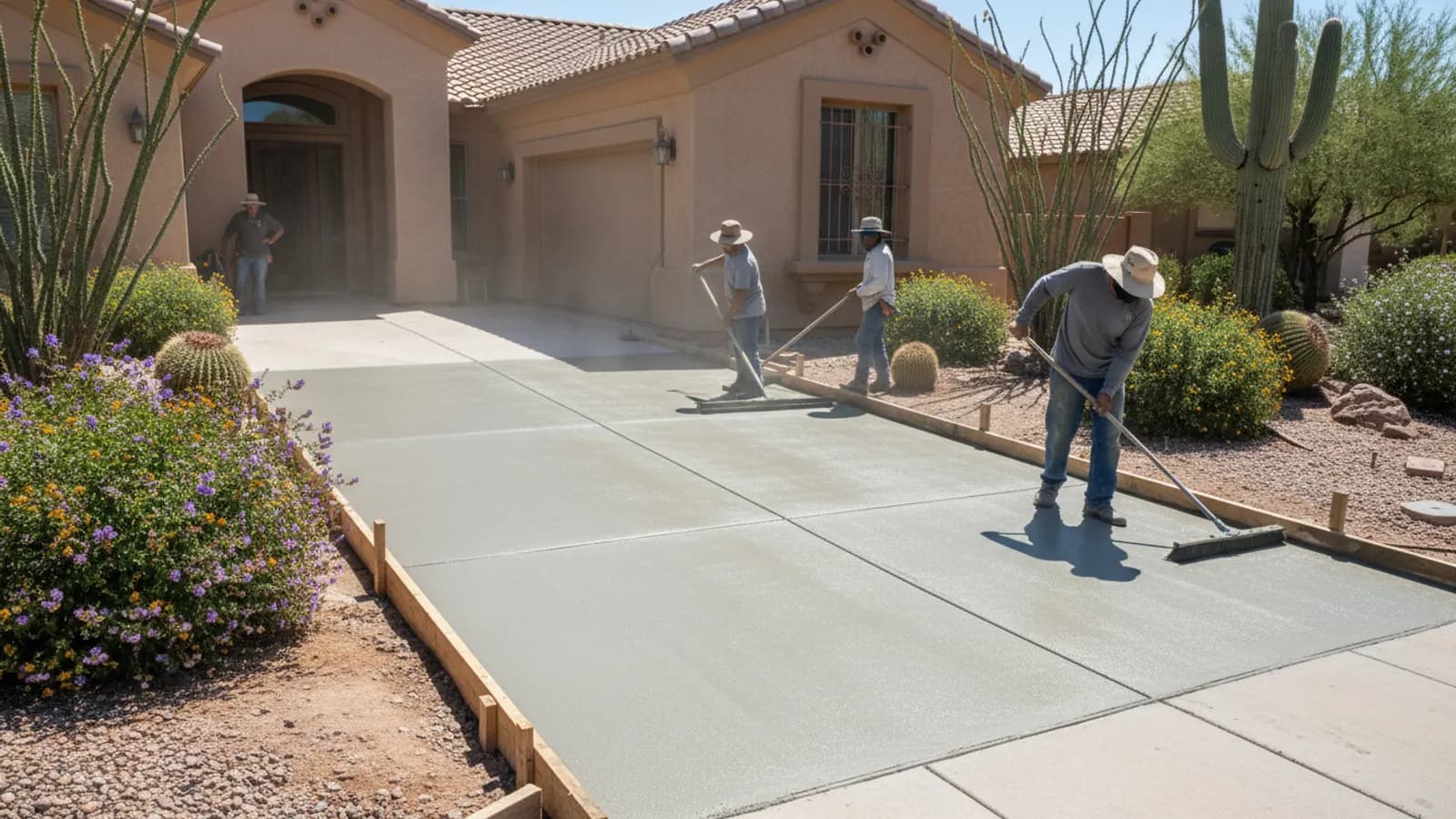
Freshly poured concrete driveway being screeded and floated between forms in a Glendale, Arizona home
Glendale's housing stock splits between 1990s–2010s Arrowhead tract (driveway replacement, RV pads) and 1960s–80s central Glendale (driveway tear-out + replace, expansive soil prep).
Westgate-adjacent STR driveways and parking aprons see steady decorative work.
Pre-dawn pour scheduling May–September is standard.

Why Glendale Concrete Pouring Is Different

Central Glendale expansive clays: 4″+ ABC base compacted to 95% on every pour.
City of Glendale Building Safety: ROW permit on driveway, building permit on footings.
Pre-dawn pour scheduling May–September.

Recent Concrete Pouring Projects in Glendale

Arrowhead Ranch

RV pad 14′x38′ + apron tie-in, 6″ slab, #4 rebar 12″ OC

$12K7 days

Stonehaven

Driveway tear-out + replace 820 sf, broom, ROW permit

$11K6 days

Westgate-area STR

Stamped slate parking apron 600 sf, integral color, sealed

$15K8 days

Concrete Pouring in Glendale: Fast Facts

Driveway replacement: ~40% of Glendale volume.

RV pad: ~20%.

Patio / decorative: ~25%.

Average Glendale concrete project: $8,000–$22,000.

ROW permit on every driveway replacement.

Typical Cost

$1,500 – $25,000+

Typical Timeline

3 days – 3 weeks

Permit Lead Time

2–4 weeks

How We Approach Concrete Pouring

ProWorx Restoration pours residential and commercial concrete across the Phoenix metro — foundations, driveways, patios, walkways, RV pads, equipment slabs, and decorative finishes. We hold Arizona ROC #349454 and self-perform formwork, reinforcement, placement, and finishing with crews experienced in hot-weather pours.
Pouring concrete in Arizona means working against ACI 305 hot-weather conditions for most of the year. Surface temperatures above 110°F flash-cure the top of a slab before the bottom sets, causing plastic shrinkage cracks. We pour at dawn (often 4–6 AM in summer), use Type II low-alkali cement, ice-chilled water, retarding admixtures, evaporation-reducing aggregates, and wet-cure or curing-compound applications. Expansive clay soils in parts of north Scottsdale, Cave Creek, and the East Valley require engineered subgrade prep and proper joint placement to control inevitable shrinkage.

Foundation slabs: slab-on-grade, monolithic, and post-tension coordination

Driveways and approaches (5–6" thick with #4 rebar at 18" OC)

Patios, walkways, RV pads, equipment and HVAC slabs

Decorative: stamped, exposed aggregate, integral color, broom and salt finishes

Hot-weather pours per ACI 305 with ice, retarders, and dawn placement

Engineered subgrade prep and control-joint layout for expansive soils

What Glendale Homeowners Should Know About Concrete Pouring

Sealing Masonry

Breathable masonry sealers can help reduce water absorption while allowing moisture inside the wall to escape. Sealers are not appropriate for every situation, and non-breathable coatings can trap moisture and cause damage. Choosing the right product depends on the type of masonry and its exposure.

Pool Barrier Walls

Block walls frequently serve as pool barriers, and gaps, damage or climbable features can compromise safety. Repairs should maintain the required barrier height and integrity. Pool barrier requirements vary by jurisdiction, so any changes should be checked against local rules.

Sealing Concrete

Applying a sealer helps protect concrete from stains, moisture and wear, and can enhance decorative finishes. Sealers need periodic reapplication, especially on surfaces exposed to intense sun and traffic. Choosing a sealer appropriate for the finish and exposure helps maintain the concrete's appearance.

Patios and Outdoor Living Slabs

Concrete patios extend usable living space into the backyard, and they are among the most popular concrete projects in Arizona. A patio should be sized for the furniture and activities planned, sloped to drain away from the house and finished with a surface that is comfortable and safe underfoot. Lighter-coloured finishes stay cooler in direct sun than dark surfaces, which matters in Arizona summers. Planning for future shade structures, lighting or outdoor kitchens before pouring allows footings and conduit to be included.

Painting Block Walls

Many block walls are painted or coated to match a home's exterior. Over time, the finish fades and peels in Arizona's sun. Repainting requires cleaning, repairing cracks and using coatings formulated for masonry. A well-applied finish protects the wall and improves its appearance.

Choosing the Right Thickness

Slab thickness depends on its use. Walkways and patios carry relatively light loads, while driveways and RV pads must support vehicles and require thicker concrete and appropriate reinforcement. Using the correct thickness prevents premature cracking and failure.

Reinforcement Options

Steel reinforcing bar, wire mesh and fibres can be added to concrete to improve its performance. Reinforcement helps hold cracks together and increases resistance to loads, which is particularly important for driveways and slabs that support vehicles. The right reinforcement depends on the slab's purpose and thickness.

Driveways

A concrete driveway must withstand vehicle loads, heat and occasional heavy rain. Proper subgrade preparation, adequate thickness, reinforcement, control joints and drainage away from the house all contribute to a driveway that lasts for decades.

Stone Veneer Repairs

Natural and manufactured stone veneer is popular on Arizona homes for accent walls, columns and fireplaces. Veneer can loosen, crack or allow water behind it if it was installed without proper drainage and flashing. Repairs may involve resetting loose stones, replacing damaged pieces and correcting installation details to prevent water intrusion.

Common Concrete Issues in Phoenix-Metro Properties

Three failure modes dominate. Plastic shrinkage cracking from hot-weather flash-curing — surface cracks visible within hours of placement, prevented by retarders, evaporation reducers, and proper curing. Random cracking from missing or late control joints — saw-cut joints must be placed within 8–12 hours and at 24× slab thickness (so 8 feet OC on a 4" slab). And heaving on expansive clay soils in north Scottsdale and Cave Creek — solved with proper subgrade prep, capillary breaks, and isolation from existing structures. We design around all three; we don't react to them after the pour.

Scheduling Around Weather

Concrete work is affected by weather, particularly extreme heat and monsoon rain. Pours are typically scheduled early in the day during summer, and heavy rain soon after placement can damage the surface. Flexible scheduling helps ensure the best possible result.

Control Joints and Cracking

Concrete naturally shrinks as it cures, and some cracking is normal. Control joints, which are deliberately placed grooves, encourage cracks to form in straight lines at predetermined locations rather than randomly across the surface. Correct spacing and depth of control joints help concrete crack in a controlled, less noticeable way.

Masonry Fireplaces and Chimneys

Masonry fireplaces and chimneys can develop cracked mortar, damaged crowns and deteriorated flues. Since these components affect fire safety, they should be inspected regularly and repaired by professionals. Restoring chimney crowns and mortar joints keeps water out and protects the structure.

Repairing Versus Replacing Concrete

Minor cracks and surface wear can sometimes be repaired or resurfaced, but slabs with significant settlement, heaving or extensive cracking may need replacement. Evaluating the cause of damage determines whether repair will last.

Pouring Concrete in Arizona Heat

Arizona's heat creates particular challenges for concrete. High temperatures, low humidity and wind cause water to evaporate quickly from fresh concrete, which can lead to rapid setting, surface cracking and reduced strength. Pouring early in the morning, keeping materials cool, using appropriate admixtures and protecting the surface from rapid drying help produce durable concrete in hot conditions.

Our Proven Process

01

Free Consultation

We visit your property, discuss your goals, and provide a detailed, no-obligation estimate.

02

Custom Plan

Our team creates a tailored project plan with timeline, materials, and transparent pricing.

03

Expert Execution

Licensed craftsmen complete your project with quality materials and meticulous attention to detail.

04

Final Walkthrough

We inspect every detail with you and ensure complete satisfaction before the job is done.

"Stamped slate apron at our Westgate STR — guests think it's natural stone. Holds up to game-day traffic with zero issues."

ProWorx Client · Glendale

Neighborhoods We Serve in Glendale

Arrowhead Ranch · Stonehaven · Historic Downtown · Westgate · Sahuaro Ranch · Marbella Vineyards · Rovey Farm Estates

Concrete Pouring FAQs for Glendale Homeowners

Ready to Start Your Glendale Concrete Pouring Project?

Get a free, no-obligation estimate from a licensed Arizona contractor — ROC #349454.