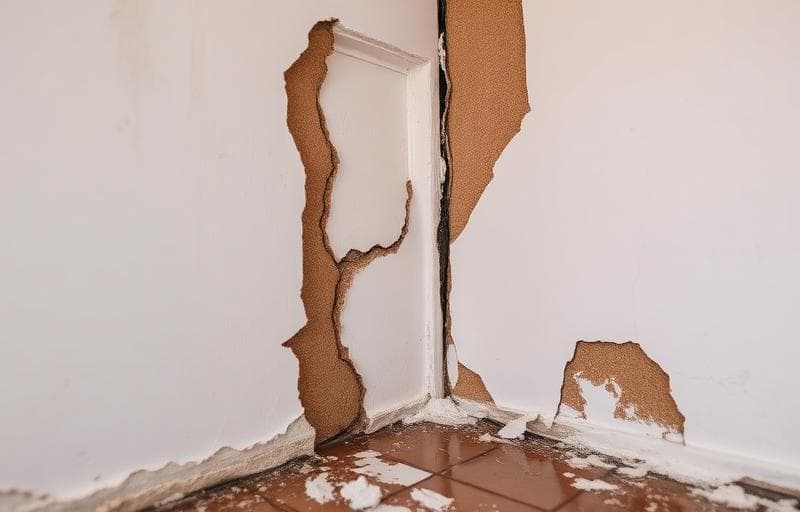



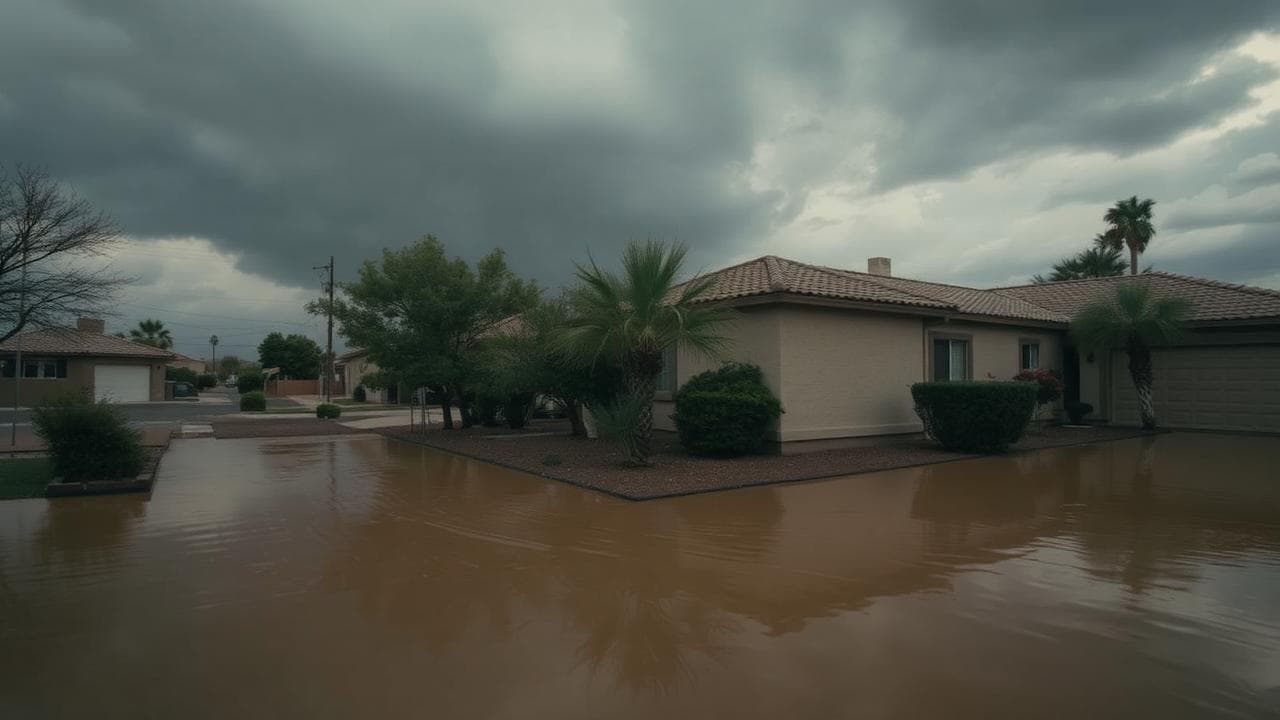
The East Valley's flat alluvial soil and hard pan layer make it uniquely vulnerable to flash flooding. A single monsoon cell can dump 2 inches of rain in 30 minutes, overwhelm storm channels, and push water through block walls, weep screeds, and garage thresholds before you've finished dinner. This guide walks Mesa, Gilbert, Chandler, and Queen Creek homeowners through what actually happens during a flash flood water damage restoration — hour by hour — and what it costs in 2026.
Why the East Valley Floods the Way It Does
Unlike Phoenix's older grid with deep storm drains, much of the East Valley was built on agricultural land with caliche hard pan 2–4 feet down. Rain can't percolate, so it sheets across lots and into homes at low elevation. Newer subdivisions in Queen Creek and San Tan Valley are particularly exposed because the retention basins haven't caught up with density. Add the occasional failed pump station and you get the kind of sudden, dirty-water flooding that ruins drywall and flooring fast.
The First 60 Minutes: Critical Decisions
- Shut off utilities if water is near electrical panels or outlets. Don't wade into a flooded room with live power.
- Document everything. Photos and video of every room, every wall, from multiple angles. Insurance will want pre-mitigation evidence.
- Move what you can. Lift furniture onto blocks, pull rugs, get electronics off the floor.
- Don't drain basements or low rooms all at once. Hydrostatic pressure from saturated exterior soil can collapse a wall inward.
- Call a licensed water damage contractor. The first 24 hours determine whether this is a dry-out job or a full tear-out.
Hour-by-Hour Restoration Timeline
Hours 0–4: Emergency Response & Extraction
Crew arrives, confirms safety, and begins standing-water extraction with commercial pumps and vacuums. Porous materials already soaked — carpet pad, baseboard, the bottom 2 feet of drywall — are flagged for removal. Moisture meters map the extent of wicking up the walls. Affected contents are moved to a dry zone or packed out.
Hours 4–24: Tear-Out & Stabilization
We cut and remove wet drywall 2 feet above the highest water line (flood cuts), pull saturated insulation, and remove carpet pad. Carpet itself can often be saved if it's clean water and dried in place. We set commercial dehumidifiers and air movers — typically one per 250 sq ft — and start logging humidity readings. Water damage restoration is a science: we track daily moisture drops toward the target (<5% in drywall, <16% in wood).
Days 2–4: Drying & Monitoring
Equipment runs continuously. We monitor with moisture meters and thermal imaging to find hidden pockets behind cabinets or in wall cavities. If we caught it within 24 hours, mold risk is low. If water sat 48+ hours, we apply an antimicrobial and may remove more material. This is the phase where cutting corners creates a mold problem 3 weeks later.
Days 5–7: Clearance & Reconstruction Planning
Once moisture readings hit target across all materials, we remove equipment and do a final clearance inspection. We then scope the rebuild: new drywall, insulation, baseboard, paint, and any flooring replacement. If the flood came from outside (Category 3 / black water), we also treat for contamination and recommend replacing rather than cleaning certain materials.
Days 7–21: Reconstruction
Rebuild phase: hang and finish drywall, replace insulation, paint, reinstall baseboard, and replace flooring. If the slab was saturated, we may need to address flooring adhesive and moisture barriers before new material goes down.
2026 Cost Ranges (East Valley)
- Clean water, single room, fast response: $2,800 – $5,500
- Clean water, 2–3 rooms + drywall: $6,000 – $12,000
- Gray water (appliance/laundry) full drywall tear-out: $9,000 – $18,000
- Black water (outside/sewage) Category 3: $15,000 – $35,000+
- Full slab flooring replacement add-on: $4,000 – $12,000 depending on material
Insurance: What's Covered After a Flash Flood
Here's the catch most homeowners don't know: standard homeowners insurance does not cover surface flooding from outside. That requires a separate flood policy (NFIP or private). What standard policies do cover is water damage from a sudden internal source (burst pipe, failed supply line) and sometimes wind-driven rain through a damaged roof. If your East Valley home flooded from storm runoff or rising groundwater, the insurance outcome depends entirely on whether you have flood coverage and how the water's source is classified. ProWorx documents the entry path precisely so your adjuster can make the right call — see our insurance restoration process.
Preventing the Next Flood
- Regrade the lot so water flows away from the foundation, not toward it
- Install a surface French drain along low garage thresholds
- Add a backwater valve if you're on city sewer in a low area
- Seal weep screeds and stem walls with elastomeric coating — see our stucco repair guide
- Keep storm channel grates clear before monsoon season
Don't Wait on Flood Damage
Every hour water sits, the cost and scope grow. If your East Valley home took on water this monsoon, ProWorx offers 24/7 emergency response across Mesa, Gilbert, Chandler, and Queen Creek. We extract, dry, document for insurance, and rebuild — all under one license. Request emergency response here, or call us directly if you have standing water now.
Why East Valley Flooding Happens So Fast
Desert soil absorbs very little water. Decades of sun bake the surface into a hard crust, and the caliche layer beneath it is close to impermeable. When a monsoon cell drops an inch of rain in twenty minutes, almost all of that water runs across the ground rather than into it. That runoff collects in washes, gathers speed down even gentle slopes, and arrives at homes as moving water rather than rising water.
The East Valley compounds this with geography. Mesa, Gilbert, Chandler and Queen Creek sit on broad, shallow grades crossed by washes that are dry nearly all year. Development has narrowed some of those channels and built roads across others. Water that once spread harmlessly over open desert now concentrates into predictable paths, and the homes near those paths take the brunt of it.
The First Hour Matters Most
If floodwater has entered your home, safety comes before property. Do not walk into standing water if it may be in contact with outlets, appliances or the electrical panel. If you can reach the main breaker safely and without standing in water, shut off power to the affected area. Wear boots and gloves if you must enter, because floodwater from outside is classified as grossly contaminated.
Once it is safe, photograph everything before you move or clean anything. Capture the water line on walls and furniture, the depth across different rooms, and the condition of flooring, baseboards and belongings. Insurers rely heavily on this evidence, and once cleanup starts it cannot be recreated. Then call your carrier and a restoration contractor.
Why Flood Water Is Treated Differently
Water that enters from outside is Category 3 under the industry standard, the most contaminated classification. It may carry sewage from overwhelmed lines, fertiliser and chemicals washed off roads and yards, animal waste and soil bacteria. That classification changes what can be saved.
Porous materials that absorbed floodwater generally cannot be reliably cleaned and are removed: carpet and pad, drywall below the water line, insulation, particleboard cabinetry and upholstered furniture. Hard, non-porous surfaces such as tile, concrete, glass and metal can be cleaned and disinfected. This is why flood restoration involves more demolition than a clean-water leak of the same depth.
Sediment, Then Drying
Flash flooding leaves mud and silt behind, inside wall cavities as well as on floors. That sediment has to be removed before drying and disinfection can work, because it holds moisture and contaminants against the structure. Walls are typically opened above the water line to remove wet insulation and allow the cavity to dry, and framing is cleaned, treated and dried to verified moisture levels before anything is closed up.
Drying is measured, not guessed. Moisture meters establish a dry standard from unaffected materials of the same type elsewhere in the house, and readings are taken daily until the affected materials match it. Closing a wall that is still damp traps the problem inside.
Flood Coverage Is Usually Separate
This is the detail that surprises East Valley homeowners most often. Standard homeowner policies generally cover sudden internal water damage, such as a burst supply line, but exclude flood water entering from outside. That coverage normally requires a separate flood policy, and such policies commonly have a waiting period before they take effect, so buying one as a storm approaches does not help.
Because the distinction matters so much, documenting where the water came from is important. A roof leak during the same storm, or a drain backing up inside the house, may be treated differently from overland flooding. Careful documentation of the source and the path the water took supports whichever claim applies.
Reducing the Risk Before the Next Storm
Once a home has flooded, it is worth understanding why water reached the structure. The most common contributors are soil that slopes toward the foundation rather than away from it, landscaping or hardscape that has raised grade above the weep screed at the base of stucco walls, blocked or undersized drainage along the property line, and garage thresholds that sit level with the driveway.
Regrading, extending drainage, raising thresholds, sealing garage door bottoms and keeping washes and channels clear all reduce exposure. None of these are expensive compared with a single flood, and most can be completed between monsoon seasons.
What Restoration Actually Costs
Flood restoration pricing is driven by four things: how deep the water got, how far it travelled through the structure, how long it sat before mitigation began, and how much of what it touched was porous. Water two inches deep across a tiled entry is a very different job from the same two inches across carpeted bedrooms, because the carpet, pad and the drywall wicking above it all have to come out.
Time is the variable you control. Mitigation starting within hours often means removing baseboards and the bottom few inches of drywall. The same loss discovered after a long weekend can mean cabinets, flooring and a mould remediation on top of the original water work. Insurers price the work on the same line-item basis restoration contractors use, which is why detailed moisture documentation from day one matters to the settlement as much as to the drying.
Garages, Casitas and Everything Else on the Lot
Floodwater usually reaches a garage before it reaches the house, because garage slabs sit lower and the door opening is wide and close to grade. Water heaters, furnaces, washers and dryers, stored belongings and vehicles are all commonly affected, and a detached casita or workshop may flood independently of the main residence.
Every affected structure on the property needs to be assessed and documented separately, not folded into a single description of the loss. Detached buildings also frequently have different construction, with uninsulated walls or bare concrete floors, which changes how they are cleaned and dried.
Who to Call, and in What Order
Call your insurer first so the claim is open and the clock starts, then a licensed restoration contractor. You are never obliged to use the contractor your insurer recommends; the choice is yours. If the water may have reached electrical systems, have an electrician check before power is restored to the affected area.
Keep every receipt from the first day onward, including emergency supplies, temporary accommodation and any equipment you rent before a contractor arrives. Most policies treat reasonable mitigation costs as part of the claim, but only if you can show what you spent.