

Water Damage Restoration in Avondale, AZ

24/7 emergency water response and full repair rebuild across Avondale — IICRC-aligned.

Serving Avondale & nearby Maricopa County

Get Your Free Water Damage Restoration Estimate

Step 1 of 5Project

What kind of project?

Pick the option that fits best — you can add details next.

Quick Answer

ProWorx Restoration provides 24/7 water damage restoration throughout Avondale, AZ. Avondale losses most often come from water-heater failures, washer-hose ruptures, and second-floor bath supply leaks; typical projects run $2,000–$20,000+ and 5 days to 4 weeks.

1,200+

Projects Completed

15+

Years Experience

ROC #349454

Licensed & Insured

100%

Satisfaction Guaranteed

Water Damage Restoration Built for Avondale Homes
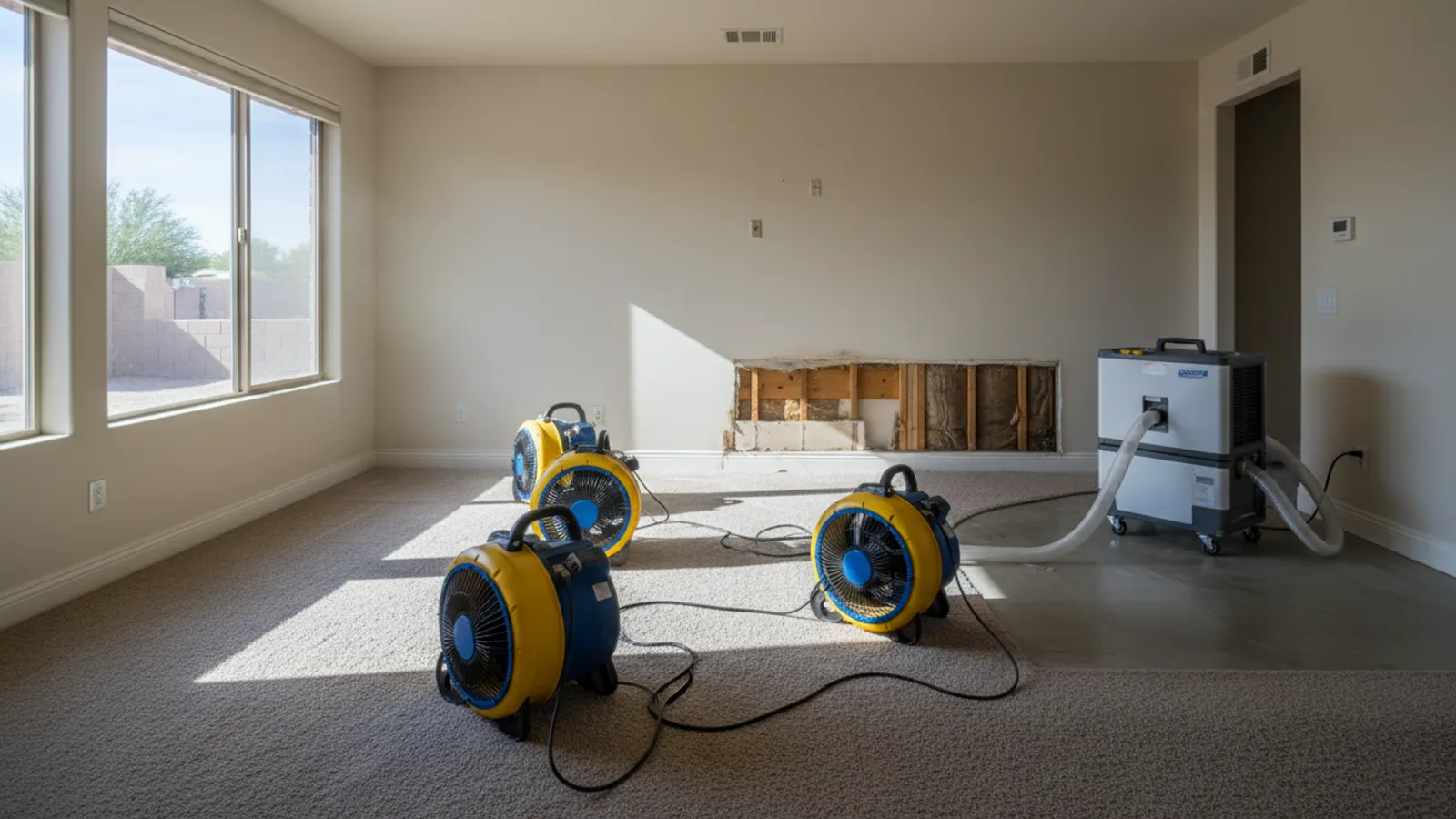
Water damage drying setup with air movers and a dehumidifier, baseboards removed in a Avondale, Arizona home
Avondale is dominated by mid-2000s tract subdivisions — Garden Lakes, Rancho Santa Fe, Coldwater Springs, Donatela. Most homes are now 15–25 years old, which puts original water heaters, washing-machine hoses, and supply lines right at end-of-life. The dominant water losses here reflect that aging-system pattern: water-heater bursts, washer-hose failures, and toilet-supply ruptures.
Older Avondale (Old Town) sees a smaller share of slab leaks and aging-plumbing losses similar to central Glendale and Tempe.
We respond 24/7, document for the carrier, and rebuild end-to-end.

Why Avondale Water Damage Restoration Is Different

Aging supply components are the dominant pattern. After mitigation we recommend braided supply hose upgrades, water-heater replacement, and automatic shutoff valves where appropriate.
Avondale permits issue in roughly 2 weeks for structural build-back scope.

Recent Water Damage Restoration Projects in Avondale

Garden Lakes

Water heater failure in interior closet: drywall demo, drying, tankless install, full rebuild

$10K3 weeks

Rancho Santa Fe

Upstairs bath supply line burst: 2-story ceiling demo, hardwood drying, drywall, paint

$12K3 weeks

Coldwater Springs

Washer hose burst: drywall demo, drying, drywall + texture, baseboard, paint, pan install

$7K2 weeks

Water Damage Restoration in Avondale: Fast Facts

Average Avondale residential water loss: $4,000–$12,000.

Most common loss source: end-of-life water heater or supply hose.

Permit timeline for build-back: roughly 2 weeks.

Mold colonization window: 48–72 hours.

Median project duration: 2–3 weeks.

Typical Cost

$1,500 – $40,000+

Typical Timeline

3 days – 6 weeks

Permit Lead Time

2–4 weeks

How We Approach Water Damage Restoration

Water damage can strike at any time — from burst pipes and appliance leaks to monsoon flooding. ProWorx Restoration provides 24/7 emergency water damage restoration throughout the area.
Our certified technicians use advanced water extraction, dehumidification, and drying equipment to stop damage in its tracks. We then repair and restore your property to its pre-loss condition, handling everything from drywall repair to complete reconstruction.

24/7 emergency water extraction

Advanced drying and dehumidification

Mold prevention and remediation

Structural drying and monitoring

Complete repair and reconstruction

Direct insurance billing

What Avondale Homeowners Should Know About Water Damage Restoration

The Wax Ring and the Slow Leak Beneath the Toilet

One of the most common sources of hidden bathroom damage is the wax ring that seals the toilet to the drain flange. When the seal fails, or when the toilet rocks because the flange is loose or broken, small amounts of water can escape every time the toilet is flushed. Because the leak is beneath the toilet, it can continue for months, soaking the subfloor and eventually causing rot, loose flooring or stains on the ceiling below. Signs include a toilet that moves when pressed, discoloured or soft flooring around the base, and a persistent odour. Replacing the seal is simple; repairing the subfloor after a long leak is not.

Removing Sediment and Restoring the Structure

After floodwater has been removed, mud, silt and debris are often left behind on floors, in wall cavities and around foundations. That material must be cleaned out thoroughly before drying and disinfection can be effective. Wall cavities are opened to remove wet insulation and allow drying, and framing is cleaned, treated and dried to safe moisture levels before reconstruction begins. Rebuilding then restores drywall, flooring, cabinetry and finishes so the home is safe and comfortable again.

Arizona's Monsoon Season and Water Damage Prevention

Arizona's monsoon season (June through September) brings intense rainfall that can overwhelm drainage systems and cause flash flooding. homeowners can reduce risk by maintaining gutters and downspouts, grading soil away from foundations, sealing basement walls, and installing sump pumps in low-lying areas. Despite prevention efforts, monsoon damage happens — and when it does, ProWorx Restoration provides 24/7 emergency water extraction, structural drying, and complete property restoration.

Roof Leaks During Monsoon Season

Monsoon storms bring wind-driven rain that can force water past roofing materials that shed ordinary rain without trouble. Lifted shingles, cracked tiles, failed underlayment, deteriorated flashing around vents and chimneys, and clogged valleys are common entry points. Because the leak may only appear during heavy storms, it can be difficult to trace afterwards. If a ceiling stain appears after a monsoon storm, have the roof inspected before repairing the ceiling, so the source is fixed first.

Cupping, Crowning and Buckling Explained

Hardwood reacts to moisture in predictable ways, and the shape of the damage tells you a lot. Cupping occurs when the edges of boards rise higher than the centres, usually because moisture is coming from below and the bottom of each board has absorbed more water than the top. Crowning is the opposite, with the centres higher than the edges, and often appears when cupped floors are sanded flat before they have properly dried. Buckling, where boards lift away from the subfloor entirely, indicates severe moisture exposure. Understanding which of these is happening helps determine whether the floor can be saved and how it should be dried.

Our Bathroom Water Damage Repair Process

Every job starts with leak detection — thermal imaging, moisture meters, and selective drywall removal to find the source. Once confirmed, we shut off water, remove damaged drywall and substrate, dry the cavity, inspect for mold, repair the underlying plumbing or waterproofing, then rebuild with code-compliant materials. A small leak repair may take 3–5 days; a full waterproofing and tile rebuild 2–4 weeks.

Where Residential Water Damage Usually Comes From

In Arizona homes, most water damage originates inside the house rather than from weather. Braided supply lines under sinks and toilets fail at their fittings, water heaters in garages and closets rupture as they age, refrigerator ice-maker lines leak slowly behind the appliance, washing machine hoses split, and air-conditioning condensate lines clog and overflow. Many of these failures are preventable with occasional inspection: replacing rubber washing machine hoses with braided ones, checking supply lines for corrosion or bulging, flushing water heaters and replacing them before they fail, and keeping condensate lines clear. A few minutes of checking each year can prevent a very expensive repair.

How Structural Drying Actually Works

Drying a building is not simply a matter of pointing fans at wet surfaces. Effective drying balances three things: removing liquid water by extraction, moving air across wet surfaces so moisture evaporates, and removing that moisture from the air with dehumidifiers so it does not simply condense somewhere else. Too much air movement without enough dehumidification raises humidity throughout the house and can spread damage to dry areas. Temperature matters as well, since warmer air holds more moisture and drying progresses faster within the right range. Professional drying is planned around the volume of the space, the materials involved and how much water they absorbed, which is why two seemingly similar leaks can require very different equipment setups and drying times.

Drying Before Closing

Once the source has been fixed and damaged drywall removed, the ceiling cavity, framing and remaining materials must be dried thoroughly before new drywall goes up. Closing a damp cavity traps moisture inside, which can lead to mould, odours and repeat staining. We verify that framing and surrounding materials have returned to normal moisture levels before reinstalling drywall, then finish, texture and paint the repair to match the rest of the ceiling.

Our Proven Process

01

Free Consultation

We visit your property, discuss your goals, and provide a detailed, no-obligation estimate.

02

Custom Plan

Our team creates a tailored project plan with timeline, materials, and transparent pricing.

03

Expert Execution

Licensed craftsmen complete your project with quality materials and meticulous attention to detail.

04

Final Walkthrough

We inspect every detail with you and ensure complete satisfaction before the job is done.

"Quick, thorough, and they upgraded our hoses and added a shutoff valve while they were at it. Worth every penny."

ProWorx Client · Avondale

Neighborhoods We Serve in Avondale

Garden Lakes · Rancho Santa Fe · Coldwater Springs · Old Town Avondale · Donatela

Water Damage Restoration FAQs for Avondale Homeowners

Ready to Start Your Avondale Water Damage Restoration Project?

Get a free, no-obligation estimate from a licensed Arizona contractor — ROC #349454.