



Flood Restoration in Phoenix, AZ

24/7 monsoon and slab-leak flood response across Phoenix — extraction, drying, and full rebuild.

Serving Phoenix & nearby Maricopa County

Get Your Free Flood Restoration Estimate

Step 1 of 5Project

What kind of project?

Pick the option that fits best — you can add details next.

Quick Answer: Flood Restoration in Phoenix

ProWorx Restoration handles 24/7 flood restoration in Phoenix, AZ. The dominant Phoenix flood losses are monsoon flash flooding in low-lying neighborhoods near Cave Creek Wash and the Salt River bottoms, slab leaks in pre-1980 central Phoenix copper supply lines, and roof failures during high-intensity July–September storms. Typical flood projects run $3,500–$60,000 and 5 days to 8 weeks.

1,200+

Projects Completed

15+

Years Experience

ROC #349454

Licensed & Insured

100%

Satisfaction Guaranteed

Flood Restoration Built for Phoenix Homes
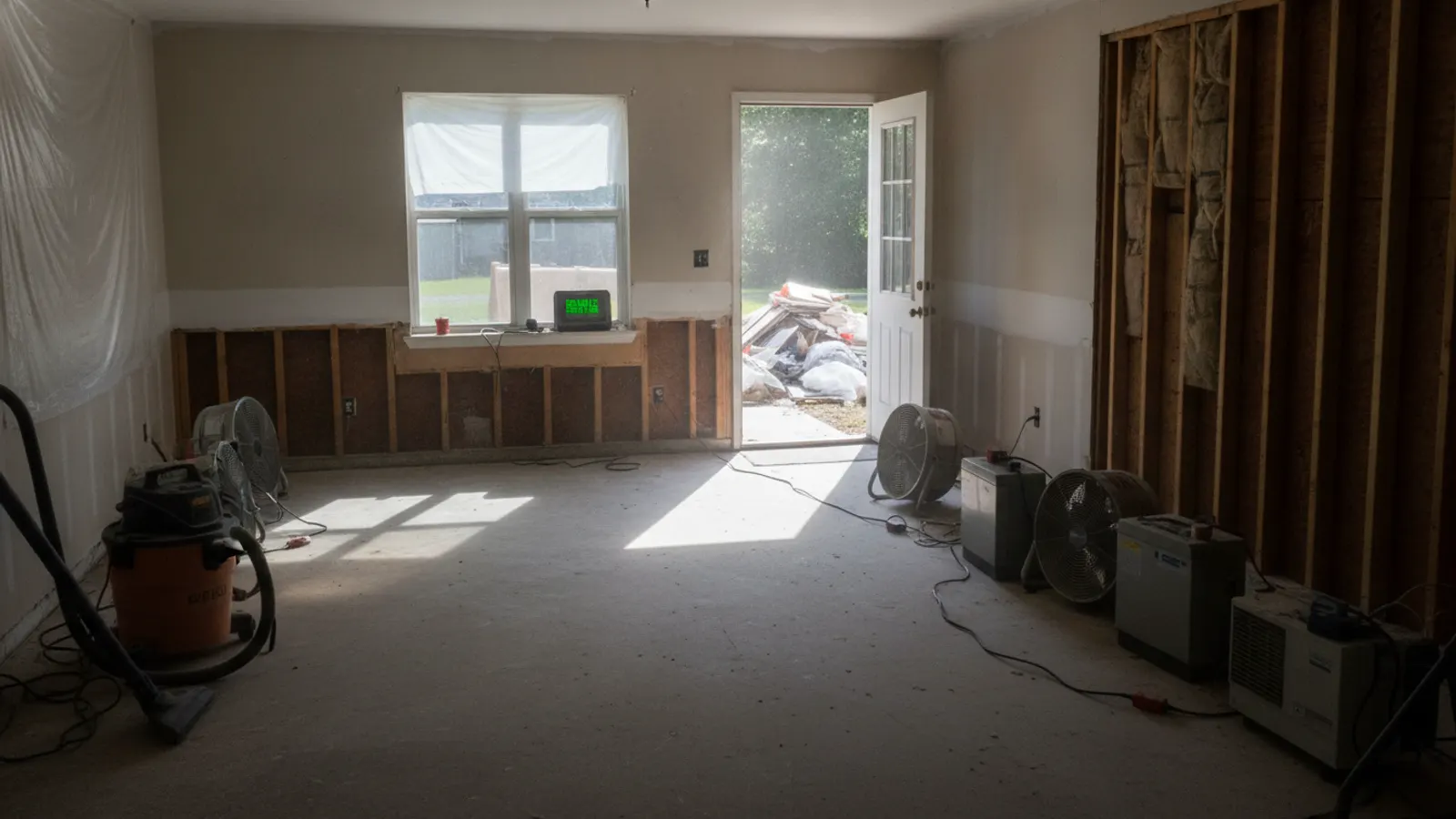
Flood-damaged flooring removed to the slab with drying equipment running in a Phoenix, Arizona home
Phoenix flood losses cluster around three patterns. Monsoon-season cells dump 1–3 inches of rain in under an hour, overwhelming surface drainage in flatter neighborhoods like Maryvale, Laveen, and the South Mountain foothills. Pre-1980 central Phoenix — Encanto, Coronado, Willo, Arcadia Lite — sees a high rate of slab leaks as original copper supply lines corrode through. And monsoon roof failures, particularly on flat-roof Santa Fe and mid-century homes, push water into ceilings and wall cavities.
Once water gets into Phoenix construction, the desert heat is not your friend — it accelerates microbial growth in trapped wall cavities within 48–72 hours. Speed of extraction and drying is what determines whether you have a $4,000 dry-out or a $40,000 reconstruct.
We respond 24/7 across the City of Phoenix with truck-mounted extraction, commercial-grade dehumidifiers and air movers, moisture mapping, antimicrobial treatment, and full reconstruction — handled by the same crew, no contractor handoff.

Why Phoenix Flood Restoration Is Different

Phoenix's slab-on-grade construction makes slab leaks especially destructive: water wicks laterally through the slab and into baseplates, baseboards, and cabinet kicks before it ever appears on the floor. By the time you see it, you usually have 10–20 linear feet of compromised drywall.
Pre-1995 Phoenix tract homes were built with paper-faced gypsum behind cabinets and tile — a perfect mold substrate when slab leaks go undetected for weeks. We moisture-map the entire affected zone, not just where water is visible, and document everything for the carrier in Xactimate.

Recent Flood Restoration Projects in Phoenix

Maryvale

Monsoon flash flood: 1,400 sf carpet/pad removal, structural drying, drywall flood-cut, repaint, baseboard replacement

$18K3 weeks

Arcadia Lite

Slab leak under kitchen island: jackhammer slab access, copper repair, cabinet rebuild, tile floor replacement

$32K5 weeks

Ahwatukee

Monsoon roof failure: attic insulation removal, ceiling drywall replacement, mold remediation, repaint

$22K4 weeks

Flood Restoration in Phoenix: Fast Facts

Phoenix monsoon season: June 15 – September 30, peak losses mid-July through August.

Average Phoenix flood/water loss claim: $11,000–$22,000.

Pre-1980 central Phoenix copper supply slab leaks: roughly 40% of residential water losses in those zip codes.

Microbial growth window in untreated wall cavities: 48–72 hours in summer.

City of Phoenix emergency-repair permits typically same-day or next-day for life-safety scope.

Typical Cost

$3,000 – $75,000+

Typical Timeline

1 – 8 weeks

Permit Lead Time

2–4 weeks

How We Approach Flood Restoration

Arizona's monsoon season — typically mid-June through September — can dump 1–3 inches of rain in under an hour on hard-packed desert soil that can't absorb it. The result: flash flooding, washes overrunning streets, roof leaks under wind-driven rain, and ground-water intrusion into garages, casitas, and lower-level living spaces. ProWorx Restoration is a licensed Arizona general contractor (ROC #349454) responding 24/7 to flood emergencies across the Valley.
We arrive with truck-mounted water extractors, submersible pumps, commercial dehumidifiers, and air movers. Water is removed immediately, structural drying begins within hours, and antimicrobial treatment is applied before mold can take hold (typically within 24–48 hours of saturation). For total losses we also handle drywall, flooring, insulation, and finish reconstruction under the same contract.

24/7 emergency response across the Phoenix metro

Licensed Arizona general contractor (ROC #349454)

Truck-mounted water extraction and submersible pumping

Industrial dehumidification and high-velocity air movers

Antimicrobial treatment to prevent mold growth

Thermal imaging to detect hidden moisture

What Phoenix Homeowners Should Know About Flood Restoration

Why Flood Water Is Treated as Contaminated

Water that enters a home from outside, whether through monsoon flash flooding, overland runoff or a backed-up sewer line, is classified as Category 3, the most contaminated class under the IICRC standard. It may carry sewage, chemicals, fertilisers, animal waste and soil bacteria. That classification changes how the restoration must be handled. Porous materials such as carpet, padding, drywall, insulation and upholstered furniture that have absorbed flood water generally cannot be safely cleaned and must be removed and discarded. Hard, non-porous surfaces are cleaned and disinfected before drying continues.

Our Residential Water Restoration Process

Every job follows the IICRC S500 sequence: emergency extraction, moisture mapping with thermal cameras, removal of unsalvageable materials, commercial dehumidification and air movement for 3–5 days, antimicrobial application, then drywall and finish reconstruction. You get one project manager from first call through final paint, and your insurance claim is documented every step.

Materials, Equipment & Standards

We use commercial-grade equipment from leading manufacturers — Phoenix Restoration Equipment, Dri-Eaz, and Drieaz — plus EPA-registered antimicrobials and IICRC-certified drying protocols. Reconstruction uses code-compliant drywall, baseboards matched to your originals, and paint colors blended to existing surfaces.

Signs of Water Damage in Your Home

Water damage isn't always obvious. Look for water stains on ceilings or walls, musty odors, peeling or bubbling paint, warped flooring, soft or spongy drywall, and unexplained increases in your water bill. In Arizona's warm climate, hidden moisture can lead to mold growth within 24-48 hours. If you notice any of these signs, call ProWorx Restoration immediately for a professional moisture assessment using thermal imaging and industrial moisture meters.

Common Flood Sources in Arizona

Most Valley flood calls fall into a few patterns: monsoon roof leaks (especially on flat-roof homes in central Phoenix), washes overrunning into garages and casitas, slab leaks from corroded copper supply lines, water heater bursts, and washing-machine supply hose failures. Each requires different extraction and drying strategies, which we adapt on-site.

Rebuilding After the Drying Is Done

Once the structure is dry, the home has to be put back together, and this is where a single contractor handling both mitigation and reconstruction saves time and confusion. Removed drywall is replaced and finished to match surrounding walls, baseboards and trim are reinstalled, flooring is repaired or replaced, cabinets are reset or rebuilt, and painting blends new work into existing finishes. Matching flooring and texture so repairs are not obvious takes care. We manage the full rebuild after drying, coordinating every trade so your home is returned to the condition it was in before the loss.

How Structural Drying Actually Works

Drying a building is not simply a matter of pointing fans at wet surfaces. Effective drying balances three things: removing liquid water by extraction, moving air across wet surfaces so moisture evaporates, and removing that moisture from the air with dehumidifiers so it does not simply condense somewhere else. Too much air movement without enough dehumidification raises humidity throughout the house and can spread damage to dry areas. Temperature matters as well, since warmer air holds more moisture and drying progresses faster within the right range. Professional drying is planned around the volume of the space, the materials involved and how much water they absorbed, which is why two seemingly similar leaks can require very different equipment setups and drying times.

How Our Flood Restoration Process Works in Phoenix

01

Free On-Site Consultation

We visit your property, discuss your goals, and provide a detailed, no-obligation estimate.

02

Custom Project Plan

Our team creates a tailored project plan with timeline, materials, and transparent pricing.

03

Licensed Crews On Site

Licensed craftsmen complete your project with quality materials and meticulous attention to detail.

04

Final Walkthrough & Sign-Off

We inspect every detail with you and ensure complete satisfaction before the job is done.

"Slab leak flooded half our Arcadia kitchen on a Sunday. ProWorx was extracting water by 9pm and had the rebuild done in 5 weeks — flawless coordination with USAA."

ProWorx Client · Phoenix

Neighborhoods We Serve in Phoenix

Arcadia · Arcadia Lite · Encanto · Coronado · Willo · Maryvale · Laveen · Ahwatukee · South Mountain · North Central

Flood Restoration FAQs for Phoenix Homeowners

Ready to Start Your Phoenix Flood Restoration Project?

Get a free, no-obligation estimate from a licensed Arizona contractor — ROC #349454.