



Flood Restoration in Cave Creek, AZ

24/7 flood response across Cave Creek — hillside runoff, well-system, and supply-line extraction and rebuild.

Serving Cave Creek & nearby Maricopa County

Get Your Free Flood Restoration Estimate

Step 1 of 5Project

What kind of project?

Pick the option that fits best — you can add details next.

Quick Answer: Flood Restoration in Cave Creek

ProWorx Restoration handles 24/7 flood restoration in Cave Creek, AZ. Cave Creek's dominant flood losses are monsoon flash flooding off Black Mountain and the surrounding hills, well-pump and pressure-tank failures in custom homes on septic/well systems, and luxury-finish supply-line losses in Carefree Foothills estate homes. Typical projects run $5,000–$85,000 and 1–10 weeks.

1,200+

Projects Completed

15+

Years Experience

ROC #349454

Licensed & Insured

100%

Satisfaction Guaranteed

Flood Restoration Built for Cave Creek Homes
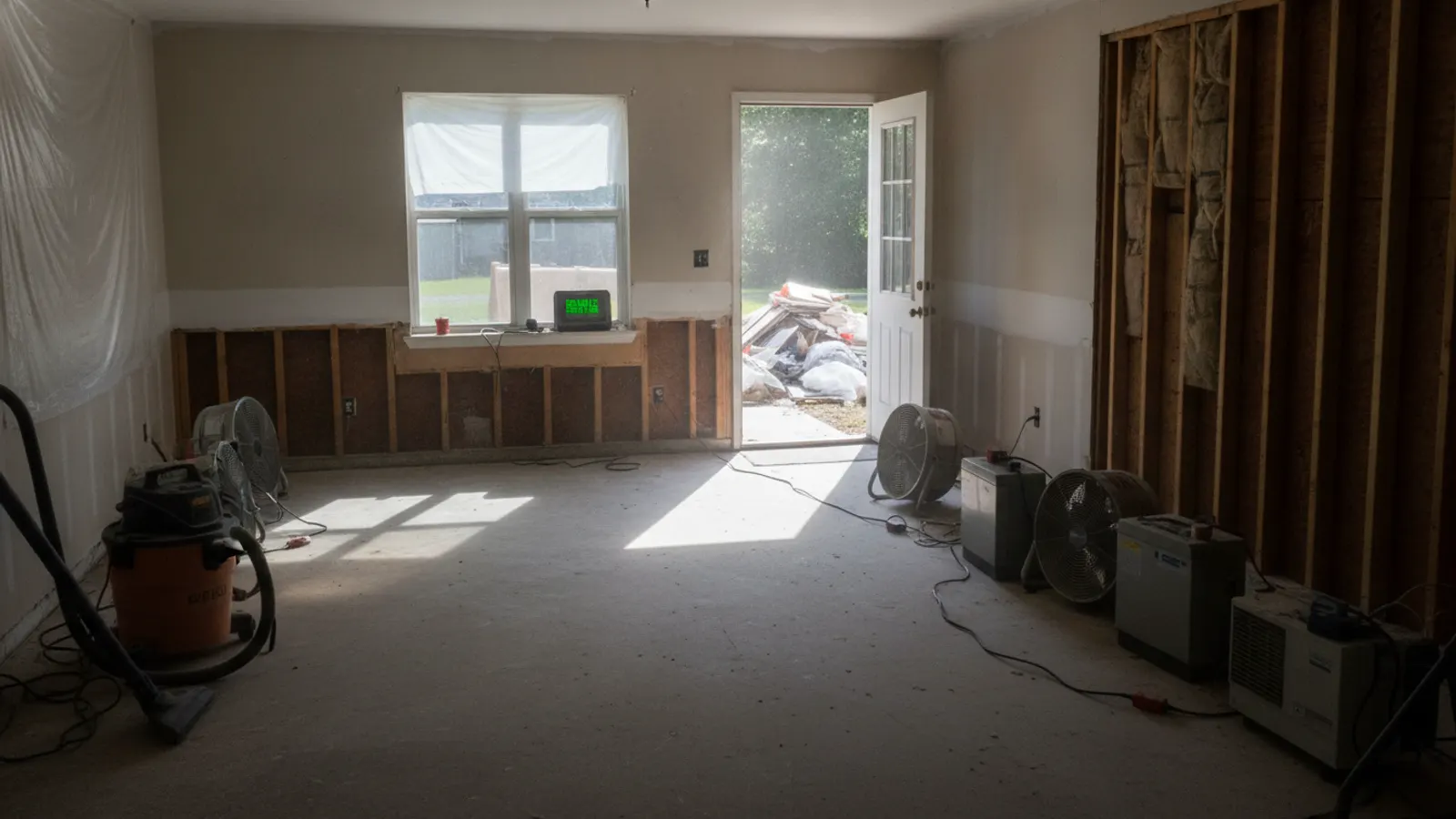
Flood-damaged flooring removed to the slab with drying equipment running in a Cave Creek, Arizona home
Cave Creek's flood profile is unlike anywhere else in the metro. Hillside custom homes on Black Mountain, in Carefree Foothills, and along the Cave Creek Wash corridor see severe monsoon runoff — sheet flow off hillsides, eroded drainage swales, retaining wall failures, and water driven into garage doors and entry transitions by 60+ mph monsoon gusts.
Many Cave Creek homes are on well/septic systems, which introduces a flood source unique to the area: pressure-tank ruptures, well-pump failures with backflow, and softener-loop overflows can flood mechanical rooms and adjacent garage/living space.
We respond 24/7 across the Town of Cave Creek and unincorporated Desert Hills with truck-mounted extraction, hillside-grade structural drying, and luxury-finish reconstruction.

Why Cave Creek Flood Restoration Is Different

Hillside custom-home water losses regularly involve more than the visible water — sheet flow that enters a garage often migrates under door thresholds and into adjacent finished space. We moisture-map full transitions on every Cave Creek hillside claim.
Cave Creek's Town Building Department typically issues emergency repair permits within 48 hours; custom-home and hillside structural rebuild permits often require engineering review and 4–6 weeks total.

Recent Flood Restoration Projects in Cave Creek

Carefree Foothills

Monsoon hillside sheet flow into garage and entry: 800 sf extraction, baseplate replacement, drywall, custom paint match, baseboard rebuild

$28K5 weeks

Black Mountain

Well pressure-tank rupture in custom-home mechanical room: 1,200 sf extraction, mechanical rebuild, drywall, hardwood floor restoration

$52K8 weeks

Tatum Ranch

Refrigerator ice-maker line failure on travertine: in-place drying, grout/sealer restoration, cabinet kick replacement, custom finish match

$15K3 weeks

Flood Restoration in Cave Creek: Fast Facts

Average Cave Creek flood/water claim: $14,000–$45,000 (skewed high by hillside custom finishes).

Hillside sheet-flow claims: roughly 30% of Cave Creek monsoon residential losses.

Well/septic-system water losses: ~15% of Cave Creek claim volume (unique to area).

Town of Cave Creek emergency repair permits: typically 48 hours.

Custom-home rebuild engineering review: add 4–6 weeks for hillside-overlay properties.

Typical Cost

$3,000 – $75,000+

Typical Timeline

1 – 8 weeks

Permit Lead Time

2–4 weeks

How We Approach Flood Restoration

Arizona's monsoon season — typically mid-June through September — can dump 1–3 inches of rain in under an hour on hard-packed desert soil that can't absorb it. The result: flash flooding, washes overrunning streets, roof leaks under wind-driven rain, and ground-water intrusion into garages, casitas, and lower-level living spaces. ProWorx Restoration is a licensed Arizona general contractor (ROC #349454) responding 24/7 to flood emergencies across the Valley.
We arrive with truck-mounted water extractors, submersible pumps, commercial dehumidifiers, and air movers. Water is removed immediately, structural drying begins within hours, and antimicrobial treatment is applied before mold can take hold (typically within 24–48 hours of saturation). For total losses we also handle drywall, flooring, insulation, and finish reconstruction under the same contract.

24/7 emergency response across the Phoenix metro

Licensed Arizona general contractor (ROC #349454)

Truck-mounted water extraction and submersible pumping

Industrial dehumidification and high-velocity air movers

Antimicrobial treatment to prevent mold growth

Thermal imaging to detect hidden moisture

What Cave Creek Homeowners Should Know About Flood Restoration

What to Do in the First Hour

If you discover water damage, safety comes first. If water is near electrical outlets, appliances or the breaker panel, or if ceilings are sagging, stay out of the area and turn off power at the panel only if you can reach it safely without standing in water. Next, stop the source by closing the fixture valve or the main water shut-off, which is usually near the street or where the line enters the house. Move valuables and electronics out of harm's way, photograph everything before cleaning up, and call your insurer and a restoration company. Avoid using a household vacuum on water, and do not turn on ceiling fans or lights in a ceiling that has visible water damage.

What Happens to Your Belongings

Water damage affects contents as well as the structure, and handling them properly is a large part of a residential job. Furniture is moved off wet flooring or raised on blocks to stop wicking and staining. Items that can be cleaned and dried are separated from those that cannot. In larger losses, contents may be packed out, inventoried and taken offsite for cleaning and storage while the house is repaired, then returned once work is finished. Photographs, irreplaceable documents and items of sentimental value should be identified early so they can be prioritised. Keep a list of everything that is damaged or discarded, with photographs, because your insurer will want it.

Our Residential Water Restoration Process

Every job follows the IICRC S500 sequence: emergency extraction, moisture mapping with thermal cameras, removal of unsalvageable materials, commercial dehumidification and air movement for 3–5 days, antimicrobial application, then drywall and finish reconstruction. You get one project manager from first call through final paint, and your insurance claim is documented every step.

Sewer Backups

A sewer backup sends contaminated water up through floor drains, toilets and tubs into the home. It can be caused by blockages in the main line, tree roots, aging pipes or a municipal system overwhelmed during heavy rain. Because the water is Category 3, cleanup requires removing affected porous materials and thoroughly cleaning and disinfecting everything else. Installing a backwater valve can help prevent future backups in some properties. Standard homeowner policies may require a specific endorsement for sewer backup coverage, so it is worth checking.

Mould: When It Becomes a Concern

Mould spores are present almost everywhere, but they need moisture to grow, and wet building materials can begin supporting growth surprisingly quickly in warm conditions. The aim of rapid drying is to bring materials back to normal moisture levels before growth gets established. If mould is already present, it should be handled under containment, so disturbing it does not spread spores to other parts of the home, and affected porous materials are generally removed rather than cleaned. Covering visible mould with paint does not solve the problem, because the moisture source and the growth behind the surface remain. Addressing the cause of the moisture is always part of the fix.

Signs of Water Damage in Your Home

Water damage isn't always obvious. Look for water stains on ceilings or walls, musty odors, peeling or bubbling paint, warped flooring, soft or spongy drywall, and unexplained increases in your water bill. In Arizona's warm climate, hidden moisture can lead to mold growth within 24-48 hours. If you notice any of these signs, call ProWorx Restoration immediately for a professional moisture assessment using thermal imaging and industrial moisture meters.

Arizona's Monsoon Season and Water Damage Prevention

Arizona's monsoon season (June through September) brings intense rainfall that can overwhelm drainage systems and cause flash flooding. homeowners can reduce risk by maintaining gutters and downspouts, grading soil away from foundations, sealing basement walls, and installing sump pumps in low-lying areas. Despite prevention efforts, monsoon damage happens — and when it does, ProWorx Restoration provides 24/7 emergency water extraction, structural drying, and complete property restoration.

How Our Flood Restoration Process Works in Cave Creek

01

Free On-Site Consultation

We visit your property, discuss your goals, and provide a detailed, no-obligation estimate.

02

Custom Project Plan

Our team creates a tailored project plan with timeline, materials, and transparent pricing.

03

Licensed Crews On Site

Licensed craftsmen complete your project with quality materials and meticulous attention to detail.

04

Final Walkthrough & Sign-Off

We inspect every detail with you and ensure complete satisfaction before the job is done.

"Monsoon sheet flow off the hillside flooded our garage and entry. ProWorx not only dried and rebuilt the interior, they re-graded the swale so it won't happen again."

ProWorx Client · Cave Creek

Neighborhoods We Serve in Cave Creek

Tatum Ranch · Carefree Foothills · Black Mountain · Dove Valley · Desert Hills

Flood Restoration FAQs for Cave Creek Homeowners

Ready to Start Your Cave Creek Flood Restoration Project?

Get a free, no-obligation estimate from a licensed Arizona contractor — ROC #349454.