



Stucco Repair in Gilbert, AZ

Crack repair, color-coat, and full resurfacing across Gilbert.

Serving Gilbert & nearby Maricopa County

Get Your Free Stucco Repair Estimate

Step 1 of 5Project

What kind of project?

Pick the option that fits best — you can add details next.

Quick Answer

ProWorx Restoration provides stucco repair across Gilbert, AZ — color re-coats, foundation step-crack repair, weep-screed patches, and HOA-coordinated work in Power Ranch, Seville, Agritopia, and Morrison Ranch. Typical projects run $500 – $10,000.

1,200+

Projects Completed

15+

Years Experience

ROC #349454

Licensed & Insured

100%

Satisfaction Guaranteed

Stucco Repair Built for Gilbert Homes
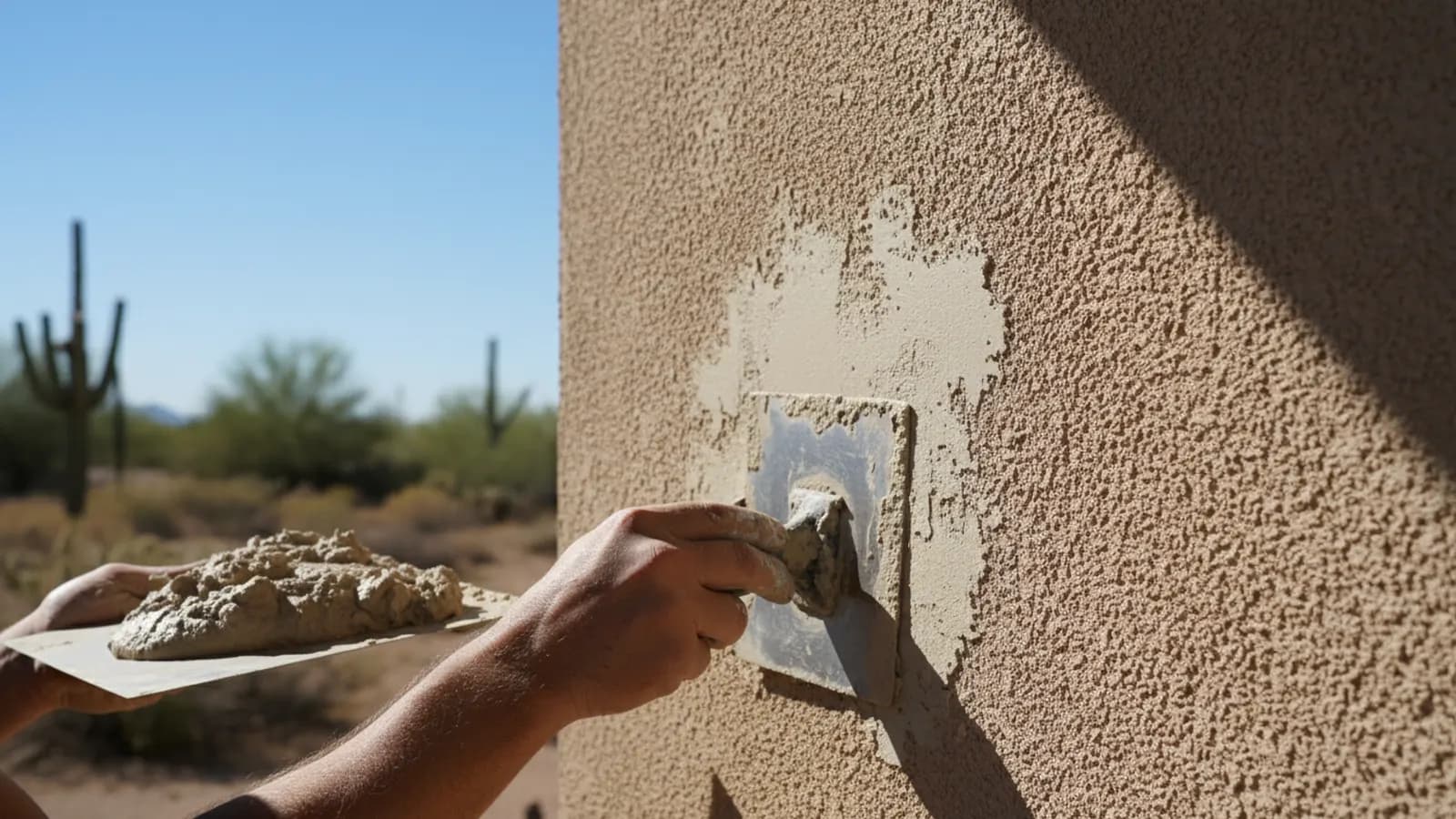
Stucco patch being floated over a repaired wall section and the texture matched in a Gilbert, Arizona home
Gilbert's tract-heavy housing stock (Power Ranch, Seville, Layton Lakes, Val Vista Lakes) drives volume color re-coat work as 15–25-year-old homes hit their second coat cycle. Agritopia and Morrison Ranch HOAs require ARC submittal on visible color changes.
Expansive clay drives step cracking at corners; we diagnose foundation movement before cosmetic repair.
Lake-adjacent Val Vista Lakes and Seville see weep-screed water damage.

Why Gilbert Stucco Repair Is Different

Agritopia / Morrison Ranch ARC submittal on color re-coats.
15–25 year tract homes hitting second color-coat cycle.
Expansive clay foundation step cracks across south Gilbert.

Recent Stucco Repair Projects in Gilbert

Power Ranch

Full color re-coat 1,700 sf, integral color, ARC-approved

$8K7 days

Agritopia

South elevation crack chase + color blend 900 sf, TND aesthetic match

$5.5K5 days

Seville

Lake-side weep-screed water damage repair + re-coat 500 sf

$4K4 days

Stucco Repair in Gilbert: Fast Facts

Color re-coats on 15–25 year tract homes: ~45%.

Foundation step cracks: ~25%.

Lake-adjacent water intrusion: ~15%.

Average Gilbert stucco repair: $2,000–$9,000.

ARC submittal in Agritopia / Morrison Ranch.

Typical Cost

$500 – $15,000+

Typical Timeline

2 days – 2 weeks

Permit Lead Time

2–4 weeks

How We Approach Stucco Repair

Arizona's extreme heat, monsoon-driven wind-driven rain, and 40°F+ daily thermal swings put stucco under constant stress. ProWorx Restoration repairs hairline and structural cracks, patches damaged areas, performs full re-stucco on aged exteriors, and matches color and texture across Phoenix-metro homes and commercial properties. Arizona ROC #349454.
Stucco failure modes in the Valley fall into predictable patterns. Hairline pattern cracking on south and west elevations from UV and thermal cycling. Diagonal cracks at window and door corners from minor structural movement. Bulging or hollow-sounding patches where moisture penetrated past failed sealant joints. EIFS (synthetic stucco) delamination on 1990s–2000s tract homes where weep details were undersized. We identify the failure mode before patching so the repair lasts.

Hairline and structural crack repair with elastomeric or cementitious patch

Full-wall and whole-house re-stucco (traditional three-coat)

Color matching from samples; integral and elastomeric topcoats

Texture matching: smooth, sand, dash, lace, Santa Barbara, Spanish

Window and door sealant replacement at stucco interfaces

EIFS repair and weep-detail correction

What Gilbert Homeowners Should Know About Stucco Repair

Code Requirements During Restoration

Restoration work may trigger requirements to bring parts of the building up to current codes, particularly when the building's use changes or major alterations are made. Accessibility, fire and life safety, electrical and energy requirements can all apply. Understanding these requirements early prevents surprises during permitting.

Arizona's Block Walls

Concrete masonry unit walls, usually called block walls, surround the yards of a huge number of Arizona homes and form the exterior walls of many buildings. They are durable, but they are not maintenance-free. Over time they can crack, lean, develop failing mortar joints or lose their protective coating. Because they often serve as property boundaries and pool barriers, keeping them sound matters for safety, security and compliance as well as appearance.

Restoring the Building Envelope

The building envelope, made up of the roof, exterior walls, windows and doors, separates the interior from the weather. Restoring it may involve replacing roofing, repairing or replacing stucco and masonry, resealing joints and replacing failed windows. In Arizona, the envelope also plays a major role in controlling heat gain, so restoration often improves energy performance as well as weather protection.

Restoring Stucco Facades

Stucco is the predominant exterior finish on Arizona buildings, and over decades it develops cracks, delamination and water intrusion problems. Small cracks can often be repaired and recoated, but areas where stucco has separated from the wall, or where water has damaged the substrate behind it, need to be removed and rebuilt. Matching the existing texture and colour so repairs blend into the rest of the facade requires skill and patience. A properly restored stucco facade both improves appearance and protects the building structure behind it from moisture.

Windows in Older Buildings

Original windows in older and historic buildings may be repairable rather than requiring replacement. Restoring frames, replacing glazing putty, repairing hardware and improving weatherstripping can extend their life considerably while preserving the building's character. Where replacement is necessary, choosing windows that respect the original design helps maintain the building's appearance.

Why Block Walls Lean

A leaning or tilting block wall usually signals a problem below ground. Inadequate footings, soil erosion, expansive soils, tree roots or water collecting at the base can all cause movement, as can soil or landscaping piled against one side. A leaning wall can become dangerous, particularly if it continues to move. Evaluating the cause determines whether the wall can be stabilised or needs to be rebuilt.

Why Small Cracks Still Matter

Even small cracks can let water behind stucco during monsoon rains. Once water reaches the substrate, it can damage sheathing and framing, corrode metal lath and cause the stucco to separate from the wall. Sealing and repairing cracks promptly is much less expensive than repairing the hidden damage they can allow.

Our Masonry Restoration Process in Arizona

We start with a hands-on inspection — sounding bricks for hollows, probing mortar with a pick to test hardness, photographing crack patterns to distinguish settlement from thermal movement. Failed mortar is cut out to a depth of at least 2× joint width (typically 5/8"–3/4") with a tuck-point grinder, joints are flushed clean, and new mortar is matched to the original in compressive strength, color, and texture. Replacement bricks are sourced from reclaimed yards when possible; visible elevations get the best matches. Sealers are applied only after mortar fully cures (28 days minimum) and only breathable formulations so trapped moisture can escape.

Cracks in Block Walls

Cracks in block walls take different forms. Step cracks that follow the mortar joints diagonally often indicate settlement, while vertical cracks may result from shrinkage or movement. Horizontal cracks can suggest lateral pressure. The width, pattern and whether a crack is growing all help determine the cause and the appropriate repair, which may range from repointing to partial rebuilding.

Working With Engineers and Architects

Significant restoration projects often involve structural engineers, architects and, for historic buildings, preservation specialists. Coordinating their recommendations with practical construction methods ensures repairs are technically sound, compliant with codes and achievable within the budget. Early collaboration between designers and the contractor helps identify the most effective restoration approach.

When to Re-Stucco Entirely

If stucco is extensively cracked, delaminated or water-damaged across large areas, re-stuccoing the wall may be more cost-effective than repeated patching. Replacement also allows inspection and repair of the water-resistive barrier, lath and substrate beneath.

When Does a Building Need Professional Restoration?

Buildings in the area face unique challenges from extreme heat, UV exposure, monsoon moisture, and shifting desert soils. Signs that your building needs professional restoration include crumbling mortar, cracked stucco, water stains, structural settling, spalling brick, and deteriorating facades. ProWorx Restoration provides comprehensive structural assessments and restores buildings to their original condition — or better — using materials and techniques that stand up to Arizona's demanding climate.

Our Proven Process

01

Free Consultation

We visit your property, discuss your goals, and provide a detailed, no-obligation estimate.

02

Custom Plan

Our team creates a tailored project plan with timeline, materials, and transparent pricing.

03

Expert Execution

Licensed craftsmen complete your project with quality materials and meticulous attention to detail.

04

Final Walkthrough

We inspect every detail with you and ensure complete satisfaction before the job is done.

"Power Ranch re-coat looks better than the original — ARC approved first round and the integral color is holding up to the south-facing UV like ProWorx promised."

ProWorx Client · Gilbert

Neighborhoods We Serve in Gilbert

Power Ranch · Seville · Morrison Ranch · Val Vista Lakes · Agritopia · Layton Lakes · Higley Park · Adora Trails

Stucco Repair FAQs for Gilbert Homeowners

Ready to Start Your Gilbert Stucco Repair Project?

Get a free, no-obligation estimate from a licensed Arizona contractor — ROC #349454.