



Stucco Repair in Mesa, AZ

Crack repair, color-coat, and full resurfacing across Mesa.

Serving Mesa & nearby Maricopa County

Get Your Free Stucco Repair Estimate

Step 1 of 5Project

What kind of project?

Pick the option that fits best — you can add details next.

Quick Answer: Stucco Repair in Mesa

ProWorx Restoration provides stucco repair across Mesa, AZ — foundation step-crack repair, UV color-coat, sprinkler-base patches, and full re-coats in Eastmark, Las Sendas, Red Mountain Ranch, and central Mesa. Typical projects run $500 – $12,000.

1,200+

Projects Completed

15+

Years Experience

ROC #349454

Licensed & Insured

100%

Satisfaction Guaranteed

Stucco Repair Built for Mesa Homes
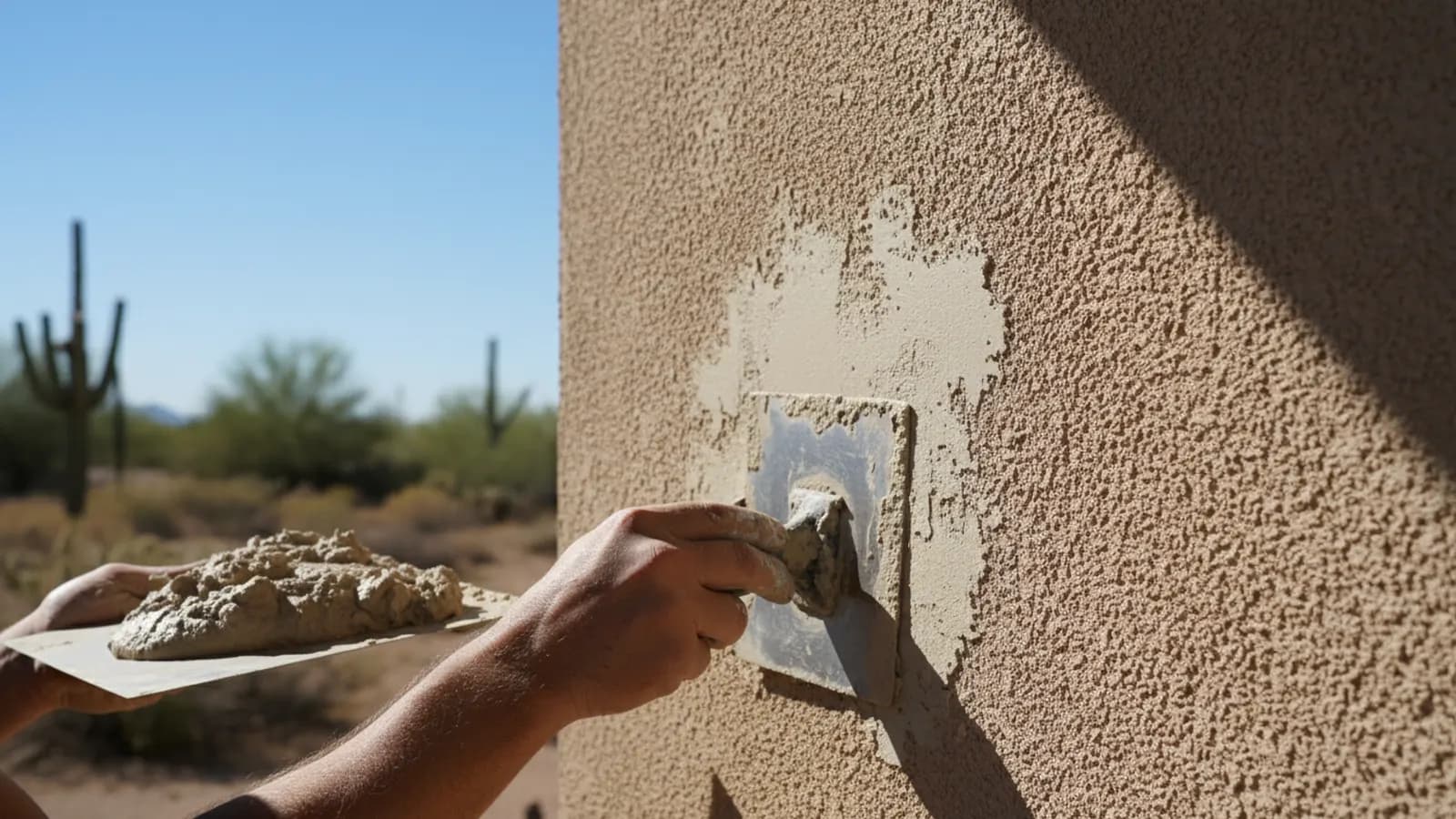
Stucco patch being floated over a repaired wall section and the texture matched in a Mesa, Arizona home
Mesa's range — pre-1970 central Mesa (three-coat hard-coat over wood lath), post-2000 east Mesa (one-coat synthetic over foam in Eastmark, Las Sendas), and Red Mountain Ranch hillside — each takes a different repair approach.
Expansive-clay soils across Mesa drive step cracking at corners; we diagnose before patching.
Las Sendas hillside foundation movement is a known issue we've repaired dozens of times.

Why Mesa Stucco Repair Is Different

Central Mesa three-coat hard-coat: lath repair + period-correct dash / lace match.
Eastmark / Las Sendas one-coat synthetic: mesh patch + color-blend technique.
Las Sendas / Red Mountain hillside foundation movement.

Recent Stucco Repair Projects in Mesa

Eastmark

South-elevation crack chase + color-coat re-coat 1,600 sf, synthetic blend

$7K6 days

Las Sendas

Hillside foundation step-crack repair 10 locations, structural sign-off

$9K7 days

Central Mesa

1965 ranch three-coat repair, lath patching, dash finish match

$5K5 days

Stucco Repair in Mesa: Fast Facts

Foundation step cracks: ~35% of Mesa volume.

UV color-coat re-coats: ~30%.

Water-intrusion patches: ~20%.

Average Mesa stucco repair: $2,000–$9,000.

Las Sendas hillside: foundation specialty.

Typical Cost

$500 – $15,000+

Typical Timeline

2 days – 2 weeks

Permit Lead Time

2–4 weeks

How We Approach Stucco Repair

Arizona's extreme heat, monsoon-driven wind-driven rain, and 40°F+ daily thermal swings put stucco under constant stress. ProWorx Restoration repairs hairline and structural cracks, patches damaged areas, performs full re-stucco on aged exteriors, and matches color and texture across Phoenix-metro homes and commercial properties. Arizona ROC #349454.
Stucco failure modes in the Valley fall into predictable patterns. Hairline pattern cracking on south and west elevations from UV and thermal cycling. Diagonal cracks at window and door corners from minor structural movement. Bulging or hollow-sounding patches where moisture penetrated past failed sealant joints. EIFS (synthetic stucco) delamination on 1990s–2000s tract homes where weep details were undersized. We identify the failure mode before patching so the repair lasts.

Hairline and structural crack repair with elastomeric or cementitious patch

Full-wall and whole-house re-stucco (traditional three-coat)

Color matching from samples; integral and elastomeric topcoats

Texture matching: smooth, sand, dash, lace, Santa Barbara, Spanish

Window and door sealant replacement at stucco interfaces

EIFS repair and weep-detail correction

What Mesa Homeowners Should Know About Stucco Repair

Restoring Interiors

Building restoration often extends inside, repairing damaged plaster and drywall, restoring flooring and woodwork, updating lighting and building systems, and repairing water or smoke damage. In historic interiors, preserving original features such as trim, doors and decorative plaster maintains the building's character.

Starting With a Condition Assessment

Effective building restoration begins with understanding exactly what condition the building is in. A thorough condition assessment examines the structure, roof, exterior walls, windows, foundations, drainage and building systems, identifying deterioration, its causes and its urgency. That assessment allows repairs to be prioritised, so the most critical issues, particularly those letting water into the building, are addressed first.

Painting Stucco

Painting stucco refreshes its appearance and adds a layer of protection. The surface must be cleaned and cracks repaired first, and paint formulated for masonry should be used. Proper preparation is essential; painting over cracks and damaged stucco only hides problems temporarily.

Weep Screeds at the Base of Walls

A weep screed is a metal trim installed at the bottom of stucco walls that allows water that gets behind the stucco to drain out. When landscaping, soil, pavers or concrete cover the weep screed, water can be trapped behind the stucco, causing damage. Keeping weep screeds exposed is a simple way to protect stucco walls.

Pool Barrier Walls

Block walls frequently serve as pool barriers, and gaps, damage or climbable features can compromise safety. Repairs should maintain the required barrier height and integrity. Pool barrier requirements vary by jurisdiction, so any changes should be checked against local rules.

Stucco Around Windows and Doors

The junctions between stucco and window or door frames are among the most common sources of leaks. Sealants deteriorate in the sun, and cracks often form at the corners of openings. Inspecting and resealing these areas regularly helps prevent water intrusion.

When to Re-Stucco Entirely

If stucco is extensively cracked, delaminated or water-damaged across large areas, re-stuccoing the wall may be more cost-effective than repeated patching. Replacement also allows inspection and repair of the water-resistive barrier, lath and substrate beneath.

Spalling Brick and Block

Spalling occurs when the face of a brick or block flakes, chips or breaks away. It is often caused by moisture moving through the masonry, combined with salt crystallisation or temperature changes. Repairing spalled units may involve replacing individual bricks or blocks and addressing the moisture source that caused the damage in the first place.

Efflorescence on Stucco

A white, powdery deposit on stucco is called efflorescence. It occurs when water moves through the material and leaves dissolved salts on the surface as it evaporates. Efflorescence itself is mostly cosmetic, but it signals that moisture is moving through the wall, and the source of that moisture should be investigated.

Delaminating and Hollow Stucco

Stucco that sounds hollow when tapped, bulges or crumbles has often separated from the wall behind it. This can result from water intrusion, improper installation or failed lath. Delaminated stucco cannot be repaired simply by patching the surface; the loose material must be removed and the area rebuilt properly.

Reading Stucco Cracks

Not all stucco cracks mean the same thing. Fine, hairline cracks in a random pattern are usually shrinkage cracks from the curing process and are mostly cosmetic. Cracks radiating from the corners of windows and doors often reflect normal movement concentrated at those weak points. Wider cracks, cracks that keep growing, or cracks with one side higher than the other may indicate structural movement and warrant closer inspection. Understanding the type of crack guides the right repair.

Matching Historic Materials

Restoring older buildings often requires matching materials that are no longer standard. Historic masonry may need mortar that is softer and more compatible with the original bricks than modern mortar, since harder mortar can damage historic masonry. Older stucco, plaster, wood profiles and windows may need custom work to match. Using compatible materials preserves both the building's appearance and its long-term durability.

Efflorescence on Masonry

White, powdery deposits on masonry are called efflorescence. They form when water carries dissolved salts to the surface and evaporates. Efflorescence can usually be cleaned off, but its presence shows that water is moving through the wall, and that moisture source should be identified and corrected to prevent recurring deposits and potential damage.

Restoring Stucco Facades

Stucco is the predominant exterior finish on Arizona buildings, and over decades it develops cracks, delamination and water intrusion problems. Small cracks can often be repaired and recoated, but areas where stucco has separated from the wall, or where water has damaged the substrate behind it, need to be removed and rebuilt. Matching the existing texture and colour so repairs blend into the rest of the facade requires skill and patience. A properly restored stucco facade both improves appearance and protects the building structure behind it from moisture.

How Our Stucco Repair Process Works in Mesa

01

Free On-Site Consultation

We visit your property, discuss your goals, and provide a detailed, no-obligation estimate.

02

Custom Project Plan

Our team creates a tailored project plan with timeline, materials, and transparent pricing.

03

Licensed Crews On Site

Licensed craftsmen complete your project with quality materials and meticulous attention to detail.

04

Final Walkthrough & Sign-Off

We inspect every detail with you and ensure complete satisfaction before the job is done.

"Las Sendas hillside cracks finally fixed properly — ProWorx caught the foundation issue two other contractors missed and the patches still look perfect two years later."

ProWorx Client · Mesa

Neighborhoods We Serve in Mesa

Eastmark · Las Sendas · Red Mountain Ranch · Dobson Ranch · Mountain Bridge · Augusta Ranch · Central Mesa · Lehi

Stucco Repair FAQs for Mesa Homeowners

Ready to Start Your Mesa Stucco Repair Project?

Get a free, no-obligation estimate from a licensed Arizona contractor — ROC #349454.