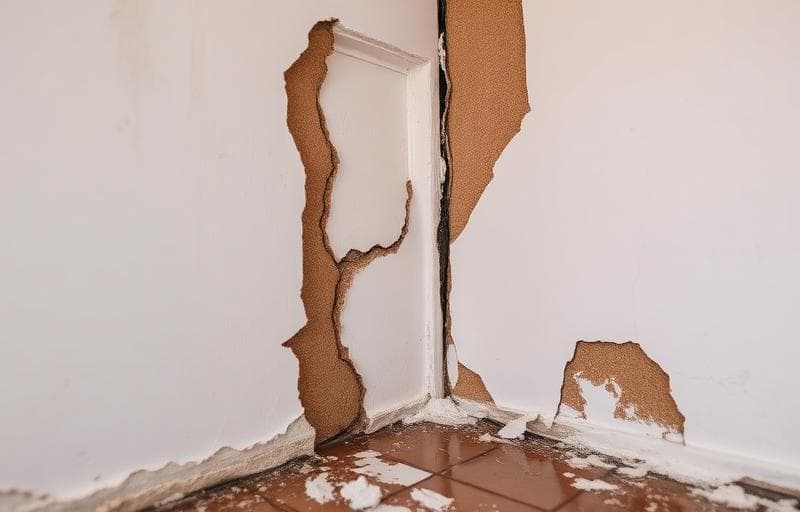



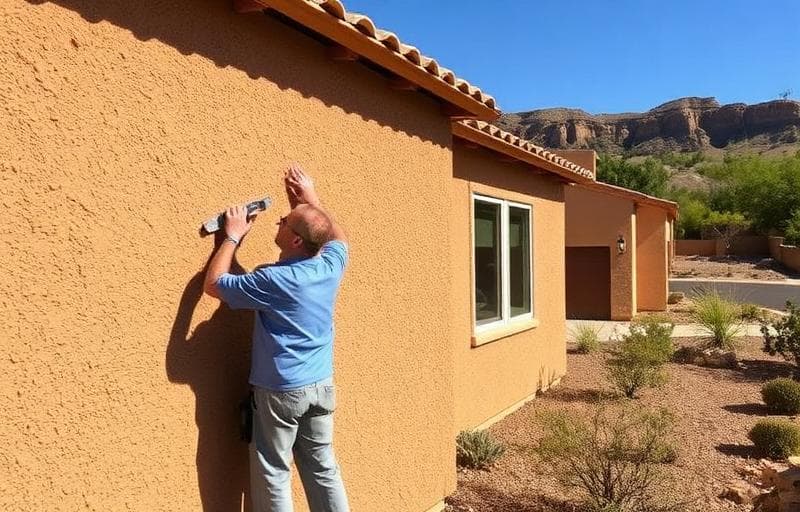
Over 90% of homes in the Phoenix Metro area feature stucco exteriors. It's durable, energy-efficient, and perfectly suited for desert living — but Arizona's extreme heat, UV exposure, and monsoon moisture create unique maintenance challenges.
At ProWorx Restoration, our stucco repair team handles everything from hairline crack repairs to full re-stucco projects across Mesa and the Valley.
Why Stucco Cracks in Arizona
Understanding why stucco fails helps you prevent and address problems early:
- Thermal cycling: Daily temperature swings of 30–40°F cause expansion and contraction that stresses stucco over time
- UV degradation: Arizona's intense sun breaks down paint and sealant on stucco surfaces
- Monsoon moisture: Driving rain penetrates cracks and causes hidden water damage behind the stucco
- Foundation movement: Mesa's expansive clay soils shift seasonally, creating stress cracks in rigid stucco
- Improper installation: Missing control joints, insufficient curing, and thin application cause premature failure
Types of Stucco Damage
Not all stucco damage is equal. Here's how to assess what you're dealing with:
- Hairline cracks: Less than 1/16 inch — usually cosmetic, easily sealed with elastomeric caulk
- Pattern cracking: Spider-web patterns indicate curing issues or substrate movement
- Stair-step cracks: Follow mortar joints and often indicate foundation settling — consult a construction professional
- Delamination: Stucco separating from the substrate — sounds hollow when tapped. Requires section replacement
- Water staining: Brown or dark streaks indicate moisture intrusion — investigate the source immediately
Stucco Maintenance Schedule for Mesa Homeowners
Proactive maintenance extends stucco life by decades:
- Annually: Visual inspection for cracks, staining, and delamination
- Every 2–3 years: Apply elastomeric sealant to visible cracks
- Every 5–7 years: Repaint with quality elastomeric paint designed for stucco
- Before monsoon season: Seal any cracks and check caulking around windows and doors
- After major storms: Inspect for new damage, especially on west and south-facing walls
Add these to your Arizona home maintenance checklist for year-round protection.
How Much Does Stucco Repair Cost in Mesa?
- Crack sealing: $150–$400 for minor repairs
- Section patching: $500–$1,500 depending on area size
- Partial re-stucco: $3–$6 per square foot
- Full re-stucco: $6–$9 per square foot (entire home)
- Color and texture matching: Included with professional repairs
DIY vs. Professional Stucco Repair
Small cosmetic repairs — filling hairline cracks with elastomeric caulk and touch-up paint — are manageable DIY projects. However, professional repair is essential for:
- Cracks wider than ⅛ inch
- Any signs of delamination or hollow sections
- Water staining or moisture intrusion
- Texture and color matching on visible walls
- Structural cracks that may indicate foundation issues
For exterior finishing, professional painting and coating ensures a seamless result that protects your investment.
Stucco and Home Value
Well-maintained stucco is expected by Arizona homebuyers. Cracked, stained, or peeling stucco immediately signals deferred maintenance and reduces your home's perceived value. A fresh re-stucco or professional repair is one of the highest-ROI exterior investments — see our remodeling projects that increase home value guide.
Schedule Your Stucco Inspection
ProWorx Restoration provides professional stucco repair and masonry restoration throughout Mesa, Gilbert, Chandler, and the Phoenix Metro area. Book a free inspection and we'll assess your stucco's condition and recommend the most cost-effective solution.
Stucco Is a System, Not a Coating
Homeowners often think of stucco as a thick paint, which leads to repairs that do not last. It is a layered system: a water-resistive barrier against the sheathing, metal lath fixed through it, then cementitious coats built up over the lath, finished with a texture and colour coat.
Understanding that matters because water is expected to get behind the finish occasionally. The barrier beneath directs it back out at the weep screed. When repairs ignore those layers, water gets in and has nowhere to go.
Reading the Cracks
Not every crack means the same thing. Fine hairline cracking in a random pattern is usually shrinkage from curing and is largely cosmetic. Cracks radiating diagonally from the corners of windows and doors reflect normal building movement concentrating at those weak points, and are very common.
Wider cracks, cracks that continue to grow, and cracks where one side sits proud of the other suggest movement in the structure or foundation rather than in the stucco, and warrant proper investigation rather than patching.
Why Small Cracks Still Matter Here
In a climate with little rain, it is tempting to ignore hairline cracks. The monsoon makes that a mistake. Wind-driven rain is pushed into cracks that vertical rain would never enter, and once water is behind the finish it can damage sheathing and framing, corrode the metal lath and cause the stucco to delaminate.
Sealing cracks promptly costs very little compared with rebuilding a wall section and repairing what the water reached behind it.
Hollow Sounds Mean Delamination
Tap suspect areas gently. Sound stucco produces a solid sound; areas that sound hollow have separated from the wall behind. Bulging, crumbling and stucco that moves when pressed are the same problem at a more advanced stage.
Delaminated stucco cannot be fixed by patching the surface. The loose material has to come off, the lath and barrier beneath inspected and repaired, and the area rebuilt in proper layers. Skim-coating over it buys a season at most.
Keep the Weep Screed Clear
The weep screed is the metal trim at the base of stucco walls, and it exists so water behind the stucco can escape. It needs clear air beneath it to function.
Over the years, raised flower beds, new pavers, added gravel and rising soil levels frequently bury it. Water that gets behind the stucco then has nowhere to drain, and it stays in the wall. It is one of the most common and most preventable causes of serious stucco damage in Arizona, and the fix is usually just moving material away from the wall.
Matching Texture and Colour
The hardest part of stucco repair is making the patch invisible. Textures vary widely between homes and eras, and colour fades with years of sun, so new material rarely matches old even when the original colour is known.
Skilled repair matches the texture carefully, and recoating an entire wall plane or elevation often produces a far more uniform result than trying to blend a patch into weathered surrounding stucco.
Efflorescence Is a Message
White, powdery deposits on stucco are efflorescence: dissolved salts left behind as water moves through the material and evaporates at the surface. The deposit itself is cosmetic and can usually be cleaned.
What matters is what it indicates, which is that water is moving through the wall. Cleaning it without finding the moisture source means it returns, and the underlying problem continues.
An Annual Walk Around the House
Most serious stucco problems are cheap to fix when caught early. Once or twice a year, walk the perimeter and look for new cracks, hollow-sounding areas, staining, efflorescence, damaged foam trim and sealant failing around windows and doors. Check that landscaping has not buried the weep screed.
Spring, before monsoon season, is the ideal time, because anything found can be repaired before the storms that would exploit it.
Repair, Recoat or Re-Stucco
There are three levels of intervention and they suit different situations. Crack repair and spot patching handles isolated damage on an otherwise sound wall. Recoating applies a fresh finish or elastomeric coating over the whole wall plane, which renews appearance, bridges fine cracking and restores weather resistance.
Full re-stucco, removing the existing system down to the substrate and rebuilding it, is the right choice when stucco has delaminated across large areas or when water has damaged the barrier and lath beneath. It is the most expensive option, but repeatedly patching a failing wall spends replacement money slowly without ever solving the problem. Honest assessment of which stage a wall has reached saves money over the life of the house.
Foam Trim and Decorative Details
Many Arizona homes use shaped foam covered in stucco for window surrounds, cornices and decorative bands. These details are vulnerable to impact damage and to water getting in at the top edge, where the horizontal surface meets the wall.
Repairing them means restoring the foam shape and reapplying the coating so the detail is watertight again, not simply filling the visible chip. Left open, these details funnel water into the wall behind them.