



Commercial Construction in Gilbert, AZ

Heritage District, medical office, retail, and ground-up flex across Gilbert.

Serving Gilbert & nearby Maricopa County

Get Your Free Commercial Construction Estimate

Step 1 of 5Project

What kind of project?

Pick the option that fits best — you can add details next.

Quick Answer

ProWorx Restoration delivers commercial construction across Gilbert, AZ — restaurant and retail in the Heritage District, medical office near Mercy Gilbert, and ground-up flex around Cooley Station, Power Ranch, and SanTan Village. Typical TIs $100K–$600K; ground-up $300K–$2.5M; 9–36 weeks.

1,200+

Projects Completed

15+

Years Experience

ROC #349454

Licensed & Insured

100%

Satisfaction Guaranteed

Commercial Construction Built for Gilbert Homes
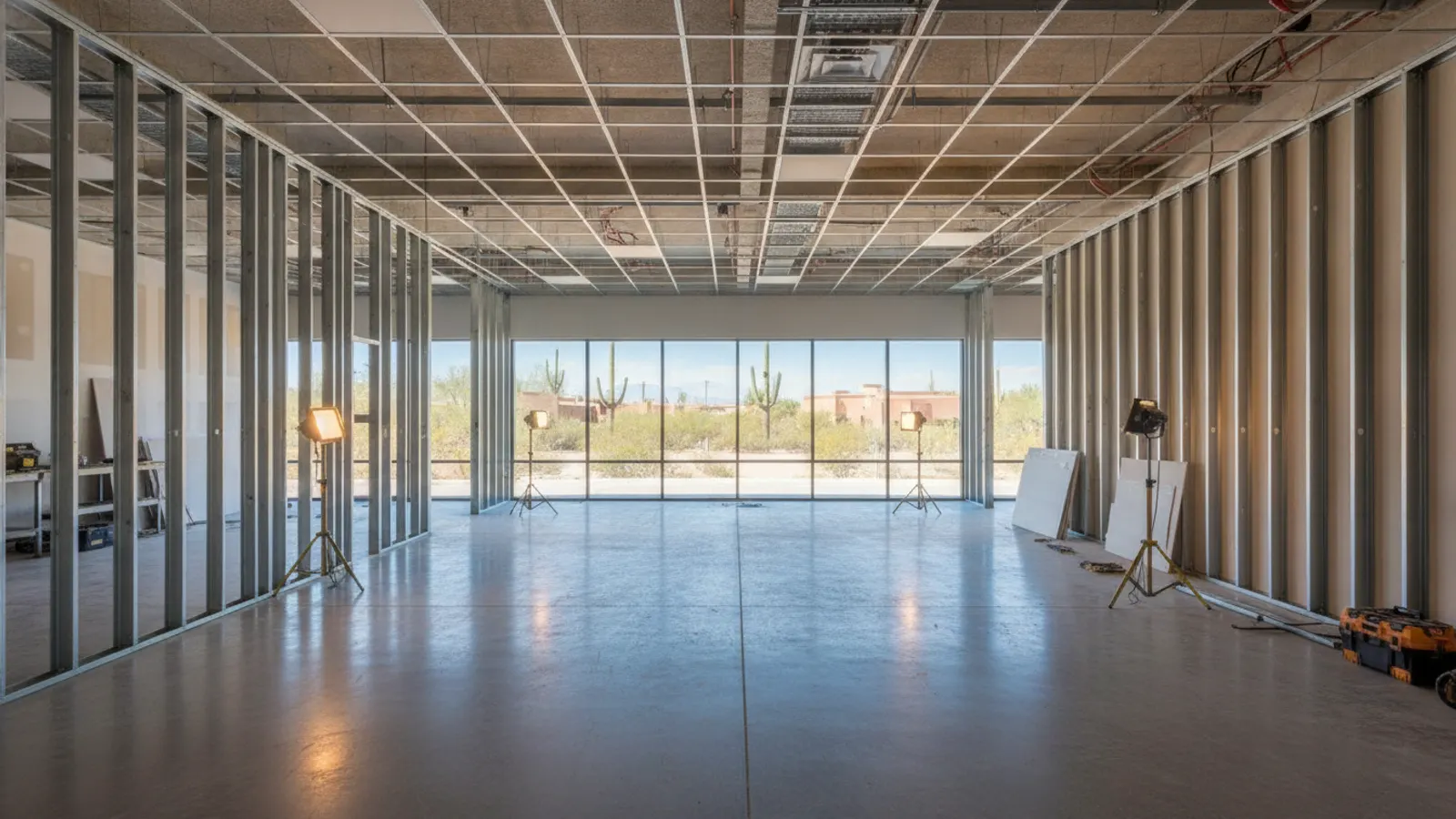
Commercial tenant improvement build-out with metal stud framing and a suspended ceiling grid in a Gilbert, Arizona home
Gilbert's commercial core is the Heritage District — restaurant, brewery, and boutique retail TIs in renovated mid-century buildings on Gilbert Road and Vaughn Avenue, often involving structural reinforcement and Type I hood work.
Medical and dental office TIs cluster around Mercy Gilbert and Banner Gateway. Cooley Station, Power Ranch, and SanTan Village host the bulk of ground-up flex / retail pad work.
Town of Gilbert Development Services handles plan review; Heritage District has design-overlay requirements on exterior changes.

Why Gilbert Commercial Construction Is Different

Heritage District: design overlay on storefront and exterior; structural reinforcement on mid-century stock.
Mercy Gilbert / Banner Gateway medical TIs: ADHS coordination on the critical path.
Cooley Station / SanTan Village: pad sites and ground-up flex with HOA/master-plan design review.
Town of Gilbert commercial plan review: 4–6 weeks first cycle.

Recent Commercial Construction Projects in Gilbert

Heritage District

Brewery + tasting-room TI 5,200 sf, structural reinforcement, drainage trench, Type I hood, overlay design review

$640K22 weeks

Mercy Gilbert area

Dental office TI 4,800 sf, 8 operatories, compressed-air + vacuum rough-in, ADHS coordination

$390K16 weeks

Cooley Station

Ground-up 6,800 sf retail pad shell, tilt-up + storefront glazing, master-plan design review

$1.3M8 months

Commercial Construction in Gilbert: Fast Facts

Average Gilbert commercial TI: $150K–$450K.

Heritage District design overlay: 2–4 weeks added.

Medical / dental TI: 3–5 weeks ADHS critical-path.

Cooley Station ground-up retail pad: 6–9 months permit-to-CO.

Gilbert plan review: 4–6 weeks first cycle.

Typical Cost

$25,000 – $1,500,000+

Typical Timeline

1 – 12 months

Permit Lead Time

2–4 weeks

How We Approach Commercial Construction

ProWorx Restoration delivers commercial construction and tenant-improvement work across the Phoenix metro — office buildouts, retail spaces, restaurant TIs, medical and dental offices, and multi-tenant shell modifications. We hold Arizona ROC #349454 and act as the general contractor of record from design coordination through certificate of occupancy.
Commercial work in the Valley carries specific compliance pressure: 2018 IBC with Arizona amendments, 2018 IFC for fire-rated assemblies and sprinklers, Maricopa County Health Department requirements for any food-service buildout, and ADA accessibility standards across every entry, restroom, and circulation path. We pre-coordinate with the landlord's CAM contact, the city plans examiner, and where applicable the fire marshal so submittal comments don't blow up the schedule.

Tenant improvements (TI) for office, retail, medical, dental

Restaurant buildouts including grease, ansul, hood, and Health Dept coordination

Office buildouts with low-voltage, HVAC modifications, and acoustic ceilings

ADA compliance: accessible restrooms, doorways, ramps, parking, signage

Fire-rated demising walls and sprinkler modification coordination

Off-hours and night-shift scheduling to keep tenants operating

What Gilbert Homeowners Should Know About Commercial Construction

Restoring Building Exteriors

The exterior of a commercial building shapes how customers and tenants perceive it, and deteriorated stucco, faded paint, damaged signage and worn finishes can make an otherwise sound property look neglected. Restoring facades, repairing and repainting exterior finishes, replacing damaged trim and updating lighting can significantly improve curb appeal. Beyond appearance, exterior restoration also protects the building envelope from water intrusion and sun damage, which reduces the likelihood of more serious and expensive interior problems developing later.

Commercial Plan Review

Commercial projects typically require detailed construction drawings that are reviewed by the local building department before permits are issued. Plan review checks compliance with building, fire, accessibility, energy and other codes. Review times vary by jurisdiction and project complexity, so they should be built into the schedule.

Budgeting Commercial Restoration

Commercial restoration budgets are easier to manage when work is prioritised by urgency and impact. Items affecting safety, water intrusion or code compliance come first, followed by work that protects asset value and improves tenant satisfaction. Breaking large projects into phases allows costs to be spread across budget cycles while still addressing the most important needs promptly.

Working With Landlords and Property Managers

Commercial projects often require coordination with landlords and property managers, who may have specific construction rules, insurance requirements, approved contractors, working hours and procedures for access. Understanding these requirements early keeps the project moving smoothly.

Tenant Improvements Explained

Tenant improvements, often called TI or build-outs, are the alterations made to a commercial space to suit a particular tenant. They can include new walls, ceilings, lighting, restrooms, finishes and building systems. The scope and who pays for it are usually defined in the lease, often through a tenant improvement allowance provided by the landlord.

Keeping Tenants Operating

Restoration in occupied commercial buildings must minimise disruption to tenants' businesses. Scheduling noisy or disruptive work outside business hours, maintaining access to entrances and parking, controlling dust and coordinating utility shutdowns in advance helps tenants continue operating. Retaining satisfied tenants is often as important as the restoration itself.

Working in Occupied Buildings

Many commercial projects take place in buildings where other tenants continue operating. Managing noise, dust, deliveries, utility shutdowns and access requires coordination with building management and neighbouring tenants. Scheduling disruptive work after hours and maintaining clean, safe common areas help minimise disruption.

Obtaining a Certificate of Occupancy

Before a commercial space can open, it typically must pass final inspections and receive approval for occupancy. Building, fire and other inspections confirm that the work complies with applicable codes. Planning for these final steps helps avoid delays at the end of the project.

Windows in Older Buildings

Original windows in older and historic buildings may be repairable rather than requiring replacement. Restoring frames, replacing glazing putty, repairing hardware and improving weatherstripping can extend their life considerably while preserving the building's character. Where replacement is necessary, choosing windows that respect the original design helps maintain the building's appearance.

Restoring the Building Envelope

The building envelope, made up of the roof, exterior walls, windows and doors, separates the interior from the weather. Restoring it may involve replacing roofing, repairing or replacing stucco and masonry, resealing joints and replacing failed windows. In Arizona, the envelope also plays a major role in controlling heat gain, so restoration often improves energy performance as well as weather protection.

Working With Engineers and Architects

Significant restoration projects often involve structural engineers, architects and, for historic buildings, preservation specialists. Coordinating their recommendations with practical construction methods ensures repairs are technically sound, compliant with codes and achievable within the budget. Early collaboration between designers and the contractor helps identify the most effective restoration approach.

Repairing Structural Damage

Deterioration from water, pests, settlement or previous alterations can weaken structural elements. Damaged framing, beams, connections and masonry must be repaired or reinforced to restore the building's structural integrity. Significant structural repairs should be designed or reviewed by a structural engineer and permitted appropriately.

Common Commercial Building Issues in Phoenix-Metro Properties

Phoenix-metro commercial buildings see specific failure modes. Flat-roof TPO and modified-bitumen failures during monsoons cause widespread water damage across acoustic ceiling tile and electrical. AC condensate-line failures in mechanical rooms saturate adjacent tenant spaces. EIFS facade delamination from sun-baked south and west elevations exposes substrate to monsoon-driven moisture. Older masonry buildings in downtown Phoenix and Mesa exhibit mortar deterioration and brick spalling. We address the root cause as part of restoration — not just the visible damage — so claims don't recur in 18 months.

Our Proven Process

01

Free Consultation

We visit your property, discuss your goals, and provide a detailed, no-obligation estimate.

02

Custom Plan

Our team creates a tailored project plan with timeline, materials, and transparent pricing.

03

Expert Execution

Licensed craftsmen complete your project with quality materials and meticulous attention to detail.

04

Final Walkthrough

We inspect every detail with you and ensure complete satisfaction before the job is done.

"Heritage District overlay, structural reinforcement, brewery equipment install — ProWorx coordinated all of it cleanly."

ProWorx Client · Gilbert

Neighborhoods We Serve in Gilbert

Heritage District · Cooley Station · Power Ranch · SanTan Village · Agritopia · Val Vista Lakes · Layton Lakes · Seville · Morrison Ranch · Lyons Gate

Commercial Construction FAQs for Gilbert Homeowners

Ready to Start Your Gilbert Commercial Construction Project?

Get a free, no-obligation estimate from a licensed Arizona contractor — ROC #349454.