



Flood Restoration in Gilbert, AZ

24/7 flood response across Gilbert — extraction, drying, and full rebuild.

Serving Gilbert & nearby Maricopa County

Get Your Free Flood Restoration Estimate

Step 1 of 5Project

What kind of project?

Pick the option that fits best — you can add details next.

Quick Answer

ProWorx Restoration provides 24/7 flood restoration throughout Gilbert, AZ. The dominant Gilbert flood losses are second-floor washing-machine and water-heater failures (most Gilbert tract homes locate both on the upper floor), refrigerator and dishwasher supply lines, and monsoon roof penetrations. Typical projects run $4,000–$50,000 and 1–7 weeks.

1,200+

Projects Completed

15+

Years Experience

ROC #349454

Licensed & Insured

100%

Satisfaction Guaranteed

Flood Restoration Built for Gilbert Homes
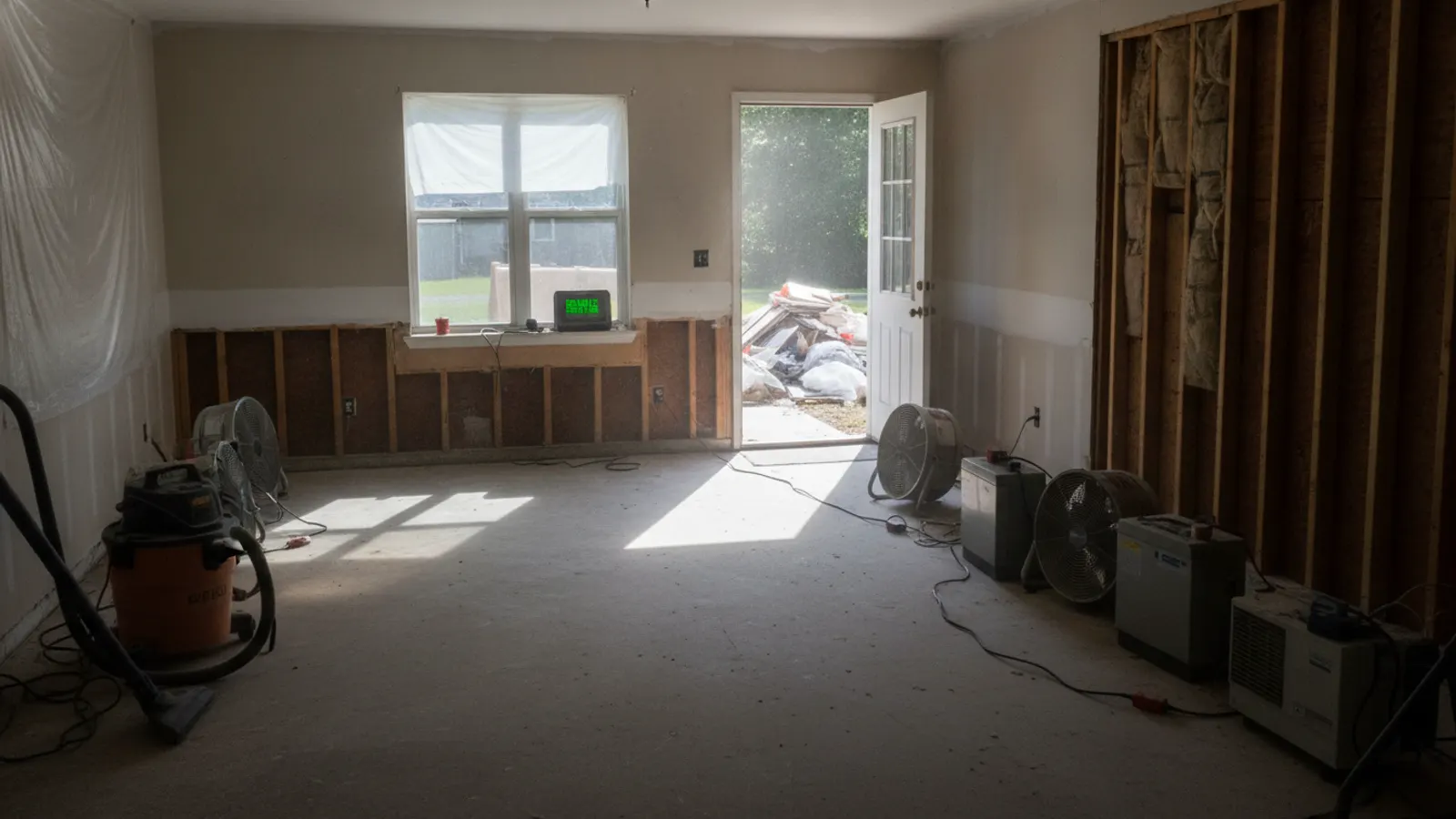
Flood-damaged flooring removed to the slab with drying equipment running in a Gilbert, Arizona home
Gilbert's tract-home pattern — Power Ranch, Seville, Val Vista Lakes, Morrison Ranch, Layton Lakes — concentrates flood losses around second-story laundry rooms and water heaters. When an upper-floor washing-machine hose lets go in a two-story Gilbert home, water typically affects three rooms across two floors before anyone notices.
Agritopia and the older Heritage District have a different mix: smaller single-story craftsman-style homes with concentrated wet-wall plumbing and more frequent monsoon roof failures on the original asphalt-shingle stock.
We respond 24/7 across the Town of Gilbert with truck-mounted extraction, IICRC-aligned drying, mold prevention, and end-to-end rebuild.

Why Gilbert Flood Restoration Is Different

Two-story water losses in Gilbert almost always require ceiling demo on the floor below. We moisture-map the entire vertical column on every upstairs claim — not just where staining is visible — so we don't miss insulation that needs to come out.
Town of Gilbert Development Services issues most emergency-repair permits within 24 hours. Structural rebuild permits typically 1–2 weeks, faster than most Maricopa County jurisdictions.

Recent Flood Restoration Projects in Gilbert

Power Ranch

Upstairs washing-machine hose burst: 1,400 sf two-story water damage, ceiling demo, drywall, paint, flooring replacement

$41K6 weeks

Seville

Second-floor water-heater pan overflow: master closet, laundry, downstairs hallway extraction and rebuild

$28K5 weeks

Agritopia

Monsoon roof leak: ceiling drywall replacement, attic insulation, repaint, mold prevention

$13K3 weeks

Flood Restoration in Gilbert: Fast Facts

Average Gilbert flood/water claim: $9,500–$30,000.

Second-floor laundry losses: roughly 40% of Gilbert two-story residential water losses.

Most Gilbert tract-home washing-machine hoses are original at 15+ years — recommend stainless-braided replacement.

Town of Gilbert emergency repair permits: typically same-day.

Microbial growth window: 48–72 hours.

Typical Cost

$3,000 – $75,000+

Typical Timeline

1 – 8 weeks

Permit Lead Time

2–4 weeks

How We Approach Flood Restoration

Arizona's monsoon season — typically mid-June through September — can dump 1–3 inches of rain in under an hour on hard-packed desert soil that can't absorb it. The result: flash flooding, washes overrunning streets, roof leaks under wind-driven rain, and ground-water intrusion into garages, casitas, and lower-level living spaces. ProWorx Restoration is a licensed Arizona general contractor (ROC #349454) responding 24/7 to flood emergencies across the Valley.
We arrive with truck-mounted water extractors, submersible pumps, commercial dehumidifiers, and air movers. Water is removed immediately, structural drying begins within hours, and antimicrobial treatment is applied before mold can take hold (typically within 24–48 hours of saturation). For total losses we also handle drywall, flooring, insulation, and finish reconstruction under the same contract.

24/7 emergency response across the Phoenix metro

Licensed Arizona general contractor (ROC #349454)

Truck-mounted water extraction and submersible pumping

Industrial dehumidification and high-velocity air movers

Antimicrobial treatment to prevent mold growth

Thermal imaging to detect hidden moisture

What Gilbert Homeowners Should Know About Flood Restoration

Materials, Equipment & Standards

We use commercial-grade equipment from leading manufacturers — Phoenix Restoration Equipment, Dri-Eaz, and Drieaz — plus EPA-registered antimicrobials and IICRC-certified drying protocols. Reconstruction uses code-compliant drywall, baseboards matched to your originals, and paint colors blended to existing surfaces.

Our Residential Water Restoration Process

Every job follows the IICRC S500 sequence: emergency extraction, moisture mapping with thermal cameras, removal of unsalvageable materials, commercial dehumidification and air movement for 3–5 days, antimicrobial application, then drywall and finish reconstruction. You get one project manager from first call through final paint, and your insurance claim is documented every step.

Sewer Backups

A sewer backup sends contaminated water up through floor drains, toilets and tubs into the home. It can be caused by blockages in the main line, tree roots, aging pipes or a municipal system overwhelmed during heavy rain. Because the water is Category 3, cleanup requires removing affected porous materials and thoroughly cleaning and disinfecting everything else. Installing a backwater valve can help prevent future backups in some properties. Standard homeowner policies may require a specific endorsement for sewer backup coverage, so it is worth checking.

Protecting Yourself Around Flood Water

Flood water poses health risks beyond the damage it causes to the house. Avoid direct contact where possible, wear waterproof boots and gloves if you must enter affected areas, and keep children and pets away. Never enter a flooded area if electrical systems may be energised. After the water recedes, mud and sediment left behind may also be contaminated. Wash hands thoroughly after any contact, and discard food, medicines and cosmetics that came into contact with flood water. Restoration crews use appropriate protective equipment for precisely these reasons.

Mold Prevention & Air Quality

In Arizona's dry climate, water-damaged materials look dry on the surface within a day even when wall cavities and subfloors stay saturated for weeks — the perfect mold environment. We monitor moisture content daily with pin and pinless meters, apply EPA-registered antimicrobials, and only close walls back up when readings meet IICRC-approved dryness standards.

Your Homeowner Policy and the Claim

Most homeowner policies cover sudden and accidental water damage, such as a burst pipe or a failed water heater, but often exclude damage resulting from long-term leaks, neglect or gradual deterioration, and flood water entering from outside usually requires separate flood coverage. Read the water damage section of your policy, report the loss promptly, document everything, and keep receipts for any emergency expenses. You have the right to choose your own restoration contractor. We provide the detailed documentation adjusters need, including moisture readings, photographs and itemised scope, which helps the claim move forward without unnecessary delay.

How Structural Drying Actually Works

Drying a building is not simply a matter of pointing fans at wet surfaces. Effective drying balances three things: removing liquid water by extraction, moving air across wet surfaces so moisture evaporates, and removing that moisture from the air with dehumidifiers so it does not simply condense somewhere else. Too much air movement without enough dehumidification raises humidity throughout the house and can spread damage to dry areas. Temperature matters as well, since warmer air holds more moisture and drying progresses faster within the right range. Professional drying is planned around the volume of the space, the materials involved and how much water they absorbed, which is why two seemingly similar leaks can require very different equipment setups and drying times.

Living in Your Home During Restoration

Many families can remain at home while water damage is being dried, but it depends on what was affected and how. Drying equipment runs continuously and is noisy, it raises the temperature in affected rooms, and those areas may be sealed off. If a kitchen or the only bathroom is out of service, or if Category 3 water or extensive mould is involved, temporarily staying elsewhere is usually more practical and safer. Many homeowner policies include coverage for additional living expenses when a home is uninhabitable, so check your policy or ask your adjuster. We will tell you honestly whether the home is reasonable to live in during each phase of the work.

Our Proven Process

01

Free Consultation

We visit your property, discuss your goals, and provide a detailed, no-obligation estimate.

02

Custom Plan

Our team creates a tailored project plan with timeline, materials, and transparent pricing.

03

Expert Execution

Licensed craftsmen complete your project with quality materials and meticulous attention to detail.

04

Final Walkthrough

We inspect every detail with you and ensure complete satisfaction before the job is done.

"Upstairs washer hose let go while we were at work. ProWorx had crews drying the entire downstairs by that evening and rebuilt every affected room in six weeks."

ProWorx Client · Gilbert

Neighborhoods We Serve in Gilbert

Power Ranch · Seville · Val Vista Lakes · Agritopia · Layton Lakes · Morrison Ranch · Higley Groves · Heritage District

Flood Restoration FAQs for Gilbert Homeowners

Ready to Start Your Gilbert Flood Restoration Project?

Get a free, no-obligation estimate from a licensed Arizona contractor — ROC #349454.