



Stucco Repair in Chandler, AZ

Crack repair, color-coat, and full resurfacing across Chandler.

Serving Chandler & nearby Maricopa County

Get Your Free Stucco Repair Estimate

Step 1 of 5Project

What kind of project?

Pick the option that fits best — you can add details next.

Quick Answer: Stucco Repair in Chandler

ProWorx Restoration provides stucco repair across Chandler, AZ — color re-coats, foundation step-crack repair, sprinkler-base patches, and Sun Lakes HOA-coordinated work in Ocotillo, Fulton Ranch, and Circle G. Typical projects run $500 – $11,000.

1,200+

Projects Completed

15+

Years Experience

ROC #349454

Licensed & Insured

100%

Satisfaction Guaranteed

Stucco Repair Built for Chandler Homes
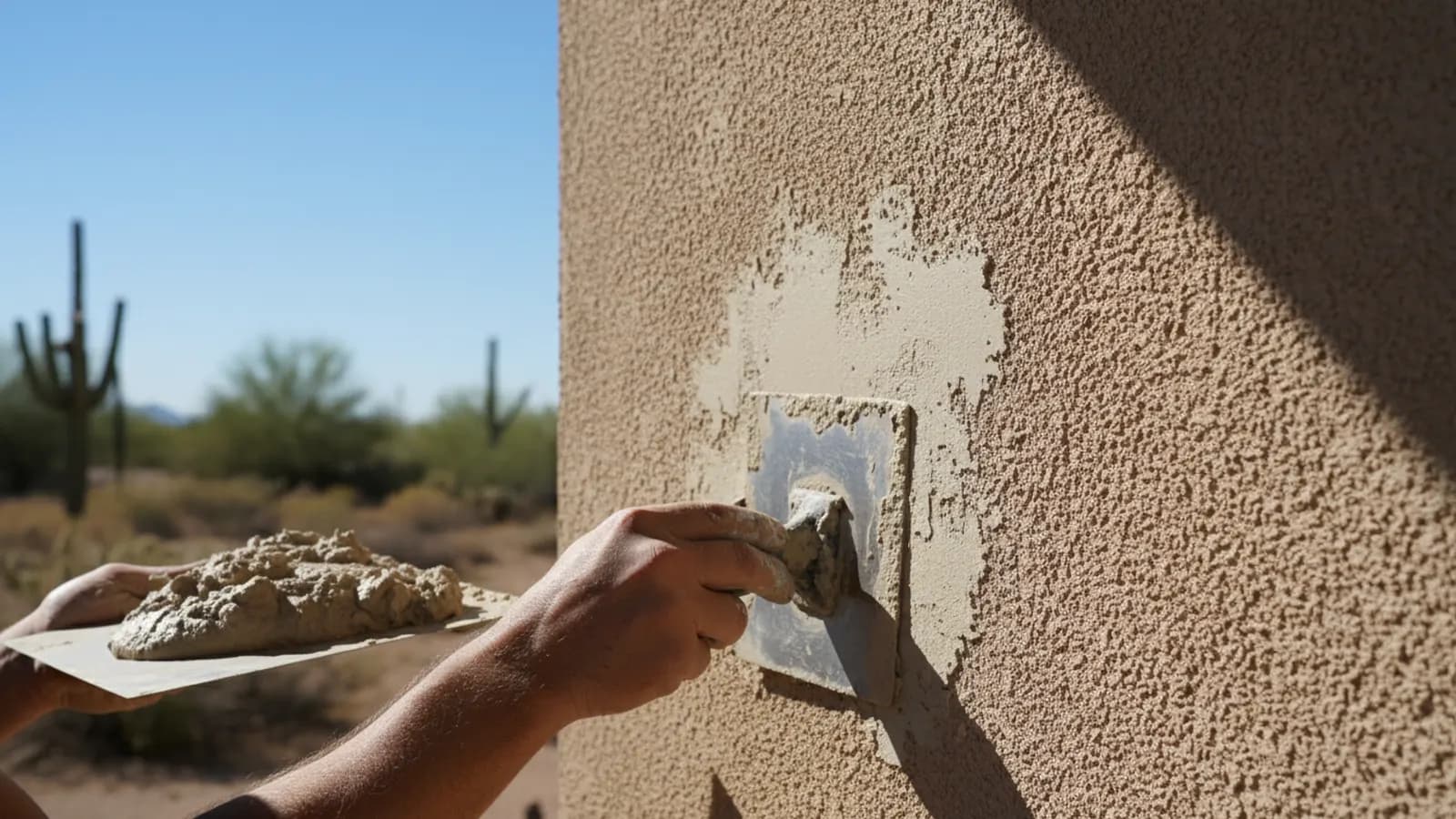
Stucco patch being floated over a repaired wall section and the texture matched in a Chandler, Arizona home
Chandler's volume comes from three pockets: Ocotillo and Fulton Ranch luxury HOA re-coats with DRB submittal; Sun Lakes age-restricted re-coats with quiet-hours and accessibility coordination; and standard tract work across Pecos / Galveston corridors.
Sprinkler over-spray on lake-adjacent Ocotillo lots is a constant repair driver.
Pre-dawn scheduling May–September standard.

Why Chandler Stucco Repair Is Different

Ocotillo / Fulton Ranch DRB submittal on visible re-coats.
Sun Lakes HOA coordination, quiet hours.
Lake-adjacent sprinkler over-spray repair specialty.

Recent Stucco Repair Projects in Chandler

Ocotillo

South elevation crack chase + color-coat 1,900 sf, DRB-approved

$9K7 days

Sun Lakes

Full re-coat 1,800 sf, integral color, HOA coord, accessibility access

$11K8 days

Fulton Ranch

Lake-side weep-screed water damage patch + re-coat 600 sf

$4K4 days

Stucco Repair in Chandler: Fast Facts

Ocotillo / Fulton Ranch DRB work: ~30%.

Sun Lakes active-adult: ~25%.

Sprinkler / lake water-intrusion: ~20%.

Average Chandler stucco repair: $2,500–$10,000.

DRB approval on visible re-coats in Ocotillo.

Typical Cost

$500 – $15,000+

Typical Timeline

2 days – 2 weeks

Permit Lead Time

2–4 weeks

How We Approach Stucco Repair

Arizona's extreme heat, monsoon-driven wind-driven rain, and 40°F+ daily thermal swings put stucco under constant stress. ProWorx Restoration repairs hairline and structural cracks, patches damaged areas, performs full re-stucco on aged exteriors, and matches color and texture across Phoenix-metro homes and commercial properties. Arizona ROC #349454.
Stucco failure modes in the Valley fall into predictable patterns. Hairline pattern cracking on south and west elevations from UV and thermal cycling. Diagonal cracks at window and door corners from minor structural movement. Bulging or hollow-sounding patches where moisture penetrated past failed sealant joints. EIFS (synthetic stucco) delamination on 1990s–2000s tract homes where weep details were undersized. We identify the failure mode before patching so the repair lasts.

Hairline and structural crack repair with elastomeric or cementitious patch

Full-wall and whole-house re-stucco (traditional three-coat)

Color matching from samples; integral and elastomeric topcoats

Texture matching: smooth, sand, dash, lace, Santa Barbara, Spanish

Window and door sealant replacement at stucco interfaces

EIFS repair and weep-detail correction

What Chandler Homeowners Should Know About Stucco Repair

Stopping Water Intrusion First

Water is the leading cause of building deterioration. Leaking roofs, failed window seals, cracked stucco, deteriorated sealants and poor drainage allow water into the structure, where it damages framing, finishes and building systems and promotes mould. Restoration should begin by identifying and stopping every source of water intrusion, because repairs made while water is still entering will not last.

Restoring Interiors

Building restoration often extends inside, repairing damaged plaster and drywall, restoring flooring and woodwork, updating lighting and building systems, and repairing water or smoke damage. In historic interiors, preserving original features such as trim, doors and decorative plaster maintains the building's character.

Documenting the Restoration

Detailed documentation, including photographs, drawings and records of materials used, provides a valuable reference for future maintenance and repairs. For historic buildings, it also creates a permanent record of the building's condition and the work performed.

Why Block Walls Lean

A leaning or tilting block wall usually signals a problem below ground. Inadequate footings, soil erosion, expansive soils, tree roots or water collecting at the base can all cause movement, as can soil or landscaping piled against one side. A leaning wall can become dangerous, particularly if it continues to move. Evaluating the cause determines whether the wall can be stabilised or needs to be rebuilt.

Foundations and Soil Movement

Some areas of Arizona have expansive clay soils that swell when wet and shrink as they dry, which can cause foundations to move and walls to crack. Poor drainage around a building makes this worse. Restoration may involve repairing cracks, improving drainage so water is directed away from the foundation and, in more serious cases, structural foundation repairs designed by an engineer.

Common Stucco Issues in Phoenix-Metro Homes

Four issues drive most calls. First, south and west elevation pattern cracking from UV and 40°F daily thermal cycling. Second, diagonal corner cracks at windows and doors from minor frame movement and missing diagonal lath reinforcement. Third, monsoon-driven moisture intrusion at failed sealant joints around windows, hose bibs, and electrical penetrations — water gets behind stucco and rots sheathing. Fourth, on 1990s–2000s tract homes, undersized or missing weep screeds at the foundation that trap moisture. We address the root cause, not just the visible crack.

Arizona's Block Walls

Concrete masonry unit walls, usually called block walls, surround the yards of a huge number of Arizona homes and form the exterior walls of many buildings. They are durable, but they are not maintenance-free. Over time they can crack, lean, develop failing mortar joints or lose their protective coating. Because they often serve as property boundaries and pool barriers, keeping them sound matters for safety, security and compliance as well as appearance.

When to Re-Stucco Entirely

If stucco is extensively cracked, delaminated or water-damaged across large areas, re-stuccoing the wall may be more cost-effective than repeated patching. Replacement also allows inspection and repair of the water-resistive barrier, lath and substrate beneath.

Cracks in Block Walls

Cracks in block walls take different forms. Step cracks that follow the mortar joints diagonally often indicate settlement, while vertical cracks may result from shrinkage or movement. Horizontal cracks can suggest lateral pressure. The width, pattern and whether a crack is growing all help determine the cause and the appropriate repair, which may range from repointing to partial rebuilding.

Foam Trim and Decorative Details

Many Arizona homes use foam shapes covered with stucco for window surrounds, cornices and decorative bands. These details can be damaged by impacts or water intrusion, and repairing them requires restoring the foam shape and reapplying the protective coating so the detail remains watertight.

Code Requirements During Restoration

Restoration work may trigger requirements to bring parts of the building up to current codes, particularly when the building's use changes or major alterations are made. Accessibility, fire and life safety, electrical and energy requirements can all apply. Understanding these requirements early prevents surprises during permitting.

Matching Historic Materials

Restoring older buildings often requires matching materials that are no longer standard. Historic masonry may need mortar that is softer and more compatible with the original bricks than modern mortar, since harder mortar can damage historic masonry. Older stucco, plaster, wood profiles and windows may need custom work to match. Using compatible materials preserves both the building's appearance and its long-term durability.

How Arizona Sun Affects Stucco

Intense UV exposure and extreme temperature swings place constant stress on stucco and its finish coats. Over time, finishes fade, chalk and become brittle, while expansion and contraction contribute to cracking. Applying quality finishes and recoating periodically helps protect stucco from sun damage and keeps it looking fresh.

Repairing Structural Damage

Deterioration from water, pests, settlement or previous alterations can weaken structural elements. Damaged framing, beams, connections and masonry must be repaired or reinforced to restore the building's structural integrity. Significant structural repairs should be designed or reviewed by a structural engineer and permitted appropriately.

How Our Stucco Repair Process Works in Chandler

01

Free On-Site Consultation

We visit your property, discuss your goals, and provide a detailed, no-obligation estimate.

02

Custom Project Plan

Our team creates a tailored project plan with timeline, materials, and transparent pricing.

03

Licensed Crews On Site

Licensed craftsmen complete your project with quality materials and meticulous attention to detail.

04

Final Walkthrough & Sign-Off

We inspect every detail with you and ensure complete satisfaction before the job is done.

"Ocotillo DRB approved our re-coat first round and the lake-side patches still look perfect after monsoon season — ProWorx fixed the root cause, not just the surface."

ProWorx Client · Chandler

Neighborhoods We Serve in Chandler

Ocotillo · Fulton Ranch · Sun Lakes · Circle G · Clemente Ranch · Lantana Ranch · Twelve Oaks · Cooper Commons

Stucco Repair FAQs for Chandler Homeowners

Ready to Start Your Chandler Stucco Repair Project?

Get a free, no-obligation estimate from a licensed Arizona contractor — ROC #349454.