Our Masonry Restoration Process in Arizona
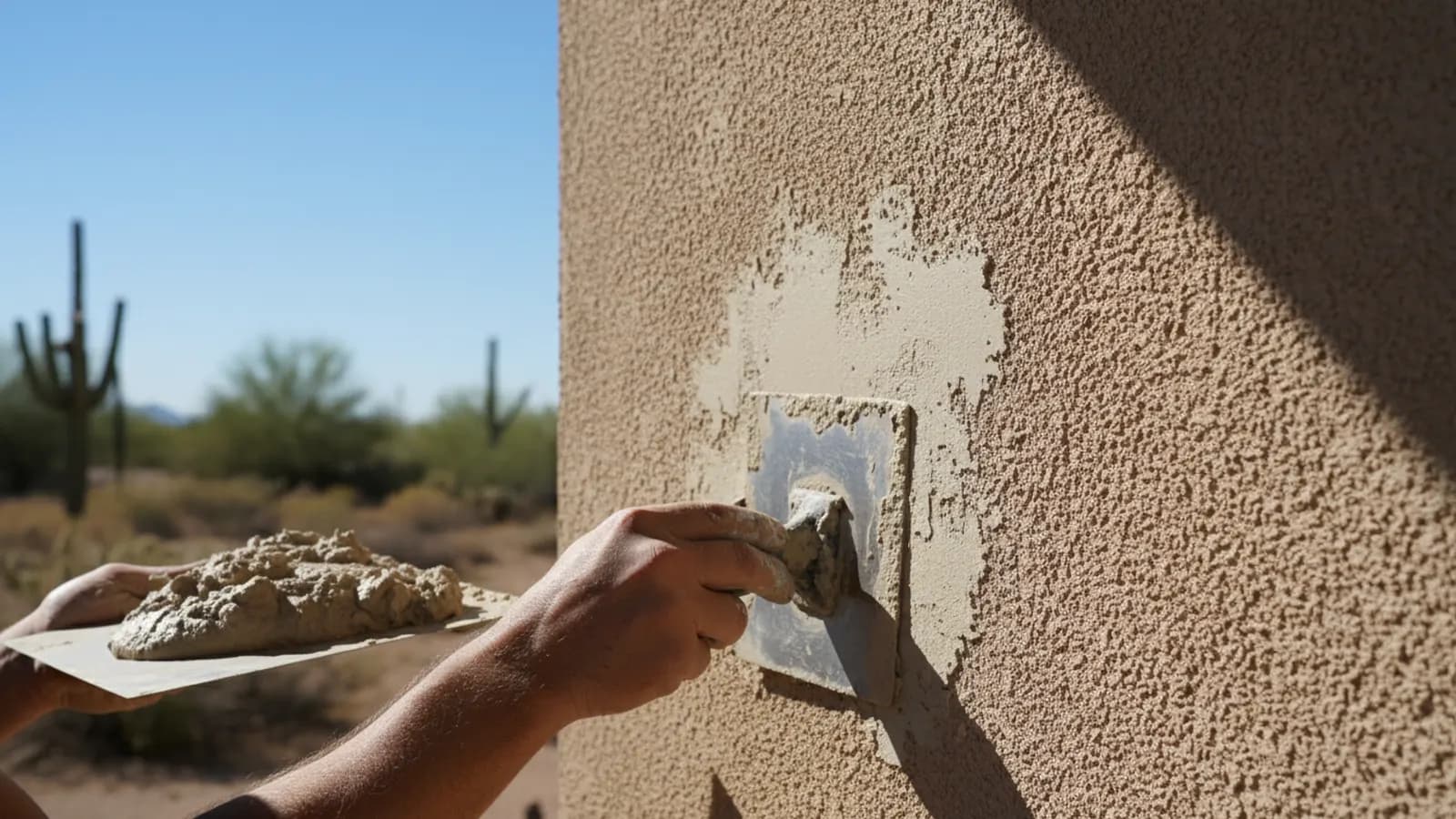
We start with a hands-on inspection — sounding bricks for hollows, probing mortar with a pick to test hardness, photographing crack patterns to distinguish settlement from thermal movement. Failed mortar is cut out to a depth of at least 2× joint width (typically 5/8"–3/4") with a tuck-point grinder, joints are flushed clean, and new mortar is matched to the original in compressive strength, color, and texture. Replacement bricks are sourced from reclaimed yards when possible; visible elevations get the best matches. Sealers are applied only after mortar fully cures (28 days minimum) and only breathable formulations so trapped moisture can escape.
Common Masonry Issues in Phoenix-Metro Properties
Five patterns dominate. Mortar deterioration along south and west elevations from UV and thermal cycling. Step cracking through brick courses from foundation settlement on expansive soils. Brick spalling from moisture entering cracked joints. Efflorescence from sulfate-rich groundwater wicking through CMU site walls. And on 1920s–1960s downtown Phoenix and Mesa brick, hard Portland-cement patches done in the 80s–90s now causing the softer original brick to spall around the patches. Each pattern needs a different repair — we don't apply a universal fix.
Materials & Standards We Use
Mortar specified per ASTM C270 — Type N for most residential, Type S for structural and below-grade, Type O or K for historic lime-mortar buildings. Replacement units matched per ASTM C216 (brick) and ASTM C90 (CMU). Helical wall ties to ICC-ES report specs for crack stabilization. Sealers are siloxane- or silane-based breathable formulations — never film-forming acrylics that trap moisture. All work permitted where required and warrantied under ROC #349454.
Arizona's Block Walls
Concrete masonry unit walls, usually called block walls, surround the yards of a huge number of Arizona homes and form the exterior walls of many buildings. They are durable, but they are not maintenance-free. Over time they can crack, lean, develop failing mortar joints or lose their protective coating. Because they often serve as property boundaries and pool barriers, keeping them sound matters for safety, security and compliance as well as appearance.
Why Block Walls Lean
A leaning or tilting block wall usually signals a problem below ground. Inadequate footings, soil erosion, expansive soils, tree roots or water collecting at the base can all cause movement, as can soil or landscaping piled against one side. A leaning wall can become dangerous, particularly if it continues to move. Evaluating the cause determines whether the wall can be stabilised or needs to be rebuilt.
Cracks in Block Walls
Cracks in block walls take different forms. Step cracks that follow the mortar joints diagonally often indicate settlement, while vertical cracks may result from shrinkage or movement. Horizontal cracks can suggest lateral pressure. The width, pattern and whether a crack is growing all help determine the cause and the appropriate repair, which may range from repointing to partial rebuilding.
Repointing Mortar Joints
Mortar joints deteriorate over time, becoming cracked, crumbly or recessed. Repointing removes deteriorated mortar to a consistent depth and replaces it with fresh mortar, restoring the joint's strength and weather resistance. The new mortar should be compatible with the existing masonry, and matching colour and joint profile helps the repair blend in.
Spalling Brick and Block
Spalling occurs when the face of a brick or block flakes, chips or breaks away. It is often caused by moisture moving through the masonry, combined with salt crystallisation or temperature changes. Repairing spalled units may involve replacing individual bricks or blocks and addressing the moisture source that caused the damage in the first place.
Efflorescence on Masonry
White, powdery deposits on masonry are called efflorescence. They form when water carries dissolved salts to the surface and evaporates. Efflorescence can usually be cleaned off, but its presence shows that water is moving through the wall, and that moisture source should be identified and corrected to prevent recurring deposits and potential damage.
Stone Veneer Repairs
Natural and manufactured stone veneer is popular on Arizona homes for accent walls, columns and fireplaces. Veneer can loosen, crack or allow water behind it if it was installed without proper drainage and flashing. Repairs may involve resetting loose stones, replacing damaged pieces and correcting installation details to prevent water intrusion.
Cleaning Masonry Safely
Masonry can be stained by dirt, efflorescence, rust, algae or paint. Cleaning methods must be appropriate for the material, since aggressive pressure washing or harsh acids can damage brick, block and mortar. Gentle methods tested in an inconspicuous area first protect the masonry while removing stains.
Sealing Masonry
Breathable masonry sealers can help reduce water absorption while allowing moisture inside the wall to escape. Sealers are not appropriate for every situation, and non-breathable coatings can trap moisture and cause damage. Choosing the right product depends on the type of masonry and its exposure.
Painting Block Walls
Many block walls are painted or coated to match a home's exterior. Over time, the finish fades and peels in Arizona's sun. Repainting requires cleaning, repairing cracks and using coatings formulated for masonry. A well-applied finish protects the wall and improves its appearance.
Pool Barrier Walls
Block walls frequently serve as pool barriers, and gaps, damage or climbable features can compromise safety. Repairs should maintain the required barrier height and integrity. Pool barrier requirements vary by jurisdiction, so any changes should be checked against local rules.
When to Rebuild Instead of Repair
If a wall is leaning significantly, has extensive cracking or was built with an inadequate footing, rebuilding may be safer and more cost-effective than repeated repairs. Rebuilding allows a proper footing and reinforcement to be installed, giving the wall a much longer service life.
Masonry Fireplaces and Chimneys
Masonry fireplaces and chimneys can develop cracked mortar, damaged crowns and deteriorated flues. Since these components affect fire safety, they should be inspected regularly and repaired by professionals. Restoring chimney crowns and mortar joints keeps water out and protects the structure.