



Flood Restoration in Queen Creek, AZ

24/7 flood response across Queen Creek — extraction, drying, and full rebuild.

Serving Queen Creek & nearby Maricopa County

Get Your Free Flood Restoration Estimate

Step 1 of 5Project

What kind of project?

Pick the option that fits best — you can add details next.

Quick Answer: Flood Restoration in Queen Creek

ProWorx Restoration handles 24/7 flood restoration throughout Queen Creek, AZ. Queen Creek flood losses are dominated by monsoon flooding along the Sonoqui Wash and Queen Creek Wash corridors, second-floor washing-machine failures in two-story tract homes, and early-life refrigerator/dishwasher supply-line losses in post-2010 builds. Typical projects run $3,500–$45,000 and 1–7 weeks.

1,200+

Projects Completed

15+

Years Experience

ROC #349454

Licensed & Insured

100%

Satisfaction Guaranteed

Flood Restoration Built for Queen Creek Homes
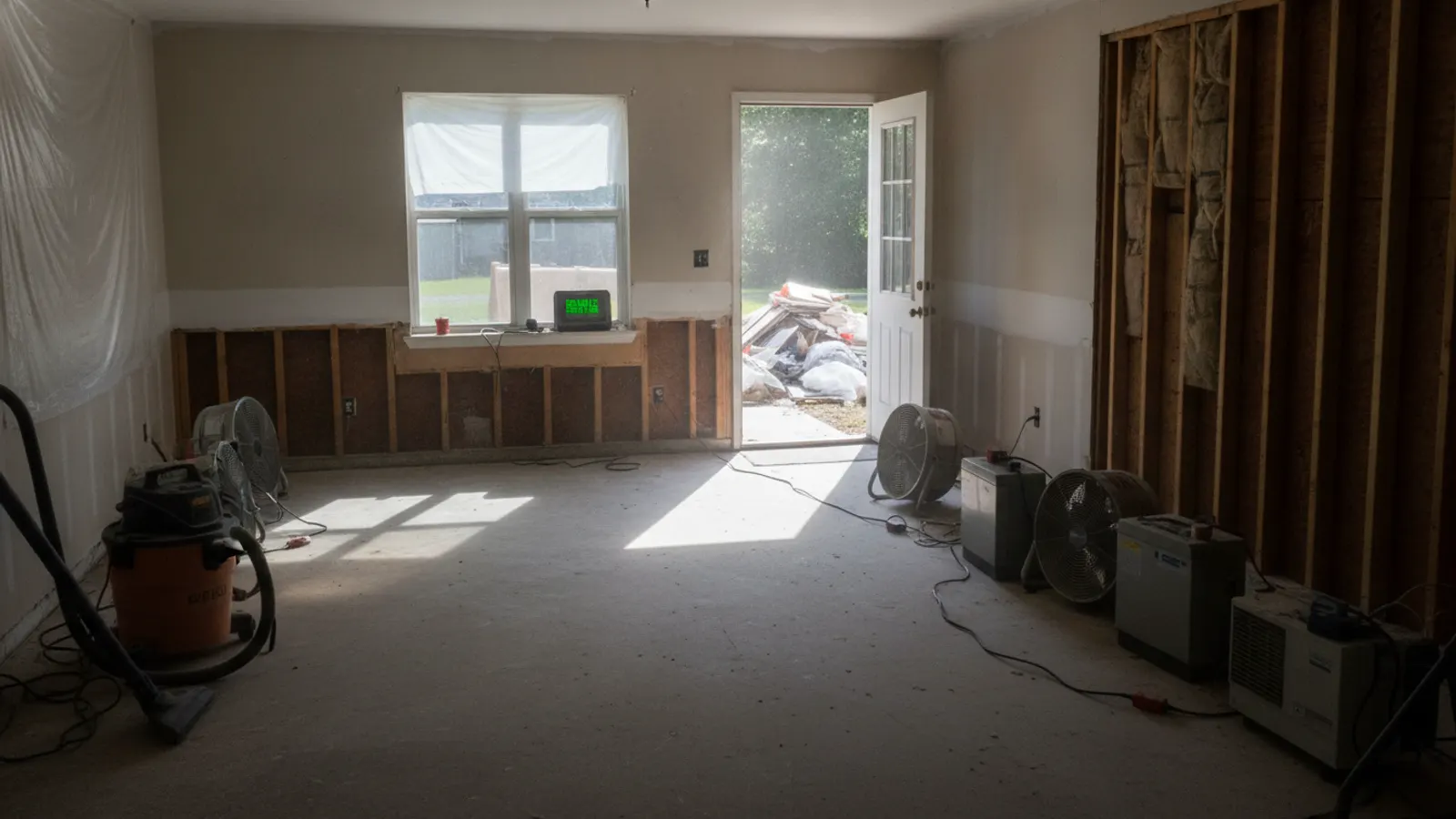
Flood-damaged flooring removed to the slab with drying equipment running in a Queen Creek, Arizona home
Queen Creek's explosive growth means most homes here are post-2010 builds — Encanterra, Hastings Farms, Pecan Creek, Cortina, Ironwood Crossing, Sossaman Estates. The dominant flood pattern is upstairs washing-machine and water-heater failures (most QC tract homes locate both on the upper floor) and refrigerator/dishwasher supply-line losses.
Queen Creek's flat agricultural geography routes monsoon runoff through Sonoqui Wash, Queen Creek Wash, and the surrounding ag-drainage system. Lower-elevation neighborhoods adjacent to these channels see periodic surface flooding during peak July–August cells.
We respond 24/7 across the Town of Queen Creek with truck-mounted extraction, structural drying, mold prevention, and full reconstruction.

Why Queen Creek Flood Restoration Is Different

Two-story Queen Creek tract homes almost always require ceiling demo on the floor below when an upstairs water loss occurs. We moisture-map the entire vertical column on every upstairs claim.
Town of Queen Creek Development Services issues emergency repair permits typically same-day; standard rebuild permits in 2–3 weeks.

Recent Flood Restoration Projects in Queen Creek

Encanterra

Original water-heater failure: kitchen extraction, base-cabinet rebuild, LVP replacement, new heater with auto-shutoff

$22K5 weeks

Hastings Farms

Upstairs washing-machine hose burst: 1,200 sf two-story water damage, ceiling demo, drywall, paint, flooring replacement

$34K6 weeks

Ironwood Crossing

Refrigerator ice-maker line failure on wood-look tile: in-place drying, grout/sealer restoration, cabinet kick replacement

$12K3 weeks

Flood Restoration in Queen Creek: Fast Facts

Average Queen Creek flood/water claim: $8,000–$24,000.

Second-floor laundry losses: roughly 40% of QC two-story residential water claims.

Sonoqui / Queen Creek Wash monsoon flow: significant during July–August.

Town of Queen Creek emergency repair permits: typically same-day.

Microbial growth window: 48–72 hours.

Typical Cost

$3,000 – $75,000+

Typical Timeline

1 – 8 weeks

Permit Lead Time

2–4 weeks

How We Approach Flood Restoration

Arizona's monsoon season — typically mid-June through September — can dump 1–3 inches of rain in under an hour on hard-packed desert soil that can't absorb it. The result: flash flooding, washes overrunning streets, roof leaks under wind-driven rain, and ground-water intrusion into garages, casitas, and lower-level living spaces. ProWorx Restoration is a licensed Arizona general contractor (ROC #349454) responding 24/7 to flood emergencies across the Valley.
We arrive with truck-mounted water extractors, submersible pumps, commercial dehumidifiers, and air movers. Water is removed immediately, structural drying begins within hours, and antimicrobial treatment is applied before mold can take hold (typically within 24–48 hours of saturation). For total losses we also handle drywall, flooring, insulation, and finish reconstruction under the same contract.

24/7 emergency response across the Phoenix metro

Licensed Arizona general contractor (ROC #349454)

Truck-mounted water extraction and submersible pumping

Industrial dehumidification and high-velocity air movers

Antimicrobial treatment to prevent mold growth

Thermal imaging to detect hidden moisture

What Queen Creek Homeowners Should Know About Flood Restoration

Why Homeowners Call Us First

Handling both the drying and the rebuild under one licensed contractor means one point of contact, one schedule and no gap between the crew that dries the house and the crew that repairs it. It also means the people documenting the damage for your claim are the same people who will rebuild it, so nothing gets lost between phases.

Your Homeowner Policy and the Claim

Most homeowner policies cover sudden and accidental water damage, such as a burst pipe or a failed water heater, but often exclude damage resulting from long-term leaks, neglect or gradual deterioration, and flood water entering from outside usually requires separate flood coverage. Read the water damage section of your policy, report the loss promptly, document everything, and keep receipts for any emergency expenses. You have the right to choose your own restoration contractor. We provide the detailed documentation adjusters need, including moisture readings, photographs and itemised scope, which helps the claim move forward without unnecessary delay.

Rebuilding After the Drying Is Done

Once the structure is dry, the home has to be put back together, and this is where a single contractor handling both mitigation and reconstruction saves time and confusion. Removed drywall is replaced and finished to match surrounding walls, baseboards and trim are reinstalled, flooring is repaired or replaced, cabinets are reset or rebuilt, and painting blends new work into existing finishes. Matching flooring and texture so repairs are not obvious takes care. We manage the full rebuild after drying, coordinating every trade so your home is returned to the condition it was in before the loss.

What Happens to Your Belongings

Water damage affects contents as well as the structure, and handling them properly is a large part of a residential job. Furniture is moved off wet flooring or raised on blocks to stop wicking and staining. Items that can be cleaned and dried are separated from those that cannot. In larger losses, contents may be packed out, inventoried and taken offsite for cleaning and storage while the house is repaired, then returned once work is finished. Photographs, irreplaceable documents and items of sentimental value should be identified early so they can be prioritised. Keep a list of everything that is damaged or discarded, with photographs, because your insurer will want it.

Garages, Casitas and Detached Structures

Flood water often enters garages, casitas and other detached structures first because they sit lower or have wider openings than the main house. Stored belongings, appliances, water heaters and vehicles may all be affected. Detached structures can also have different construction, such as uninsulated walls or concrete floors, which affects how they are cleaned and dried. We assess every affected building on the property, not just the main residence, so nothing is missed in the restoration or the insurance claim.

Flood Insurance Is Usually Separate

Most standard homeowner insurance policies do not cover flood damage from water entering the home from outside, such as overland flooding or rising water. Flood coverage typically requires a separate policy. Damage from sudden internal sources, such as a burst pipe, is generally treated differently. Understanding which coverage applies to your loss is important before work begins. We document the source and extent of damage carefully, which helps clarify coverage and supports whichever claim applies.

Not All Water Is the Same: The Three Categories

The industry standard for water damage restoration, IICRC S500, sorts water into three categories by how contaminated it is, and the category determines what can be saved. Category 1 is clean water from a sanitary source, such as a burst supply line or an overflowing sink with no contaminants. Category 2, often called grey water, carries significant contamination: washing machine or dishwasher discharge, or a toilet overflow containing urine but no faeces. Category 3, black water, is grossly contaminated and includes sewage, rising flood water from outside and any water that has been left standing long enough to support significant microbial growth. Water also degrades over time and with contact, so a clean-water leak left for several days can become Category 2 or 3. Porous materials such as carpet pad and drywall that have absorbed Category 3 water generally cannot be cleaned and must be removed.

How Our Flood Restoration Process Works in Queen Creek

01

Free On-Site Consultation

We visit your property, discuss your goals, and provide a detailed, no-obligation estimate.

02

Custom Project Plan

Our team creates a tailored project plan with timeline, materials, and transparent pricing.

03

Licensed Crews On Site

Licensed craftsmen complete your project with quality materials and meticulous attention to detail.

04

Final Walkthrough & Sign-Off

We inspect every detail with you and ensure complete satisfaction before the job is done.

"Upstairs washer hose let go and ruined the dining-room ceiling. ProWorx had crews on site within two hours and rebuilt the entire affected area in six weeks."

ProWorx Client · Queen Creek

Neighborhoods We Serve in Queen Creek

Encanterra · Hastings Farms · Pecan Creek · Cortina · Ironwood Crossing · Sossaman Estates

Flood Restoration FAQs for Queen Creek Homeowners

Ready to Start Your Queen Creek Flood Restoration Project?

Get a free, no-obligation estimate from a licensed Arizona contractor — ROC #349454.