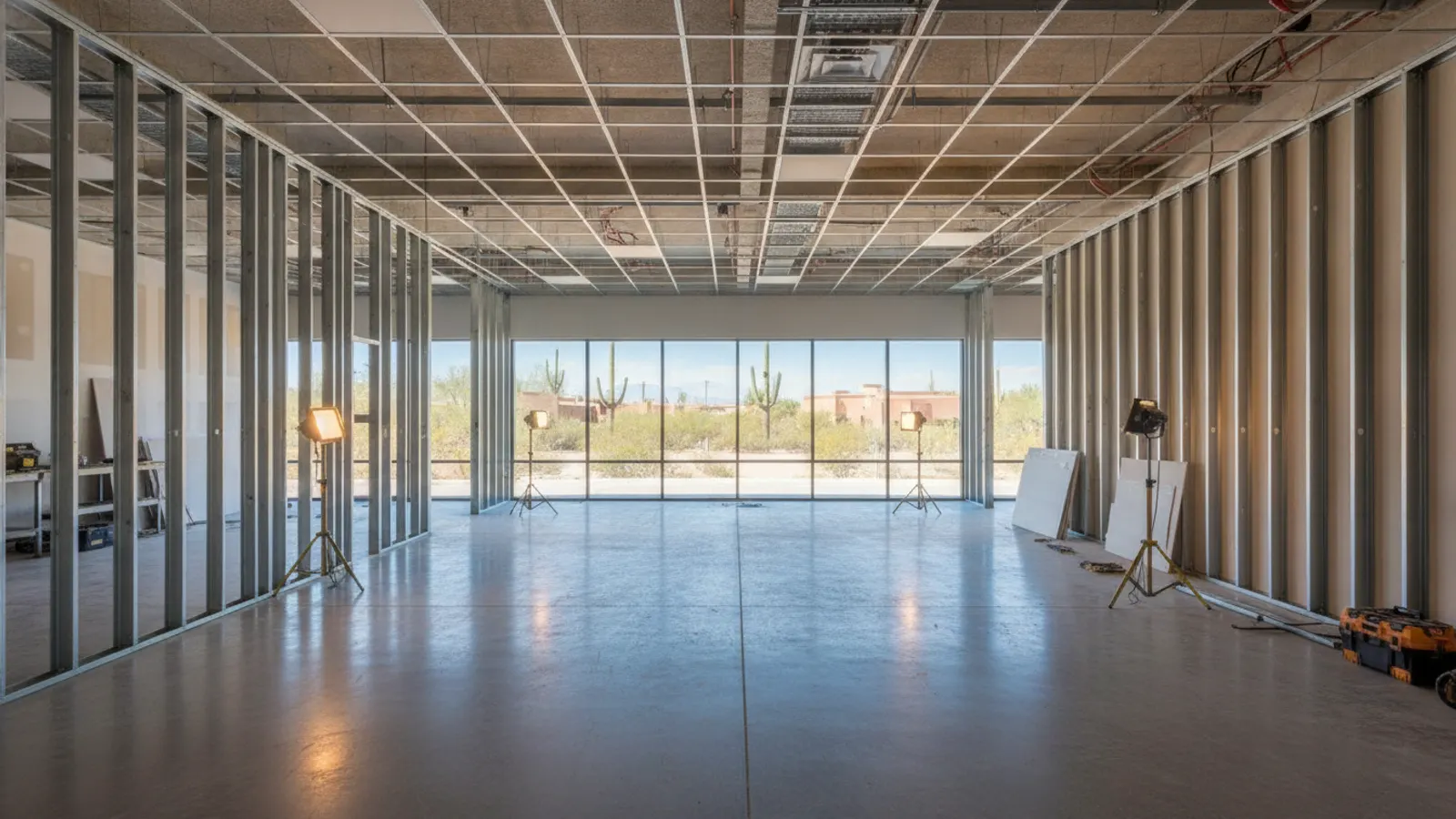
Our Commercial Restoration Process in Arizona
We respond within hours of the call for emergency damage. Step one is stabilization: water extraction, structural drying, board-up, smoke containment, mold containment per IICRC S520. Step two is documentation — moisture mapping, photo records, scope written in Xactimate for carrier alignment. Step three is reconstruction: structural repair, MEP restoration, drywall, finishes, and code-compliance upgrades. We coordinate directly with the building owner, property manager, tenant, and insurance adjuster throughout. Typical mid-sized commercial restoration runs 6–16 weeks; large multi-tenant losses can run 4–9 months.
Common Commercial Building Issues in Phoenix-Metro Properties
Phoenix-metro commercial buildings see specific failure modes. Flat-roof TPO and modified-bitumen failures during monsoons cause widespread water damage across acoustic ceiling tile and electrical. AC condensate-line failures in mechanical rooms saturate adjacent tenant spaces. EIFS facade delamination from sun-baked south and west elevations exposes substrate to monsoon-driven moisture. Older masonry buildings in downtown Phoenix and Mesa exhibit mortar deterioration and brick spalling. We address the root cause as part of restoration — not just the visible damage — so claims don't recur in 18 months.
Materials & Standards We Use
Water mitigation per IICRC S500. Mold remediation per IICRC S520 with containment, HEPA filtration, and post-remediation verification. Fire and smoke per IICRC S700. Structural repairs to current IBC with Arizona amendments. Fire-rated assemblies maintain UL-listed integrity. ADA paths verified to 2010 ADA Standards. All work permitted where required, inspected, and warrantied under ROC #349454.
Restoration as Capital Planning
For commercial property owners, restoration is best treated as part of long-term capital planning rather than a series of emergency repairs. Understanding the remaining life of roofs, building envelopes, parking surfaces and mechanical systems allows owners to schedule work, budget reserves and avoid unexpected failures that disrupt tenants. A planned approach usually costs less than reacting to breakdowns.
Working Through Property Managers
Many commercial restoration projects are coordinated through property managers, who balance owner budgets, tenant needs and building operations. Clear scopes, reliable schedules and regular communication help managers keep owners and tenants informed. Documentation of completed work also supports budgeting, insurance and future planning.
Keeping Tenants Operating
Restoration in occupied commercial buildings must minimise disruption to tenants' businesses. Scheduling noisy or disruptive work outside business hours, maintaining access to entrances and parking, controlling dust and coordinating utility shutdowns in advance helps tenants continue operating. Retaining satisfied tenants is often as important as the restoration itself.
Flat Roofs on Commercial Buildings
Many Arizona commercial buildings have flat or low-slope roofs, which rely on proper drainage to prevent water from ponding. Over time, membranes and coatings deteriorate, drains clog and flashing around rooftop equipment fails. Restoration options range from recoating sound roofs to complete replacement. Regular inspection and maintenance extend roof life and prevent interior damage.
Rooftop Mechanical Equipment
Commercial buildings frequently house HVAC units on the roof, and the penetrations and curbs supporting them are common leak points. Replacing equipment may require structural evaluation, new curbs and careful flashing. Coordinating roofing and mechanical work avoids damage to new roofing when equipment is replaced.
Storefronts and Entrances
Storefront glazing, entrance doors and canopies take heavy use and constant exposure to the elements. Failed seals, damaged frames, worn hardware and deteriorated finishes affect both appearance and security. Restoring or replacing storefront systems can improve energy efficiency, curb appeal and accessibility for customers.
Parking Areas and Walkways
Parking lots and pedestrian walkways deteriorate under heat, traffic and occasional heavy rain. Cracked pavement, trip hazards, faded striping and failing drainage create safety and liability concerns. Restoring these areas improves safety, appearance and compliance with accessibility requirements for accessible parking and routes.
Reducing Vacancy Downtime
When a commercial space becomes vacant, restoring it quickly helps the owner lease it sooner. Repairing damage, updating finishes and confirming building systems are in good working order prepares the space for new tenants. Coordinated restoration shortens the time a space remains empty.
Insurance Losses in Commercial Buildings
Fire, water and storm damage to commercial buildings often affects multiple tenants and building systems. Restoration must be coordinated with insurers, property managers and tenants, and documented carefully to support both property and business interruption claims. Prompt mitigation limits damage and shortens downtime.
Inspections and Code Compliance
Commercial restoration may trigger requirements for fire protection, accessibility, energy performance or structural updates, depending on the scope of work. Understanding these requirements before work begins prevents delays during permitting and inspection.
Preventive Maintenance Programmes
Routine inspection of roofs, drainage, sealants, exterior finishes and building systems identifies problems while they are small and inexpensive to repair. A preventive maintenance programme extends the life of building components and protects the owner's investment.
Restoring Building Exteriors
The exterior of a commercial building shapes how customers and tenants perceive it, and deteriorated stucco, faded paint, damaged signage and worn finishes can make an otherwise sound property look neglected. Restoring facades, repairing and repainting exterior finishes, replacing damaged trim and updating lighting can significantly improve curb appeal. Beyond appearance, exterior restoration also protects the building envelope from water intrusion and sun damage, which reduces the likelihood of more serious and expensive interior problems developing later.
Restoring Restrooms and Common Areas
Restrooms, lobbies, corridors and other common areas experience heavy use and reflect directly on a property's management. Worn finishes, outdated fixtures and accessibility shortcomings can affect tenant satisfaction and leasing. Restoring these spaces with durable materials, modern fixtures and accessible layouts improves the experience for tenants and visitors while reducing ongoing maintenance costs over the life of the building.
Budgeting Commercial Restoration
Commercial restoration budgets are easier to manage when work is prioritised by urgency and impact. Items affecting safety, water intrusion or code compliance come first, followed by work that protects asset value and improves tenant satisfaction. Breaking large projects into phases allows costs to be spread across budget cycles while still addressing the most important needs promptly.
One Contractor for the Whole Building
Using one licensed contractor for envelope, interior and systems work keeps commercial restoration coordinated, accountable and on schedule.