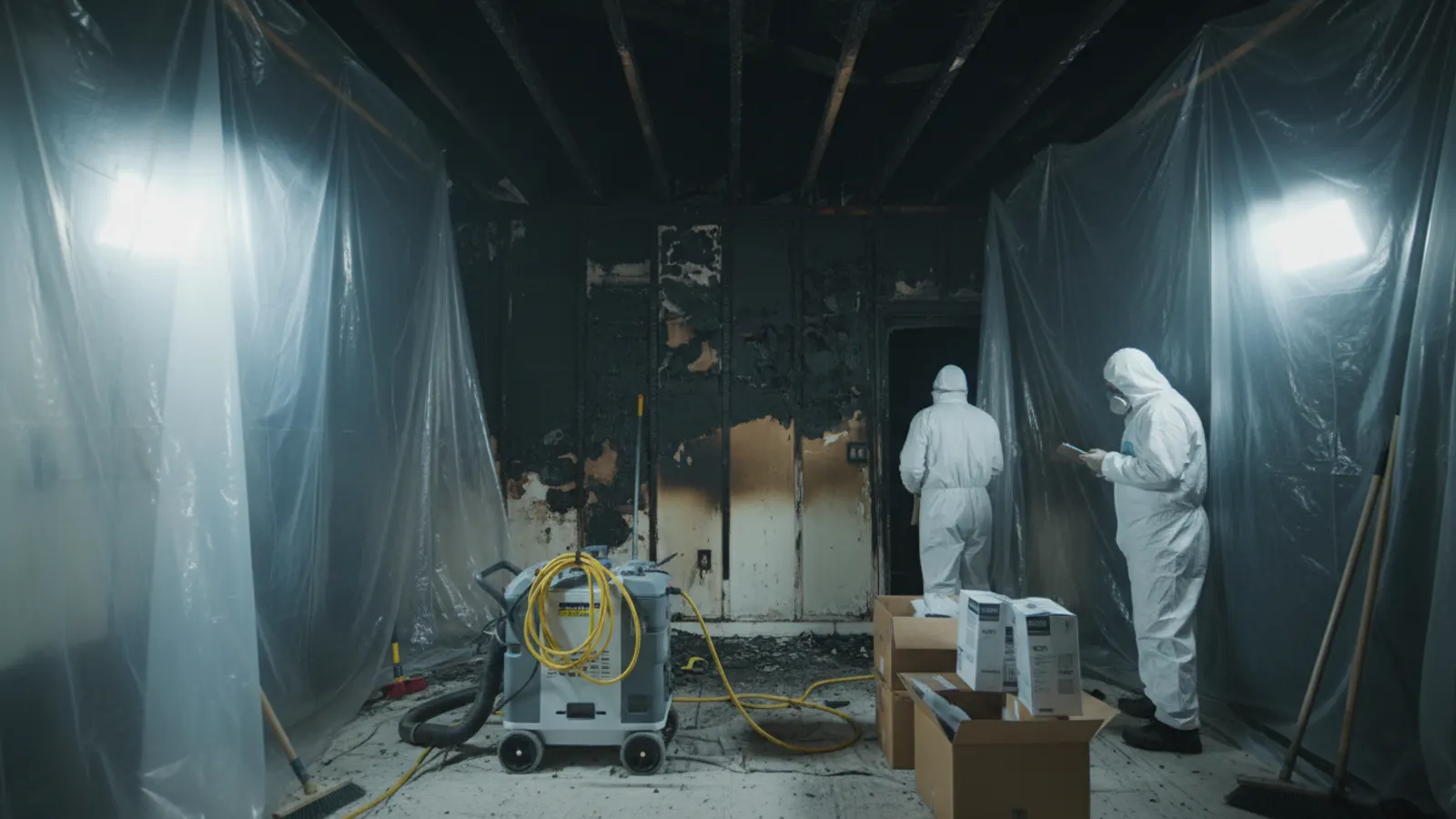
Our Commercial Fire Response Process
We mobilize a project manager and stabilization crew within hours of your call. After board-up and water extraction, we coordinate a walkthrough with your insurance adjuster, property manager, and the fire marshal if required. You get a written scope, phased timeline, and a single point of contact for the duration of the project — critical when multiple tenants or stakeholders are involved.
Common Commercial Fire Scenarios in the Valley
We routinely respond to restaurant grease and hood fires, warehouse electrical fires, rooftop HVAC fires (a common Arizona issue during peak summer load), and tenant-caused fires in multi-unit retail and office buildings. Each scenario has specific code, occupancy, and tenant-coordination requirements we manage on your behalf, including ADA-compliant repairs during reconstruction.
Materials, Standards & Compliance
Commercial rebuilds must meet IBC (International Building Code), local fire marshal requirements, and ADA accessibility standards. We use fire-rated assemblies, commercial-grade HVAC and ductwork, code-compliant exit signage and emergency lighting, and document every assembly for your certificate of occupancy. Permits are pulled through the appropriate city — Phoenix, Mesa, Scottsdale, Tempe, etc. — and we manage all inspections.
Suppression Systems Leave Their Own Mess
In commercial buildings, the systems that put out a fire create a second category of damage. Sprinkler activation releases large volumes of water across multiple areas. Dry chemical extinguishers leave a fine powder that settles on surfaces and equipment, and some types of dry chemical residue can be corrosive to electronics and metals if not cleaned promptly. Kitchen hood suppression systems discharge wet chemical agents. Each requires a specific cleanup approach, and acting quickly reduces the risk of secondary damage to equipment and inventory.
Protecting Electronics and Data
Smoke, soot and suppression residue can damage computers, servers, point-of-sale systems and other electronics even when they were not near the fire. Soot is often acidic and can corrode circuit boards and connections over time. Affected equipment should be powered down and assessed before being restarted, since running contaminated equipment can cause further damage. Electronics may need specialist cleaning or replacement, and data recovery services may be required. Including these items in the assessment from the start helps protect critical business operations.
Inventory and Stock
Retail, warehouse and manufacturing businesses must deal with inventory that may be damaged by heat, smoke, soot or water. Food products, cosmetics and other consumables exposed to smoke or heat may need to be discarded for safety and regulatory reasons. Other stock may be cleaned, while some may need careful documentation for insurance purposes. Separating salvageable from non-salvageable inventory, documenting quantities and condition, and storing items appropriately are essential steps in both the restoration and the claim.
Fire Marshal and Re-Inspection Requirements
Before a commercial building damaged by fire can be reoccupied, it may require inspections from the fire marshal, building officials and other authorities. Fire alarms, sprinklers, emergency lighting, exits and fire-rated assemblies must be restored and verified. Electrical systems affected by fire or water may need inspection before re-energising. Planning the restoration with these requirements in mind avoids delays at the end of the project. We coordinate with inspectors and provide the documentation needed for sign-off.
Phased Reopening
Not every commercial fire requires the entire building to remain closed until all repairs are complete. Where it is safe and permitted, unaffected areas may reopen sooner while restoration continues elsewhere, separated by appropriate containment. A phased approach can significantly reduce business interruption. It requires careful planning of containment, access, air quality and life-safety systems so occupants are protected. We work with owners and authorities to identify safe options for partial reopening.
Business Interruption and Documentation
Commercial fire claims frequently include business interruption coverage, which can help replace lost income during closure. Supporting that claim requires a clear record of when the loss occurred, when restoration began, which areas were unusable and when operations resumed. We keep detailed daily records, photographs and progress reports throughout the restoration. That documentation supports both the property claim and any business interruption claim.
Working Around Landlords and Tenants
In leased commercial properties, responsibility for repairs may be divided between landlord and tenant according to the lease. The building structure and systems may fall to the landlord, while tenant improvements, fixtures and inventory may be the tenant's responsibility, each covered by different insurance policies. Coordinating restoration across those parties requires clear communication. We document damage separately where needed and coordinate with all parties so repairs proceed efficiently.
Restaurant and Kitchen Fires
Commercial kitchens face a particular set of fire risks because of open flames, hot cooking oil and grease accumulation in hoods and ductwork. A kitchen fire can spread into the exhaust system, and grease residue combined with smoke creates a heavy, sticky contamination that requires intensive cleaning. After a fire, hood systems and ductwork must be cleaned and inspected, suppression systems recharged and certified, and food-contact surfaces cleaned or replaced to meet health requirements before service resumes. We coordinate restoration with the inspections and certifications needed to reopen, so a restaurant is not left waiting on paperwork after the physical work is done.
Preventing the Next Commercial Fire
After restoration, many businesses review their fire prevention practices. Regular inspection and maintenance of fire alarms, sprinklers and suppression systems, routine cleaning of kitchen exhaust systems, safe storage of flammable materials, electrical system maintenance and staff training all reduce risk. Clear emergency procedures help protect people and property if a fire does occur. Improvements identified during restoration can often be incorporated while repairs are underway.
Smoke Migration Between Commercial Suites
In strip centres, office buildings and mixed-use properties, smoke from a fire in one suite frequently travels into neighbouring units through shared ceiling plenums, ductwork, wall penetrations and gaps above demising walls. A business that never saw flames may still face soot residue, odour and contaminated HVAC systems. Each affected suite should be assessed and documented separately, since the tenants may have different insurers and different responsibilities under their leases.