



Fire Damage Restoration in Cave Creek, AZ

24/7 fire response and custom-home reconstruction across Cave Creek — IICRC-aligned.

Serving Cave Creek & nearby Maricopa County

Get Your Free Fire Damage Restoration Estimate

Step 1 of 5Project

What kind of project?

Pick the option that fits best — you can add details next.

Quick Answer: Fire Damage Restoration in Cave Creek

ProWorx Restoration provides 24/7 fire damage restoration throughout Cave Creek, AZ. Dominant Cave Creek fire losses are kitchen fires, brush-fire perimeter losses on custom-lot homes backing to open desert, and lightning-strike attic fires during monsoon season. Typical projects run $12,000–$250,000+ and 4 weeks to 5 months.

1,200+

Projects Completed

15+

Years Experience

ROC #349454

Licensed & Insured

100%

Satisfaction Guaranteed

Fire Damage Restoration Built for Cave Creek Homes
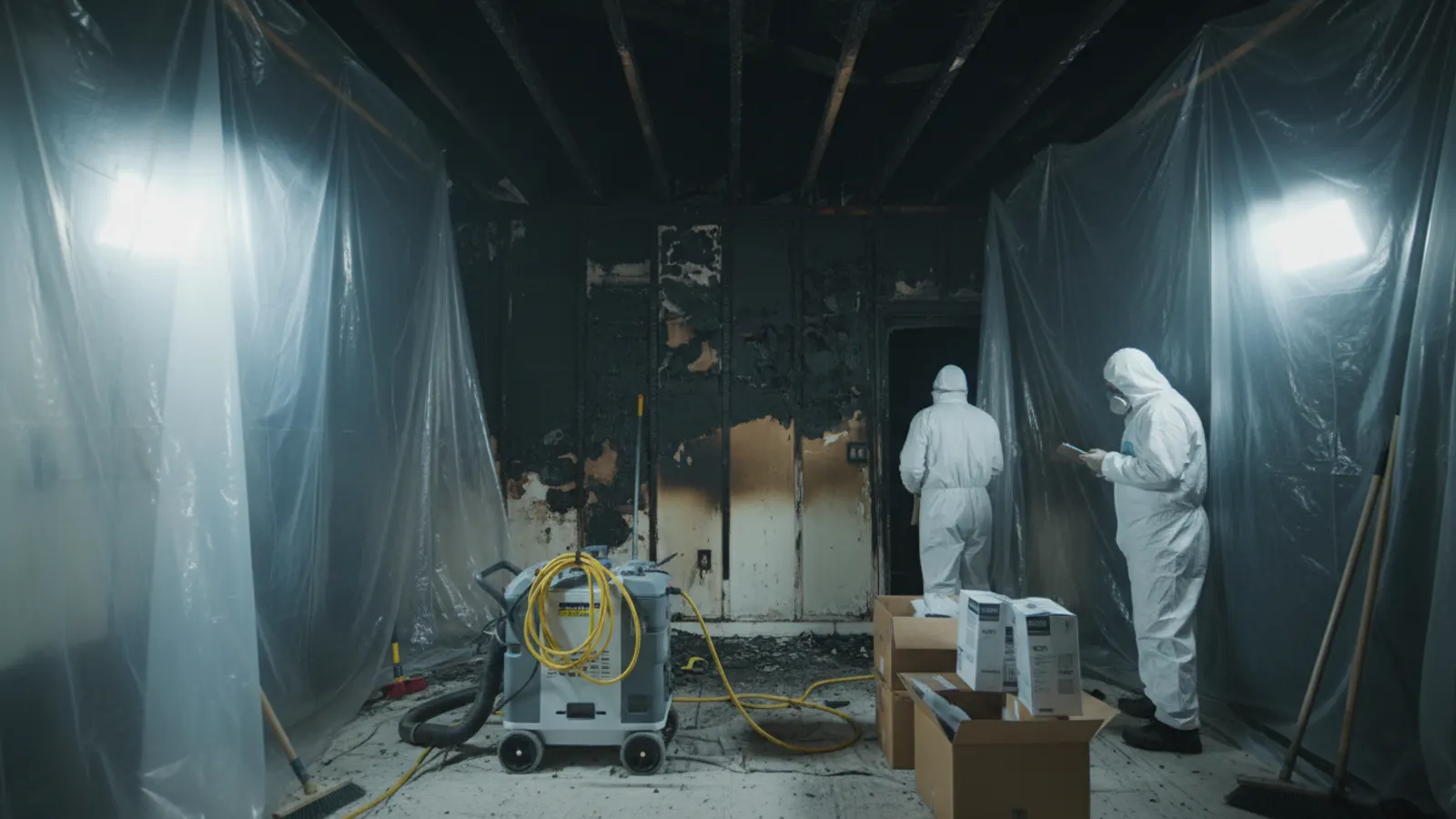
Fire damage being assessed under work lights with containment sheeting in place in a Cave Creek, Arizona home
Cave Creek mixes custom one-acre-plus lots with master-planned subdivisions like Tatum Ranch and Dove Valley Ranch. The fire-loss profile is dominated by wildland-urban interface exposure — most lots back directly to open desert or BLM land — and by kitchen and lightning-strike ignitions in larger custom homes with extensive attic and ramada framing.
Custom-home rebuilds often involve specialty finishes — exposed timber, custom stone, hand-troweled stucco — that require like-kind specialists.
We respond 24/7 across the Town of Cave Creek, secure the structure, document for the carrier, and rebuild end-to-end.

Why Cave Creek Fire Damage Restoration Is Different

Brush-fire perimeter rebuilds routinely require defensible-space landscaping updates as part of permit close.
Custom-home like-kind rebuild on exposed timber, custom stone, and hand-troweled stucco requires a contractor who can specify and source.
Town of Cave Creek structural permit timelines for fire rebuild run 3–4 weeks.

Recent Fire Damage Restoration Projects in Cave Creek

Tatum Ranch

Kitchen fire: full kitchen gut, soot remediation, HVAC duct cleaning, cabinet + appliance rebuild

$72K11 weeks

Cave Creek (custom lot)

Lightning-strike attic fire: attic gut, exposed timber replacement, custom stone refacing, smoke remediation full interior

$185K18 weeks

Dove Valley Ranch

Brush-fire perimeter damage: exterior stucco rebuild, defensible-space landscaping, ramada framing rebuild

$95K13 weeks

Fire Damage Restoration in Cave Creek: Fast Facts

Average Cave Creek residential fire loss: $25,000–$120,000.

Brush-fire perimeter exposure: significant share of Cave Creek custom-lot claims.

Town of Cave Creek structural permit timeline: 3–4 weeks.

Custom-home like-kind rebuild adds 4–8 weeks for finish sourcing.

Smoke odor remediation required on roughly 85% of claims.

Typical Cost

$5,000 – $150,000+

Typical Timeline

2 – 12 weeks

Permit Lead Time

2–4 weeks

How We Approach Fire Damage Restoration

When fire strikes your home or business, ProWorx Restoration is here to help you recover. Our fire damage restoration team provides 24/7 emergency response throughout the area.
We handle everything from initial assessment and debris removal to complete structural reconstruction. Our team works directly with your insurance company to streamline the claims process so you can focus on getting back to normal.

24/7 emergency response available

Complete fire damage assessment

Smoke and soot removal

Water damage from firefighting addressed

Structural reconstruction and repair

Direct insurance billing and claim support

What Cave Creek Homeowners Should Know About Fire Damage Restoration

Contents Inventory and Valuation

Restoring a home to its pre-loss condition includes the belongings inside it, and documenting contents is often one of the most time-consuming parts of a fire claim. Each damaged item typically needs a description, its age, its original cost or replacement cost and, where possible, a receipt or photograph. Room-by-room inventories, organised clearly, make the process far more manageable and help ensure nothing is overlooked. Items that can be cleaned and restored should be separated from those that need replacement. We help organise contents documentation and, for items that can be restored, arrange professional cleaning so they can be returned to the home.

"Like Kind and Quality" in Practice

"Like kind and quality" is the standard most insurance policies use to define replacement materials. Applying it requires accurate information about what existed before the loss, including the type, grade and brand of flooring, cabinetry, countertops, fixtures and finishes. Where exact matches are no longer available, comparable materials must be identified. Disagreements frequently arise over whether a proposed replacement truly matches the original. We document the original materials carefully and recommend comparable replacements so these discussions can be resolved with evidence rather than opinion.

Keeping a Home Inventory Before Anything Happens

The best time to document your home's condition is before a loss ever occurs. A walk-through video of every room, opening closets and cabinets, combined with photographs of major purchases and their receipts, creates a record that can save weeks of effort after a fire. Store it somewhere other than the house itself, such as cloud storage.

Depreciation and Replacement Cost

Some policies pay the actual cash value of damaged items initially, which accounts for depreciation, and then pay the remaining replacement cost once repairs or replacement are completed. Others may pay only actual cash value. Understanding which applies to your policy affects how funds are released during restoration. Keeping receipts and documentation of completed work is often necessary to recover any withheld depreciation.

What to Remove Instead of Clean

Some materials cannot be restored effectively and must be removed. Insulation exposed to smoke, heavily charred wood, drywall that is burned or saturated with water, carpeting and padding that have absorbed significant smoke or water, and items that have deformed or melted generally need replacement. Removing them, rather than attempting to clean them, prevents lingering odour and ensures repairs are sound. We explain what needs to be removed and why before the work begins.

The Fire Damage Restoration Process Explained

Professional fire restoration involves multiple phases: emergency board-up and securing, water removal from firefighting efforts, smoke and soot removal from all surfaces, structural assessment and demolition of irreparable materials, deodorization and air quality restoration, and finally complete reconstruction. ProWorx Restoration manages the entire process from emergency response to the final coat of paint, working directly with your insurance adjuster to ensure maximum claim coverage and minimize your out-of-pocket costs.

Electrical Safety After a Fire

Heat can damage wiring, outlets, switches and the electrical panel in ways that are not visible from the outside, and insulation on wires inside walls can melt or become brittle well away from where the flames actually reached. Water from firefighting adds a further hazard, since wet electrical components can short or shock. Until a qualified electrician has inspected the system, do not assume it is safe to restore power to affected areas, even if the lights appear to work normally. We arrange electrical evaluation as part of the restoration and repair or replace damaged wiring before walls are closed up again, so hidden heat damage is not sealed inside the finished structure where it could cause a problem years later.

Deciding What Can Be Saved

After a fire, it can be difficult to know which belongings are worth restoring. Hard surfaces such as glass, ceramics and many metals can often be cleaned successfully. Clothing and textiles can frequently be professionally cleaned to remove smoke odour. Electronics may be recoverable depending on exposure, although soot can damage internal components. Items that were burned, heavily charred or exposed to extreme heat are usually not salvageable. Photographs, documents and keepsakes may be restorable through specialist services. We help assess which items can be restored and which should be documented for replacement.

Controlled Demolition

Once the assessment is complete, damaged materials are removed in a controlled way that preserves sound portions of the structure where possible. Demolition must also address debris disposal, protection of remaining areas, and testing for hazardous materials such as asbestos in older homes before they are disturbed. Careful demolition reduces unnecessary rebuilding and keeps the project safer for everyone on site.

How Our Fire Damage Restoration Process Works in Cave Creek

01

Free On-Site Consultation

We visit your property, discuss your goals, and provide a detailed, no-obligation estimate.

02

Custom Project Plan

Our team creates a tailored project plan with timeline, materials, and transparent pricing.

03

Licensed Crews On Site

Licensed craftsmen complete your project with quality materials and meticulous attention to detail.

04

Final Walkthrough & Sign-Off

We inspect every detail with you and ensure complete satisfaction before the job is done.

"Lightning took the attic and half the great room. Came back with the same timbers, same stone. You'd never know."

ProWorx Client · Cave Creek

Neighborhoods We Serve in Cave Creek

Tatum Ranch · Dove Valley Ranch · Carefree Highway · Desert Foothills · Custom lots throughout Cave Creek

Fire Damage Restoration FAQs for Cave Creek Homeowners

Ready to Start Your Cave Creek Fire Damage Restoration Project?

Get a free, no-obligation estimate from a licensed Arizona contractor — ROC #349454.