



Commercial Construction in Cave Creek, AZ

Western-themed retail, restaurant, and boutique hospitality TIs across Cave Creek.

Serving Cave Creek & nearby Maricopa County

Get Your Free Commercial Construction Estimate

Step 1 of 5Project

What kind of project?

Pick the option that fits best — you can add details next.

Quick Answer

ProWorx Restoration delivers commercial construction across Cave Creek, AZ — Western-themed restaurant and retail TIs along Cave Creek Road, boutique hospitality, and small-scale ground-up. Town of Cave Creek design overlay applies on most exterior work. Typical TIs $120K–$500K; 12–28 weeks.

1,200+

Projects Completed

15+

Years Experience

ROC #349454

Licensed & Insured

100%

Satisfaction Guaranteed

Commercial Construction Built for Cave Creek Homes
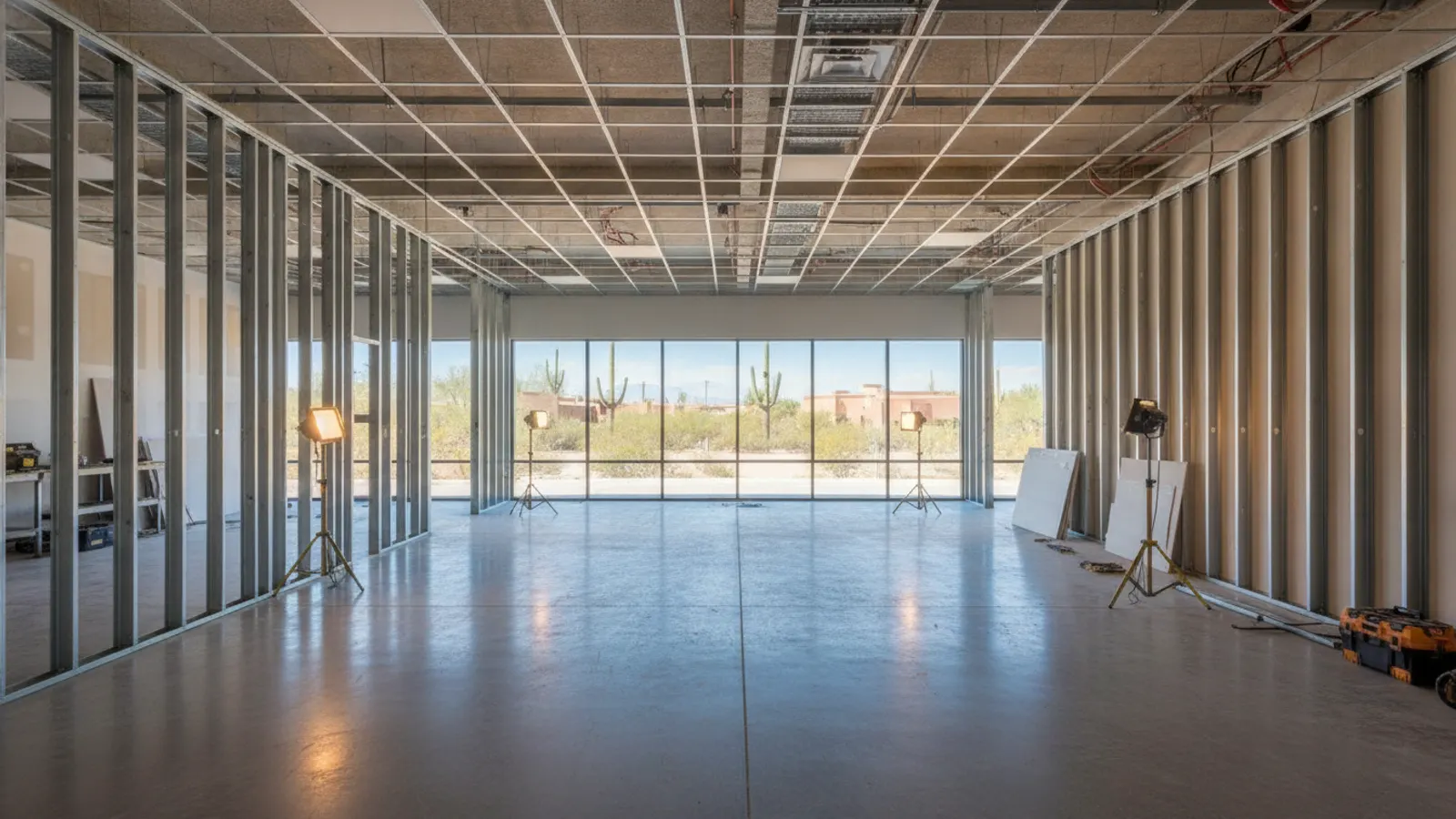
Commercial tenant improvement build-out with metal stud framing and a suspended ceiling grid in a Cave Creek, Arizona home
Cave Creek's commercial character is protected — Town design overlay enforces Western / Sonoran architectural standards on storefronts, signage, and roofline. Restaurant, saloon, retail, and gallery TIs along Cave Creek Road and Stagecoach Pass are the dominant project type.
Boutique hospitality and small inn renovations are common; ground-up scopes are small-scale and design-review intensive.
Town of Cave Creek Building Division manages plan review along with the design-overlay process.

Why Cave Creek Commercial Construction Is Different

Town design overlay: 4–6 weeks on visible exterior changes, signage, and roofline.
Western architectural specifications: rough-sawn timber, hand-troweled stucco, rusted-steel detailing.
Boutique hospitality renovations: phased to preserve operations.
Town of Cave Creek commercial plan review: 4–6 weeks first cycle.

Recent Commercial Construction Projects in Cave Creek

Cave Creek Road

Restaurant + saloon TI 5,400 sf, Western theming, rough-sawn timber, custom bar, overlay design review

$640K22 weeks

Stagecoach Pass area

Gallery + retail TI 2,800 sf, hand-troweled stucco, custom storefront, accessibility upgrade

$210K12 weeks

Downtown Cave Creek

Boutique inn renovation 9 rooms, common-area rebuild, accessibility upgrade, phased operations

$480K20 weeks

Commercial Construction in Cave Creek: Fast Facts

Average Cave Creek commercial TI: $180K–$500K.

Town design overlay: 4–6 weeks added.

Western finish specifications: rough-sawn timber, rusted-steel detailing, hand-troweled stucco.

Cave Creek plan review: 4–6 weeks first cycle.

Boutique hospitality renovations: phased operations standard.

Typical Cost

$25,000 – $1,500,000+

Typical Timeline

1 – 12 months

Permit Lead Time

2–4 weeks

How We Approach Commercial Construction

ProWorx Restoration delivers commercial construction and tenant-improvement work across the Phoenix metro — office buildouts, retail spaces, restaurant TIs, medical and dental offices, and multi-tenant shell modifications. We hold Arizona ROC #349454 and act as the general contractor of record from design coordination through certificate of occupancy.
Commercial work in the Valley carries specific compliance pressure: 2018 IBC with Arizona amendments, 2018 IFC for fire-rated assemblies and sprinklers, Maricopa County Health Department requirements for any food-service buildout, and ADA accessibility standards across every entry, restroom, and circulation path. We pre-coordinate with the landlord's CAM contact, the city plans examiner, and where applicable the fire marshal so submittal comments don't blow up the schedule.

Tenant improvements (TI) for office, retail, medical, dental

Restaurant buildouts including grease, ansul, hood, and Health Dept coordination

Office buildouts with low-voltage, HVAC modifications, and acoustic ceilings

ADA compliance: accessible restrooms, doorways, ramps, parking, signage

Fire-rated demising walls and sprinkler modification coordination

Off-hours and night-shift scheduling to keep tenants operating

What Cave Creek Homeowners Should Know About Commercial Construction

Restoring the Building Envelope

The building envelope, made up of the roof, exterior walls, windows and doors, separates the interior from the weather. Restoring it may involve replacing roofing, repairing or replacing stucco and masonry, resealing joints and replacing failed windows. In Arizona, the envelope also plays a major role in controlling heat gain, so restoration often improves energy performance as well as weather protection.

Experience With Arizona Commercial Projects

Local experience matters on commercial work. Familiarity with Valley jurisdictions, inspectors, suppliers and climate conditions helps commercial projects move through permitting and construction efficiently.

Flat Roofs on Commercial Buildings

Many Arizona commercial buildings have flat or low-slope roofs, which rely on proper drainage to prevent water from ponding. Over time, membranes and coatings deteriorate, drains clog and flashing around rooftop equipment fails. Restoration options range from recoating sound roofs to complete replacement. Regular inspection and maintenance extend roof life and prevent interior damage.

Managing Construction Costs

Commercial construction costs are influenced by design complexity, materials, code requirements, building conditions and schedule. Value engineering, which looks for alternative materials or methods that deliver the same function at lower cost, can help keep projects within budget. Early involvement of the contractor during design allows cost-saving opportunities to be identified before plans are finalised, when changes are still inexpensive to make.

Obtaining a Certificate of Occupancy

Before a commercial space can open, it typically must pass final inspections and receive approval for occupancy. Building, fire and other inspections confirm that the work complies with applicable codes. Planning for these final steps helps avoid delays at the end of the project.

Restoring Restrooms and Common Areas

Restrooms, lobbies, corridors and other common areas experience heavy use and reflect directly on a property's management. Worn finishes, outdated fixtures and accessibility shortcomings can affect tenant satisfaction and leasing. Restoring these spaces with durable materials, modern fixtures and accessible layouts improves the experience for tenants and visitors while reducing ongoing maintenance costs over the life of the building.

Coordinating Mechanical, Electrical and Plumbing

Commercial spaces require careful coordination of mechanical, electrical and plumbing systems, often within limited ceiling and wall space. Conflicts between ducts, pipes, conduit and structure can cause delays if not identified early. Careful coordination during design and construction prevents costly rework.

Restoring Interiors

Building restoration often extends inside, repairing damaged plaster and drywall, restoring flooring and woodwork, updating lighting and building systems, and repairing water or smoke damage. In historic interiors, preserving original features such as trim, doors and decorative plaster maintains the building's character.

Budgeting Commercial Restoration

Commercial restoration budgets are easier to manage when work is prioritised by urgency and impact. Items affecting safety, water intrusion or code compliance come first, followed by work that protects asset value and improves tenant satisfaction. Breaking large projects into phases allows costs to be spread across budget cycles while still addressing the most important needs promptly.

Inspections and Code Compliance

Commercial restoration may trigger requirements for fire protection, accessibility, energy performance or structural updates, depending on the scope of work. Understanding these requirements before work begins prevents delays during permitting and inspection.

Occupancy Classifications

Building codes classify spaces according to how they will be used, such as business, retail, assembly or restaurant use. The occupancy classification affects requirements for exits, fire protection, plumbing fixtures and more. Changing the use of a space can trigger significant code requirements.

Safety on Commercial Sites

Commercial construction sites require strict safety practices to protect workers, building occupants and the public. Clear site boundaries, protected walkways, proper storage of materials, fall protection and daily housekeeping all reduce risk. In occupied buildings, keeping construction areas separated from tenants and visitors is especially important to prevent accidents and liability.

Parking Areas and Walkways

Parking lots and pedestrian walkways deteriorate under heat, traffic and occasional heavy rain. Cracked pavement, trip hazards, faded striping and failing drainage create safety and liability concerns. Restoring these areas improves safety, appearance and compliance with accessibility requirements for accessible parking and routes.

Restoring Vacant and Neglected Buildings

Buildings left vacant or neglected for extended periods often have accumulated problems, including roof leaks, water damage, pest damage, vandalism and failed systems. Bringing them back into use requires thorough investigation, removal of damaged materials, structural repairs where needed and replacement of building systems. A phased plan helps manage cost and priorities.

Commercial Plan Review

Commercial projects typically require detailed construction drawings that are reviewed by the local building department before permits are issued. Plan review checks compliance with building, fire, accessibility, energy and other codes. Review times vary by jurisdiction and project complexity, so they should be built into the schedule.

Our Proven Process

01

Free Consultation

We visit your property, discuss your goals, and provide a detailed, no-obligation estimate.

02

Custom Plan

Our team creates a tailored project plan with timeline, materials, and transparent pricing.

03

Expert Execution

Licensed craftsmen complete your project with quality materials and meticulous attention to detail.

04

Final Walkthrough

We inspect every detail with you and ensure complete satisfaction before the job is done.

"ProWorx nailed the Cave Creek Western look — locals can't tell our saloon TI wasn't always there."

ProWorx Client · Cave Creek

Neighborhoods We Serve in Cave Creek

Cave Creek Road · Stagecoach Pass · Downtown Cave Creek · Tatum Ranch · Lone Mountain · Spur Cross · Carefree border · Rancho Mañana · Black Mountain · Desert Mountain area

Commercial Construction FAQs for Cave Creek Homeowners

Ready to Start Your Cave Creek Commercial Construction Project?

Get a free, no-obligation estimate from a licensed Arizona contractor — ROC #349454.