



Water Damage Restoration in Tempe, AZ

24/7 emergency water response and full repair rebuild across Tempe — IICRC-aligned.

Serving Tempe & nearby Maricopa County

Get Your Free Water Damage Restoration Estimate

Step 1 of 5Project

What kind of project?

Pick the option that fits best — you can add details next.

Quick Answer

ProWorx Restoration provides 24/7 water damage restoration throughout Tempe, AZ. Tempe losses most often come from aging galvanized supply lines, slab leaks in post-war ranch builds, and monsoon roof leaks; typical projects run $2,000–$22,000+ and 5 days to 4 weeks.

1,200+

Projects Completed

15+

Years Experience

ROC #349454

Licensed & Insured

100%

Satisfaction Guaranteed

Water Damage Restoration Built for Tempe Homes
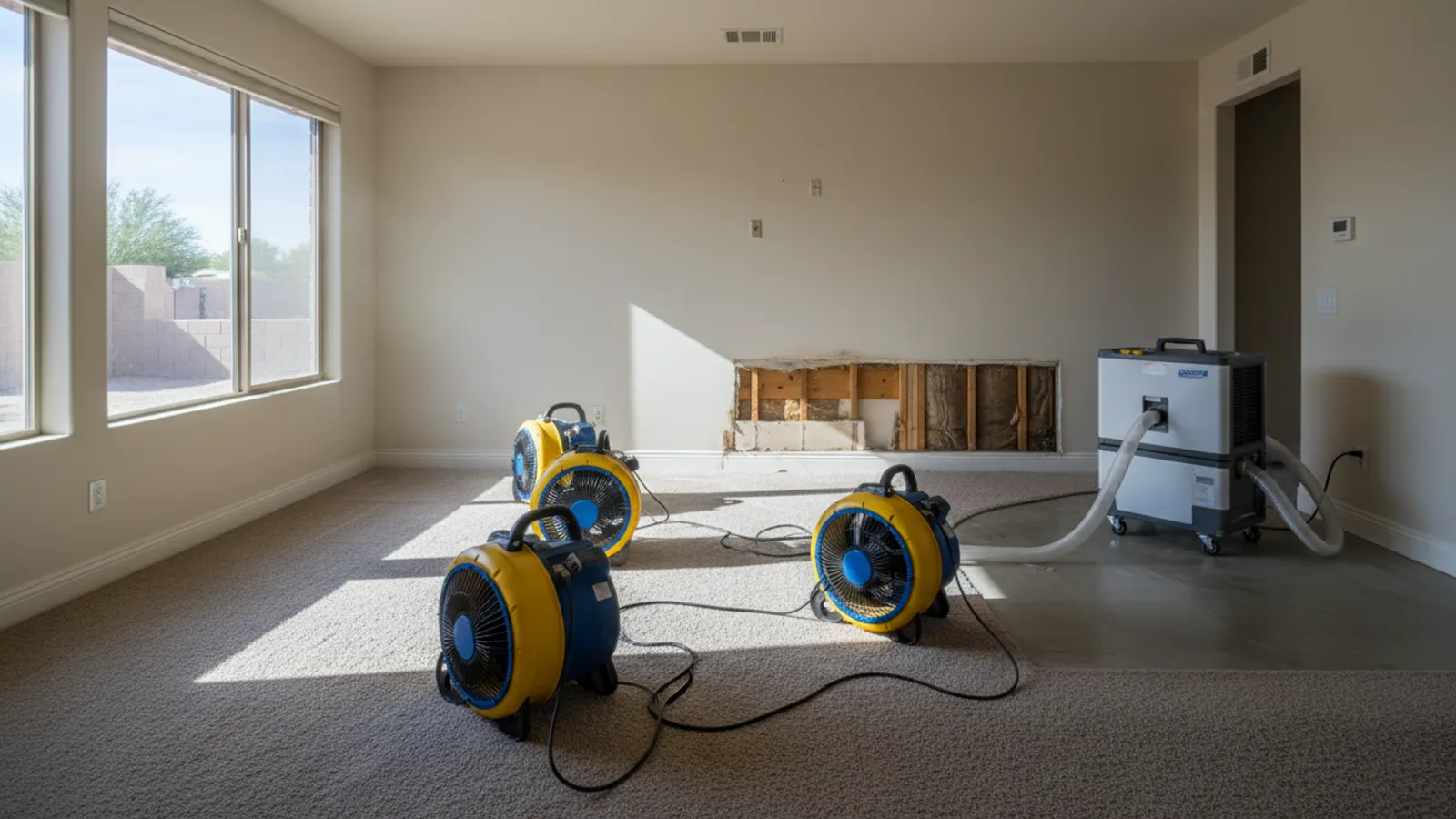
Water damage drying setup with air movers and a dehumidifier, baseboards removed in a Tempe, Arizona home
Tempe has the oldest core housing stock in the East Valley. Maple-Ash, Mitchell Park, Optimist Park, and the older blocks around ASU are full of 1940s–60s post-war ranch homes with original galvanized supply lines, cast-iron drain stacks, and undersized electrical service. The water-loss profile here is dominated by aging-system failures — pinhole leaks in galvanized pipe, slab leaks under decades-old copper, and cast-iron drain stack breaches.
Warner Ranch, the Lakes, and Tempe Gardens add a small share of 1980s+ builds where losses skew toward water-heater failures and toilet supply ruptures.
We respond 24/7, document for the carrier, and handle the rebuild ourselves — especially important on Tempe historic-district properties where finish-matching matters.

Why Tempe Water Damage Restoration Is Different

Aging-plumbing losses in Tempe usually aren't one-time events. A pinhole in galvanized supply pipe means the rest of the run is at end-of-life. We scope the systems during mitigation and flag the carrier transparently so you can decide whether to fold a re-pipe into the rebuild.
Historic-district properties (Maple-Ash, parts of Mitchell Park) require extra care on visible exterior repairs and finish-matching. We file design review where required.

Recent Water Damage Restoration Projects in Tempe

Maple-Ash

Galvanized supply pinhole + slab moisture: drying, partial re-pipe, original-profile baseboard match, paint

$16K4 weeks

Warner Ranch

Water heater burst in garage: drywall demo, drying, new tankless install, full rebuild

$7K2 weeks

Downtown Tempe

Cast-iron drain stack breach: demo, stack replacement, drying, drywall + tile rebuild

$18K4 weeks

Water Damage Restoration in Tempe: Fast Facts

Average Tempe residential water loss: $4,000–$16,000.

Pre-1970 Tempe homes: high incidence of galvanized supply / cast-iron drain failures.

Historic district design review: adds 2–3 weeks on visible exterior repairs.

Tempe permit timeline for build-back: roughly 10–14 days.

Mold colonization window: 48–72 hours.

Typical Cost

$1,500 – $40,000+

Typical Timeline

3 days – 6 weeks

Permit Lead Time

2–4 weeks

How We Approach Water Damage Restoration

Water damage can strike at any time — from burst pipes and appliance leaks to monsoon flooding. ProWorx Restoration provides 24/7 emergency water damage restoration throughout the area.
Our certified technicians use advanced water extraction, dehumidification, and drying equipment to stop damage in its tracks. We then repair and restore your property to its pre-loss condition, handling everything from drywall repair to complete reconstruction.

24/7 emergency water extraction

Advanced drying and dehumidification

Mold prevention and remediation

Structural drying and monitoring

Complete repair and reconstruction

Direct insurance billing

What Tempe Homeowners Should Know About Water Damage Restoration

Mold Prevention & Air Quality

In Arizona's dry climate, water-damaged materials look dry on the surface within a day even when wall cavities and subfloors stay saturated for weeks — the perfect mold environment. We monitor moisture content daily with pin and pinless meters, apply EPA-registered antimicrobials, and only close walls back up when readings meet IICRC-approved dryness standards.

Leaks Behind the Wall

Some bathroom leaks come from supply or drain lines inside the wall, rather than from fixtures or seals, and these can be difficult to detect until damage becomes visible. Signs include stains or bubbling paint on the wall behind fixtures, an unexplained rise in the water bill, the sound of running water when nothing is in use, and musty odours. Locating the source accurately before opening the wall limits the amount of finish that needs to be removed. Once the leak is repaired, the wall cavity must be dried thoroughly before it is closed up again.

Common Sources of Hardwood Water Damage

Hardwood floors are most often damaged by dishwasher and refrigerator leaks in kitchens, overflowing sinks and toilets, failed water heaters, pet accidents near doors, and slab leaks beneath the floor. Water may travel under the boards some distance from the source before damage becomes visible. Placing protective mats near sinks and entry doors, wiping up spills promptly and investigating any unusual cupping or discolouration early helps catch problems before they spread.

How Structural Drying Actually Works

Drying a building is not simply a matter of pointing fans at wet surfaces. Effective drying balances three things: removing liquid water by extraction, moving air across wet surfaces so moisture evaporates, and removing that moisture from the air with dehumidifiers so it does not simply condense somewhere else. Too much air movement without enough dehumidification raises humidity throughout the house and can spread damage to dry areas. Temperature matters as well, since warmer air holds more moisture and drying progresses faster within the right range. Professional drying is planned around the volume of the space, the materials involved and how much water they absorbed, which is why two seemingly similar leaks can require very different equipment setups and drying times.

Common Flood Sources in Arizona

Most Valley flood calls fall into a few patterns: monsoon roof leaks (especially on flat-roof homes in central Phoenix), washes overrunning into garages and casitas, slab leaks from corroded copper supply lines, water heater bursts, and washing-machine supply hose failures. Each requires different extraction and drying strategies, which we adapt on-site.

Rebuilding After the Drying Is Done

Once the structure is dry, the home has to be put back together, and this is where a single contractor handling both mitigation and reconstruction saves time and confusion. Removed drywall is replaced and finished to match surrounding walls, baseboards and trim are reinstalled, flooring is repaired or replaced, cabinets are reset or rebuilt, and painting blends new work into existing finishes. Matching flooring and texture so repairs are not obvious takes care. We manage the full rebuild after drying, coordinating every trade so your home is returned to the condition it was in before the loss.

Arizona's Dry Climate After the Flood

Arizona's naturally low humidity can help hardwood dry, but it also creates its own challenges. Wood that dries too quickly or unevenly can crack, check or develop gaps between boards. Once restoration is complete, normal indoor humidity in Arizona homes is often much lower than in other regions, and floors installed or repaired without allowing for that can shrink and open up over time. Controlled drying and allowing replacement boards to acclimatise to the home before installation help prevent these issues.

Finding the Real Source First

A stain on a ceiling shows where water ended up, not necessarily where it began. Water travels along rafters, joists, ductwork and the top of drywall before dripping through, so the source can be several feet away from the visible damage. In Arizona homes, the most common sources are roof leaks during monsoon storms, plumbing lines in the attic or upstairs bathrooms, and air-conditioning condensate overflows. Repairing the ceiling without identifying and fixing the source simply means repairing it again later. We trace the water path, often using moisture meters and thermal imaging, before any ceiling repair begins.

Our Proven Process

01

Free Consultation

We visit your property, discuss your goals, and provide a detailed, no-obligation estimate.

02

Custom Plan

Our team creates a tailored project plan with timeline, materials, and transparent pricing.

03

Expert Execution

Licensed craftsmen complete your project with quality materials and meticulous attention to detail.

04

Final Walkthrough

We inspect every detail with you and ensure complete satisfaction before the job is done.

"They caught the galvanized issue, talked us through fold-in re-pipe pricing, and we ended up with a fully modernized water system in the rebuild scope."

ProWorx Client · Tempe

Neighborhoods We Serve in Tempe

Downtown Tempe · Maple-Ash · Warner Ranch · Lakes · Optimist Park · Mitchell Park · Tempe Gardens

Water Damage Restoration FAQs for Tempe Homeowners

Ready to Start Your Tempe Water Damage Restoration Project?

Get a free, no-obligation estimate from a licensed Arizona contractor — ROC #349454.