



Insurance Restoration in Tempe, AZ

Xactimate-aligned scoping, direct carrier billing, and full rebuild across Tempe.

Serving Tempe & nearby Maricopa County

Get Your Free Insurance Restoration Estimate

Step 1 of 5Project

What kind of project?

Pick the option that fits best — you can add details next.

Quick Answer: Insurance Restoration in Tempe

ProWorx Restoration manages insurance restoration in Tempe, AZ — water, fire, smoke, slab-leak, and rental-property losses. We scope in Xactimate, work directly with adjusters from State Farm, USAA, Allstate, Farmers, and the major landlord carriers, and rebuild end-to-end. Typical Tempe claim cycle: 6–14 weeks.

1,200+

Projects Completed

15+

Years Experience

ROC #349454

Licensed & Insured

100%

Satisfaction Guaranteed

Insurance Restoration Built for Tempe Homes
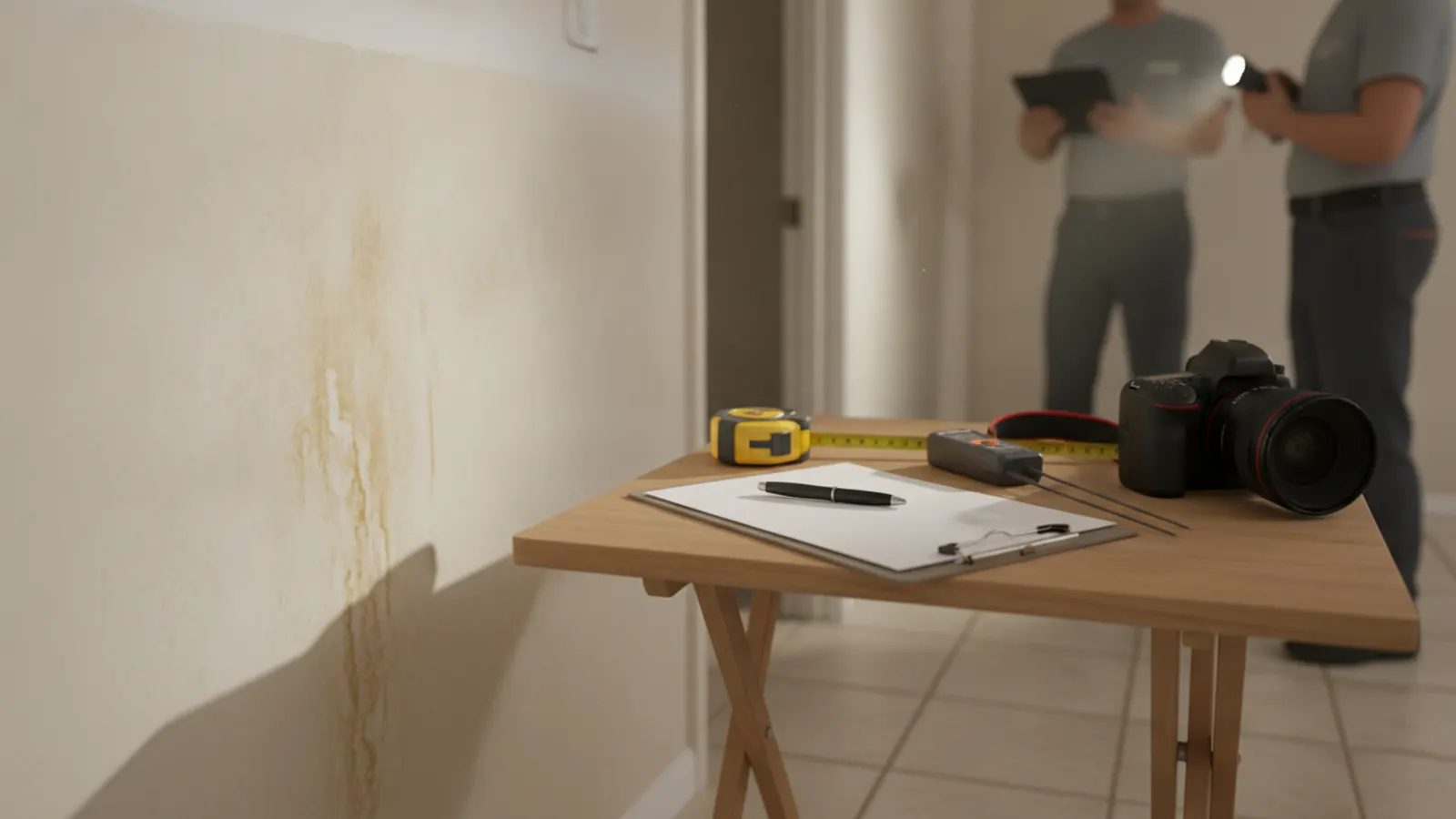
Property damage being documented with a moisture meter, tape measure and camera in a Tempe, Arizona home
Tempe's old housing stock (Maple-Ash, Mitchell Park, Optimist Park) drives a higher rate of galvanized-pipe and slab-leak claims than the rest of the Valley. ASU-adjacent rentals also produce a steady stream of investor claims where delayed reporting compounds damage. The Lakes and Warner Ranch are 1980s–90s stock with typical appliance and supply-line losses.
We scope every Tempe loss in Xactimate, document system condition (galvanized vs. copper, panel age, etc.), and supplement when hidden damage is exposed during demo. Tempe Community Development turns emergency repair permits in 24–48 hours and rebuild permits in 10–14 business days.
Landlord/owner-occupied scope differences matter on rental claims. We work directly with landlords, property managers, and tenants on rapid turnover.

Why Tempe Insurance Restoration Is Different

Galvanized supply pipes in pre-1975 Tempe homes are at end of life. When one fails, we document the broader system condition so the carrier and homeowner can make an informed decision about scope — many policies fund a section re-pipe when failure is shown to be due to age.
ASU rental claims often involve delayed reporting and amplified microbial growth. We scope mold remediation alongside structural repair from day one.

Recent Insurance Restoration Projects in Tempe

Maple-Ash

Galvanized supply-line claim with State Farm in 1962 bungalow: kitchen re-pipe, cabinet rebuild, hardwood refinish — paid with two supplements

$43K8 weeks

The Lakes

Slab leak under primary bath claim with USAA: copper repair, tile replacement, vanity rebuild — single supplement approved

$31K6 weeks

Warner Ranch

Rental water-heater claim with landlord policy (Travelers): rapid extraction, drywall, LVP, paint — closed in 3 weeks

$19K3 weeks

Insurance Restoration in Tempe: Fast Facts

Average Tempe claim cycle: 6–14 weeks.

Pre-1975 galvanized supply pipe failure rate in central Tempe: very high.

ASU-adjacent rental claims: ~25% of Tempe residential claim volume.

Supplement approval rate on properly documented Tempe claims: ~95%.

City of Tempe emergency repair permits: typically 24–48 hours.

Typical Cost

Claim-dependent

Typical Timeline

2 – 16 weeks

Permit Lead Time

2–4 weeks

How We Approach Insurance Restoration

ProWorx Restoration is a full-service insurance restoration contractor serving the entire Phoenix metro. We act as your single point of accountability from the first emergency call through final reconstruction — performing mitigation, documenting damage to carrier standards, writing the scope in Xactimate, negotiating supplements with your adjuster, and rebuilding to pre-loss condition under one contract. That eliminates the common homeowner trap of hiring one company to dry the structure, a second to clean contents, and a third to rebuild — with no one owning the claim or the timeline.
Arizona claims have their own profile. Monsoon micro-bursts (June–September) drive a spike in roof-leak, wind, and flash-flood losses; aging polybutylene and CPVC supply lines fail under the Valley's high water-pressure zones; pre-1995 stucco-clad homes in Sun City, Mesa, and west Phoenix often have hidden moisture intrusion behind one-coat assemblies; and HVAC condensate overflows are a year-round source of ceiling and drywall damage in attic-mounted air handlers. We document each of these correctly so the loss is paid as the structural and code-upgrade event it actually is — not a cosmetic repair.

Direct adjuster coordination — phone, email, on-site meetings

Xactimate estimating and supplements to ACV/RCV line-item detail

Emergency mitigation within 1–2 hours, 24/7/365

Moisture mapping, thermal imaging, and contents inventory documentation

Code-upgrade coverage pursued under Ordinance & Law (Coverage D)

Mortgage company draw coordination for losses over $10,000

What Tempe Homeowners Should Know About Insurance Restoration

Materials, Sourcing & Documentation

We work with regional and national suppliers to locate discontinued materials, salvage yards for vintage hardware, and custom millwork shops for cabinet door reproduction. Every substitution is photographed, documented, and signed off by your insurance adjuster — protecting both you and the integrity of your claim.

Matching Finishes Across Rooms

Restoration becomes more complex when damaged materials are part of a continuous finish that extends into undamaged areas. Flooring that runs throughout several rooms, cabinetry that matches across a kitchen, or paint and texture that continue along a hallway can all make partial replacement difficult. If new materials cannot match the existing ones closely, the result may look inconsistent. Policies and adjusters handle matching issues differently, so documenting the continuity of materials is important when establishing the scope.

Checks Made Out to Your Mortgage Company

If your home has a mortgage, insurance payments for structural damage are often issued jointly to you and your lender. Lenders typically have procedures for releasing funds as repairs progress, which may involve inspections or paperwork. Contacting your lender early about its claim process helps prevent delays in paying for repairs.

When You Disagree With the Estimate

Disagreements over the scope or cost of repairs are common. Providing detailed documentation, photographs and contractor estimates can support your position. Many policies include an appraisal clause that offers a process for resolving disputes over the amount of a loss. Understanding these options helps homeowners pursue a fair settlement.

Proving What Was There Before

Establishing the pre-loss condition is easier when there is evidence. Photographs and videos taken before the fire, purchase receipts, design documents, remodelling contracts and even real estate listing photos can all help demonstrate what materials and finishes the home contained. Homeowners who keep a simple photographic inventory of their home are in a much stronger position after a loss. Where records are limited, a careful examination of remaining materials and comparable areas of the home can also provide evidence.

Contents Inventory and Valuation

Restoring a home to its pre-loss condition includes the belongings inside it, and documenting contents is often one of the most time-consuming parts of a fire claim. Each damaged item typically needs a description, its age, its original cost or replacement cost and, where possible, a receipt or photograph. Room-by-room inventories, organised clearly, make the process far more manageable and help ensure nothing is overlooked. Items that can be cleaned and restored should be separated from those that need replacement. We help organise contents documentation and, for items that can be restored, arrange professional cleaning so they can be returned to the home.

Your Duty to Prevent Further Damage

Most property policies require homeowners to take reasonable steps to protect their property from further damage after a loss, such as stopping a leak, tarping a damaged roof or starting water mitigation. Delaying these steps can allow damage to grow and may affect coverage. Keeping receipts for emergency measures ensures those costs can be submitted with the claim.

Public Adjusters

Public adjusters are licensed professionals who represent policyholders, rather than insurers, in preparing and negotiating claims, typically in exchange for a percentage of the settlement. Some homeowners with complex or large claims choose to hire one. Before signing an agreement, understand the fee, the scope of services and whether the adjuster is properly licensed.

How Our Insurance Restoration Process Works in Tempe

01

Free On-Site Consultation

We visit your property, discuss your goals, and provide a detailed, no-obligation estimate.

02

Custom Project Plan

Our team creates a tailored project plan with timeline, materials, and transparent pricing.

03

Licensed Crews On Site

Licensed craftsmen complete your project with quality materials and meticulous attention to detail.

04

Final Walkthrough & Sign-Off

We inspect every detail with you and ensure complete satisfaction before the job is done.

"Slab leak in our 1962 Maple-Ash bungalow. ProWorx handled State Farm, documented every line item, and refinished the original oak floors better than they were."

ProWorx Client · Tempe

Neighborhoods We Serve in Tempe

Maple-Ash · Mitchell Park · Optimist Park · Warner Ranch · The Lakes · Tempe Gardens · Downtown Tempe

Insurance Restoration FAQs for Tempe Homeowners

Ready to Start Your Tempe Insurance Restoration Project?

Get a free, no-obligation estimate from a licensed Arizona contractor — ROC #349454.