



Fire Damage Restoration in Queen Creek, AZ

24/7 fire response and full reconstruction across Queen Creek — IICRC-aligned.

Serving Queen Creek & nearby Maricopa County

Get Your Free Fire Damage Restoration Estimate

Step 1 of 5Project

What kind of project?

Pick the option that fits best — you can add details next.

Quick Answer: Fire Damage Restoration in Queen Creek

ProWorx Restoration provides 24/7 fire damage restoration throughout Queen Creek, AZ. Dominant Queen Creek fire losses are kitchen fires, garage lithium-ion fires, and dryer-vent fires in post-2010 master-planned two-story homes. Typical projects run $8,000–$120,000+ and 3 weeks to 4 months.

1,200+

Projects Completed

15+

Years Experience

ROC #349454

Licensed & Insured

100%

Satisfaction Guaranteed

Fire Damage Restoration Built for Queen Creek Homes
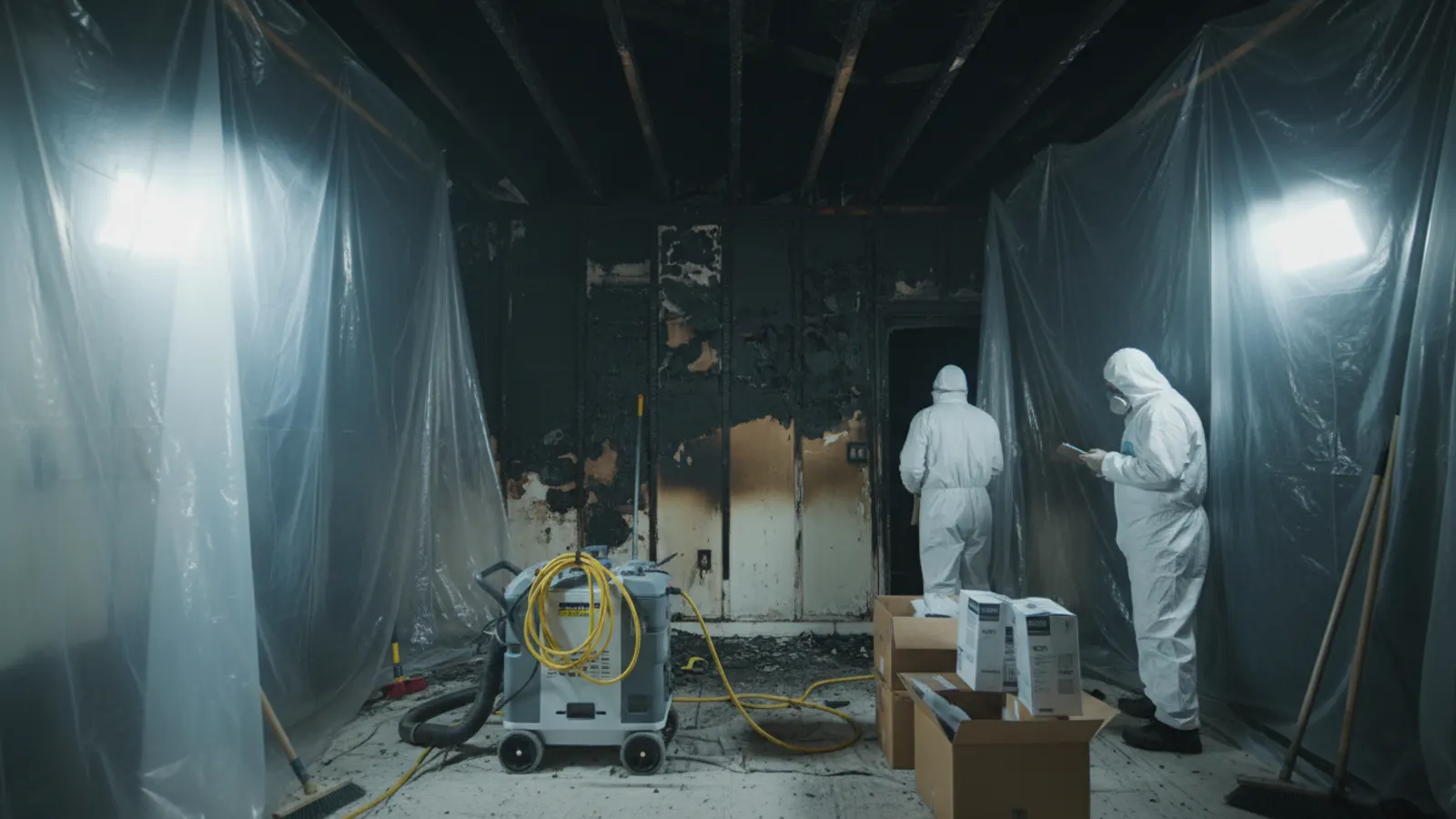
Fire damage being assessed under work lights with containment sheeting in place in a Queen Creek, Arizona home
Queen Creek's housing stock is among the newest in the Valley — Encanterra, Hastings Farms, Pecan Creek, Cortina, Ironwood Crossing, and Sossaman Estates are dominated by post-2010 two-story tract homes. The fire-loss profile is consistent with that housing type: kitchen fires (grease, unattended cooking), garage lithium-ion fires (e-bikes, scooters, power-tool batteries), and dryer-vent fires from undersized 2-story builder runs.
Detached shop and RV-garage fires are also common in Queen Creek's larger-lot subdivisions.
We respond 24/7 across the Town of Queen Creek, board up, document, and rebuild end-to-end.

Why Queen Creek Fire Damage Restoration Is Different

Garage lithium-ion ignitions are a fast-growing Queen Creek pattern. Rebuild scope frequently includes upgraded fire-rated drywall on the house-side wall.
Encanterra HOA architectural review applies on visible exterior repairs. We file in parallel.
Town of Queen Creek structural permits on fire rebuild typically run 2–3 weeks.
Detached shop / RV-garage rebuilds require structural engineering on the shared wall — we coordinate the engineer day one.

Recent Fire Damage Restoration Projects in Queen Creek

Encanterra

Kitchen fire: full kitchen gut, soot remediation, HVAC duct cleaning, cabinet + appliance rebuild

$62K10 weeks

Hastings Farms

Garage lithium-ion fire: garage gut, attic insulation, fire-rated drywall upgrade, structural rebuild

$52K9 weeks

Ironwood Crossing

Detached shop fire: structural engineering, rebuild, exterior wall restoration on main house

$78K12 weeks

Fire Damage Restoration in Queen Creek: Fast Facts

Average Queen Creek residential fire loss: $13,000–$60,000.

Garage lithium-ion / EV-related fires: growing share of claims since 2022.

Town of Queen Creek structural permit timeline: 2–3 weeks.

HOA design review for visible exterior repairs: 2–3 weeks.

Detached shop fire structural engineer review: 1–2 weeks.

Typical Cost

$5,000 – $150,000+

Typical Timeline

2 – 12 weeks

Permit Lead Time

2–4 weeks

How We Approach Fire Damage Restoration

When fire strikes your home or business, ProWorx Restoration is here to help you recover. Our fire damage restoration team provides 24/7 emergency response throughout the area.
We handle everything from initial assessment and debris removal to complete structural reconstruction. Our team works directly with your insurance company to streamline the claims process so you can focus on getting back to normal.

24/7 emergency response available

Complete fire damage assessment

Smoke and soot removal

Water damage from firefighting addressed

Structural reconstruction and repair

Direct insurance billing and claim support

What Queen Creek Homeowners Should Know About Fire Damage Restoration

Realistic Reconstruction Timelines

Major reconstruction after a fire often takes several months. Engineering evaluation, insurance approvals, design, permitting, material lead times and construction all contribute to the schedule. Clear communication and careful planning help avoid unnecessary delays. We provide a realistic timeline at the outset and keep homeowners informed throughout the project.

The Fire Damage Restoration Process Explained

Professional fire restoration involves multiple phases: emergency board-up and securing, water removal from firefighting efforts, smoke and soot removal from all surfaces, structural assessment and demolition of irreparable materials, deodorization and air quality restoration, and finally complete reconstruction. ProWorx Restoration manages the entire process from emergency response to the final coat of paint, working directly with your insurance adjuster to ensure maximum claim coverage and minimize your out-of-pocket costs.

Not All Smoke Leaves the Same Residue

What burned, and how hot it burned, determines the kind of residue a fire leaves behind, and that in turn determines how it must be cleaned. A fast, high-temperature fire involving paper and wood tends to leave a dry, powdery soot that is comparatively easy to remove. A slow, smouldering fire involving plastics, rubber and synthetic materials leaves a wet, sticky, smeary residue that clings to surfaces and has a strong odour. A kitchen fire involving food can leave a protein residue that is almost invisible but discolours paint and carries a pervasive smell. A furnace puff-back leaves a fine, oily fuel soot. Identifying the residue type is the first step, because cleaning methods that work on one can smear or set another.

Our Residential Fire Restoration Process

Every job starts with a 24/7 emergency response — typically within 1–2 hours of your call. We secure the property with board-up and tarping, then perform a detailed damage assessment with photos and video for your insurance claim. From there we extract any firefighting water, remove unsalvageable materials, deodorize, and rebuild. You get a single point of contact and a written timeline before demo begins.

Keeping a Home Inventory Before Anything Happens

The best time to document your home's condition is before a loss ever occurs. A walk-through video of every room, opening closets and cabinets, combined with photographs of major purchases and their receipts, creates a record that can save weeks of effort after a fire. Store it somewhere other than the house itself, such as cloud storage.

Proving What Was There Before

Establishing the pre-loss condition is easier when there is evidence. Photographs and videos taken before the fire, purchase receipts, design documents, remodelling contracts and even real estate listing photos can all help demonstrate what materials and finishes the home contained. Homeowners who keep a simple photographic inventory of their home are in a much stronger position after a loss. Where records are limited, a careful examination of remaining materials and comparable areas of the home can also provide evidence.

Thermal Fogging, Ozone and Hydroxyl Treatment

Several methods are used to neutralise smoke odour after visible residue has been removed. Thermal fogging releases a deodorising agent as a fine fog that penetrates the same small spaces smoke reached. Ozone generators can be effective for strong odours but must only be used in unoccupied spaces, because ozone is harmful to people, pets and plants. Hydroxyl generators break down odour molecules and can generally operate safely while people are present, although they work more slowly. The right choice depends on the severity of the odour and whether the home is occupied.

Getting Rid of the Smell Permanently

Smoke odour is one of the most persistent effects of a fire, because odour molecules penetrate porous materials such as drywall, wood, insulation and fabrics. Masking the smell with fragrances only hides it temporarily. Effective deodorisation removes the source by cleaning residue from surfaces, removing materials that cannot be cleaned, cleaning the HVAC system, and then treating remaining odour with methods such as thermal fogging or hydroxyl generators. Where odour remains in structural surfaces, a specialised sealing primer can lock it in before repainting. Using several of these approaches together is usually necessary for lasting results.

Controlled Demolition

Once the assessment is complete, damaged materials are removed in a controlled way that preserves sound portions of the structure where possible. Demolition must also address debris disposal, protection of remaining areas, and testing for hazardous materials such as asbestos in older homes before they are disturbed. Careful demolition reduces unnecessary rebuilding and keeps the project safer for everyone on site.

Returning Home

The final stages of reconstruction include finishes, final inspections, cleaning and a walkthrough with the homeowner. Before moving back in, all systems should be operating correctly, smoke odour eliminated and any outstanding items resolved. Our goal is to deliver a home that feels safe, comfortable and complete, allowing the family to move forward after the loss.

How Our Fire Damage Restoration Process Works in Queen Creek

01

Free On-Site Consultation

We visit your property, discuss your goals, and provide a detailed, no-obligation estimate.

02

Custom Project Plan

Our team creates a tailored project plan with timeline, materials, and transparent pricing.

03

Licensed Crews On Site

Licensed craftsmen complete your project with quality materials and meticulous attention to detail.

04

Final Walkthrough & Sign-Off

We inspect every detail with you and ensure complete satisfaction before the job is done.

"Lost the shop and part of the house wall. ProWorx engineered it, rebuilt it, and ran the entire insurance claim."

ProWorx Client · Queen Creek

Neighborhoods We Serve in Queen Creek

Encanterra · Hastings Farms · Pecan Creek · Cortina · Ironwood Crossing · Sossaman Estates

Fire Damage Restoration FAQs for Queen Creek Homeowners

Ready to Start Your Queen Creek Fire Damage Restoration Project?

Get a free, no-obligation estimate from a licensed Arizona contractor — ROC #349454.