

Arizona's extreme climate — scorching summers, monsoon storms, and dramatic temperature swings — takes a toll on homes. Catching problems early can save Mesa homeowners thousands in emergency repairs. Here are five warning signs that your home needs professional restoration services.
1. Water Stains on Ceilings or Walls
Brown or yellowish stains on your ceiling are a telltale sign of water intrusion. In Mesa, common causes include monsoon roof damage, AC condensation line leaks, and pipe failures behind walls.
Don't just paint over water stains — the underlying moisture can lead to mold growth within 24–48 hours. A professional water damage restoration assessment identifies the source and prevents structural damage.
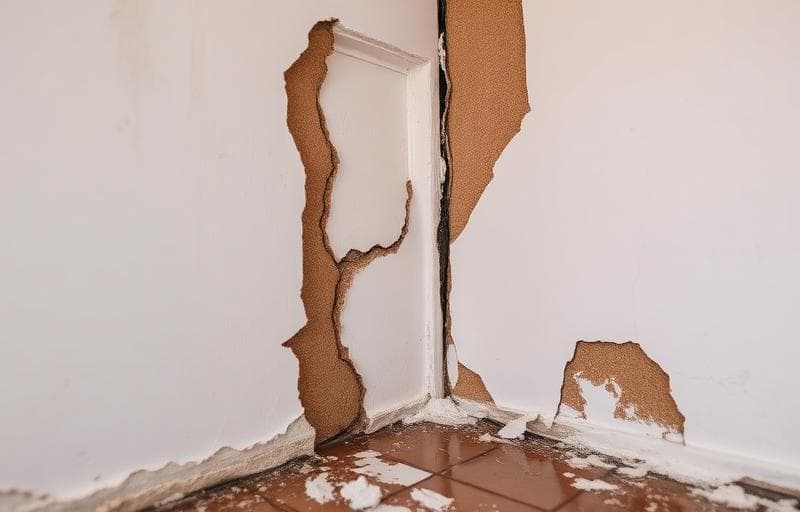
2. Cracks in Walls or Foundation
Arizona's expansive clay soil shrinks and swells with moisture changes, putting constant stress on foundations. Hairline cracks are often cosmetic, but horizontal cracks, stair-step patterns in block walls, or cracks wider than 1/4 inch require immediate professional evaluation.
Foundation issues left unchecked can affect doors, windows, and overall structural integrity.
3. Musty Odors or Visible Mold
Despite Mesa's dry climate, mold thrives in hidden moisture pockets — behind shower walls, under sinks, and in poorly ventilated areas. A persistent musty smell often indicates hidden mold growth.
Professional restoration includes moisture mapping, mold remediation, and repairing the water source to prevent recurrence.
4. Peeling or Bubbling Exterior Paint
Arizona's intense UV exposure degrades exterior paint faster than most climates. Peeling, bubbling, or flaking paint exposes underlying materials to moisture and sun damage. Mesa homes typically need exterior repainting every 5–7 years.
When repainting, a quality stucco repair may be needed before applying new coatings.
5. Outdated Electrical or Plumbing Systems
Homes built before 1990 in Mesa often have outdated electrical panels, aluminum wiring, or galvanized plumbing. These aging systems increase fire risk and can cause water damage from corroded pipes.
A comprehensive home renovation can bring these systems up to current code while improving safety and efficiency.
What Should You Do Next?
If you've noticed any of these warning signs, don't wait. Early intervention is always cheaper than emergency repair. ProWorx Restoration offers free property assessments for Mesa homeowners. Schedule your free inspection today.
Stains That Come Back After Painting
A ceiling or wall stain that reappears weeks after being painted over is one of the clearest signals of an active problem. Paint hides a stain; it does not stop the water producing it. When the mark returns, water is still arriving.
In Mesa the usual culprits are roof leaks that only appear during monsoon storms, air-conditioning condensate overflowing from an attic unit, or a supply line leaking inside a wall. Each needs tracing to its source, because the visible stain is usually some distance from the entry point.
A Musty Smell With No Visible Cause
Arizona air is dry, which makes a persistent musty or earthy smell indoors more significant here than it would be in a humid climate. It usually indicates moisture and microbial growth somewhere out of sight: inside a wall cavity, beneath flooring, in the attic or within ductwork.
A smell that intensifies when the air conditioning runs points toward the HVAC system or ductwork specifically. A smell concentrated in one room narrows the search considerably. Either way, odour without a visible source is worth investigating rather than masking.
Floors That Have Changed Shape
Flooring tells you about water beneath it. Hardwood that has cupped, with board edges higher than their centres, indicates moisture coming from below. Tile that has become hollow-sounding or loose suggests the substrate beneath has been compromised. Vinyl or laminate that has lifted at seams or developed soft spots points to water that reached the subfloor.
Carpet that feels damp or smells after cleaning, or that has discoloured in patches, often means the pad beneath has been wet. These changes rarely reverse on their own.
Unexplained Increases in the Water Bill
A water bill rising without a change in habits is a strong indicator of a leak, and in Mesa the most common hidden source is a slab leak, where a supply line beneath the concrete fails. Others include a running toilet, an irrigation leak or a failing water heater.
A simple test: turn off every fixture and appliance that uses water, then check whether the meter still moves. If it does, water is going somewhere it should not.
Bubbling Paint and Soft Drywall
Paint that bubbles, blisters or peels in a localised area usually means moisture behind it. Drywall that feels soft or spongy when pressed has absorbed water and lost its structural integrity.
These signs are often found low on walls, where water has wicked upward from a floor-level source, or on ceilings beneath bathrooms and attic air handlers. Pressing gently along a baseboard line is a quick way to check whether a suspicion is justified.
Cracks That Keep Returning
Some cracking is normal as a house settles and as materials expand and contract in Arizona's temperature swings. What is not normal is a crack that keeps reopening after proper repair, a crack where one side sits proud of the other, or cracks appearing in several places at once.
Those patterns suggest ongoing structural movement, frequently related to soil moisture around the foundation or drainage directing water toward the house rather than away from it. Repairing the symptom repeatedly without addressing the cause is wasted money.
Doors and Windows That Have Stopped Fitting
Doors that stick or will not latch, and windows that have become difficult to operate, can indicate that the structure has moved. In a house where several doors have developed the same problem around the same time, movement rather than coincidence is the likely explanation.
Individually, a sticking door is often just seasonal timber movement. Collectively, and particularly alongside new cracking, it warrants a proper look at the foundation and drainage.
Signs After a Monsoon Storm
Storm damage frequently announces itself quietly. Walk the exterior after a significant storm and look for displaced or cracked roof tiles, debris, damaged flashing, and pooled water that has not drained. Inside, check ceilings for fresh staining.
The most useful check is the attic with a torch, looking for wet framing, wet insulation or daylight where none should be. Water found within hours rarely becomes a mould problem; the same water found weeks later usually has.
When to Call Someone
Investigate promptly when a stain is growing, when odour persists, when flooring has changed shape, when drywall is soft, or when several of these appear together. Any of them alongside a recent storm or a known plumbing issue deserves attention immediately.
The economics are straightforward. Water found early is usually dried in place; the same water found late means replaced flooring, opened walls and often remediation. The cost of looking is always lower than the cost of waiting.
Efflorescence and Staining on Exterior Walls
White, powdery deposits on stucco or block walls are efflorescence: dissolved salts left behind as water moves through the material and evaporates at the surface. The deposit is cosmetic, but what it indicates is not, because it means water is travelling through the wall.
Dark staining low on exterior walls, or a tide line a few inches above grade, points to water wicking up from the ground, frequently because landscaping or hardscape has been built up against the wall and buried the weep screed that lets water escape.
Higher Energy Bills Without a Cause
A cooling bill climbing year over year without a change in habits or rates usually means the house is working harder than it should. Common causes in Mesa include insulation that has settled and thinned, ductwork leaking into the attic, failed window seals, and an air conditioner approaching the end of its service life.
Wet insulation from a slow roof leak is a particularly common and invisible cause, since it loses most of its insulating value while looking unchanged from below. A cooling bill that jumped after a monsoon season is worth investigating in the attic.