



Commercial Construction in Fountain Hills, AZ

Avenue of the Fountains retail, medical, and hillside-pad commercial across Fountain Hills.

Serving Fountain Hills & nearby Maricopa County

Get Your Free Commercial Construction Estimate

Step 1 of 5Project

What kind of project?

Pick the option that fits best — you can add details next.

Quick Answer

ProWorx Restoration delivers commercial construction across Fountain Hills, AZ — retail, restaurant, and gallery TIs along Avenue of the Fountains, medical office, and hillside-pad ground-up. Town of Fountain Hills design review applies on most visible exterior changes. Typical TIs $110K–$500K; 12–32 weeks.

1,200+

Projects Completed

15+

Years Experience

ROC #349454

Licensed & Insured

100%

Satisfaction Guaranteed

Commercial Construction Built for Fountain Hills Homes
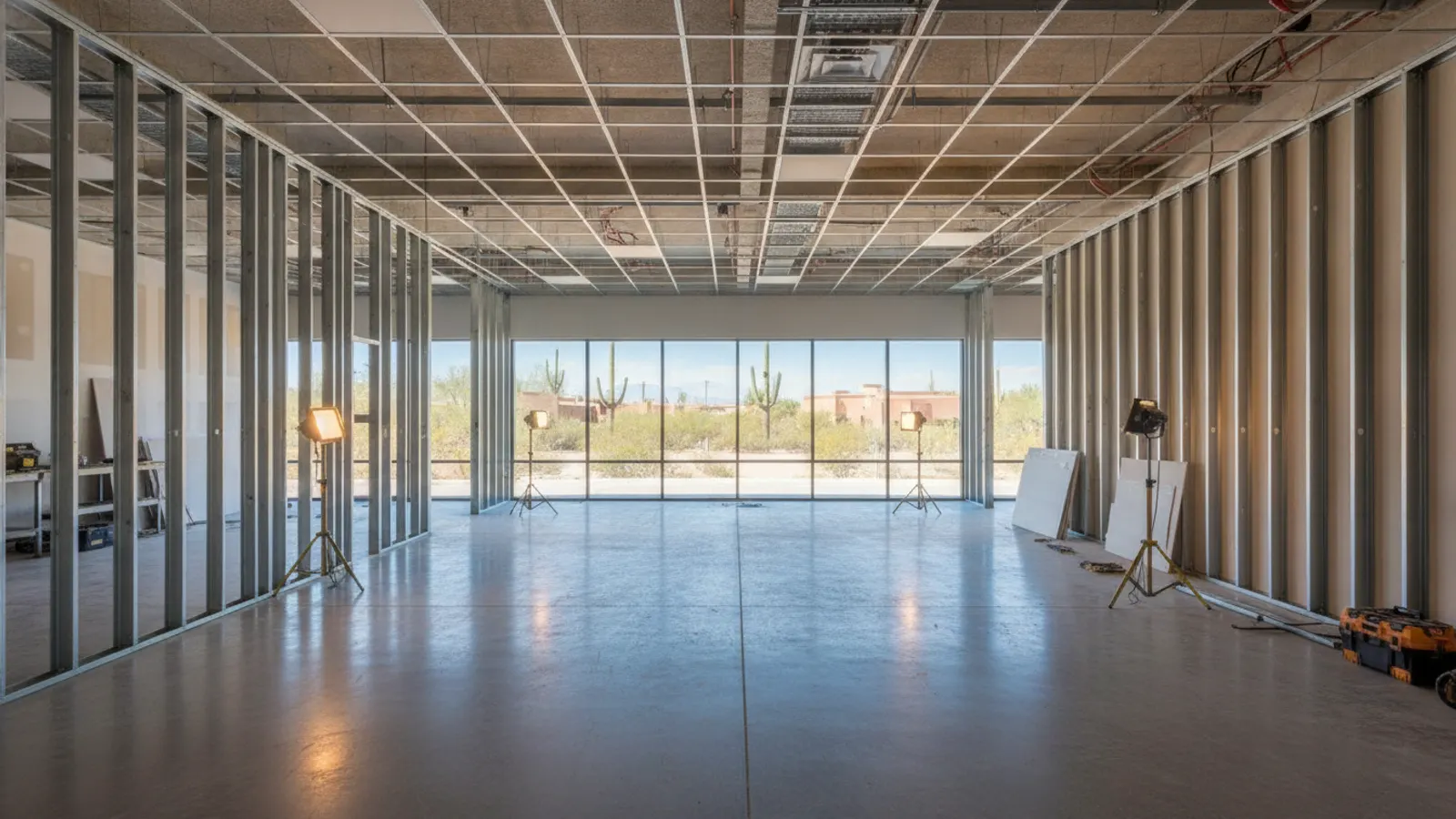
Commercial tenant improvement build-out with metal stud framing and a suspended ceiling grid in a Fountain Hills, Arizona home
Fountain Hills commercial work centers on Avenue of the Fountains and the Downtown core — restaurant, retail, gallery, and salon TIs in a tight design-overlay environment.
Medical and dental office serves a largely active-adult population. Ground-up commercial pads on hillside lots require structural caisson and grade-beam coordination similar to hillside residential.
Town of Fountain Hills Development Services manages plan review along with design-review submittal.

Why Fountain Hills Commercial Construction Is Different

Town design review on Avenue of the Fountains and visible exteriors: 3–5 weeks added.
Hillside pad ground-up: caisson and grade-beam footing, geotech coordination.
Active-adult-friendly medical TI: accessibility above code minimum.
Town of Fountain Hills commercial plan review: 4–6 weeks first cycle.

Recent Commercial Construction Projects in Fountain Hills

Avenue of the Fountains

Restaurant TI 4,200 sf with patio, Type I hood, custom storefront, design review

$540K20 weeks

Downtown core

Medical office TI 4,800 sf, accessible exam rooms, ADHS coordination

$370K16 weeks

Hillside pad (Shea / Saguaro)

Ground-up 6,500 sf retail/office hillside pad, caisson + grade-beam footings, structural engineering

$1.6M10 months

Commercial Construction in Fountain Hills: Fast Facts

Average Fountain Hills commercial TI: $160K–$450K.

Town design review: 3–5 weeks added.

Hillside-pad geotech + structural: 4–6 weeks added on critical path.

Fountain Hills plan review: 4–6 weeks first cycle.

Medical TI: accessibility above code minimum on active-adult-serving projects.

Typical Cost

$25,000 – $1,500,000+

Typical Timeline

1 – 12 months

Permit Lead Time

2–4 weeks

How We Approach Commercial Construction

ProWorx Restoration delivers commercial construction and tenant-improvement work across the Phoenix metro — office buildouts, retail spaces, restaurant TIs, medical and dental offices, and multi-tenant shell modifications. We hold Arizona ROC #349454 and act as the general contractor of record from design coordination through certificate of occupancy.
Commercial work in the Valley carries specific compliance pressure: 2018 IBC with Arizona amendments, 2018 IFC for fire-rated assemblies and sprinklers, Maricopa County Health Department requirements for any food-service buildout, and ADA accessibility standards across every entry, restroom, and circulation path. We pre-coordinate with the landlord's CAM contact, the city plans examiner, and where applicable the fire marshal so submittal comments don't blow up the schedule.

Tenant improvements (TI) for office, retail, medical, dental

Restaurant buildouts including grease, ansul, hood, and Health Dept coordination

Office buildouts with low-voltage, HVAC modifications, and acoustic ceilings

ADA compliance: accessible restrooms, doorways, ramps, parking, signage

Fire-rated demising walls and sprinkler modification coordination

Off-hours and night-shift scheduling to keep tenants operating

What Fountain Hills Homeowners Should Know About Commercial Construction

Windows in Older Buildings

Original windows in older and historic buildings may be repairable rather than requiring replacement. Restoring frames, replacing glazing putty, repairing hardware and improving weatherstripping can extend their life considerably while preserving the building's character. Where replacement is necessary, choosing windows that respect the original design helps maintain the building's appearance.

Restoring Occupied Buildings

Many buildings must remain in use while restoration takes place. Phasing work, scheduling noisy tasks outside business hours, maintaining safe access, protecting occupants from dust and keeping essential systems operating all require careful planning. Clear communication with occupants reduces disruption.

Historic Buildings and Preservation Standards

Historic buildings require a different approach from ordinary repairs. Preservation guidance, including the Secretary of the Interior's Standards for the Treatment of Historic Properties, emphasises repairing rather than replacing historic materials where possible and making new work compatible with the original. Properties in historic districts or listed on historic registers may also be subject to review before exterior changes are made.

Commercial vs. Residential Building Restoration

Commercial restoration projects require careful coordination to minimize business disruption, meet ADA and fire safety codes, and often involve larger-scale structural work. Residential restoration focuses on preserving your home's character and value while addressing damage from age, weather, or accidents. ProWorx Restoration has dedicated teams for both, ensuring specialized expertise and compliance with all applicable building codes throughout the area.

Accessibility Requirements

Commercial spaces must provide accessibility for people with disabilities, including accessible entrances, restrooms, routes through the space, counters and parking. Requirements depend on the type of building and the scope of work. Designing for accessibility from the start avoids costly corrections later.

Documenting the Restoration

Detailed documentation, including photographs, drawings and records of materials used, provides a valuable reference for future maintenance and repairs. For historic buildings, it also creates a permanent record of the building's condition and the work performed.

Rooftop Mechanical Equipment

Commercial buildings frequently house HVAC units on the roof, and the penetrations and curbs supporting them are common leak points. Replacing equipment may require structural evaluation, new curbs and careful flashing. Coordinating roofing and mechanical work avoids damage to new roofing when equipment is replaced.

Foundations and Soil Movement

Some areas of Arizona have expansive clay soils that swell when wet and shrink as they dry, which can cause foundations to move and walls to crack. Poor drainage around a building makes this worse. Restoration may involve repairing cracks, improving drainage so water is directed away from the foundation and, in more serious cases, structural foundation repairs designed by an engineer.

One Contractor for the Whole Building

Using one licensed contractor for envelope, interior and systems work keeps commercial restoration coordinated, accountable and on schedule.

Restoring Interiors

Building restoration often extends inside, repairing damaged plaster and drywall, restoring flooring and woodwork, updating lighting and building systems, and repairing water or smoke damage. In historic interiors, preserving original features such as trim, doors and decorative plaster maintains the building's character.

Building Toward an Opening Date

Commercial tenants often have fixed opening dates tied to leases, marketing or seasonal demand. Construction schedules must account for permitting, long-lead materials, inspections and the time needed for furniture, fixtures and equipment installation. Planning backward from the opening date helps ensure the space is ready on time.

Restoring Stucco Facades

Stucco is the predominant exterior finish on Arizona buildings, and over decades it develops cracks, delamination and water intrusion problems. Small cracks can often be repaired and recoated, but areas where stucco has separated from the wall, or where water has damaged the substrate behind it, need to be removed and rebuilt. Matching the existing texture and colour so repairs blend into the rest of the facade requires skill and patience. A properly restored stucco facade both improves appearance and protects the building structure behind it from moisture.

Restoring Building Exteriors

The exterior of a commercial building shapes how customers and tenants perceive it, and deteriorated stucco, faded paint, damaged signage and worn finishes can make an otherwise sound property look neglected. Restoring facades, repairing and repainting exterior finishes, replacing damaged trim and updating lighting can significantly improve curb appeal. Beyond appearance, exterior restoration also protects the building envelope from water intrusion and sun damage, which reduces the likelihood of more serious and expensive interior problems developing later.

Commercial Construction Close-Out

Completing a commercial project includes final inspections, obtaining occupancy approval, providing warranty documents, operation manuals and as-built drawings, and resolving any punch-list items. A thorough close-out ensures the owner has the information needed to operate and maintain the space.

Our Proven Process

01

Free Consultation

We visit your property, discuss your goals, and provide a detailed, no-obligation estimate.

02

Custom Plan

Our team creates a tailored project plan with timeline, materials, and transparent pricing.

03

Expert Execution

Licensed craftsmen complete your project with quality materials and meticulous attention to detail.

04

Final Walkthrough

We inspect every detail with you and ensure complete satisfaction before the job is done.

"ProWorx handled the hillside engineering, the Town design review, and the build — single point of contact, no surprises."

ProWorx Client · Fountain Hills

Neighborhoods We Serve in Fountain Hills

Avenue of the Fountains · Downtown Fountain Hills · Shea corridor · Saguaro Boulevard · Sunridge Canyon · FireRock · Eagles Nest · Crestview · Hesperus · Westridge

Commercial Construction FAQs for Fountain Hills Homeowners

Ready to Start Your Fountain Hills Commercial Construction Project?

Get a free, no-obligation estimate from a licensed Arizona contractor — ROC #349454.