



Commercial Construction in Phoenix, AZ

Tenant improvements, ground-up commercial, and post-loss rebuilds across metro Phoenix.

Serving Phoenix & nearby Maricopa County

Get Your Free Commercial Construction Estimate

Step 1 of 5Project

What kind of project?

Pick the option that fits best — you can add details next.

Quick Answer: Commercial Construction in Phoenix

ProWorx Restoration delivers commercial construction across Phoenix, AZ — tenant improvements, ground-up builds, and post-loss rebuilds in Downtown, Midtown, Camelback Corridor, Deer Valley Airpark, and the Warehouse District. Typical TI scopes run $80K–$600K; ground-up shells $250K–$2M+; 8–36 weeks depending on permit path.

1,200+

Projects Completed

15+

Years Experience

ROC #349454

Licensed & Insured

100%

Satisfaction Guaranteed

Commercial Construction Built for Phoenix Homes
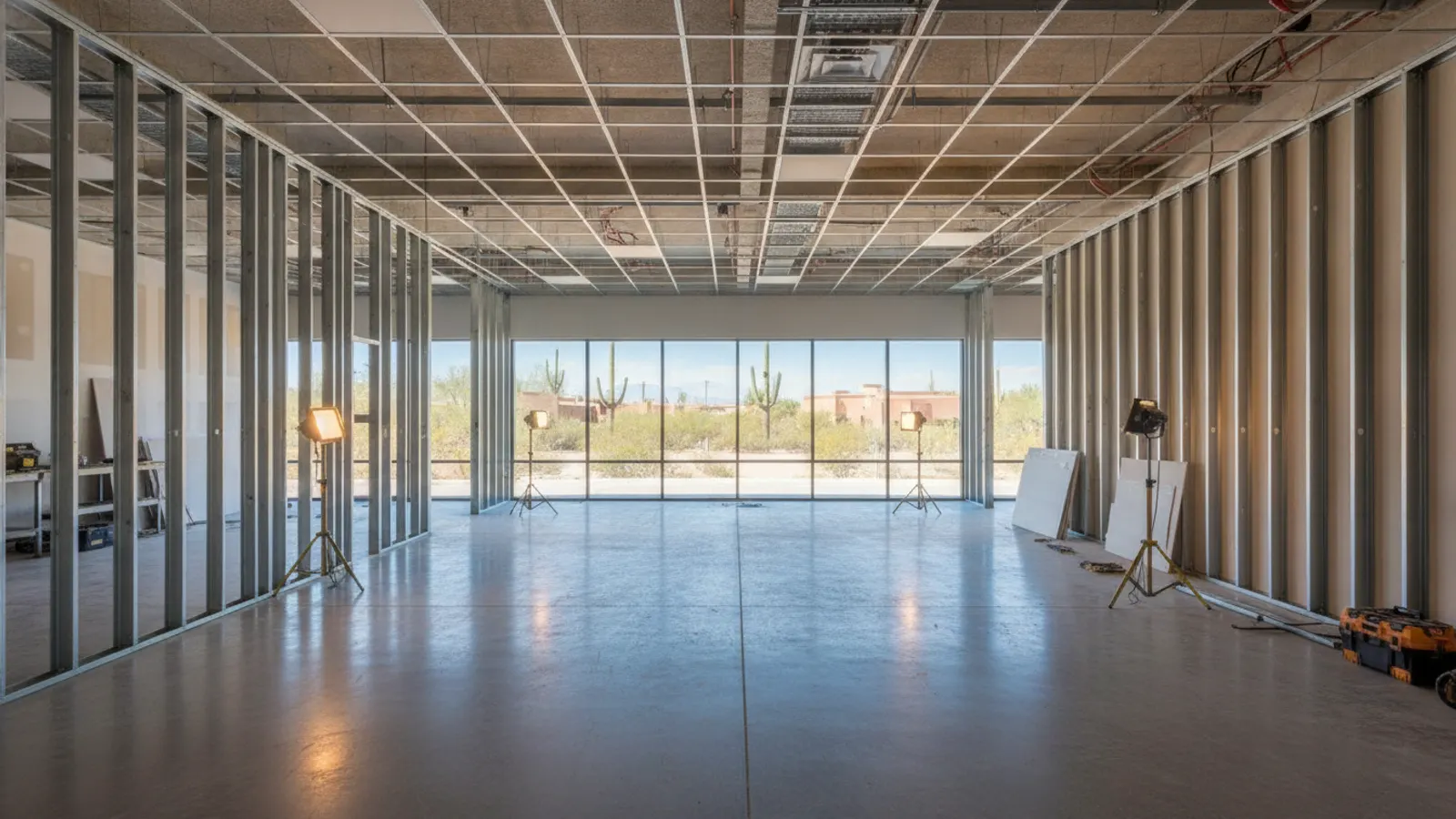
Commercial tenant improvement build-out with metal stud framing and a suspended ceiling grid in a Phoenix, Arizona home
Phoenix commercial work splits between high-rise tenant improvements in Midtown and Downtown (Type I/II construction, after-hours core-drilling restrictions, freight-elevator coordination), low-rise office and medical TIs along Camelback Corridor and 24th Street, and ground-up flex / industrial along the Deer Valley Airpark and Sky Harbor corridors.
We run the City of Phoenix Planning & Development plan-review process end-to-end — including PDD overlays in Downtown, Historic Preservation review in Roosevelt Row and Grand Avenue, and FAA Part 77 height review near Sky Harbor and Deer Valley Airport.
Restoration-side: post-fire and post-flood commercial rebuilds for office, retail, restaurant, and small-industrial. We sequence around tenant operations when possible.

Why Phoenix Commercial Construction Is Different

City of Phoenix commercial plan review: 4–8 weeks first cycle; we manage the corrections cycle to keep schedule.
Downtown and Midtown high-rise: after-hours core drilling and freight-elevator scheduling are required by most building rules.
Medical TI on Camelback Corridor: ADHS licensure coordination on the same critical path as TCO.
Deer Valley / Sky Harbor: FAA Part 77 height review on any rooftop equipment over the imaginary surface.

Recent Commercial Construction Projects in Phoenix

Camelback Corridor

Class A office TI — 14,000 sf demo + rebuild, glass-front conference rooms, demountable walls

$520K16 weeks

Downtown

Ground-floor restaurant TI in 1980s tower — Type I work, after-hours core drilling, Type I hood + grease interceptor

$640K20 weeks

Deer Valley Airpark

Ground-up 9,500 sf flex shell — tilt-up panels, fire-suppression, FAA review for rooftop units

$1.6M9 months

Commercial Construction in Phoenix: Fast Facts

Phoenix commercial plan-review first cycle: 4–8 weeks.

Average mid-size Phoenix TI: $180K–$450K.

Downtown / Midtown after-hours work premium: 15–25%.

Medical TI (ADHS-licensed): 3–5 weeks additional on critical path.

Ground-up flex pad in Deer Valley: 7–10 months permit-to-CO.

Typical Cost

$25,000 – $1,500,000+

Typical Timeline

1 – 12 months

Permit Lead Time

2–4 weeks

How We Approach Commercial Construction

ProWorx Restoration delivers commercial construction and tenant-improvement work across the Phoenix metro — office buildouts, retail spaces, restaurant TIs, medical and dental offices, and multi-tenant shell modifications. We hold Arizona ROC #349454 and act as the general contractor of record from design coordination through certificate of occupancy.
Commercial work in the Valley carries specific compliance pressure: 2018 IBC with Arizona amendments, 2018 IFC for fire-rated assemblies and sprinklers, Maricopa County Health Department requirements for any food-service buildout, and ADA accessibility standards across every entry, restroom, and circulation path. We pre-coordinate with the landlord's CAM contact, the city plans examiner, and where applicable the fire marshal so submittal comments don't blow up the schedule.

Tenant improvements (TI) for office, retail, medical, dental

Restaurant buildouts including grease, ansul, hood, and Health Dept coordination

Office buildouts with low-voltage, HVAC modifications, and acoustic ceilings

ADA compliance: accessible restrooms, doorways, ramps, parking, signage

Fire-rated demising walls and sprinkler modification coordination

Off-hours and night-shift scheduling to keep tenants operating

What Phoenix Homeowners Should Know About Commercial Construction

Budgeting Commercial Restoration

Commercial restoration budgets are easier to manage when work is prioritised by urgency and impact. Items affecting safety, water intrusion or code compliance come first, followed by work that protects asset value and improves tenant satisfaction. Breaking large projects into phases allows costs to be spread across budget cycles while still addressing the most important needs promptly.

One Contractor for the Whole Building

Using one licensed contractor for envelope, interior and systems work keeps commercial restoration coordinated, accountable and on schedule.

Common Commercial Building Issues in Phoenix-Metro Properties

Phoenix-metro commercial buildings see specific failure modes. Flat-roof TPO and modified-bitumen failures during monsoons cause widespread water damage across acoustic ceiling tile and electrical. AC condensate-line failures in mechanical rooms saturate adjacent tenant spaces. EIFS facade delamination from sun-baked south and west elevations exposes substrate to monsoon-driven moisture. Older masonry buildings in downtown Phoenix and Mesa exhibit mortar deterioration and brick spalling. We address the root cause as part of restoration — not just the visible damage — so claims don't recur in 18 months.

Building Toward an Opening Date

Commercial tenants often have fixed opening dates tied to leases, marketing or seasonal demand. Construction schedules must account for permitting, long-lead materials, inspections and the time needed for furniture, fixtures and equipment installation. Planning backward from the opening date helps ensure the space is ready on time.

Fire and Life Safety Systems

Commercial buildings often require fire sprinklers, fire alarms, emergency lighting, exit signs and fire-rated construction. Alterations to a space may require modifications to these systems, which must be designed, installed and inspected properly. Coordinating these systems early prevents delays in obtaining occupancy.

Working With Engineers and Architects

Significant restoration projects often involve structural engineers, architects and, for historic buildings, preservation specialists. Coordinating their recommendations with practical construction methods ensures repairs are technically sound, compliant with codes and achievable within the budget. Early collaboration between designers and the contractor helps identify the most effective restoration approach.

Ground-Up Construction Versus Build-Outs

Ground-up commercial construction creates a new building from an empty site, involving site work, foundations, structure and every building system. Build-outs work within an existing shell. Each requires different planning, permitting and scheduling, and understanding which applies helps set expectations for cost and timeline.

Commercial vs. Residential Building Restoration

Commercial restoration projects require careful coordination to minimize business disruption, meet ADA and fire safety codes, and often involve larger-scale structural work. Residential restoration focuses on preserving your home's character and value while addressing damage from age, weather, or accidents. ProWorx Restoration has dedicated teams for both, ensuring specialized expertise and compliance with all applicable building codes throughout the area.

Inspections and Code Compliance

Commercial restoration may trigger requirements for fire protection, accessibility, energy performance or structural updates, depending on the scope of work. Understanding these requirements before work begins prevents delays during permitting and inspection.

Documenting the Restoration

Detailed documentation, including photographs, drawings and records of materials used, provides a valuable reference for future maintenance and repairs. For historic buildings, it also creates a permanent record of the building's condition and the work performed.

Restoring Occupied Buildings

Many buildings must remain in use while restoration takes place. Phasing work, scheduling noisy tasks outside business hours, maintaining safe access, protecting occupants from dust and keeping essential systems operating all require careful planning. Clear communication with occupants reduces disruption.

Preventive Maintenance Programmes

Routine inspection of roofs, drainage, sealants, exterior finishes and building systems identifies problems while they are small and inexpensive to repair. A preventive maintenance programme extends the life of building components and protects the owner's investment.

Windows in Older Buildings

Original windows in older and historic buildings may be repairable rather than requiring replacement. Restoring frames, replacing glazing putty, repairing hardware and improving weatherstripping can extend their life considerably while preserving the building's character. Where replacement is necessary, choosing windows that respect the original design helps maintain the building's appearance.

How Our Commercial Construction Process Works in Phoenix

01

Free On-Site Consultation

We visit your property, discuss your goals, and provide a detailed, no-obligation estimate.

02

Custom Project Plan

Our team creates a tailored project plan with timeline, materials, and transparent pricing.

03

Licensed Crews On Site

Licensed craftsmen complete your project with quality materials and meticulous attention to detail.

04

Final Walkthrough & Sign-Off

We inspect every detail with you and ensure complete satisfaction before the job is done.

"ProWorx took our Camelback Corridor office TI from demo to keys in 16 weeks without us closing for a single day."

ProWorx Client · Phoenix

Neighborhoods We Serve in Phoenix

Downtown · Midtown · Camelback Corridor · Biltmore · Deer Valley Airpark · Sky Harbor · Warehouse District · Roosevelt Row · Arcadia · Ahwatukee

Commercial Construction FAQs for Phoenix Homeowners

Ready to Start Your Phoenix Commercial Construction Project?

Get a free, no-obligation estimate from a licensed Arizona contractor — ROC #349454.