

Drywall is the foundation of every room in your home. Whether you're dealing with water damage, cracks from settling, or finishing a new addition, understanding your drywall options saves time and money.
ProWorx Restoration provides professional drywall installation and repair services throughout Mesa and the Phoenix Metro area.
Common Drywall Problems in Mesa Homes
Arizona's climate creates specific drywall challenges:
- Nail pops: Temperature swings cause framing lumber to expand and contract, pushing nails through the drywall surface
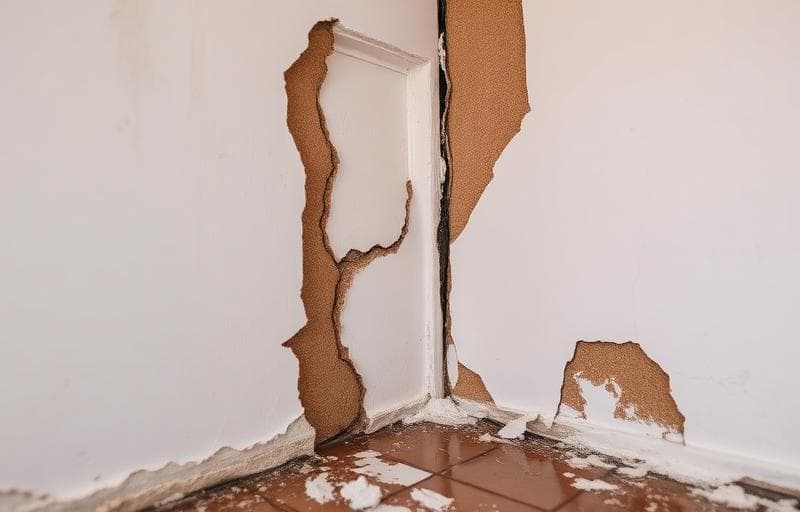
- Settlement cracks: Mesa's expansive clay soils shift over time, creating diagonal cracks at door and window corners
- Water damage: Monsoon leaks and plumbing failures can saturate drywall, leading to staining, mold, and structural weakness
- Termite damage: Arizona's subterranean termites can damage the paper facing on drywall
When to Patch vs. When to Replace
Not every drywall issue requires full replacement. Here's how to decide:
- Small holes (under 4 inches): Patch with mesh tape and joint compound — a quick, affordable fix
- Hairline cracks: Tape and mud — often a cosmetic issue only
- Water-stained areas: If the drywall is still firm, it can be primed and repainted. If soft or crumbling, replace the affected section
- Mold contamination: Always replace — mold can grow behind the surface and pose health risks
- Large holes or structural damage: Cut out and replace the damaged section with new drywall
If you suspect water damage, it's worth reading about what to do first after water damage to prevent further issues.
Drywall Installation for Remodels and Additions
New drywall installation is required for:
- Home additions and room extensions
- Garage conversions
- Basement finishing
- Wall reconfiguration during home renovations
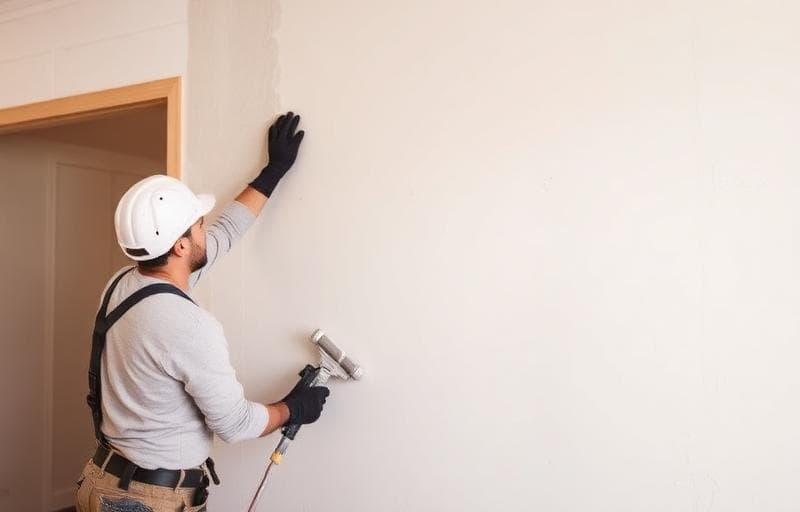
Professional installation ensures proper hanging, taping, mudding, and sanding for a smooth, paint-ready surface. The difference between DIY and professional drywall finishing is immediately visible.
How Much Does Drywall Cost in Mesa?
- Small patch repair: $150–$400
- Large section repair: $400–$800
- Full room installation: $1.50–$3.50 per square foot (materials + labor)
- Texture matching: Additional $1–$2 per square foot for skip trowel, knockdown, or orange peel textures
Why Hire a Professional for Drywall?
Drywall finishing is one of those trades where skill level is immediately obvious. Poor taping and mudding creates visible seams, bumps, and imperfections that show through paint. A professional finisher delivers Level 4 or Level 5 finishes that look seamless.
As a licensed general contractor, ProWorx Restoration coordinates drywall work with other trades — painting, electrical, plumbing — to keep your project running smoothly.
Schedule your free estimate for drywall repair or installation in Mesa.
Matching Arizona Wall Texture
Almost every Mesa home has textured walls rather than smooth ones, usually knockdown or orange peel, and matching that texture is what makes a repair disappear. A perfectly executed patch with the wrong texture is more noticeable than the damage was, because the eye catches the change in surface under raking light.
Texture matching is a genuine skill. The spray pattern, mud consistency, knockdown timing and pressure all affect the result, and experienced finishers test on scrap before touching the wall. Older homes sometimes have different textures in different rooms, which makes matching harder again.
Why Nail Pops Happen Here
Small circular bumps or popped screws appearing on walls and ceilings are extremely common in Mesa, and they are usually framing movement rather than poor workmanship. Lumber continues drying and shrinking in very low humidity, and as it does the fastener stays put while the wood moves away from it.
The fix is not simply filling the bump. The fastener is reset or a new one added nearby into solid framing, the old one driven below the surface, then the area filled, sanded, textured and painted. Filling without resetting means it returns.
Cracks at Corners and Over Openings
Cracks appear where movement concentrates: inside corners, along seams, and radiating diagonally from the corners of doors and windows. Those locations are stress points in any building, and some cracking is normal as a house settles and as materials expand and contract.
What matters is whether a crack keeps returning after proper repair, or whether one side sits proud of the other. Both suggest ongoing structural movement rather than normal settling, and the cause deserves investigation before cosmetic repair is repeated.
Choosing the Right Board
Drywall is not one product. Standard board suits most walls and ceilings. Moisture-resistant board belongs in laundry rooms, bathrooms and near water heaters, though it is not waterproof and must never serve as a tile backer in a shower, where cement board or another approved backer is required.
Fire-resistant board is required where codes call for fire separation, most commonly between an attached garage and the living space. Using the correct type is a safety matter, not a preference.
Ceilings Are Different
Ceiling drywall carries its own weight against gravity continuously, which is why it sags when installed incorrectly. Thicker board, correct fastener spacing and adequate framing support all matter more overhead than on walls.
Ceilings are also hung before walls, so wall panels support the ceiling edges and create stronger corners. Reversing that order produces joints that crack early.
Levels of Finish
Drywall finishing is described in levels, from minimal treatment in concealed areas up to a full skim coat across the entire surface. Most Mesa walls receive a mid-level finish because texture is applied over them and hides minor variation.
Smooth walls, glossy paint or strong raking light all demand a higher level, because every imperfection shows. Agreeing the finish level before work starts prevents the disappointment of a wall that looks fine until the afternoon sun crosses it.
Repairing Water-Damaged Drywall
Drywall that has been soaked loses strength and can support mould growth, and the paper facing is a food source. Saturated board is generally cut out rather than dried in place, and the cut extends above the visible damage because water wicks upward through the gypsum.
Critically, the wall cavity must be dried and verified before new board goes up. Closing a damp cavity traps the problem inside where it will continue quietly, which is the most common reason water damage repairs fail.
Patching Holes Properly
Small holes from nails and anchors fill and sand easily. Larger holes need backing: either a patch secured to framing or a piece of board with backing strips behind it, so the repair has something solid behind it rather than relying on compound alone.
Compound-only repairs over unsupported holes crack as soon as anything bumps the wall. The extra few minutes to install backing is the difference between a repair that lasts and one that reappears.
Priming Before Paint
New drywall and joint compound absorb paint at different rates, so painting without primer produces uneven sheen and visible seams, a defect called flashing. A quality drywall primer equalises absorption so the topcoat looks consistent.
Primer also matters over repairs. A patched area absorbs differently from the surrounding wall even after texturing, and skipping primer means the repair shows through the finished paint in exactly the way the repair was meant to prevent.
Sound Control Between Rooms
Drywall choices affect how much noise travels between rooms, which matters increasingly in homes where people work remotely. Options include additional insulation in the wall cavity, resilient channel that decouples the board from the framing, specialised sound-dampening drywall, and careful sealing of gaps around outlets and penetrations where sound leaks through.
None of these are expensive while walls are open, and all of them are disruptive to add later. A home office, media room or bedroom sharing a wall with a living space is worth treating during a remodel rather than regretting afterwards.
Coordinating With Other Trades
Drywall sits at a junction in the construction sequence. Electrical, plumbing and HVAC rough-in must be complete and inspected before board goes up, and insulation must be in and inspected as well.
Where a remodel involves opening walls for any of those trades, coordinating so walls are opened once rather than repeatedly saves considerable time and cost. Doing electrical work, then closing walls, then discovering plumbing also needed attention is a common and avoidable expense.