


Choosing the right flooring for a Mesa home isn't just about looks. Arizona's desert climate creates unique challenges — extreme heat, low humidity, intense UV exposure, and occasional monsoon moisture. The wrong flooring choice can warp, fade, or crack within a few years.
This guide breaks down the best flooring options for Mesa homes based on durability, appearance, maintenance, and cost.
Porcelain and Ceramic Tile
Tile has been the go-to flooring in Arizona homes for decades. It's practically made for the desert climate.
- Heat resistance: Tile stays cool underfoot, even when outdoor temps exceed 110°F
- Moisture proof: Porcelain tile absorbs less than 0.5% moisture — perfect for bathrooms and kitchens
- UV resistant: Won't fade from sun exposure through windows
- Lifespan: 25–50+ years with proper installation
Cost: $3–$10 per square foot for materials, $5–$15 installed.
Best for: Kitchens, bathrooms, entryways, and living areas. See our kitchen flooring and bathroom renovation services.
Luxury Vinyl Plank (LVP)
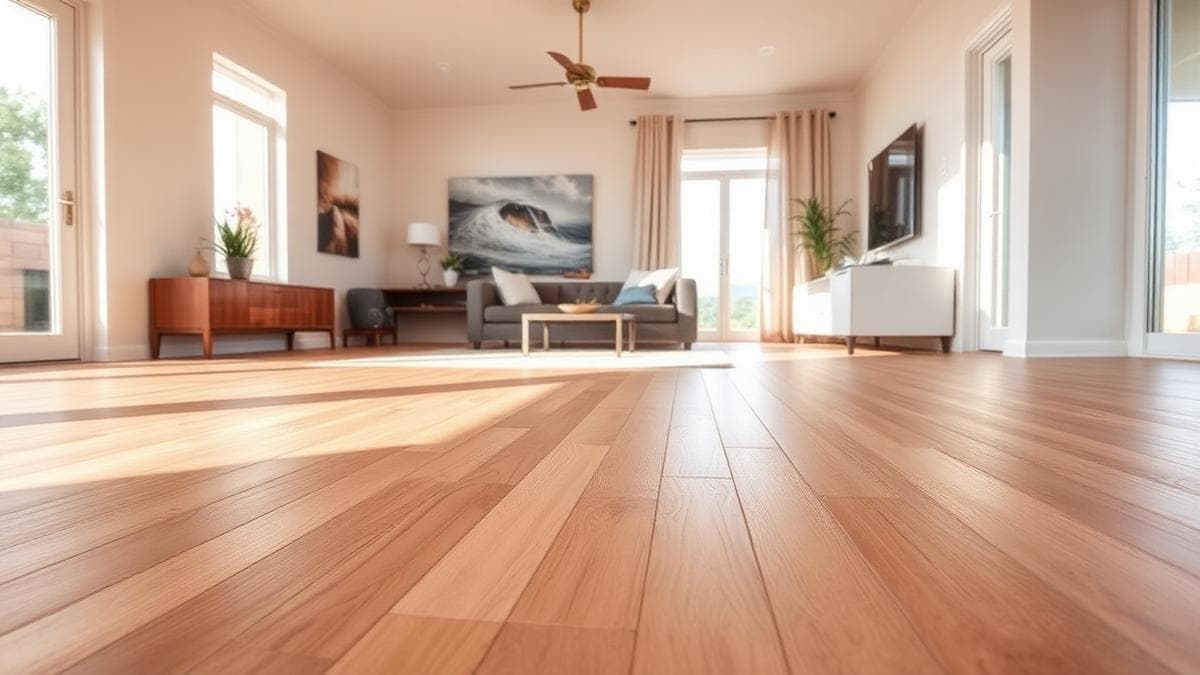
LVP has exploded in popularity and for good reason. It looks like hardwood but handles Arizona conditions much better.
- Water resistant: Most LVP is 100% waterproof — great for kitchens and bathrooms
- Comfortable: Softer underfoot than tile, with sound-dampening properties
- Easy installation: Click-lock systems mean faster install and lower labor costs
- Realistic look: Modern LVP is nearly indistinguishable from real wood
Cost: $2–$7 per square foot for materials, $4–$10 installed.
Caution: Lower-quality LVP can expand in extreme heat. Always choose products rated for high-temperature environments.
Engineered Hardwood
Solid hardwood struggles in Arizona's low humidity — it shrinks, gaps, and cracks. Engineered hardwood solves this problem with a layered construction that resists expansion and contraction.
- Stability: The plywood core handles humidity changes better than solid wood
- Appearance: Real wood veneer on top provides authentic look and feel
- Refinishing: Can be sanded and refinished 1–2 times depending on veneer thickness
Cost: $5–$15 per square foot for materials, $8–$18 installed.
Best for: Living rooms, bedrooms, and dining areas away from moisture.
Polished Concrete
Many Mesa homes are built on concrete slabs. Instead of covering them, some homeowners polish and seal the existing slab for a modern industrial look.
- Ultra-durable: Concrete lasts the lifetime of the home
- Cool: Stays naturally cool in summer
- Low maintenance: Sweep and mop — that's it
- Affordable: If the slab is in good condition, polishing costs less than new flooring
Cost: $3–$8 per square foot for polishing and sealing. Learn more about our concrete services.
What to Avoid in Arizona
Some flooring materials don't perform well in the desert:
- Solid hardwood: Shrinks and gaps in Arizona's low humidity (10–20% in summer)
- Carpet: Traps dust, allergens, and doesn't handle pet accidents well in the heat
- Laminate: Swells with moisture and can warp in high heat
- Bamboo: Extremely sensitive to humidity changes
How to Choose the Right Flooring
Consider these factors for your Mesa home:
- Room function: Wet areas need tile or LVP. Bedrooms can handle engineered wood.
- Sun exposure: South-facing rooms get intense UV. Choose fade-resistant materials.
- Pets and kids: Scratch-resistant and waterproof options like LVP or tile work best.
- Budget: LVP offers the best value. Tile offers the best longevity.
- Resale value: Tile and engineered hardwood have the highest ROI in Mesa.
Ready to upgrade your floors? ProWorx Restoration provides expert flooring installation throughout Mesa and the Phoenix Metro area. Schedule a free estimate today.
What Mesa Floors Actually Have to Cope With
Flooring choices that work elsewhere do not always suit a Mesa home. Nearly every house sits on a concrete slab, which means moisture can migrate up from the ground and there is no crawlspace to buffer it. Indoor humidity is very low for most of the year, which makes solid wood shrink and open gaps between boards. Fine dust is constant, and it is abrasive. Summer heat means homeowners actively want floors that feel cool underfoot.
Those four conditions, slab construction, dry air, abrasive dust and heat, explain why tile dominates in this market and why some products that are popular in other regions underperform here.
Porcelain and Ceramic Tile
Tile remains the default for good reasons. It is unaffected by slab moisture, essentially immune to water damage, extremely hard-wearing against dust and grit, and it stays noticeably cooler than any other surface during summer. Porcelain is denser and harder than ceramic and handles heavy traffic better.
The trade-offs are real too. It is hard underfoot, which matters if you stand to cook or have joint problems, and dropped dishes break. Grout needs sealing and shows staining if neglected, though larger-format tiles reduce the number of grout lines. Installation is also less forgiving: large tiles demand a very flat slab or edges sit proud of one another.
Luxury Vinyl Plank
Luxury vinyl plank has taken a large share of the Mesa market because it addresses tile's weaknesses without introducing wood's. Products with waterproof cores tolerate spills and leaks, the surface is softer and warmer underfoot, it is quieter, and good ones convincingly imitate wood or stone at a fraction of the cost.
Quality varies enormously. The wear layer thickness is the number that matters most for durability, and thin budget products scratch and dent under furniture and pet claws. Installation still requires a flat slab and proper expansion gaps, because these floors expand and contract with the significant temperature swings an Arizona house experiences.
Wood: Solid Versus Engineered
Wood brings warmth that no imitation quite matches, but Mesa's dry air works against it. Solid hardwood installed without allowing for very low indoor humidity will shrink, opening gaps between boards during the driest months. It also cannot be installed directly over a slab without a suitable subfloor system.
Engineered wood, which bonds a real wood wear layer to a dimensionally stable plywood core, handles these conditions considerably better and can be installed over a slab. Whether it can ever be refinished depends on how thick that wear layer is, which is worth checking before buying. Both remain vulnerable to water, so kitchens, laundry rooms and bathrooms deserve careful thought.
Carpet, and Where It Still Belongs
Carpet has retreated to bedrooms in most Mesa homes, and that is a sensible place for it. It is warm, quiet and soft underfoot where people are barefoot and traffic is light. A good pad matters more than most buyers realise; it affects comfort, insulation and how long the carpet lasts.
In living areas and hallways, carpet struggles against Arizona dust, which works into the fibres and is abrasive. Households with pets or allergies usually find hard surfaces easier to keep genuinely clean.
Polished and Stained Concrete
Since the slab is already there, finishing the concrete itself is a legitimate option. Polished or stained concrete is extremely durable, entirely unaffected by moisture, very low maintenance and stays cool. It suits modern and industrial interiors particularly well.
It is also the hardest surface of all underfoot, it shows existing cracks rather than hiding them, and the finished appearance depends heavily on the condition and history of the slab, which cannot be fully predicted until grinding begins. Expectations need to be set accordingly.
Choosing Room by Room
Many Mesa homeowners settle on a combination: tile or luxury vinyl through the main living areas for durability and continuity, carpet in bedrooms for comfort, and a waterproof surface in laundry rooms and bathrooms. Running one material through all the connected living space makes a house feel larger than switching materials at every doorway.
Where different floors do meet, transitions need planning so heights match and nobody trips. That is easier to design at the start than to resolve after both floors are installed.
Preparing the Slab Is Not Optional
Whatever you choose, the slab underneath determines how the floor performs and how long it lasts. It must be clean, flat within the manufacturer's tolerance, and free of excess moisture. High spots need grinding, low spots need filling, and cracks need appropriate repair.
Moisture testing matters particularly for adhesives and moisture-sensitive products. Skipping it is a common cause of adhesive failure and cupping that appears months after installation, long after everyone has forgotten which step was skipped.