



Stucco Repair in Phoenix, AZ

Crack repair, color-matched re-coat, and full resurfacing for Phoenix homes.

Serving Phoenix & nearby Maricopa County

Get Your Free Stucco Repair Estimate

Step 1 of 5Project

What kind of project?

Pick the option that fits best — you can add details next.

Quick Answer: Stucco Repair in Phoenix

ProWorx Restoration provides stucco repair across Phoenix, AZ — hairline UV cracks, foundation-settlement step cracks, water-intrusion patches, and full color-coat resurfacing in Arcadia, Biltmore, Ahwatukee, North Central, and Moon Valley. Typical projects run $500 – $9,000.

1,200+

Projects Completed

15+

Years Experience

ROC #349454

Licensed & Insured

100%

Satisfaction Guaranteed

Stucco Repair Built for Phoenix Homes
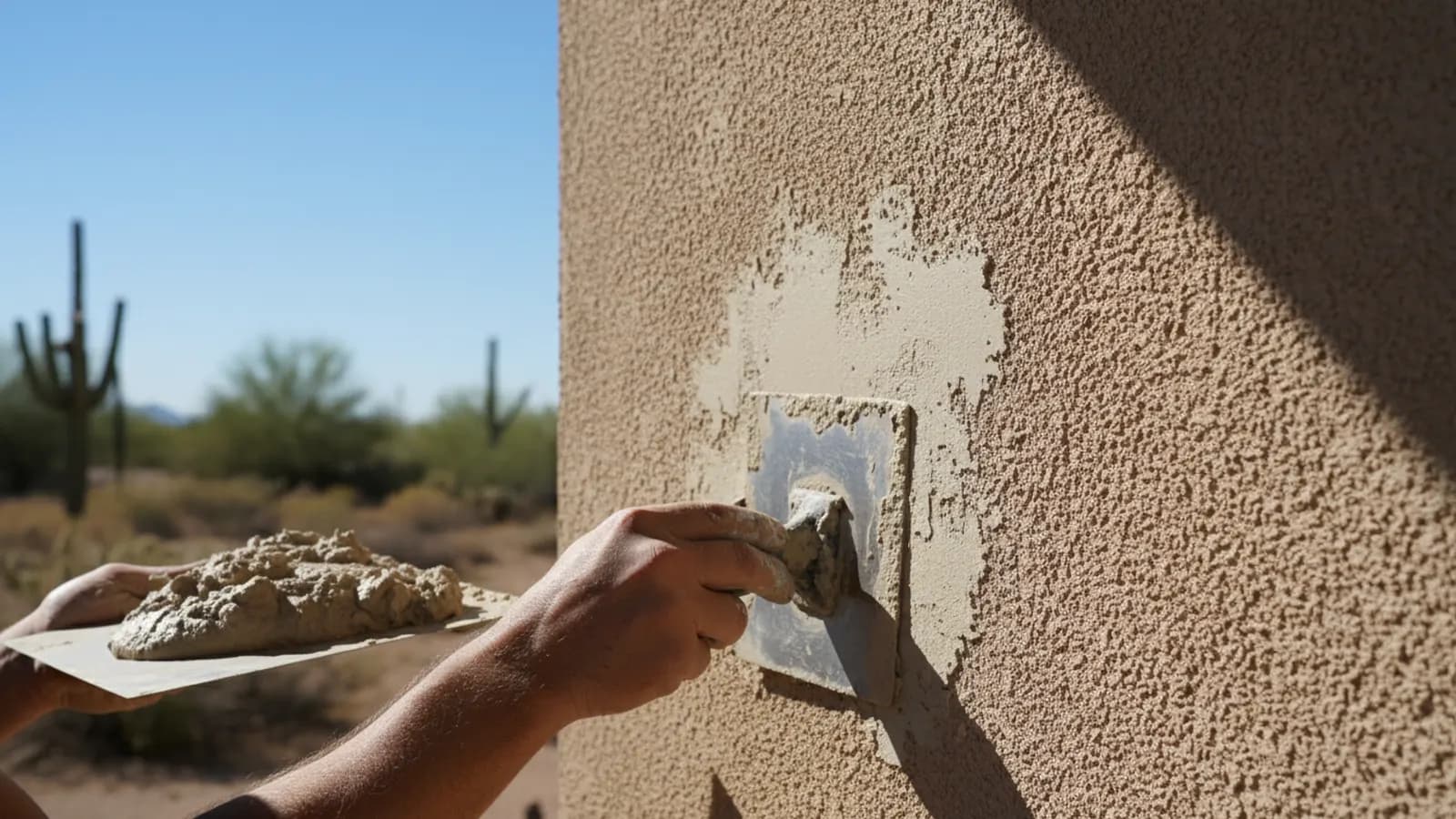
Stucco patch being floated over a repaired wall section and the texture matched in a Phoenix, Arizona home
Phoenix stucco fails in three predictable patterns: hairline map cracking from 110°F+ UV cycling on south and west elevations, vertical step cracks at corners from expansive-clay settlement, and horizontal cracks at the weep screed from sprinkler over-spray. We diagnose root cause before patching — otherwise the crack returns within a season.
Older Arcadia and North Central homes (pre-1980) often have three-coat hard-coat stucco over wood lath; we match the original sand-float or Santa Barbara finish rather than skim-coating modern synthetic over it.
New-build Ahwatukee, Desert Ridge, and Moon Valley homes use one-coat synthetic over foam — different repair approach (mesh patch, color-coat blend).

Why Phoenix Stucco Repair Is Different

Foundation-movement step cracks: we coordinate structural assessment before cosmetic patch.
South / west elevation UV burnout: integral-color re-coat lasts 10+ years vs. paint at 3–5.
Sprinkler over-spray at base: re-route irrigation as part of the repair scope.

Recent Stucco Repair Projects in Phoenix

Arcadia

Three-coat repair on 1962 ranch, lath patching, Santa Barbara finish match, integral color

$6.5K8 days

Ahwatukee

South-elevation crack chase + color-coat re-coat 1,800 sf, fog-coat blend

$8K6 days

Moon Valley

Foundation step-crack repair 6 locations, structural sign-off, color match

$3.5K4 days

Stucco Repair in Phoenix: Fast Facts

UV map cracking: ~40% of Phoenix stucco calls.

Foundation settlement step cracks: ~25%.

Sprinkler / water intrusion at weep: ~20%.

Average Phoenix stucco repair: $1,500–$8,000.

Arcadia / North Central pre-1980: three-coat hard-coat repair specialty.

Typical Cost

$500 – $15,000+

Typical Timeline

2 days – 2 weeks

Permit Lead Time

2–4 weeks

How We Approach Stucco Repair

Arizona's extreme heat, monsoon-driven wind-driven rain, and 40°F+ daily thermal swings put stucco under constant stress. ProWorx Restoration repairs hairline and structural cracks, patches damaged areas, performs full re-stucco on aged exteriors, and matches color and texture across Phoenix-metro homes and commercial properties. Arizona ROC #349454.
Stucco failure modes in the Valley fall into predictable patterns. Hairline pattern cracking on south and west elevations from UV and thermal cycling. Diagonal cracks at window and door corners from minor structural movement. Bulging or hollow-sounding patches where moisture penetrated past failed sealant joints. EIFS (synthetic stucco) delamination on 1990s–2000s tract homes where weep details were undersized. We identify the failure mode before patching so the repair lasts.

Hairline and structural crack repair with elastomeric or cementitious patch

Full-wall and whole-house re-stucco (traditional three-coat)

Color matching from samples; integral and elastomeric topcoats

Texture matching: smooth, sand, dash, lace, Santa Barbara, Spanish

Window and door sealant replacement at stucco interfaces

EIFS repair and weep-detail correction

What Phoenix Homeowners Should Know About Stucco Repair

Common Masonry Issues in Phoenix-Metro Properties

Five patterns dominate. Mortar deterioration along south and west elevations from UV and thermal cycling. Step cracking through brick courses from foundation settlement on expansive soils. Brick spalling from moisture entering cracked joints. Efflorescence from sulfate-rich groundwater wicking through CMU site walls. And on 1920s–1960s downtown Phoenix and Mesa brick, hard Portland-cement patches done in the 80s–90s now causing the softer original brick to spall around the patches. Each pattern needs a different repair — we don't apply a universal fix.

Stone Veneer Repairs

Natural and manufactured stone veneer is popular on Arizona homes for accent walls, columns and fireplaces. Veneer can loosen, crack or allow water behind it if it was installed without proper drainage and flashing. Repairs may involve resetting loose stones, replacing damaged pieces and correcting installation details to prevent water intrusion.

Code Requirements During Restoration

Restoration work may trigger requirements to bring parts of the building up to current codes, particularly when the building's use changes or major alterations are made. Accessibility, fire and life safety, electrical and energy requirements can all apply. Understanding these requirements early prevents surprises during permitting.

Stucco Damage From Impacts

Stucco can be chipped or cracked by impacts from vehicles, lawn equipment, gates and even hail. Small chips can be patched and textured, while larger damaged sections may require cutting back to sound material, repairing the lath and rebuilding the stucco layers. Matching the surrounding texture and colour makes the repair blend into the rest of the wall.

Foam Trim and Decorative Details

Many Arizona homes use foam shapes covered with stucco for window surrounds, cornices and decorative bands. These details can be damaged by impacts or water intrusion, and repairing them requires restoring the foam shape and reapplying the protective coating so the detail remains watertight.

Matching Historic Materials

Restoring older buildings often requires matching materials that are no longer standard. Historic masonry may need mortar that is softer and more compatible with the original bricks than modern mortar, since harder mortar can damage historic masonry. Older stucco, plaster, wood profiles and windows may need custom work to match. Using compatible materials preserves both the building's appearance and its long-term durability.

Arizona's Block Walls

Concrete masonry unit walls, usually called block walls, surround the yards of a huge number of Arizona homes and form the exterior walls of many buildings. They are durable, but they are not maintenance-free. Over time they can crack, lean, develop failing mortar joints or lose their protective coating. Because they often serve as property boundaries and pool barriers, keeping them sound matters for safety, security and compliance as well as appearance.

Painting Block Walls

Many block walls are painted or coated to match a home's exterior. Over time, the finish fades and peels in Arizona's sun. Repainting requires cleaning, repairing cracks and using coatings formulated for masonry. A well-applied finish protects the wall and improves its appearance.

Sealing Masonry

Breathable masonry sealers can help reduce water absorption while allowing moisture inside the wall to escape. Sealers are not appropriate for every situation, and non-breathable coatings can trap moisture and cause damage. Choosing the right product depends on the type of masonry and its exposure.

Stopping Water Intrusion First

Water is the leading cause of building deterioration. Leaking roofs, failed window seals, cracked stucco, deteriorated sealants and poor drainage allow water into the structure, where it damages framing, finishes and building systems and promotes mould. Restoration should begin by identifying and stopping every source of water intrusion, because repairs made while water is still entering will not last.

Inspecting Stucco Regularly

Walking around the house once or twice a year to look for new cracks, staining, efflorescence and damaged areas allows stucco problems to be addressed early, before water causes hidden damage behind the wall.

Starting With a Condition Assessment

Effective building restoration begins with understanding exactly what condition the building is in. A thorough condition assessment examines the structure, roof, exterior walls, windows, foundations, drainage and building systems, identifying deterioration, its causes and its urgency. That assessment allows repairs to be prioritised, so the most critical issues, particularly those letting water into the building, are addressed first.

How Our Stucco Repair Process Works in Phoenix

01

Free On-Site Consultation

We visit your property, discuss your goals, and provide a detailed, no-obligation estimate.

02

Custom Project Plan

Our team creates a tailored project plan with timeline, materials, and transparent pricing.

03

Licensed Crews On Site

Licensed craftsmen complete your project with quality materials and meticulous attention to detail.

04

Final Walkthrough & Sign-Off

We inspect every detail with you and ensure complete satisfaction before the job is done.

"Three other contractors told us to just paint over the cracks on our Arcadia ranch. ProWorx found the foundation movement, patched it properly, and color-matched the original 1962 Santa Barbara finish flawlessly."

ProWorx Client · Phoenix

Neighborhoods We Serve in Phoenix

Arcadia · Biltmore · North Central · Moon Valley · Ahwatukee · Desert Ridge · Sunnyslope · Encanto · Willo · Coronado

Stucco Repair FAQs for Phoenix Homeowners

Ready to Start Your Phoenix Stucco Repair Project?

Get a free, no-obligation estimate from a licensed Arizona contractor — ROC #349454.