


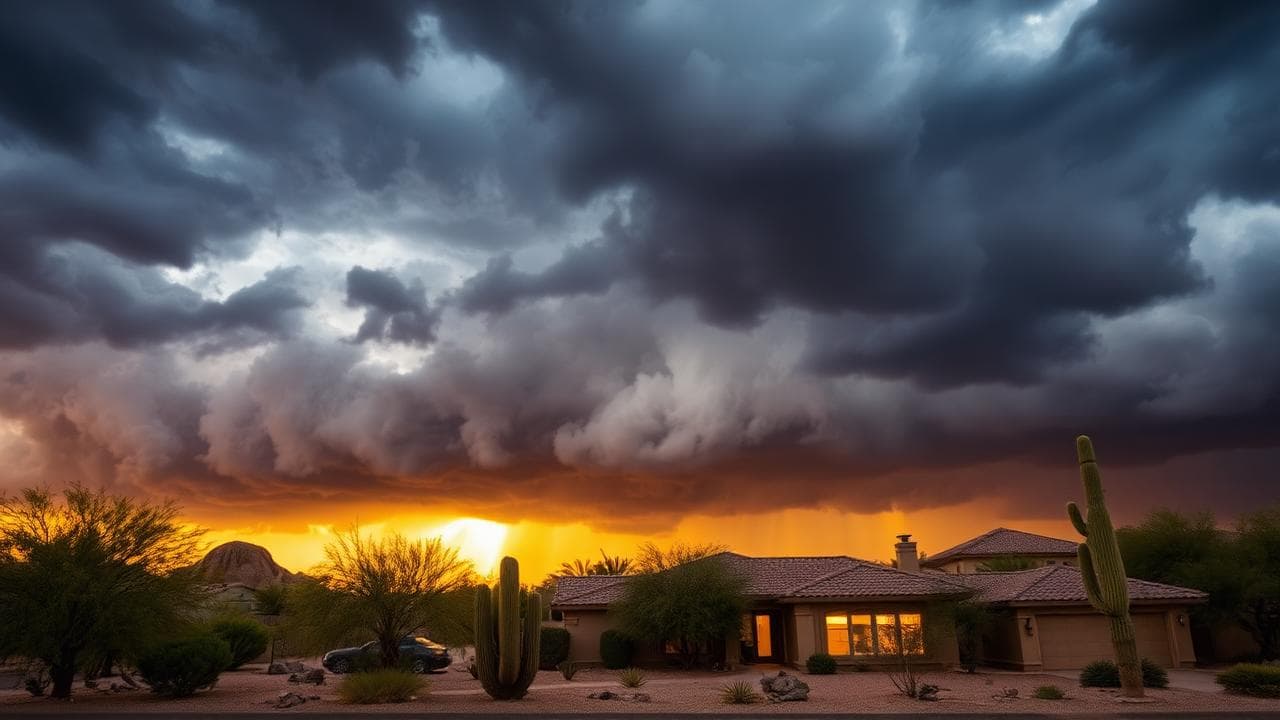
Every June, Phoenix homeowners get the same reminder from insurance adjusters: monsoon season is coming, and unprepared homes pay the price. Between mid-June and late September, the Valley sees microbursts, dust storms, wind-driven rain, and flash flooding — often in the same afternoon. This 2026 checklist walks through what to inspect, what to fix, and what a licensed contractor should handle before the first storm rolls in.
Why Monsoon Damage Hits Phoenix So Hard
Arizona homes are built for heat, not water. Flat and low-slope roofs, stucco exteriors, minimal gutters, and desert-adapted drainage all shed water fast — until debris, cracks, or clogged scuppers slow it down. When 2 inches of rain falls in 30 minutes, even small vulnerabilities turn into thousands of dollars in water damage restoration claims.
Roof and Attic Inspection (Do This First)
- Walk the perimeter and look for lifted or missing tiles, especially on the leeward side where microbursts tear at fasteners.
- Check flashing around vents, chimneys, and skylights — this is where 80% of monsoon leaks start.
- Clear scuppers and roof drains of palm debris, bougainvillea shed, and dust cake.
- From inside the attic, look for daylight, water stains on trusses, or dry rot around the deck.
If you spot anything questionable, get it inspected before the first storm. A same-week roofing repair is far cheaper than a post-storm insurance claim with drying, drywall, and reconstruction.
Stucco, Paint, and Exterior Envelope
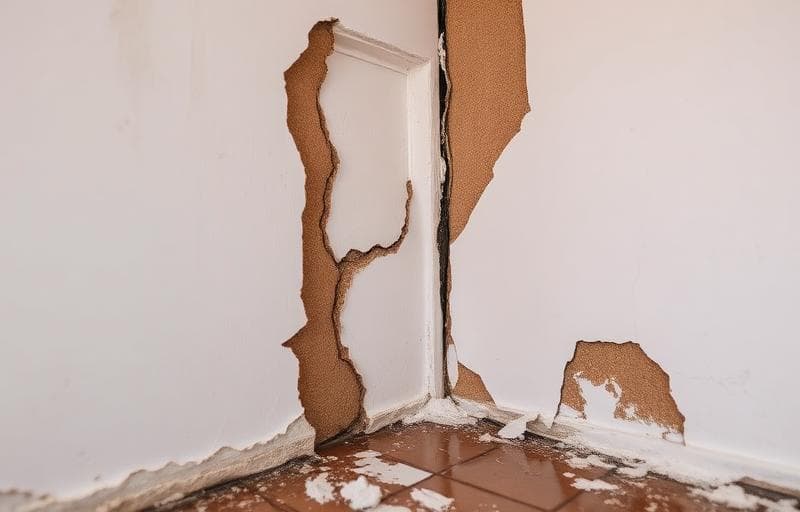
Phoenix stucco takes brutal UV exposure year-round, which means hairline cracks are normal — until they let wind-driven rain into the wall cavity. Look for:
- Cracks wider than a credit card, especially at wall/roof intersections and around windows
- Efflorescence (white powder) — a sign moisture is already migrating through the wall
- Blistered or bubbling paint near the foundation line
- Separations at expansion joints and control joints
Small cracks can be sealed with elastomeric caulk in a weekend. Anything structural or wider than 1/4" should be scoped by a licensed stucco contractor before the humidity spikes.
Drainage and Grading
Most monsoon flooding inside Phoenix homes doesn't come from the roof — it comes from the yard. Confirm that:
- The ground slopes away from the foundation at least 6" over the first 10 feet
- Landscape borders, decorative rock walls, and pavers aren't damming water toward the house
- AC condensate lines and pool overflow drains discharge away from the slab
- Window wells and light wells are clear and covered
Windows, Doors, and Weatherstripping
Wind-driven monsoon rain finds every gap in a poorly sealed window. Replace cracked weatherstripping, re-caulk the perimeter of exterior windows and door frames, and check that patio slider tracks drain properly.
Trees and Yard Debris
Palm fronds, mesquite branches, and unsecured patio furniture become projectiles in a 60 mph microburst. Trim trees back at least 10 feet from the roof line and secure or stow anything the wind can lift.
Insurance Prep
- Photograph the roof, exterior, and interior condition every June — dated photos are your best evidence in a claim.
- Review your policy for monsoon-specific exclusions (wind vs flood coverage is a common gap in Arizona).
- Save the contact for a 24-hour emergency restoration contractor before you need one.
Already Have Storm Damage?
If you're reading this after a storm has already hit, don't wait. Standing water in a Phoenix home turns into mold within 48 hours because of the residual heat. ProWorx runs 24/7 emergency response in Phoenix and across the Valley. Book a same-day inspection and we'll document everything for your insurance carrier.
Start With the Roof
The roof is the single most important thing to check before storm season, and it is best inspected in spring while the weather is calm. On tile roofs, look for cracked, slipped or missing tiles and for debris collected in valleys. The tile is a rain shield; the underlayment beneath it is the actual waterproof layer, and it degrades under Arizona heat long before the tile looks old.
On flat and low-slope roofs, check seams, parapet flashing, and the penetrations around rooftop air-conditioning units and vents. Clear scuppers and drains completely. A drain blocked by a season's worth of debris turns a heavy downpour into standing water that finds every weakness in the membrane.
Drainage and Grading Around the House
Most monsoon water damage enters at ground level rather than through the roof. Walk the perimeter and look at where water will go. Soil should slope away from the foundation, not toward it. Years of landscaping, new pavers or added gravel often raise grade against the house, and in stucco homes that can bury the weep screed at the base of the wall, trapping water behind the stucco.
Check that drainage channels, area drains and swales are clear, and that downspouts discharge well away from the foundation rather than beside it. Garage thresholds are a common entry point; a threshold seal is inexpensive compared with drying a flooded garage.
Trees and Loose Objects
Monsoon winds bring down branches and whole trees, and in the desert many species are shallow-rooted and top-heavy after a wet spring. Thinning dense canopies and removing dead or overhanging limbs before the season reduces both direct impact damage and the debris that blocks drains.
Everything loose in the yard becomes a projectile in a strong gust. Patio umbrellas, shade sails, lightweight furniture, trampolines, bins and pool equipment should be secured or have a plan for being moved indoors when a storm warning is issued.
Windows, Doors and the Building Envelope
Wind-driven rain exploits gaps that ordinary rain never reaches. Check the sealant around window and door frames, especially at the corners of openings where cracks typically form, and replace failed weatherstripping. These are inexpensive repairs that prevent water entering walls.
Attic and gable vents should have intact screens. During a haboob, open or damaged vents let dust pour into the attic, and during the rain that often follows, they let water in as well.
Know Where Your Shut-Offs Are
Before a storm, make sure everyone in the household knows where the main water shut-off and the electrical panel are, and how to operate them. If a storm damages a roof and water begins entering near electrical fixtures, being able to isolate power quickly matters.
It is also worth photographing the exterior and interior of the house in good condition before the season starts. If you later file a storm claim, before-and-after evidence is far more persuasive than a description.
Have a Plan for the First Hour After a Storm
When a storm has passed, damage control is about speed. Check ceilings for new stains, walk the exterior for displaced roofing and debris impacts, and look at the attic with a torch for wet framing or insulation. Water that is found and dried within hours rarely becomes a mould problem; water found a week later usually has.
If damage has occurred, photograph everything before moving or cleaning anything, report the claim promptly, and arrange temporary protection such as tarping. Most policies expect you to take reasonable steps to prevent further damage, and those costs are normally part of the claim.
Check Your Insurance Before the Season
Review your policy before storms arrive rather than after. Confirm your deductible, whether your roof is settled at replacement cost or actual cash value, and whether you carry separate flood coverage, since standard homeowner policies generally exclude water entering the home from outside. Flood policies also commonly have a waiting period, so buying one as a storm approaches does not help.
Photographing the house in good condition before the season gives you a baseline. Storm claims are considerably easier when you can show what the roof, walls and yard looked like beforehand.
Finally, keep a short list of who to call before you need it: your insurer, a roofer and a restoration contractor. Finding those numbers at eleven at night with water coming through a ceiling is the worst possible time to start searching.