



Smoke Restoration in Chandler, AZ

Soot, residue, and HVAC smoke cleanup across Chandler — full IICRC S700 protocol.

Serving Chandler & nearby Maricopa County

Get Your Free Smoke Restoration Estimate

Step 1 of 5Project

What kind of project?

Pick the option that fits best — you can add details next.

Quick Answer: Smoke Restoration in Chandler

ProWorx Restoration provides smoke damage restoration across Chandler, AZ — kitchen and garage fires, electrical events, and wildfire smoke. Most Chandler smoke jobs run $3,000–$25,000 and 5–18 days using IICRC S700 protocols, HVAC decontamination, residue-specific wall cleaning, and contents pack-out.

1,200+

Projects Completed

15+

Years Experience

ROC #349454

Licensed & Insured

100%

Satisfaction Guaranteed

Smoke Restoration Built for Chandler Homes
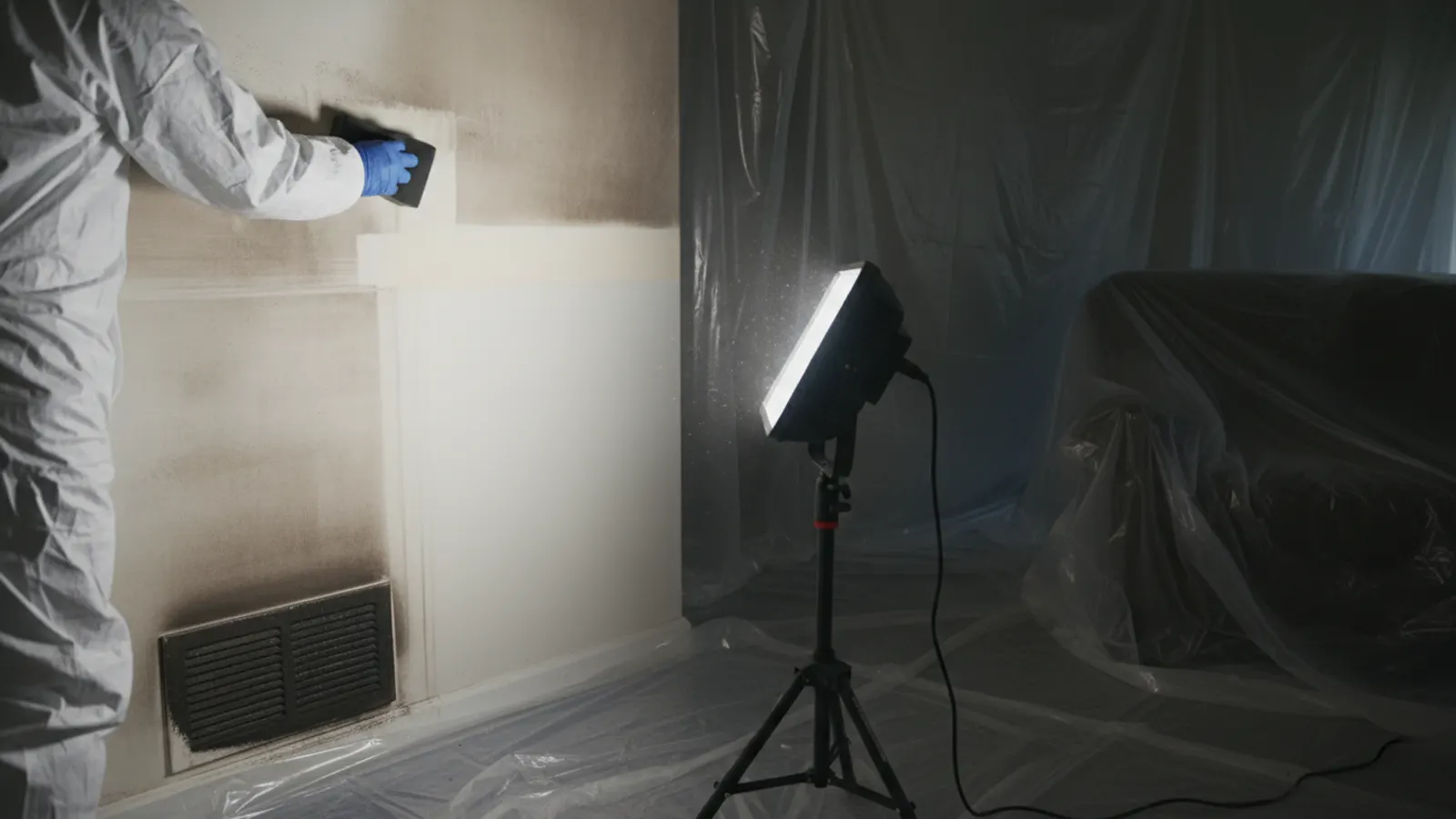
Soot being cleaned from a wall, showing the contrast between treated and untreated sections in a Chandler, Arizona home
Chandler's mix of 1980s tract homes in Andersen Springs through 2010s+ builds in Layton Lakes and Fulton Ranch means we see every residue type and every era of HVAC system. Older 90s Trane and Carrier systems often need full coil R&R after a heavy smoke event; newer variable-speed systems usually clean successfully.
Sun Lakes active-adult communities see frequent kitchen smoke events tied to long unattended cooking. We coordinate with on-site HOA staff for after-hours emergency access, containment, and contents pack-out.
All jobs scoped in Xactimate, documented to IICRC S700, and billed directly to the carrier.

Why Chandler Smoke Restoration Is Different

Chandler Development Services issues emergency board-up permits same-day. Standard reconstruction permits issue in 1–3 weeks; HOA architectural review can add 2–4 weeks in Ocotillo and Fulton Ranch.
Several Chandler neighborhoods (Sun Lakes, Solera) have age-restricted HOA rules requiring quiet hours and limited dumpster placement — we coordinate during mitigation.

Recent Smoke Restoration Projects in Chandler

Ocotillo

Stovetop protein smoke, whole-home migration: dry-sponge + degreaser walls/ceilings, HVAC decon, contents wipe-down, hydroxyl cycle

$17K11 days

Sun Lakes

Unattended cooking fire, kitchen + adjacent living room: cabinet R&R, drywall replacement, HVAC line cleaning, full repaint

$24K16 days

Fulton Ranch

Electrical fire in laundry room: containment, HEPA + dry sponge through laundry/garage/kitchen, HVAC decon, attic HEPA

$13K10 days

Smoke Restoration in Chandler: Fast Facts

Sun Lakes / active-adult smoke calls: roughly 25% of our Chandler smoke volume.

Average kitchen-fire smoke job in Chandler: $8,000–$20,000.

HVAC decon included on every job; coil R&R on roughly 15% of older systems.

Same-day emergency response across all Chandler ZIPs.

IICRC S700 documentation on every claim.

Typical Cost

$2,500 – $60,000+

Typical Timeline

3 days – 6 weeks

Permit Lead Time

2–4 weeks

What Chandler Homeowners Should Know About Smoke Restoration

Restoring Indoor Air Quality

After smoke exposure, airborne particles can remain in the home long after visible residue is cleaned. Replacing HVAC filters, cleaning ductwork where needed, using air scrubbers with HEPA filtration and ventilating the home help restore healthy indoor air. People with asthma or other respiratory sensitivities may notice lingering effects, which is a good reason to address air quality as part of the restoration.

Why You Should Never Wipe Soot

One of the most common mistakes after a fire is trying to wipe soot away with a wet cloth or household cleaner. Many types of soot smear when wet, pushing the residue deeper into porous surfaces such as painted drywall, ceiling texture and unfinished wood, which can make staining permanent. Effective soot removal usually begins with dry methods, such as specialised dry-cleaning sponges and vacuuming with HEPA-filtered equipment, before any wet cleaning is attempted. If you are unsure, leave the surface alone until it can be assessed properly.

Soot Is Acidic, and It Keeps Working

Soot does not simply sit on surfaces. Many residues are acidic and continue to cause damage after the fire is out. Within days, they can discolour plastics, etch glass, tarnish metal fixtures and yellow grout and finishes. Left longer, staining can become permanent and items that could have been cleaned may need replacing. This is one of the main reasons restoration should start as soon as possible after a fire. Prompt cleaning of affected surfaces limits how much ends up being replaced rather than restored.

Cleaning the HVAC System

If the heating and air-conditioning system ran during or after a fire, it almost certainly circulated smoke and soot through the ductwork and into rooms that were otherwise unaffected. Contaminated ducts continue to release odour and particles every time the system runs, undermining cleanup elsewhere. HVAC cleaning involves inspecting and cleaning the ductwork, registers and air handler, replacing filters and, where necessary, treating the system to remove odour. It should be completed as part of the restoration, not left as an afterthought.

Smoke and Electronics

Smoke residue can be acidic and conductive, and it settles inside electronics as well as on their surfaces. Computers, televisions, gaming systems and appliances exposed to heavy smoke may develop corrosion and failures weeks or months later. Affected electronics should be assessed before being used heavily, and some may need professional cleaning. Documenting exposed electronics is important for insurance purposes.

Furnace Puff-Backs

A puff-back happens when a malfunctioning oil or gas appliance ignites improperly and blows soot through the heating system and out of the registers. It can coat an entire house in a fine, oily black residue within moments. Puff-back soot is particularly smeary and difficult to remove, and cleaning it requires methods suited to oily residue. The appliance must also be repaired before it is used again.

Our Fire Cleanup & Repair Process

Every job follows a proven sequence: (1) emergency board-up and water extraction from firefighting efforts; (2) damage assessment with photos for your insurance claim; (3) debris removal and demolition of unsalvageable materials; (4) soot and residue cleaning using the right method for each surface; (5) deodorization with thermal fog or ozone; (6) structural repair, drywall, paint, and finish work. You get one project manager from start to finish.

What to Remove Instead of Clean

Some materials cannot be restored effectively and must be removed. Insulation exposed to smoke, heavily charred wood, drywall that is burned or saturated with water, carpeting and padding that have absorbed significant smoke or water, and items that have deformed or melted generally need replacement. Removing them, rather than attempting to clean them, prevents lingering odour and ensures repairs are sound. We explain what needs to be removed and why before the work begins.

Not All Smoke Leaves the Same Residue

What burned, and how hot it burned, determines the kind of residue a fire leaves behind, and that in turn determines how it must be cleaned. A fast, high-temperature fire involving paper and wood tends to leave a dry, powdery soot that is comparatively easy to remove. A slow, smouldering fire involving plastics, rubber and synthetic materials leaves a wet, sticky, smeary residue that clings to surfaces and has a strong odour. A kitchen fire involving food can leave a protein residue that is almost invisible but discolours paint and carries a pervasive smell. A furnace puff-back leaves a fine, oily fuel soot. Identifying the residue type is the first step, because cleaning methods that work on one can smear or set another.

Why Phoenix Fires Need Specialized Cleanup

Arizona homes have features that change how fire residue behaves: stucco walls that hold odor for months, tile roofs that trap heat above attic insulation, foam-in-place insulation that releases acrid smoke, and HVAC systems running 18+ hours a day during summer that spread soot building-wide. We address each of these conditions specifically rather than applying generic cleanup methods.

How Our Smoke Restoration Process Works in Chandler

01

Free On-Site Consultation

We visit your property, discuss your goals, and provide a detailed, no-obligation estimate.

02

Custom Project Plan

Our team creates a tailored project plan with timeline, materials, and transparent pricing.

03

Licensed Crews On Site

Licensed craftsmen complete your project with quality materials and meticulous attention to detail.

04

Final Walkthrough & Sign-Off

We inspect every detail with you and ensure complete satisfaction before the job is done.

"Kitchen fire in our Ocotillo home — ProWorx had containment up the same day, the duct work spotless, and worked directly with State Farm. Stress-free."

ProWorx Client · Chandler

Neighborhoods We Serve in Chandler

Ocotillo · Sun Lakes · Fulton Ranch · Andersen Springs · Pecos Ranch · Clemente Ranch · Layton Lakes · Downtown Chandler

Smoke Restoration FAQs for Chandler Homeowners

Ready to Start Your Chandler Smoke Restoration Project?

Get a free, no-obligation estimate from a licensed Arizona contractor — ROC #349454.