



Flood Restoration in Buckeye, AZ

24/7 flood response across Buckeye — extraction, drying, and rebuild.

Serving Buckeye & nearby Maricopa County

Get Your Free Flood Restoration Estimate

Step 1 of 5Project

What kind of project?

Pick the option that fits best — you can add details next.

Quick Answer

ProWorx Restoration handles 24/7 flood restoration in Buckeye, AZ. The dominant Buckeye flood losses are monsoon flooding along the Hassayampa and Waterman Wash corridors, new-construction supply-line failures in fast-built 2010s tract homes, and Sun City Festival original-equipment failures. Typical projects run $3,500–$45,000 and 1–7 weeks.

1,200+

Projects Completed

15+

Years Experience

ROC #349454

Licensed & Insured

100%

Satisfaction Guaranteed

Flood Restoration Built for Buckeye Homes
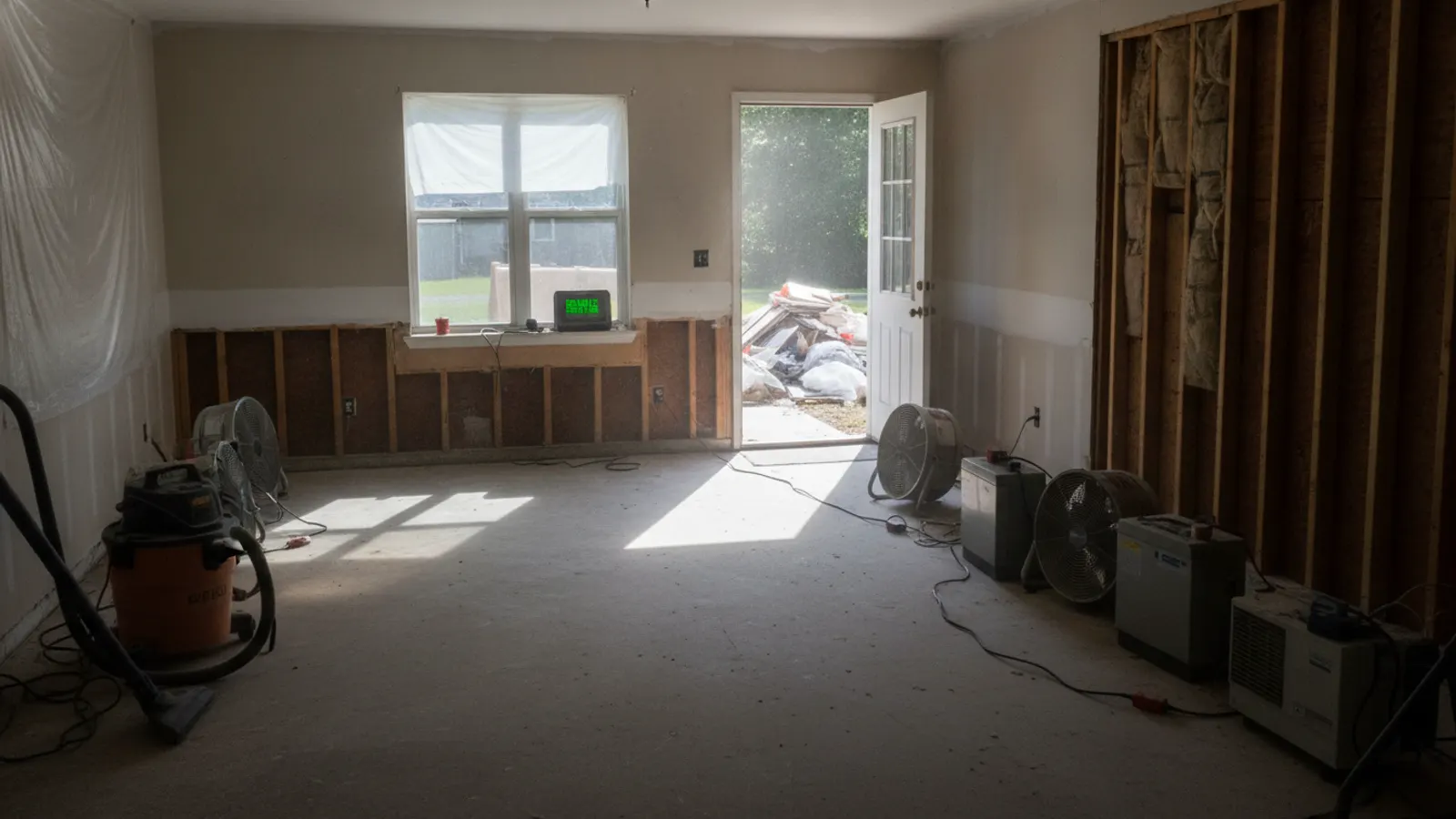
Flood-damaged flooring removed to the slab with drying equipment running in a Buckeye, Arizona home
Buckeye is one of the fastest-growing cities in the country and most homes here are post-2005 builds. That construction speed produces a specific flood pattern: high rates of early-life appliance supply-line failures (refrigerators, dishwashers, washing machines), pinhole leaks in poorly-sweated copper joints, and the occasional under-slab PEX issue on rushed installs.
The Hassayampa River and Waterman Wash drive significant monsoon flow on Buckeye's west side. Far-west neighborhoods (Tartesso, Sundance) see surface flooding and roadway closures during peak July–August storms.
We respond 24/7 across the City of Buckeye with truck-mounted extraction, structural drying, mold prevention, and full reconstruction.

Why Buckeye Flood Restoration Is Different

New-construction defect cases — particularly under-slab PEX manifold failures and improperly sweated copper — make up a higher percentage of Buckeye claims than older Phoenix neighborhoods. We document construction-defect causation for builder warranty claims when applicable.
Buckeye's Development Services Department turns emergency repair permits same-day; standard rebuild permits in roughly 2 weeks.

Recent Flood Restoration Projects in Buckeye

Verrado

Upstairs washing-machine hose burst: 1,100 sf two-story water damage, ceiling demo, drywall, paint, LVP replacement

$33K6 weeks

Sun City Festival

Original water-heater failure: kitchen extraction, base-cabinet rebuild, tile floor replacement, new heater with auto-shutoff

$22K5 weeks

Tartesso

Monsoon roof flashing failure: ceiling drywall, attic insulation, mold prevention, repaint across two rooms

$14K3 weeks

Flood Restoration in Buckeye: Fast Facts

Average Buckeye flood/water claim: $8,000–$24,000.

Early-life construction defect water losses: roughly 20% of Buckeye claim volume.

Hassayampa / Waterman Wash peak monsoon flow: July–August.

City of Buckeye emergency repair permits: typically same-day.

Microbial growth window: 48–72 hours.

Typical Cost

$3,000 – $75,000+

Typical Timeline

1 – 8 weeks

Permit Lead Time

2–4 weeks

How We Approach Flood Restoration

Arizona's monsoon season — typically mid-June through September — can dump 1–3 inches of rain in under an hour on hard-packed desert soil that can't absorb it. The result: flash flooding, washes overrunning streets, roof leaks under wind-driven rain, and ground-water intrusion into garages, casitas, and lower-level living spaces. ProWorx Restoration is a licensed Arizona general contractor (ROC #349454) responding 24/7 to flood emergencies across the Valley.
We arrive with truck-mounted water extractors, submersible pumps, commercial dehumidifiers, and air movers. Water is removed immediately, structural drying begins within hours, and antimicrobial treatment is applied before mold can take hold (typically within 24–48 hours of saturation). For total losses we also handle drywall, flooring, insulation, and finish reconstruction under the same contract.

24/7 emergency response across the Phoenix metro

Licensed Arizona general contractor (ROC #349454)

Truck-mounted water extraction and submersible pumping

Industrial dehumidification and high-velocity air movers

Antimicrobial treatment to prevent mold growth

Thermal imaging to detect hidden moisture

What Buckeye Homeowners Should Know About Flood Restoration

Measuring Dry Rather Than Guessing

Surfaces often feel dry long before the materials beneath them are. Drywall can be dry to the touch while the bottom plate of the wall behind it is still saturated, and flooring can look fine while the subfloor holds enough moisture to cause mould or warping later. We use moisture meters and thermal imaging to locate water that cannot be seen, establish dry standards by measuring unaffected materials of the same type in the same building, and record readings every day. Drying is complete when the affected materials reach those standards, not when a set number of days has passed. That documentation also supports the insurance claim, because it shows exactly what was wet, how it was dried and when it reached an acceptable level.

Our Residential Water Restoration Process

Every job follows the IICRC S500 sequence: emergency extraction, moisture mapping with thermal cameras, removal of unsalvageable materials, commercial dehumidification and air movement for 3–5 days, antimicrobial application, then drywall and finish reconstruction. You get one project manager from first call through final paint, and your insurance claim is documented every step.

Removing Sediment and Restoring the Structure

After floodwater has been removed, mud, silt and debris are often left behind on floors, in wall cavities and around foundations. That material must be cleaned out thoroughly before drying and disinfection can be effective. Wall cavities are opened to remove wet insulation and allow drying, and framing is cleaned, treated and dried to safe moisture levels before reconstruction begins. Rebuilding then restores drywall, flooring, cabinetry and finishes so the home is safe and comfortable again.

Garages, Casitas and Detached Structures

Flood water often enters garages, casitas and other detached structures first because they sit lower or have wider openings than the main house. Stored belongings, appliances, water heaters and vehicles may all be affected. Detached structures can also have different construction, such as uninsulated walls or concrete floors, which affects how they are cleaned and dried. We assess every affected building on the property, not just the main residence, so nothing is missed in the restoration or the insurance claim.

Not All Water Is the Same: The Three Categories

The industry standard for water damage restoration, IICRC S500, sorts water into three categories by how contaminated it is, and the category determines what can be saved. Category 1 is clean water from a sanitary source, such as a burst supply line or an overflowing sink with no contaminants. Category 2, often called grey water, carries significant contamination: washing machine or dishwasher discharge, or a toilet overflow containing urine but no faeces. Category 3, black water, is grossly contaminated and includes sewage, rising flood water from outside and any water that has been left standing long enough to support significant microbial growth. Water also degrades over time and with contact, so a clean-water leak left for several days can become Category 2 or 3. Porous materials such as carpet pad and drywall that have absorbed Category 3 water generally cannot be cleaned and must be removed.

How Structural Drying Actually Works

Drying a building is not simply a matter of pointing fans at wet surfaces. Effective drying balances three things: removing liquid water by extraction, moving air across wet surfaces so moisture evaporates, and removing that moisture from the air with dehumidifiers so it does not simply condense somewhere else. Too much air movement without enough dehumidification raises humidity throughout the house and can spread damage to dry areas. Temperature matters as well, since warmer air holds more moisture and drying progresses faster within the right range. Professional drying is planned around the volume of the space, the materials involved and how much water they absorbed, which is why two seemingly similar leaks can require very different equipment setups and drying times.

Mold Prevention & Air Quality

In Arizona's dry climate, water-damaged materials look dry on the surface within a day even when wall cavities and subfloors stay saturated for weeks — the perfect mold environment. We monitor moisture content daily with pin and pinless meters, apply EPA-registered antimicrobials, and only close walls back up when readings meet IICRC-approved dryness standards.

Our Proven Process

01

Free Consultation

We visit your property, discuss your goals, and provide a detailed, no-obligation estimate.

02

Custom Plan

Our team creates a tailored project plan with timeline, materials, and transparent pricing.

03

Expert Execution

Licensed craftsmen complete your project with quality materials and meticulous attention to detail.

04

Final Walkthrough

We inspect every detail with you and ensure complete satisfaction before the job is done.

"Brand-new Verrado home and the upstairs washer hose let go. ProWorx had it documented for the builder warranty, drove the whole rebuild, and we didn't pay a dollar out of pocket."

ProWorx Client · Buckeye

Neighborhoods We Serve in Buckeye

Verrado · Sundance · Tartesso · Festival Ranch · Sun City Festival

Flood Restoration FAQs for Buckeye Homeowners

Ready to Start Your Buckeye Flood Restoration Project?

Get a free, no-obligation estimate from a licensed Arizona contractor — ROC #349454.