

Stucco Repair in Buckeye, AZ

Crack repair, color-coat, and full resurfacing across Buckeye.

Serving Buckeye & nearby Maricopa County

Get Your Free Stucco Repair Estimate

Step 1 of 5Project

What kind of project?

Pick the option that fits best — you can add details next.

Quick Answer: Stucco Repair in Buckeye

ProWorx Restoration provides stucco repair across Buckeye, AZ — Verrado DRB-coordinated TND color re-coats, Sundance / Tartesso tract patching, foundation step cracks, and dust-storm impact damage repair. Typical projects run $500 – $12,000.

1,200+

Projects Completed

15+

Years Experience

ROC #349454

Licensed & Insured

100%

Satisfaction Guaranteed

Stucco Repair Built for Buckeye Homes
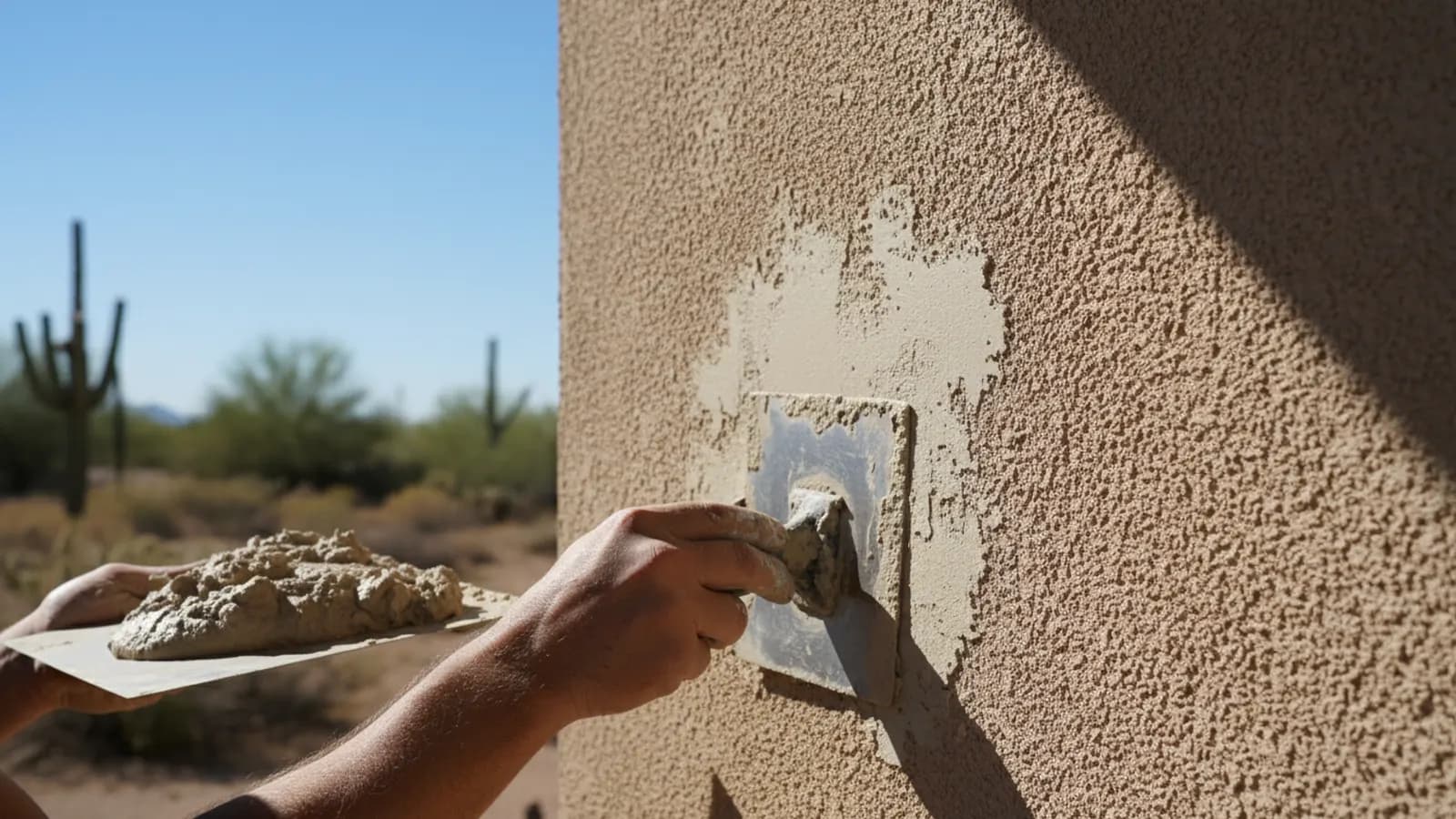
Stucco patch being floated over a repaired wall section and the texture matched in a Buckeye, Arizona home
Buckeye's stucco scope is dominated by Verrado TND DRB-coordinated re-coats requiring period-appropriate color palettes, and standard tract re-coat / crack chase in Sundance, Tartesso, and Festival Ranch. Far-west location means more haboob (dust storm) impact damage at corners and projections.
Pre-dawn scheduling May–September standard.
Expansive-clay foundation movement common in rural acreage lots.

Why Buckeye Stucco Repair Is Different

Verrado TND DRB: period color palette, sample boards, ARC.
Far-west haboob impact damage at corners and parapets.
Rural acreage expansive-clay foundation work.

Recent Stucco Repair Projects in Buckeye

Verrado

Full TND-palette color re-coat 1,900 sf, DRB-approved, hand-troweled

$13K9 days

Sundance

South / west crack chase + color blend 1,300 sf, monsoon prep

$6.5K5 days

Tartesso

Haboob impact corner repair + color match 8 locations

$3.5K3 days

Stucco Repair in Buckeye: Fast Facts

Verrado DRB work: ~30%.

Sundance / Tartesso tract: ~30%.

Haboob impact damage: ~15%.

Average Buckeye stucco repair: $2,500–$11,000.

DRB submittal in Verrado.

Typical Cost

$500 – $15,000+

Typical Timeline

2 days – 2 weeks

Permit Lead Time

2–4 weeks

How We Approach Stucco Repair

Arizona's extreme heat, monsoon-driven wind-driven rain, and 40°F+ daily thermal swings put stucco under constant stress. ProWorx Restoration repairs hairline and structural cracks, patches damaged areas, performs full re-stucco on aged exteriors, and matches color and texture across Phoenix-metro homes and commercial properties. Arizona ROC #349454.
Stucco failure modes in the Valley fall into predictable patterns. Hairline pattern cracking on south and west elevations from UV and thermal cycling. Diagonal cracks at window and door corners from minor structural movement. Bulging or hollow-sounding patches where moisture penetrated past failed sealant joints. EIFS (synthetic stucco) delamination on 1990s–2000s tract homes where weep details were undersized. We identify the failure mode before patching so the repair lasts.

Hairline and structural crack repair with elastomeric or cementitious patch

Full-wall and whole-house re-stucco (traditional three-coat)

Color matching from samples; integral and elastomeric topcoats

Texture matching: smooth, sand, dash, lace, Santa Barbara, Spanish

Window and door sealant replacement at stucco interfaces

EIFS repair and weep-detail correction

What Buckeye Homeowners Should Know About Stucco Repair

Painting Block Walls

Many block walls are painted or coated to match a home's exterior. Over time, the finish fades and peels in Arizona's sun. Repainting requires cleaning, repairing cracks and using coatings formulated for masonry. A well-applied finish protects the wall and improves its appearance.

Stopping Water Intrusion First

Water is the leading cause of building deterioration. Leaking roofs, failed window seals, cracked stucco, deteriorated sealants and poor drainage allow water into the structure, where it damages framing, finishes and building systems and promotes mould. Restoration should begin by identifying and stopping every source of water intrusion, because repairs made while water is still entering will not last.

Cracks in Block Walls

Cracks in block walls take different forms. Step cracks that follow the mortar joints diagonally often indicate settlement, while vertical cracks may result from shrinkage or movement. Horizontal cracks can suggest lateral pressure. The width, pattern and whether a crack is growing all help determine the cause and the appropriate repair, which may range from repointing to partial rebuilding.

Repointing Mortar Joints

Mortar joints deteriorate over time, becoming cracked, crumbly or recessed. Repointing removes deteriorated mortar to a consistent depth and replaces it with fresh mortar, restoring the joint's strength and weather resistance. The new mortar should be compatible with the existing masonry, and matching colour and joint profile helps the repair blend in.

Restoring the Building Envelope

The building envelope, made up of the roof, exterior walls, windows and doors, separates the interior from the weather. Restoring it may involve replacing roofing, repairing or replacing stucco and masonry, resealing joints and replacing failed windows. In Arizona, the envelope also plays a major role in controlling heat gain, so restoration often improves energy performance as well as weather protection.

Restoring Stucco Facades

Stucco is the predominant exterior finish on Arizona buildings, and over decades it develops cracks, delamination and water intrusion problems. Small cracks can often be repaired and recoated, but areas where stucco has separated from the wall, or where water has damaged the substrate behind it, need to be removed and rebuilt. Matching the existing texture and colour so repairs blend into the rest of the facade requires skill and patience. A properly restored stucco facade both improves appearance and protects the building structure behind it from moisture.

When to Re-Stucco Entirely

If stucco is extensively cracked, delaminated or water-damaged across large areas, re-stuccoing the wall may be more cost-effective than repeated patching. Replacement also allows inspection and repair of the water-resistive barrier, lath and substrate beneath.

Pool Barrier Walls

Block walls frequently serve as pool barriers, and gaps, damage or climbable features can compromise safety. Repairs should maintain the required barrier height and integrity. Pool barrier requirements vary by jurisdiction, so any changes should be checked against local rules.

Painting Stucco

Painting stucco refreshes its appearance and adds a layer of protection. The surface must be cleaned and cracks repaired first, and paint formulated for masonry should be used. Proper preparation is essential; painting over cracks and damaged stucco only hides problems temporarily.

Weep Screeds at the Base of Walls

A weep screed is a metal trim installed at the bottom of stucco walls that allows water that gets behind the stucco to drain out. When landscaping, soil, pavers or concrete cover the weep screed, water can be trapped behind the stucco, causing damage. Keeping weep screeds exposed is a simple way to protect stucco walls.

When to Rebuild Instead of Repair

If a wall is leaning significantly, has extensive cracking or was built with an inadequate footing, rebuilding may be safer and more cost-effective than repeated repairs. Rebuilding allows a proper footing and reinforcement to be installed, giving the wall a much longer service life.

Masonry Fireplaces and Chimneys

Masonry fireplaces and chimneys can develop cracked mortar, damaged crowns and deteriorated flues. Since these components affect fire safety, they should be inspected regularly and repaired by professionals. Restoring chimney crowns and mortar joints keeps water out and protects the structure.

Starting With a Condition Assessment

Effective building restoration begins with understanding exactly what condition the building is in. A thorough condition assessment examines the structure, roof, exterior walls, windows, foundations, drainage and building systems, identifying deterioration, its causes and its urgency. That assessment allows repairs to be prioritised, so the most critical issues, particularly those letting water into the building, are addressed first.

Matching Texture and Colour

The biggest challenge in stucco repair is making patches blend in. Stucco textures vary widely, from smooth to sand finishes and heavier textures, and colour fades with sun exposure. Skilled repair matches the existing texture carefully, and recoating or painting the whole wall section often produces the most uniform appearance.

Cleaning Masonry Safely

Masonry can be stained by dirt, efflorescence, rust, algae or paint. Cleaning methods must be appropriate for the material, since aggressive pressure washing or harsh acids can damage brick, block and mortar. Gentle methods tested in an inconspicuous area first protect the masonry while removing stains.

How Our Stucco Repair Process Works in Buckeye

01

Free On-Site Consultation

We visit your property, discuss your goals, and provide a detailed, no-obligation estimate.

02

Custom Project Plan

Our team creates a tailored project plan with timeline, materials, and transparent pricing.

03

Licensed Crews On Site

Licensed craftsmen complete your project with quality materials and meticulous attention to detail.

04

Final Walkthrough & Sign-Off

We inspect every detail with you and ensure complete satisfaction before the job is done.

"Verrado DRB approved our TND color re-coat first round and the haboob corner repairs survived the next monsoon season clean — ProWorx knows this market."

ProWorx Client · Buckeye

Neighborhoods We Serve in Buckeye

Verrado · Sundance · Tartesso · Festival Ranch · Westpark · Blue Horizons · Watson Estates · Sun City Festival

Stucco Repair FAQs for Buckeye Homeowners

Ready to Start Your Buckeye Stucco Repair Project?

Get a free, no-obligation estimate from a licensed Arizona contractor — ROC #349454.